
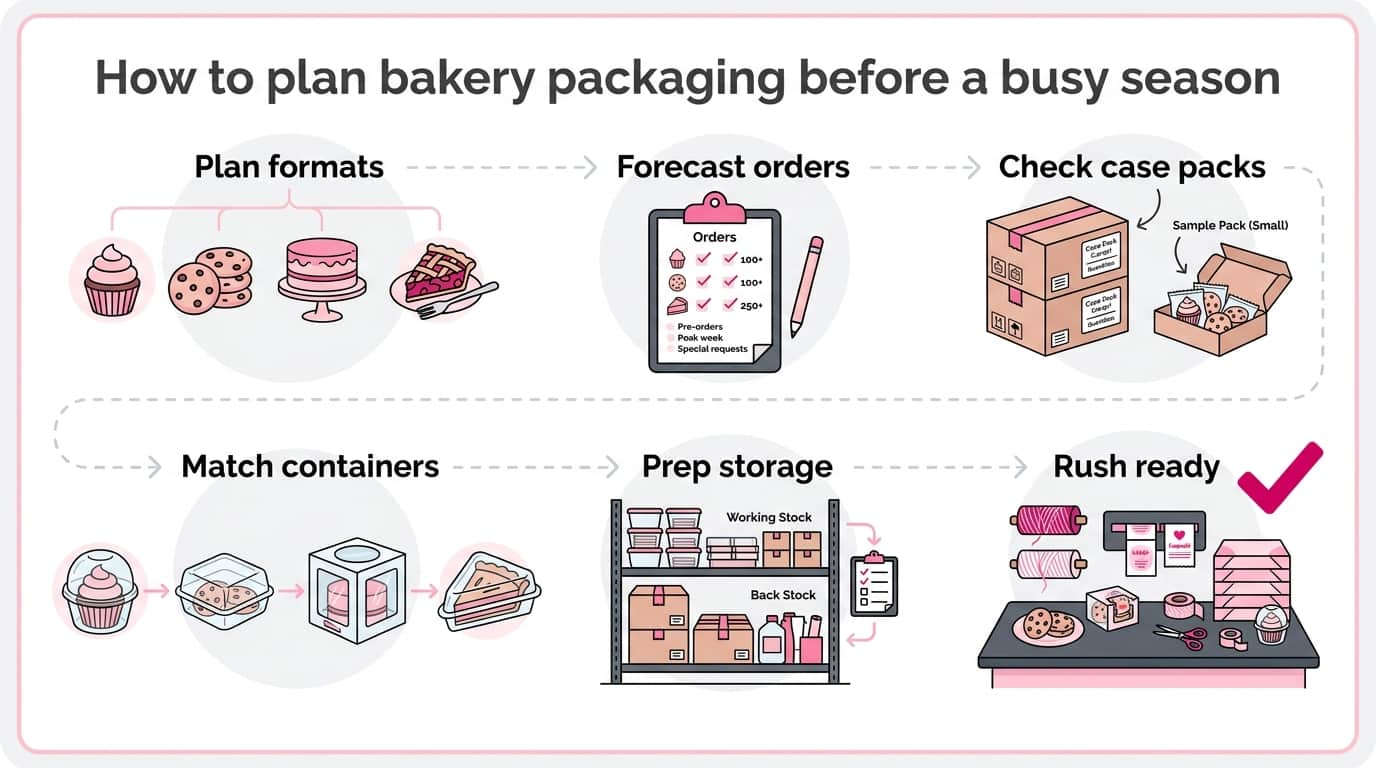
TL;DR: Planning bakery packaging before a busy season means treating containers like inventory, not a last-minute errand. Build your order around rush dates, product formats, case quantities, and storage space. Start with your actual menu, calculate by format, then order early enough to allow stock checks, transit, and a small reorder window.
If bakery packaging busy season planning is not on the calendar, it usually shows up later as the wrong container, the wrong count, or no stock left when orders are already booked. Many stock packaging items can move quickly once ordered, but the real risk is timing, stock status, and format gaps. The problem is usually not that packaging was forgotten. It is that the wrong formats were counted too late.
This guide walks through the full system: when to order, how to calculate quantities by container format, and what every major product type requires before the rush begins. Each section introduces the key decision, with dedicated supporting guides linked for the deeper detail on quantities, cookies, and cake and pie preorders.
How Should You Plan Bakery Packaging for a Busy Season?
Direct Answer: Plan packaging by product format, case quantity, and order date before peak sales begin. Count every container type separately.
Bakery packaging is an inventory decision. Operators who run into problems during holiday week tend to share the same habit: they order packaging when supplies run low, which works fine in slow weeks and fails in the ones that matter most. A system built around rush dates, product formats, and case quantities changes that. It is not complicated. It is a question of treating containers the same way you treat ingredients, labor, and preorder cutoff dates.
Why Do Bakeries Run Out of Packaging During a Rush?
Direct Answer: Most packaging shortfalls happen because operators calculate one total instead of by format, finding the gap after orders are already booked.
For stock packaging, supplier processing is only one part of the timeline. What matters for a bakery operator is whether the item is in stock when the order is placed, how long processing takes during peak periods, and how much carrier transit time sits between the supplier and the first pickup date. A late order, a miscalculated quantity, or a format gap usually becomes visible only when production starts.
Custom, printed, or made-to-order packaging needs a separate timeline from stock containers. If those items are part of the season, confirm production timing before setting preorder cutoff dates. Do not apply the stock-container timeline to custom packaging.
When Should You Order Bakery Packaging?
Direct Answer: A 3 to 4 week window is a practical starting target for in-stock containers. Confirm stock status and transit time before setting preorder dates.
The ordering timeline for stock packaging needs to cover three things: confirming the item is actually in stock at the time of order, allowing for supplier processing (which extends during peak periods), and accounting for carrier transit (which adds time in November and December). Each of those is a real variable, not a fixed number, which is why a 3 to 4 week window works as a starting target rather than a guaranteed rule.
Build your calendar around your earliest preorder pickup or sales date, count back from there, and plan your order date from that starting point. If anything on your container list is custom or made-to-order, add that production window first before setting anything else in the calendar.
For broad foodservice safety context, the FDA Food Code page is a neutral reference for retail and foodservice operations. Use it for general safety context, while using product pages and fit tests for container selection.
What Packaging Should You Stock by Product Format?
Direct Answer: Build a separate container count for each format. Cookies, cupcakes, cakes, and pies each need different sizing, counts, and case quantities.
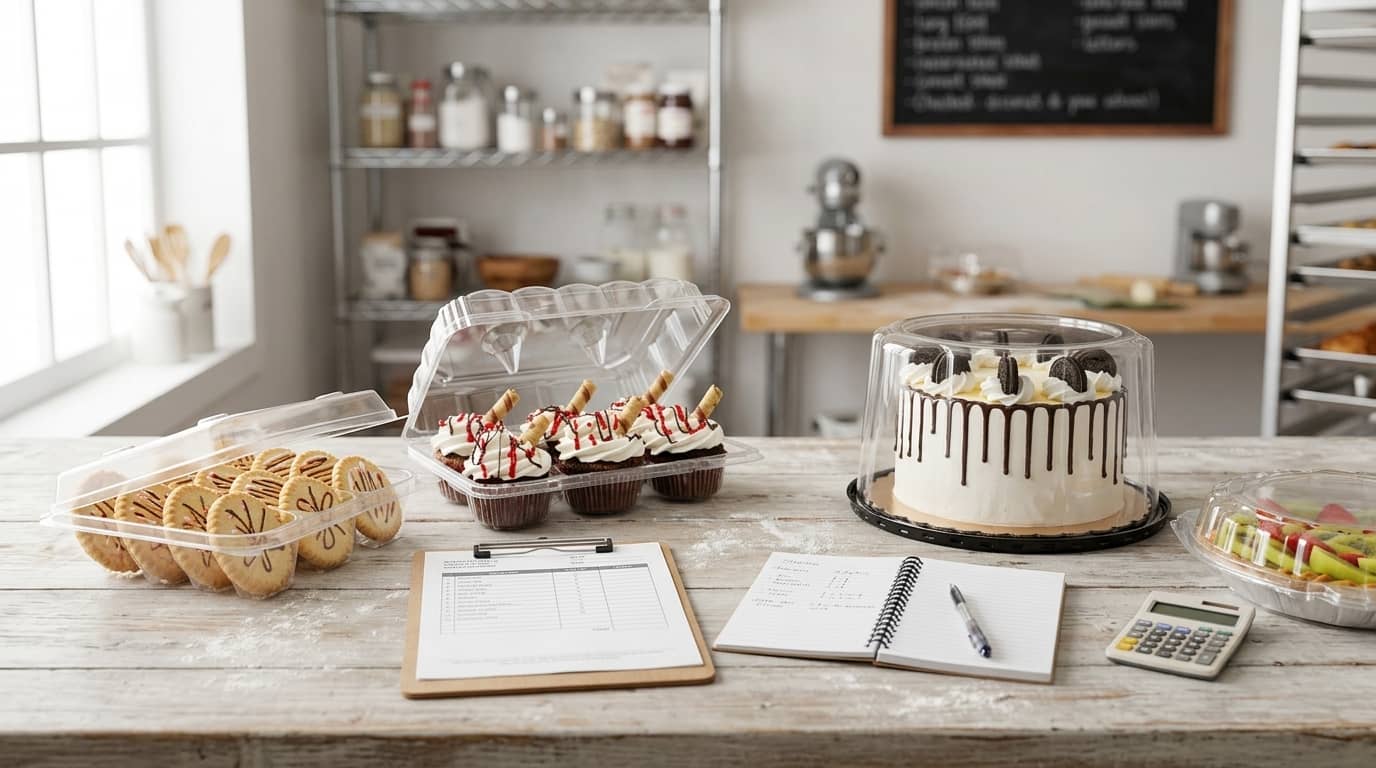
At Plastic Container City, we work with thousands of food professionals across the U.S., from independent bakeries to cottage food operators. The operators who move through holiday season without a packaging failure tend to do one thing consistently: they build their container list by product format before placing a single order. Before you calculate case quantities, match each product format to the right clear bakery containers for your menu, pickup flow, and storage space.
For general U.S. food-contact packaging context, the FDA food packaging and food-contact materials page is a neutral reference. Product fit still needs to be checked by container size, lid height, and your actual baked goods.
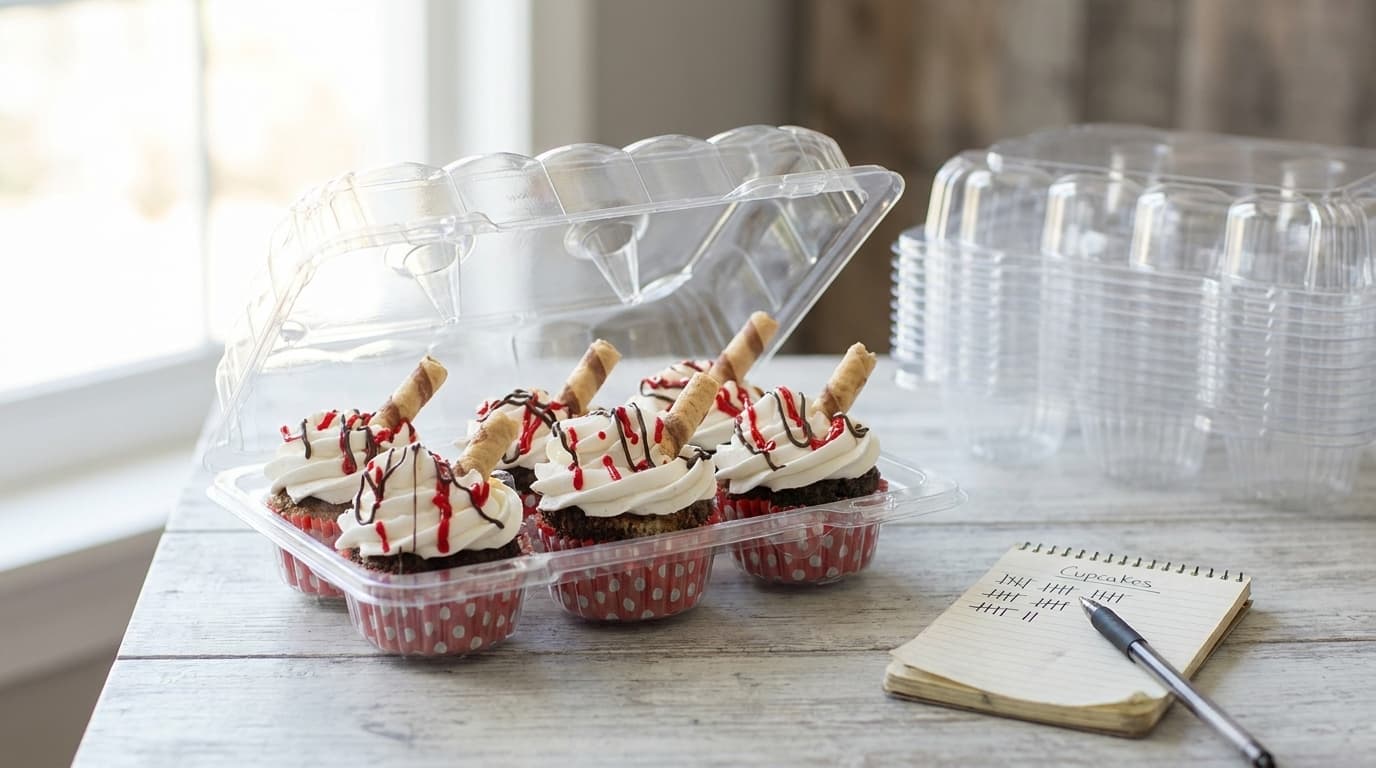
For cupcake orders, dome height matters before the rush starts, especially if your menu includes tall frosting, toppers, or seasonal decorations. For more detail, see our guide to choosing cupcake containers.
| Format | Container Type | What to Check Before Ordering | Deeper Guide |
|---|---|---|---|
| Cookies | Hinged clamshell or cellophane bag | Count format, cookie size, and how orders are staged for pickup | What Cookie Packaging for Bakery Orders Works Best? |
| Cupcakes | Stackable deep-dome containers | Dome clearance for frosting height and case count for weekly volume | How to Calculate Bakery Packaging Case Quantities |
| Cakes | Rigid cake containers | Box diameter plus dome height clearance for decorated layers | Cake and Pie Preorder Packaging Checklist |
| Pies | Pie boxes | Interior fit and depth, not just pie diameter | Cake and pie preorder checklist |
How Do You Estimate Bakery Packaging Case Quantities?
Direct Answer: Projected weekly units by format, multiplied by rush weeks, plus a buffer, equals your case quantity target. Run the formula per format.
A case quantity is the number of containers sold in one wholesale case, such as 100, 200, or 300 units depending on the product. Knowing your target case quantity per format is the practical output of the planning formula above, and it is how you move from a projected unit count to an actual order.
Use a simple planning formula built around normal weekly units, expected rush increase, rush weeks to cover, current stock on hand, and a buffer. Any bakery operator can run this without specialist software. Treat 10 to 15% as a planning cushion, not a fixed rule, and adjust it based on reorder speed, sales history, and how painful a stockout would be. For broader inventory-planning context, ISM explains safety stock as inventory used to handle demand and supply variation.
Use the case quantity guide linked in the table above for worked examples by container format and cost comparison.
How Should Cookies, Cakes, and Pies Change the Plan?
Direct Answer: Cookies add a format decision, cakes add a dome height check, and pies add an interior depth check. Confirm each before the order goes in.
Cookie container decisions
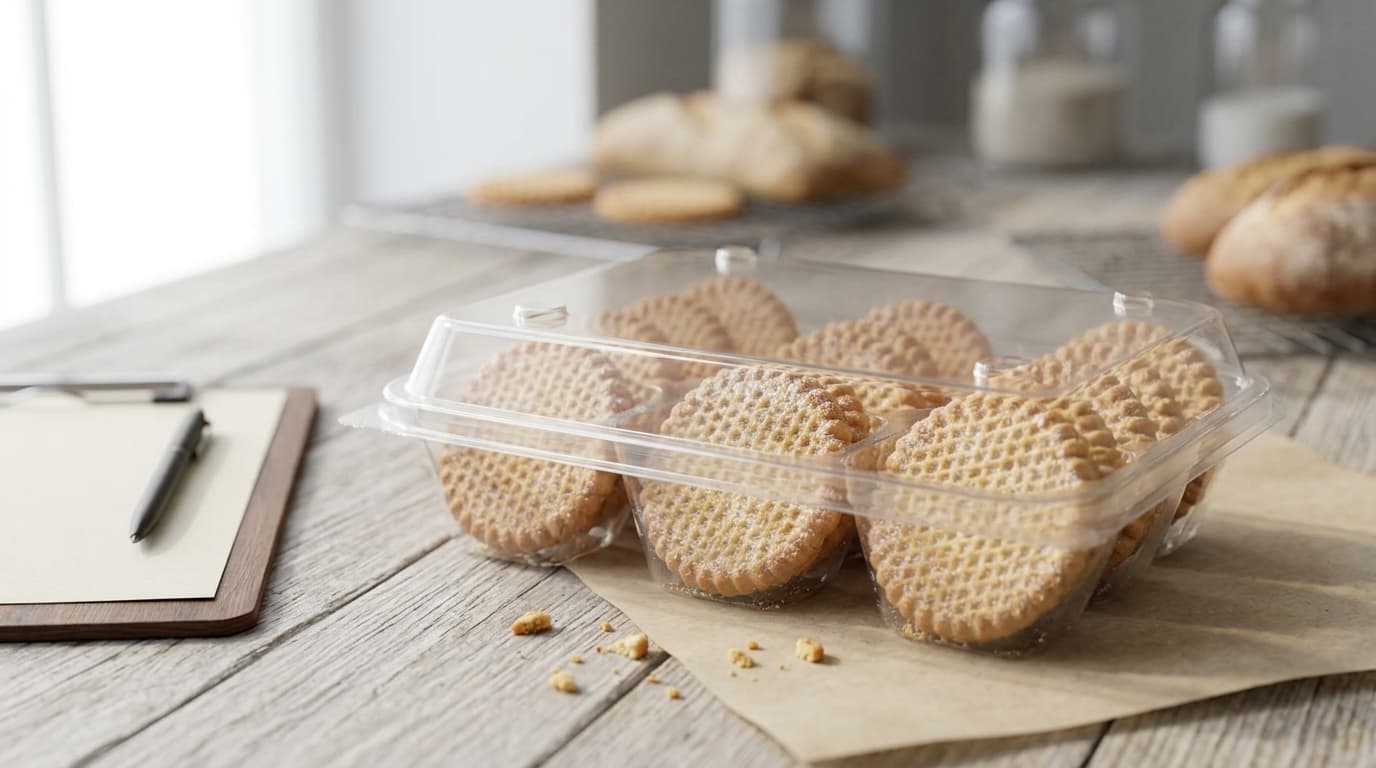
For cookie orders, the container decision comes down to structure and handling. Rigid hinged clamshells suit single-layer presentation, stacking discipline during pickup events, and transport without shifting. Cellophane works for individually wrapped items where a lightweight, flexible format is the right fit. The choice depends on cookie type, count, and how orders will be staged before collection. Use the cookie packaging guide linked in the table above for sizing by cookie type, count formats, and bulk staging guidance.
Cake and pie container decisions
Cake containers must account for diameter and dome height. A box sized only by cake diameter, without clearance for frosting or decorated layers, may not close on the day it is needed. For pies, interior fit and depth are the key checks. A 9 inch pie may still need extra interior clearance depending on crust edge, filling height, and topping. A pie box ordered by diameter alone may not close if the finished pie height has not been checked.
Use the cake and pie checklist linked in the table above for sizing, dome height decisions, and preorder quantity planning. For a broader look at how container material affects product quality between packaging and pickup, the guide to bakery packaging freshness covers the science behind the container choice.
How Should Small Bakeries Store Bulk Packaging?
Direct Answer: Store cases dry, avoid crushing stacks, and separate working stock from back stock. Bulk ordering can lower unit cost when volume fits.
A large order takes up real space, and packaging that gets crushed, warped, or exposed to moisture before it is used defeats the purpose of ordering ahead. A few practical rules that hold well for most small and cottage food kitchens:
- Keep cases dry and away from temperature swings. A space that fluctuates between cold nights and warm days is not a reliable home for clear plastic containers.
- Avoid stacking cases so high that the bottom cases compress. Distorted packaging causes lid and closure problems before you even open the box.
- Separate back stock from working stock. Keep the current week’s containers near production. Everything else stays in storage until it is needed.
If storage space is a real constraint, order the largest case size your space can safely hold rather than the absolute largest case available. A well-planned smaller order beats an oversized one that creates staging problems during your busiest days.
Getting bakery packaging busy season planning right means treating the container order with the same discipline as every other supply decision before a rush. The operators who handle peak week without a supply failure started planning before the season did. For more bakery packaging and food industry planning guides, visit the Plastic Container City blog.
Frequently Asked Questions
How far in advance should I order packaging for the holiday season?
For in-stock containers, a 3 to 4 week planning window is a practical working target. It allows for stock confirmation, supplier processing, carrier transit, and a small reorder buffer if volumes run higher than projected. Custom or made-to-order items need an additional production window on top of that, so those should be confirmed and ordered first.
What packaging do I need for a busy holiday season?
Build the list by product format: hinged clamshells or cellophane for cookies (depending on count and presentation), stackable deep-dome containers for cupcakes, rigid containers sized for frosting dome height for cakes, and pie boxes checked for interior fit and depth rather than just diameter. Each format carries its own case quantity and sizing decision.
How do I prepare my bakery for a busy season?
On the packaging side: build your container list by format, calculate quantities from projected output, confirm live stock status before placing large orders, and get any custom items on the calendar first. Packaging should sit in your prep timeline the same way ingredient purchasing and staffing decisions do.
What makes a bakery successful during the holidays?
From a packaging standpoint: the right containers, in the right quantities, confirmed before the first order goes out. Operators who handle peak week without supply failures treated bakery packaging busy season planning as a deliberate supply decision before the season started, not a same-week reaction to a shelf running empty.