
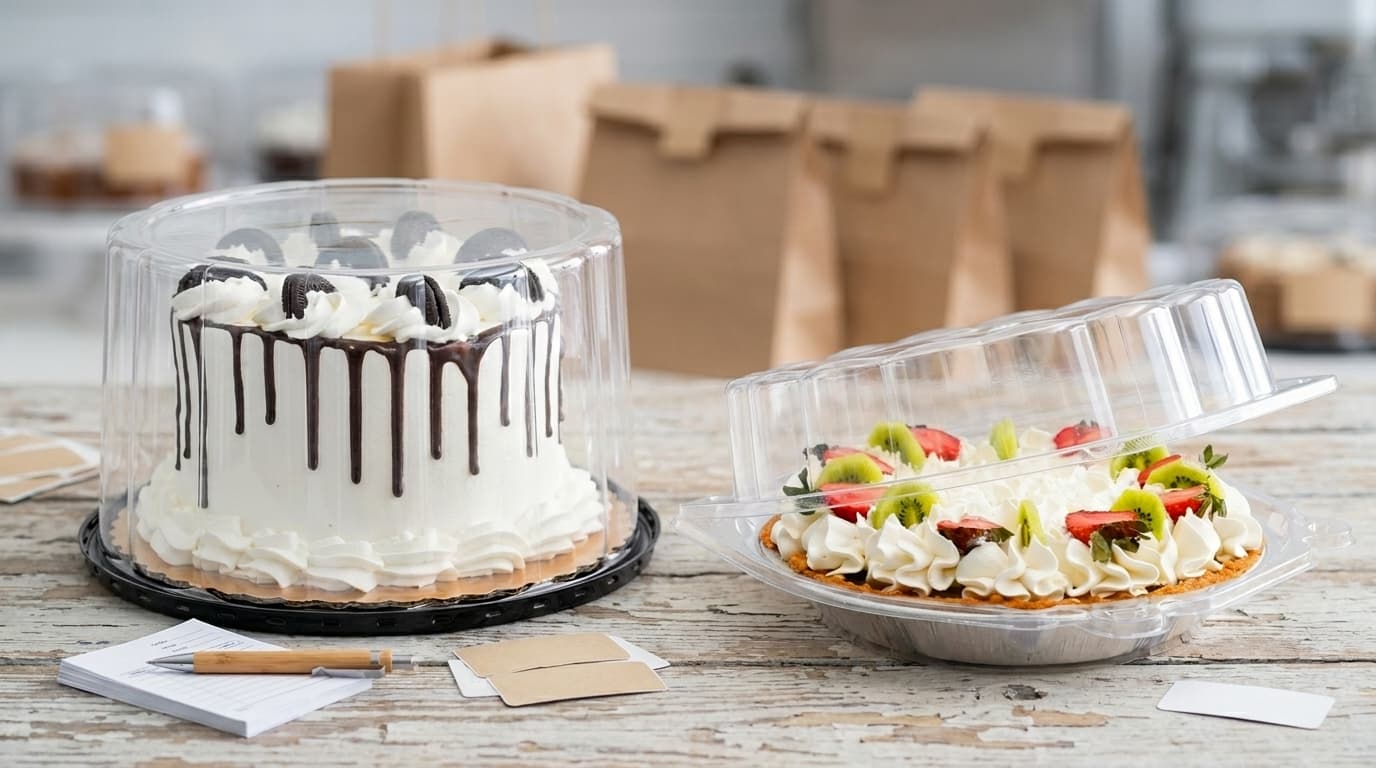
TL;DR: Cake and pie preorder packaging comes down to four container decisions before pickup day: the right box size for your pie type, the right dome height for your cake, how far ahead each product can be packaged without hurting quality, and how many containers to have ready per preorder volume. Get all four right and the pickup table runs clean. This checklist walks through each one in order.
Cake and pie preorder packaging failures tend to surface at the worst possible moment: pickup day, when the preorder is already filled and the container is already wrong. A 9-inch pie in a 9-inch box that will not close. A decorated three-layer cake with frosting pressed flat against a standard-dome lid. A pickup table short of containers for the last twelve orders in the queue.
At Plastic Container City, we work with thousands of food professionals across the U.S., from home bakers running their first Thanksgiving preorder list to bakeries filling hundreds of holiday orders every week. The container problems we see repeatedly come down to three mistakes: wrong box size, wrong dome height, and no quantity plan. This checklist addresses all three in sequence, covering the four decisions that protect your preorders from the container backward.
Work through pie container size and depth, cake container size and dome clearance, advance packaging windows by product type, and container counts by preorder volume before your first preorder slot opens. These are the decisions that prevent a packaging failure, not the ones that fix one.
What Size Box Do You Need for a 9-Inch Pie?
Direct Answer: A 9-inch pie often needs extra interior clearance beyond the pan diameter. Match depth to pie type so crust, filling, and toppings clear the lid cleanly.
Sizing a pie container by pie diameter alone is where the first mistake happens. A 9-inch pie can need extra interior clearance once the crust edge, filling, and topping are included. Treat the finished pie, not the pan label, as the sizing reference.
For general U.S. food-contact packaging context, the FDA food packaging and food-contact materials page is a neutral reference. Pie container fit still needs to be checked against the finished product, not the pan label alone.
The depth dimension matters just as much as the footprint. A flat fruit pie and a mounded meringue are both nine inches across. They are not the same box, and ordering them as though they are is where a preorder packaging run falls apart. For pie boxes by interior size and depth, browse the Plastic Container City product range and confirm the interior dimensions before placing a case order.
What Depth Does a Pie Box Need?
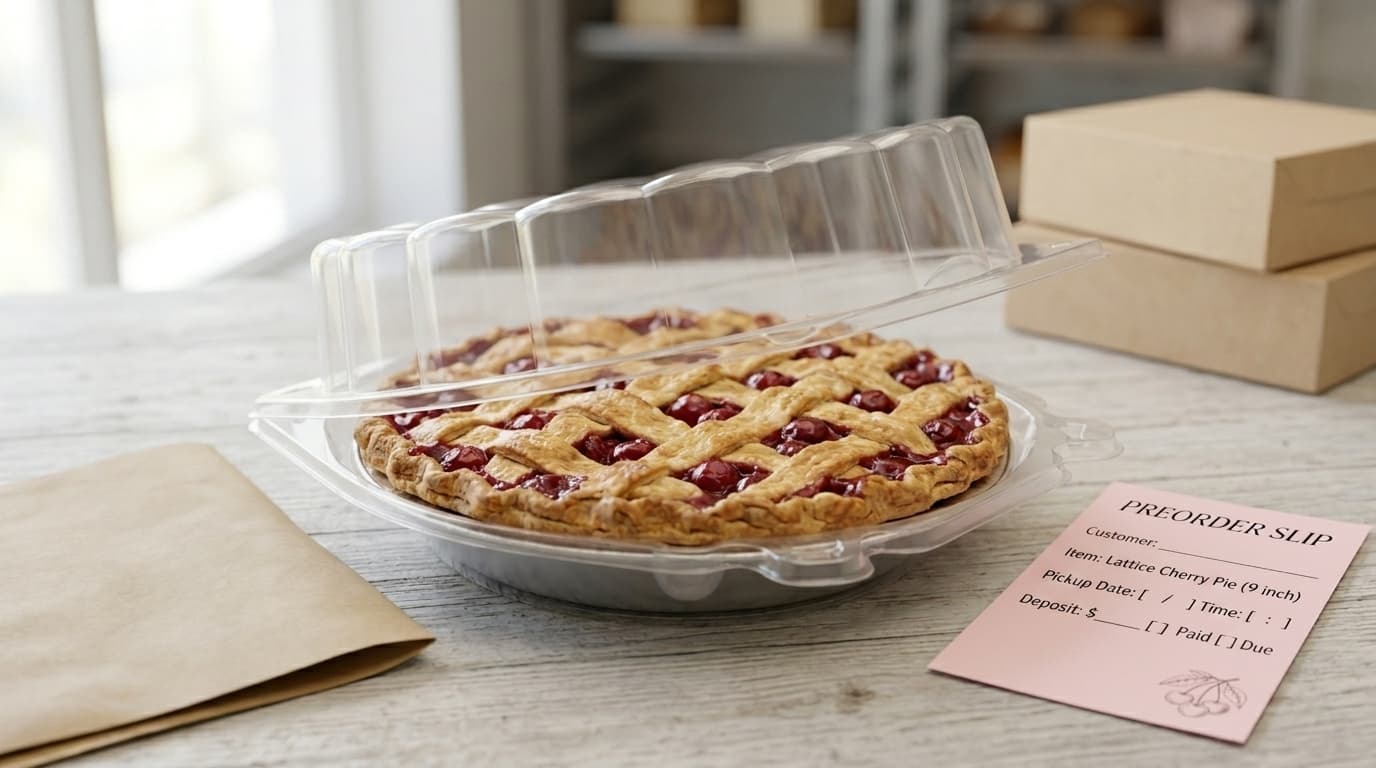
Direct Answer: Pie depth depends on the finished product height. Flat fruit pies need less lid space than cream, deep-dish, or tall meringue pies.
Flat fruit pies, custard pies, cream pies, deep-dish pies, and meringue pies do not need the same lid space. Use the finished product height as the deciding measurement: lower pies can use shallower containers, while cream, deep-dish, and meringue pies usually need more clearance. Confirm depth per pie type before placing a case order for a full preorder run.
| Pie Type | What to Check | Container Decision |
|---|---|---|
| Fruit pie | Crust edge, filling height, and topping | Confirm interior fit and lid clearance |
| Custard or pumpkin pie | Finished height and surface protection | Choose depth by finished pie height |
| Cream or deep-dish pie | Topping height and lid contact risk | Use more lid clearance when needed |
| Tall meringue pie | Tallest point of the finished topping | Choose a container that closes without touching the topping |
What Size Cake Box Do You Need for a 9-Inch Round Cake?
Direct Answer: Choose a cake container by base fit and dome clearance. The sides should clear frosting, and the lid should clear the tallest decoration.
Cake container sizing involves two independent decisions: the base footprint and the lid height. The base needs enough interior width to accommodate the cake diameter without the container walls contacting the frosting. The lid needs enough vertical clearance to clear the tallest decoration on the surface without touching it. These two measurements do not move together, which is why operators who size by cake diameter alone still end up with a lid that crushes the top.
For detailed container dimensions by cake diameter and format, What Size Cake Container Do I Need? on the Plastic Container City blog covers the full sizing range. Confirm interior dimensions against your actual baked product before ordering in volume.
When Do You Need a Deep Dome Cake Container?
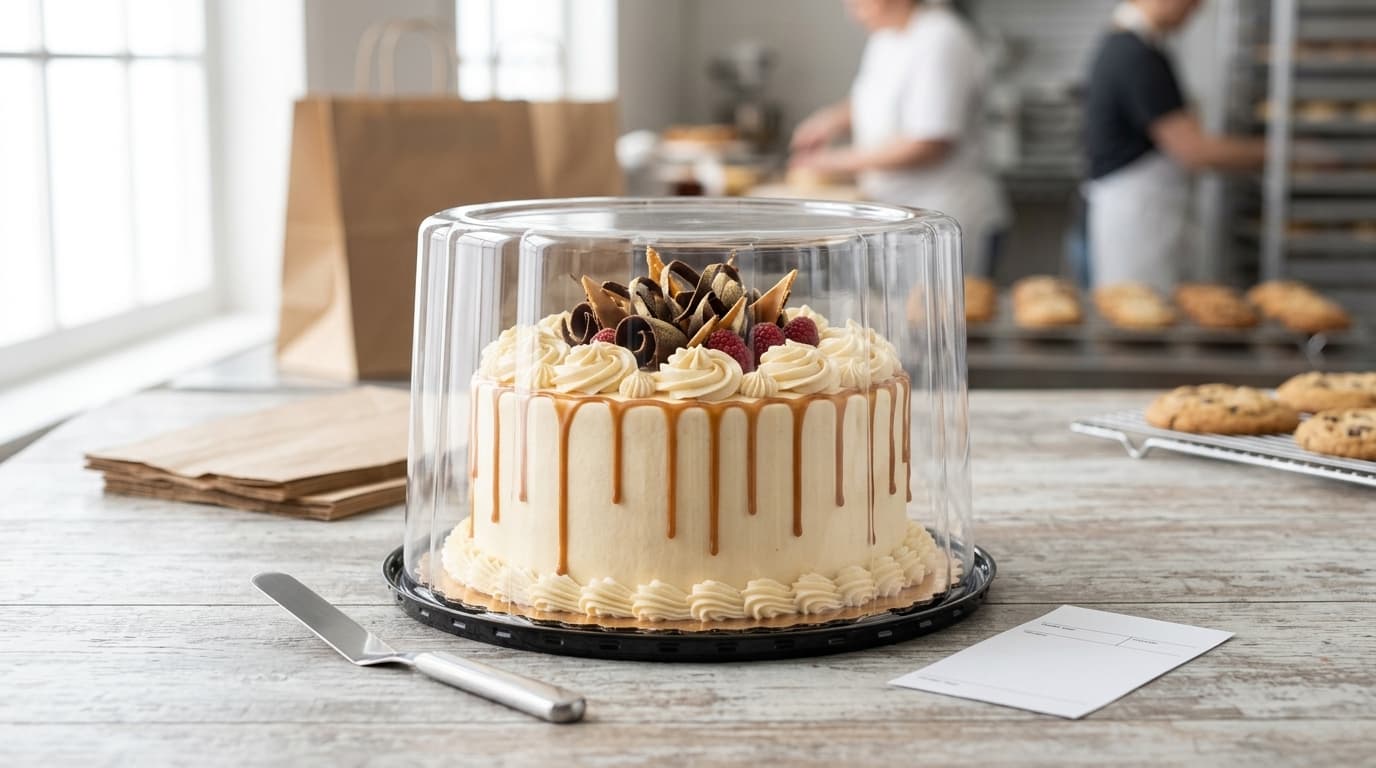
Direct Answer: Use a deep dome when frosting, layers, or decorations would touch a standard lid. Measure the finished cake before choosing.
Dome height is the decision that gets skipped in the planning stage and then shows up as a problem on the packaging table. A decorated three-layer cake and a frosted single-layer sheet are both cakes. They are not the same container. Buttercream rosettes, tall fondant accents, or any decoration extending above the cake surface needs a lid with clearance to match. A standard dome that fits a lightly frosted layer will crush whatever it cannot clear.
The rule is simple: measure the tallest point of the finished, decorated cake before choosing a lid. If that height exceeds a standard dome, the container choice is already made. For dome height planning, use the same clearance logic across container formats: measure the tallest finished decoration before choosing the lid.
How Do You Transport a Decorated Cake Safely in a Preorder Box?
Direct Answer: Use a rigid container with base fit, dome clearance, and a flat non-slip vehicle surface. The box should stop movement, not squeeze the cake.
A decorated cake needs two layers of protection: clearance above the frosting and stability under the base. The container should close without touching the decoration, then sit flat during staging, handoff, and transport. If the cake slides inside the container, the fit is too loose. If the lid touches the decoration, the dome is too shallow.
Is It Better to Wrap a Cake in Foil or Cling Film for Preorders?
Direct Answer: Wrapping protects exposed cake surfaces during storage. A rigid container protects the cake structure, lid clearance, and pickup handoff.
The foil vs. cling film question comes up when operators package cakes a day or two before pickup and want to protect the product between storage and handoff. If your bakery already has a tested wrapping method for that recipe, keep it tied to the product's storage needs. Then choose the rigid container separately, based on base fit, dome clearance, and pickup protection.
Neither is a substitute for a lid that closes properly. A rigid cake container with the right dome clearance handles the structural side: it protects the decoration from contact during storage and keeps the cake steadier during handoff. Treat wrapping and containers as two separate tools, not alternatives to each other.
How Far in Advance Can You Package Cake and Pie Preorders?
Direct Answer: Pumpkin, pecan, custard, and chiffon pies keep 3 to 4 days refrigerated. For cakes, test your own product before setting a window.
For refrigerated pie storage, FoodSafety.gov's Cold Food Storage Chart lists pumpkin and pecan pies at 3 to 4 days after baking, and custard and chiffon pies at the same window. Packaging within that range keeps the product within a confirmed food-safety timeframe, but presentation quality can shift across those days depending on the topping and filling. Package to the storage window, and test with your own product before committing that schedule to a preorder calendar.
For cakes, the advance-packaging decision sits with the baker and the product, not the container. A well-fitted rigid container protects the structure from handling damage during storage. What no container can do is extend the fresh window beyond what the product and frosting hold at refrigerator temperature. Many bakeries treat 1 to 2 days as a test window for decorated preorder cakes, but the final call belongs to the cake, frosting, fill, and storage setup.
Run your own product test before setting any packaging window as a fixed rule across a full season. The container choice supports the timing. It does not replace the baking judgment.
How Many Containers Do You Need for 30, 50, or 100 Preorders?
Direct Answer: Add a 10 to 15 percent buffer by container format, then round up to the nearest available case size before preorder pickup day.
Treat the 10 to 15 percent buffer as a Plastic Container City planning cushion, not an industry standard. Use it to cover damage, filling errors, and last-minute additions to the preorder list. For broader inventory-planning context, ISM explains safety stock as a buffer used to handle demand and lead-time variation. A 50-preorder run with one pie and one cake per order means 50 pie containers and 50 cake containers, each counted and ordered separately. Combine them into one total and a format shortage on pickup day has nowhere to recover. The table below shows target order quantities at both buffer levels for three common preorder volumes.
| Preorder Volume (per format) | With 10% Buffer | With 15% Buffer | Order Target (round up to nearest case) |
|---|---|---|---|
| 30 preorders | 33 | 35 | 35 |
| 50 preorders | 55 | 58 | 58 |
| 100 preorders | 110 | 115 | 115 |
Match your target unit count to the nearest available case size on the product page and always round up. The cost of carrying a few extra containers is well below the cost of running short on a date with no reorder window. For the full calculation framework with volume spike multipliers, rush-week coverage windows, and worked examples across all bakery formats, see How to Calculate Bakery Packaging Case Quantities.
If the same preorder week includes cookie trays or boxed cookie orders, connect this checklist with What Cookie Packaging for Bakery Orders Works Best? so each format has its own container count.
Your Cake and Pie Preorder Packaging Checklist
Direct Answer: Use the checklist before ordering, before packaging day, and on pickup day. It turns size, dome, timing, and counts into a repeatable flow.
Work through these before preorder pickups open. Each item prevents a known failure that tends to arrive on the day there is no time left to fix it.
Before ordering containers:
- Confirm pie container interior width by finished pie size, including crust edge and topping
- Confirm pie container depth by product type: lower pies, cream pies, deep-dish pies, and meringue pies need different lid clearance
- Confirm cake container base footprint fits the cake diameter with clearance on all sides
- Confirm dome height clears the tallest frosting or decoration with the lid fully closed. Measure the finished, decorated product, not the unfrosted layer
- Run the buffer calculation separately per container format and round up to the nearest case size
- Order before the rush window opens. Check live stock status, supplier processing time, carrier transit time, and holiday closure dates before committing to pickup windows.
Before packaging day:
- Test the container with one filled product before committing to the full preorder run. Lid closed, product confirmed, no contact.
- Confirm refrigerator space for staged orders before filling begins
- Set packaging timing per product: pies within the confirmed refrigerated window, cakes based on your tested recipe, frosting, fill, and storage setup
- Label each container by pickup date and order name before staging
On pickup day:
- Stage orders first-in, first-out by pickup time slot to keep the table organized at volume
- Keep a small set of spare containers from your planned buffer at the table for last-minute needs or damage replacements
- For delivery orders, place the container on a flat, non-slip surface in the vehicle and carry it level at all times
When Should the Container Decision Happen?
Direct Answer: Make the container decision before preorders open. Pickup day should be for handoff, not sizing tests or emergency substitutions.
Cake and pie preorder packaging is a container decision made long before preorders fill. Size the box to the pie interior, not the pie diameter. Match the dome to the tallest decoration, not the cake height. Set the packaging timeline to what the product holds, not the day before as a default. Order by format with a buffer, and have the right case size confirmed before the first preorder slot opens.
The container is the last thing your customer handles before they open the box. A crushed dome or a split lid is the final impression, and it leaves with the product. Make sure the container still looks like it did when it left your kitchen. For the full seasonal planning system, covering ordering windows, format selection, and container checklists across all product types, see How to Plan Your Bakery Packaging Before a Busy Season. For more on cake and pie preorder packaging, seasonal container planning, and every format in your preorder lineup, visit the Plastic Container City blog.
Frequently Asked Questions
What size box do I need for a 9-inch cheesecake?
Start with the same base-width logic as a 9-inch pie: the container needs enough interior clearance to close cleanly without pressing into the sides. Cheesecake height varies by recipe and topping, so confirm the box depth against the actual finished product before ordering in volume. A plain cheesecake sits lower than one with a tall topping, and the box needs to reflect the real height, not the pan size.
How big is a 9-inch pie?
A 9-inch pie is measured by the inside diameter of the pie dish. The finished pie can need extra container clearance once the crust edge and topping are included. That is why a container chosen only by pan size may not close cleanly over the finished pie. The container needs to fit the finished pie, not the pan measurement.
How long will a decorated cake stay fresh in the fridge?
Storage time varies by cake type, frosting, and fill. Buttercream, fondant, and cream-filled cakes each behave differently at refrigerator temperature and across different storage durations. Run your own product test under your planned packaging conditions before committing any storage window to a preorder schedule. The container protects the structure during that window. It does not extend what the product itself will hold.
Can I make a cake 3 days in advance?
Some cakes can be made 3 days ahead, but that should be tested by cake type, frosting, fill, and storage setup. A rigid container can protect the structure during refrigeration, but it does not extend the product's fresh window. Test your own cake and frosting combination before setting 3 days as a fixed rule for a full preorder run.
How do you package a cake for a bake sale?
The same principles apply as for preorder packaging: use a rigid cake container with a base that fits the cake diameter and a dome that clears the frosting without contact. Carry the container flat and on a stable, non-slip surface. A correctly sized container with a closing lid does most of the protective work before the product reaches the table. For a broader look at getting baked goods from kitchen to table safely, see Deliciously Delivered: How to Safely Transport Your Baked Goods.