
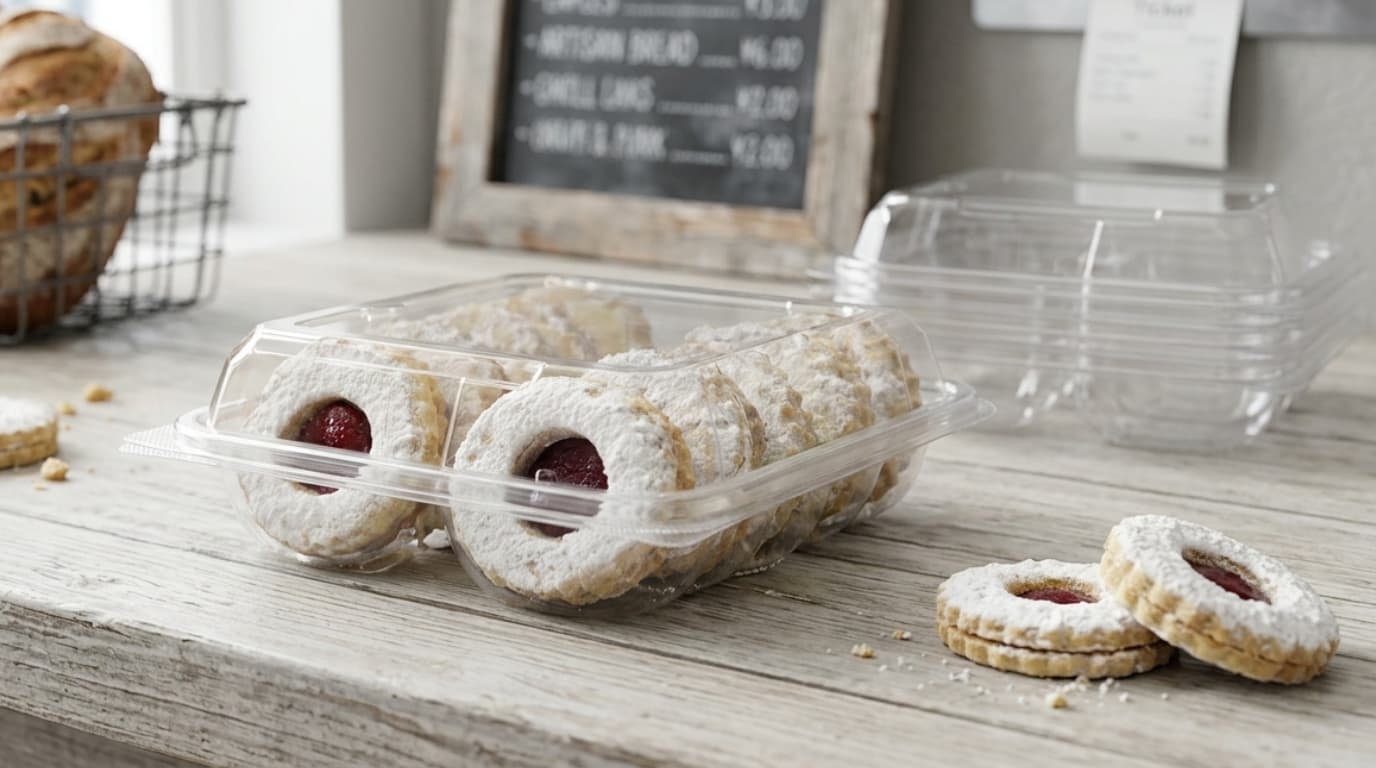
TL;DR: Knowing how to keep cookies fresh is a container and channel problem, not just a timing problem. Moisture, air, and a weak closure are common culprits behind stale bakery cookies. For operators selling across shelf display, pickup orders, and gift packaging, a clear hinged clamshell in the right count format can cover all three channels when the fit and count match the order. This guide breaks down the freshness rules, the right container by channel, and the count logic that cuts the repacking problem.
Knowing how to keep cookies fresh sounds like it should be the easy part. You bake them, you package them, and they are good. Except by early afternoon, something is off. The texture is not what it was. The packaging looks like it has been through something. A customer picks up the container, weighs it in their hand, and puts it back down.
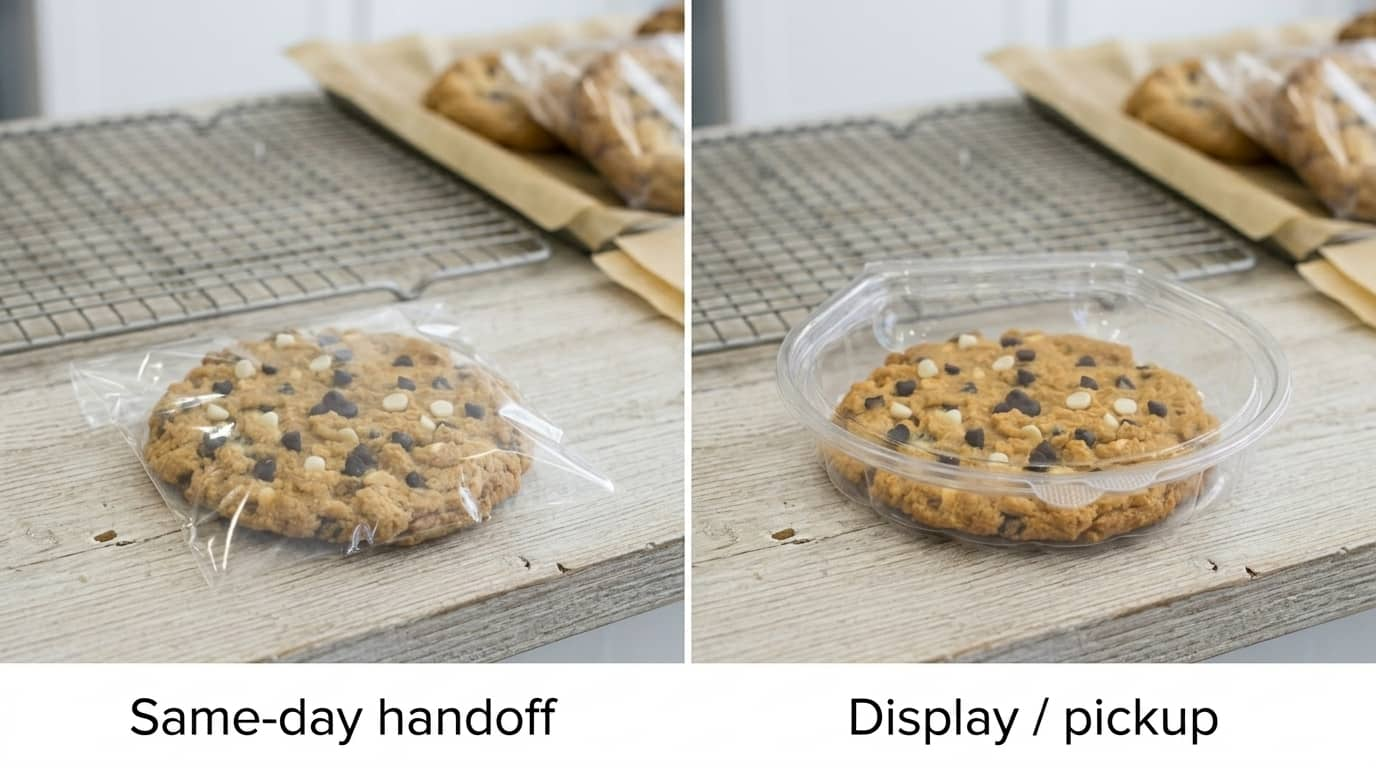
Most cookie freshness failures trace back to the same three culprits: moisture exposure, air getting in, and a container that was not designed for the selling channel it is actually being used for. Cellophane may work for a quick handoff, but gift and pickup orders need a tighter fit and a more repeatable closure.
At Plastic Container City, we work with bakery operators across the U.S., and the cookie freshness question comes up constantly. Not because bakers do not know how to bake. They do. It is a packaging and channel problem, and this guide tackles both.
What Actually Makes Cookies Go Stale?
Direct Answer: Cookies stay fresher when air, moisture, light, and handling are limited. A secure container slows the quality drop after baking.
The science is worth knowing briefly. As baked goods cool and sit, starches that absorbed water during baking begin releasing that moisture back out. The texture shifts from soft and chewy to dry and firm. The packaging you choose either helps protect that texture or leaves the cookie exposed to faster quality loss.
University of Minnesota Extension guidance on cottage food shelf life notes that even sealed packaging can allow moisture to penetrate over time, which increases spoilage risk and stale texture. The role of packaging is to act as a barrier against the main freshness enemies: air, moisture, light, and contamination.
UC Agriculture and Natural Resources explains that water activity affects food quality and chemical reactions over time, which is why limiting moisture exposure in packaging is a meaningful lever, not just a preference.
This is why container choice is not just a presentation decision. It is a freshness decision. The container you choose affects how well the product holds its quality after it leaves the oven.
How Do You Keep Cookies Fresh for Bakery Display?
Direct Answer: Use clear containers with a secure closure and cool cookies fully first. Warm cookies trap moisture and can fog the lid fast.
For counter or case display, your primary freshness enemy is air movement. Every time a container nearby is opened, every time ambient temperature shifts, and every time the closure on an individual container is not seating cleanly, you are reducing the quality window for everything on that shelf.
A few practical rules that hold up in a real bakery environment:
- Cool completely before sealing. Sealing warm product traps condensation, which accelerates texture changes and produces a fogged lid that signals stale product to the customer before they have even opened it.
- Choose a container with a defined closure. A hinged clamshell or snap-lid container gives staff a repeatable closure to check during packing. A loose-fitting or undersized lid does not create that consistent check point.
- Keep display quantities realistic. Packaging more than you can rotate within your display window creates a freshness lag at the back of the batch that catches up with the front eventually.
For the full container-to-product format guide, including which container format matches each bakery item type, the piece on grab-and-go bakery packaging goes into the detail on container selection, cooling before sealing, and display positioning.
Will Cookies Stay Fresh in Cellophane?
Direct Answer: Cellophane can work for same-day counter sales. For longer holding, choose packaging with a tighter, more repeatable closure.
This is one of the most common questions from operators who want to keep packaging simple. Cellophane bags are lightweight, low-cost, and easy to work with. For a cookie handed directly to a customer at the counter, they do the job.
The limitation is in the seal. Cellophane freshness performance depends on how tightly the bag is folded, tied, or sealed each time. There is no structural barrier beyond the material itself, and the closure depends entirely on the method used to close it. For a cookie sitting in a display case for several hours, or packed for a next-day pickup order, a rigid hinged or snap-lid container can give staff a more consistent closure to check before display, pickup, or handoff.
That is not a knock on cellophane as a material. It is a channel mismatch. If your selling channel requires more than a same-day window, the container needs to match the window. For the full format comparison including cellophane, PET clamshells, flexible pouches, and window boxes, the guide on packaging cupcakes, cakes, and cookies for sale covers all four formats side by side.
Does Your Selling Channel Change What Container You Need?
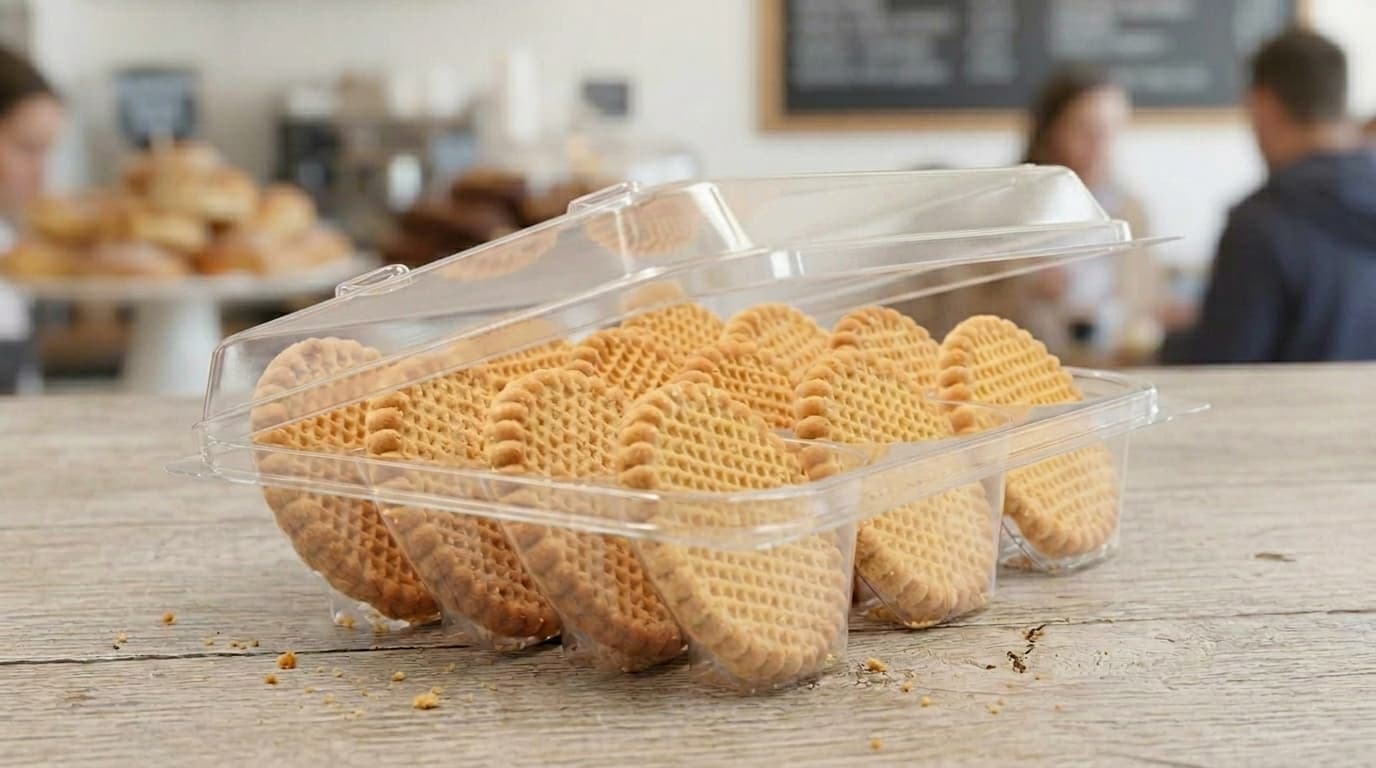
Direct Answer: Yes. Shelf display, pickup, and gift orders need different counts, but they can often use the same clear container format.
This is the operational insight that most cookie-packaging conversations miss. Operators often end up managing three separate container types because they assume each channel needs something entirely different. In most cases, the difference is count format, not container type. Get the count right, and one container handles the job across all three channels.
Shelf Display
For counter or case display, visibility drives the sale. A clear container that shows the full cookie, including color, texture, and toppings, helps customers judge the product before any label does. A secure closure protects freshness through the display rotation. Flat, single-layer containers work best here. Stacking cookies or filling a container past its intended count creates crumb buildup along the edges and weakens the visual presentation within hours.
Pickup and Preorders
Pickup orders need a container that travels cleanly. The closure should hold during bagging and transport without the lid popping or shifting. A rigid hinged clamshell handles this better than a flexible bag or a closure that relies on consistent hand pressure to stay seated.
Count format matters here too. If a customer orders six cookies, packaging them in a 12-count container leaves empty space that allows cookies to shift in transit. The right count format protects both the presentation and the freshness, and removes the awkward repacking step that adds labor without adding value.
Gift and Seasonal Orders
For gift packaging, presentation and perceived freshness both matter. A clear rigid container in a curated count format (a 6-pack or 12-pack) reads as intentional rather than improvised. The clarity lets the product do the visual work. A customer picking up a gift order wants to feel like they are handing over something that looks as good as it tastes.
The FDA Food Code 2022 states that food on display should be protected from contamination through packaging, food guards, display cases, or another effective method. For bakery display, a closed clear container is one practical way to support that display-protection standard. Local rules still apply.
For the full picture on packaging cookies alongside other bakery desserts, the guide on how to package bakery desserts to sell covers the wider container strategy across product types.
Which Cookie Container Works Best by Selling Channel?
Direct Answer: Use single or small-count packs for display, 6-counts for flexible orders, and 12-counts for bulk, gift, or catering runs.
| Channel | Freshness Priority | Best Container Format | Count Format |
|---|---|---|---|
| Shelf Display | Secure closure, presentation clarity, crumb containment | Clear hinged clamshell, flat single layer | 1-count, 4-count, 6-count |
| Pickup and Preorders | Transport stability, closure integrity, no shifting | Rigid hinged clamshell | 6-count, 12-count |
| Gift and Seasonal Orders | Presentation, perceived freshness, curated count | Clear hinged clamshell | 6-count, 12-count |
How Do You Arrange Cookies in a Container for Display?
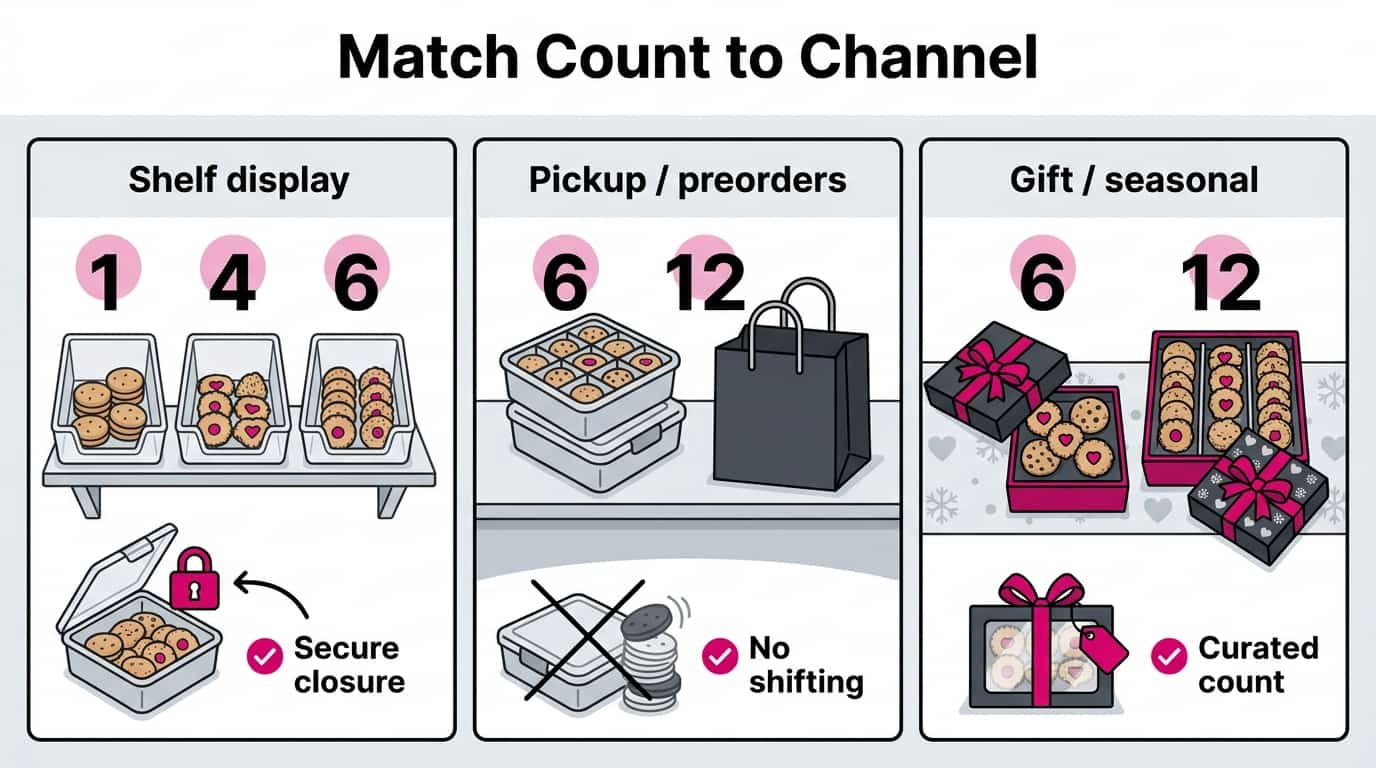
Direct Answer: Arrange cookies flat in a single layer, toppings up. Match the container count to the order so cookies do not slide or crumble.
How cookies sit inside a container affects both freshness and the impression the container makes on the shelf. A few layout principles that apply regardless of container type:
Flat and face-up. Cookies displayed with their toppings visible are easier for customers to judge quickly. The container should be oriented so the best-looking face of the cookie is the first thing a customer sees through the clear lid or window.
One layer only. Stacking cookies causes edge crumbling and pushes crumbs against the clear container wall. By the end of a display shift, a stacked container looks like it has been there for days regardless of how fresh the product actually is. That visual weakens the sale before the customer commits.
Count-matched containers. A 6-count container should hold six cookies with minimal movement when the cookie diameter matches the cavity or footprint. Too much space and the presentation degrades fast. Too tight and you risk breaking edges on the way in.
For a broader look at how container choice affects buyer perception alongside freshness, the article on bakery packaging freshness and perceived quality covers why customers use packaging as a proxy for what is inside.
What Count Format Works Best for Cookie Orders?
Direct Answer: Match count to channel. Singles fit impulse display; 6-counts cover most orders; 12-counts suit bulk, catering, and gift runs.
The count format question is where many bakery operators realize they are managing more SKUs than they need to. If your display uses 6-count, your gift orders use 6-count, and your pickup orders use 6-count, you are ordering one container type in bulk. That is a stock management win, and it keeps your presentation consistent across channels without the overhead of matching each order to a different container size.
Where 12-count makes sense: bulk gift orders, corporate catering, and seasonal high-volume periods where a higher-count format justifies the larger container. For everyday counter display, 12-count is often too large and creates the empty-container effect during slower rotation periods.
Where single-count makes sense: impulse display at point of sale, alongside a coffee station, or in a grab-and-go case where the decision is quick. A single oversized cookie in a clear container can work as a simple impulse offer at the register.
Should All Three Channels Use the Same Cookie Container?
Direct Answer: Usually, yes. Start with one clear hinged clamshell format, then adjust count only when the channel or order size requires it.
Most of the time, yes. The freshness failures operators see most often, stale texture, crumbled edges, fogged lids, and inconsistent presentation, trace back to a container choice that does not match the selling channel it is being used for. Not to the cookie itself.
A practical target is one or two container formats that cover the most common display, pickup, and gift orders. The result is fewer SKUs, faster packing, and a presentation consistent enough that customers recognize it as yours.
For bakery operators, knowing how to keep cookies fresh starts with matching the container, count, and closure to the way the order will be sold.
For more on packaging cookies as part of a complete bakery dessert strategy, visit the Plastic Container City blog for practical guides built for food professionals across the U.S.
Frequently Asked Questions
How do you keep cookies fresh for gift giving?
From an operator standpoint, keeping cookies fresh for gift orders means sealing them in a rigid container with a secure closure immediately after they have cooled completely, matching the count format to the order size so there is minimal movement inside the container, and not packaging ahead further than your standard batch window. A clear hinged clamshell in a 6-count or 12-count format presents well, supports presentation and protection through handoff, and does not require any repacking at the handoff point.
How long will cookies stay fresh in a sealed container?
University of Minnesota Extension guidance on cottage food shelf life places baked goods in a broad shelf-life range of 2 to 3 weeks when stored properly in containers that limit air, moisture, and contamination exposure. That is a general category benchmark, not a per-product or per-container promise. Actual freshness depends on the cookie type, ambient humidity, how consistently the container is closed, and whether the product was fully cooled before packing.
What are good cookie containers for bakery orders?
Clear hinged clamshells in appropriate count formats (1-count, 6-count, 12-count) cover the widest range of bakery selling channels. The clarity supports presentation; the rigid shell protects in transit; the hinged closure gives staff a repeatable closure to check without a separate lid component. For container selection matched to order type and product dimensions, the packaging guide for cupcakes, cakes, and cookies has the full breakdown.
How do you display cookies in a bakery case?
Use clear, single-layer containers with toppings facing up. Position packed cookies where customers can see the product clearly in the display case. Keep count formats matched to available batch quantity to avoid the empty-container effect, which reads as low-quality product regardless of what is actually inside. Rotate product consistently to keep display freshness aligned with the actual packaging date.
How do you package cookies so they don't break in transit?
Use a rigid container sized to the order. A 6-count clamshell holding exactly six cookies leaves minimal free movement. If there is extra space inside the container, the cookies can shift and edge-chip during transport regardless of how well the closure is seated. For bakery operators, matching count, fit, and closure is one of the simplest ways to keep cookies fresh from pack to handoff.