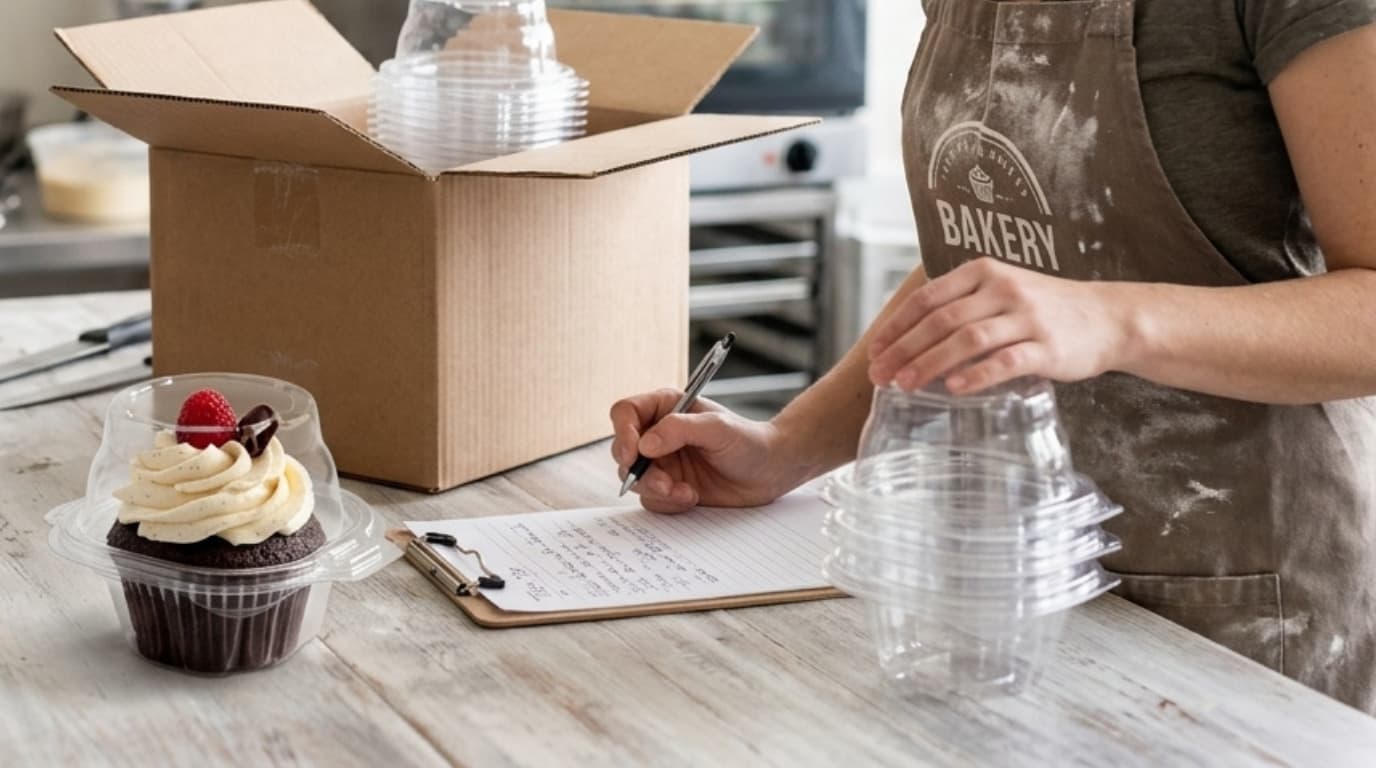
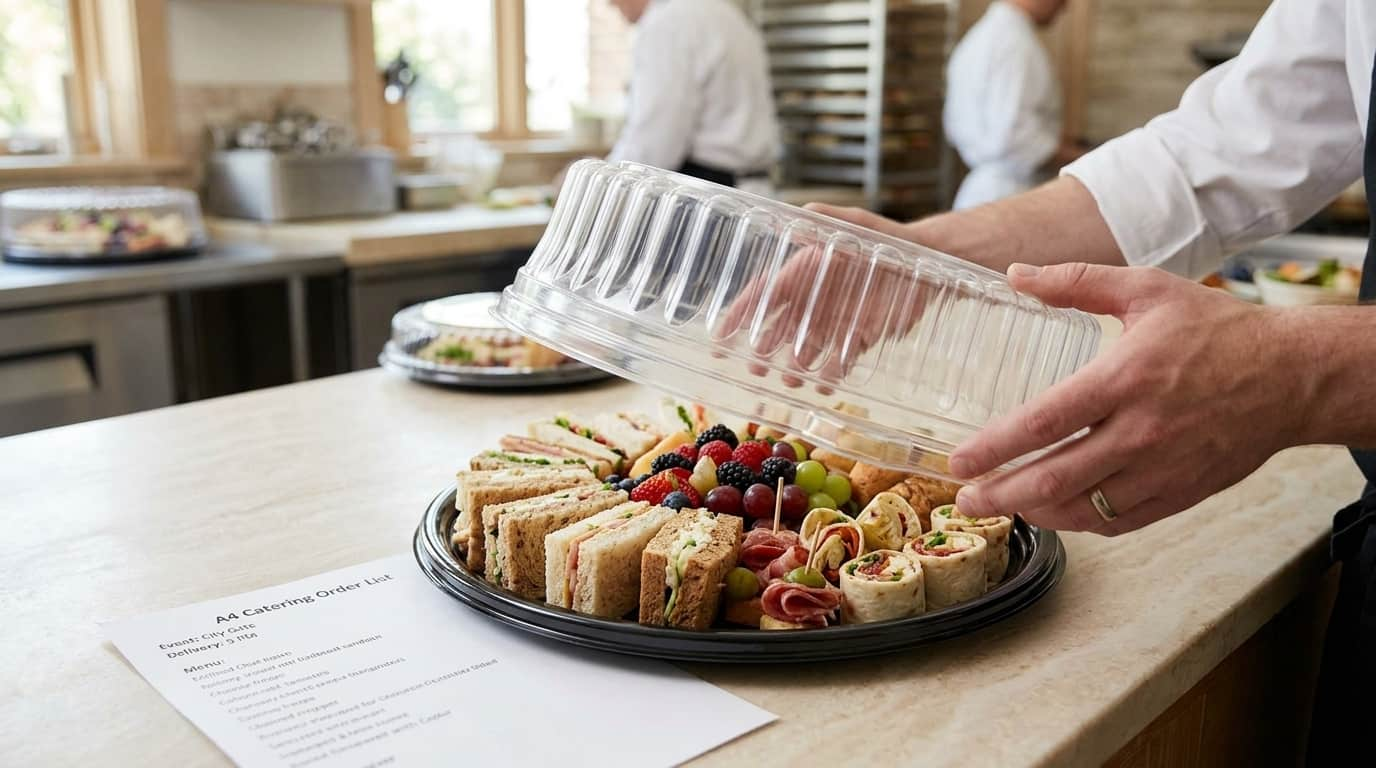
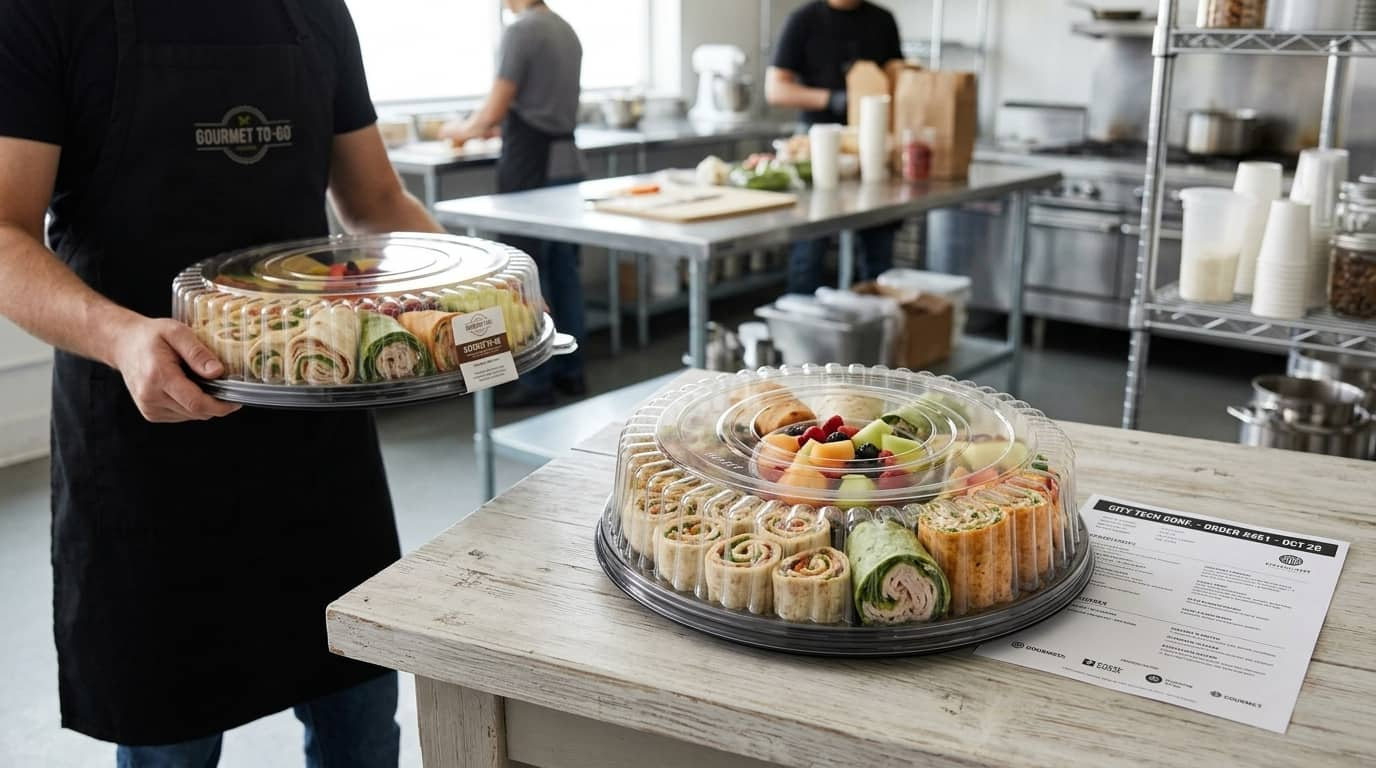
A good wholesale packaging minimum order quantity is one that matches what you would buy anyway, rather than treating a supplier's minimum as a recommended quantity. The high minimums you see online often come from custom packaging runs. Stocked disposables run on a separate rulebook, and the minimum shifts by SKU. Check the pack size before you assume you need a full case, then size your first order from real usage.
The common catering mistakes to avoid are rarely menu mistakes. They happen after the food is cooked, in the six stages between your kitchen and the guest: the order, the prep clock, the pack, the drive, the handoff and the service. This guide names the mistake living in each stage and points you to the fix. Start by auditing your last three jobs.
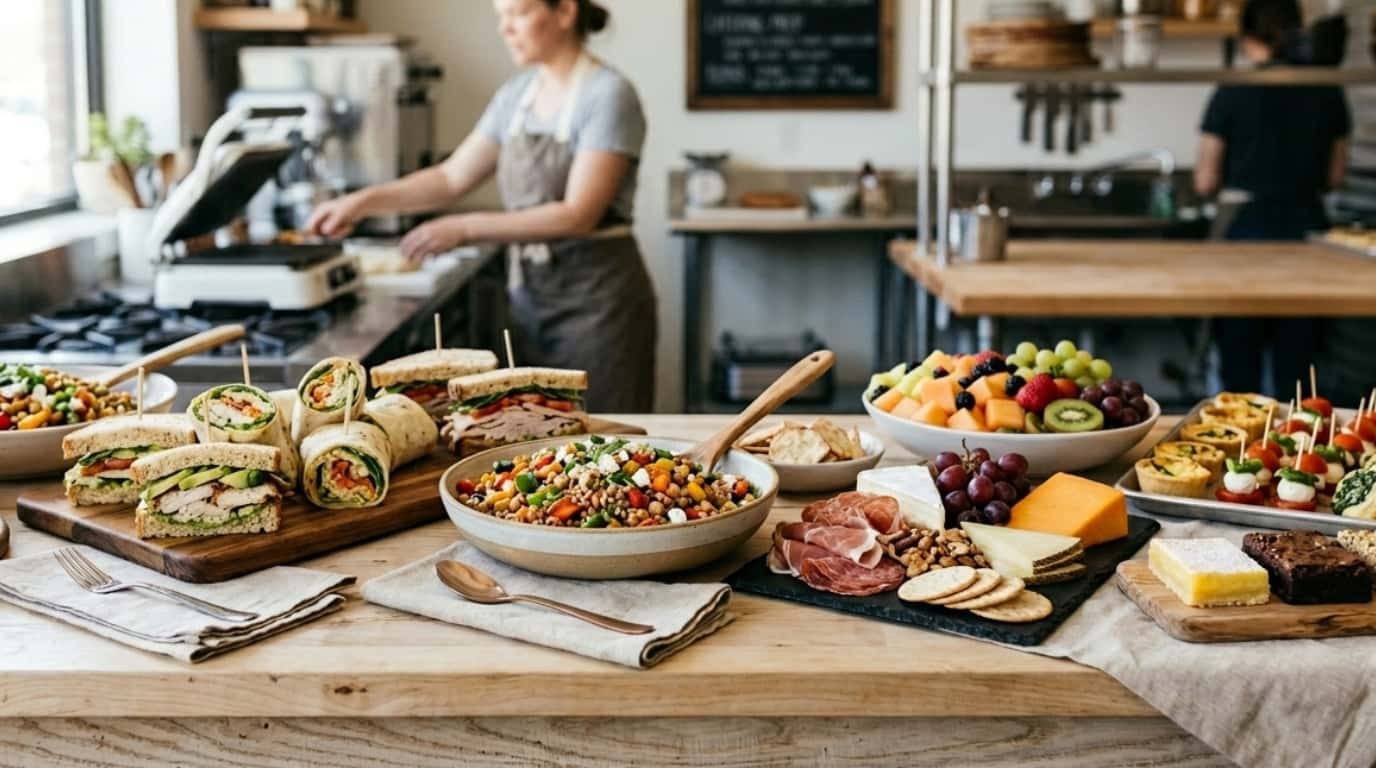
A good catering menu is not your best retail dishes in bigger portions. It is a short list of items that survive a journey, hold without a kitchen, portion the same way every time, and pack into something you can buy by the case. This guide gives you the four tests a dish has to pass, and a way to try one before it ever reaches a client.
The challenges caterers face all start in the same place: the moment food leaves your building you stop controlling temperature, timing, plating and service. This guide walks a job in order, from guest count to handoff, and gives each challenge a mechanism instead of a platitude. Start by rebuilding your prep schedule around departure time.
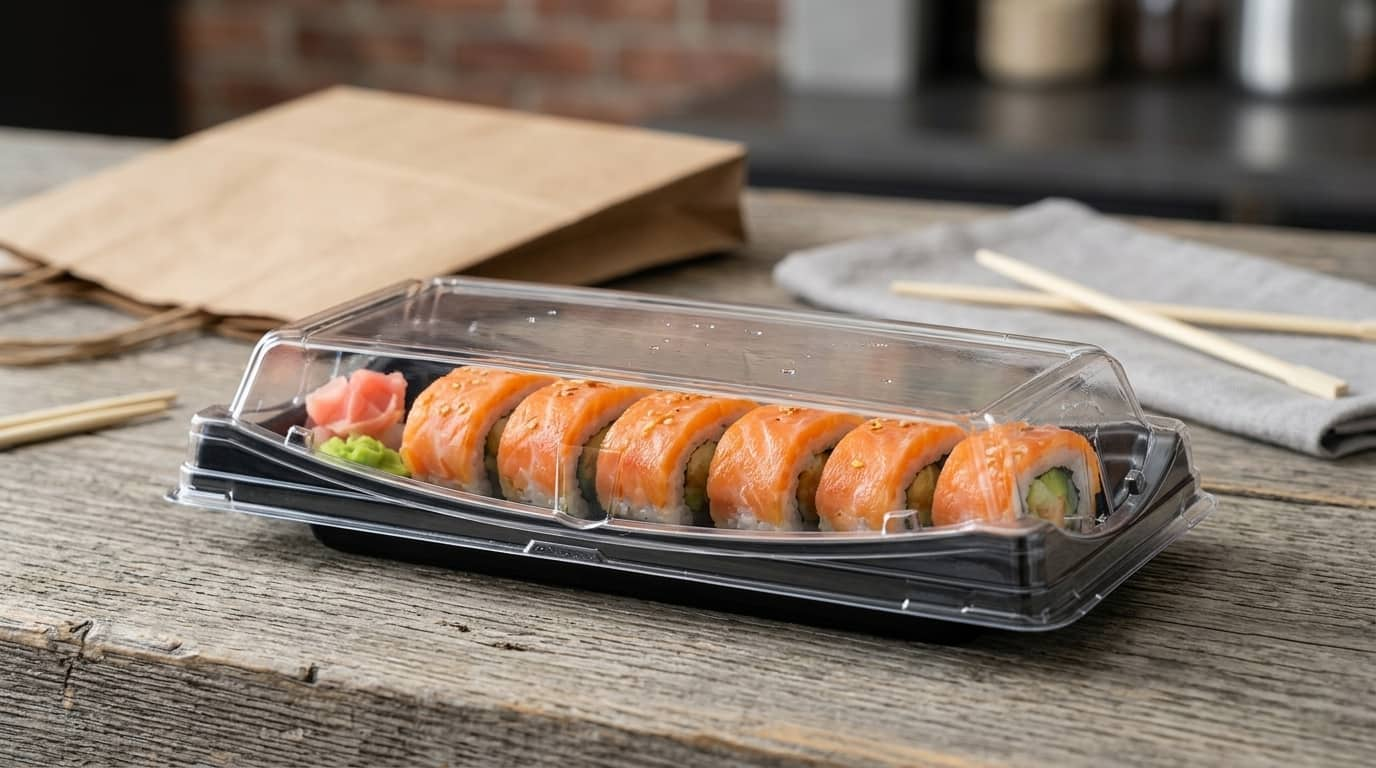
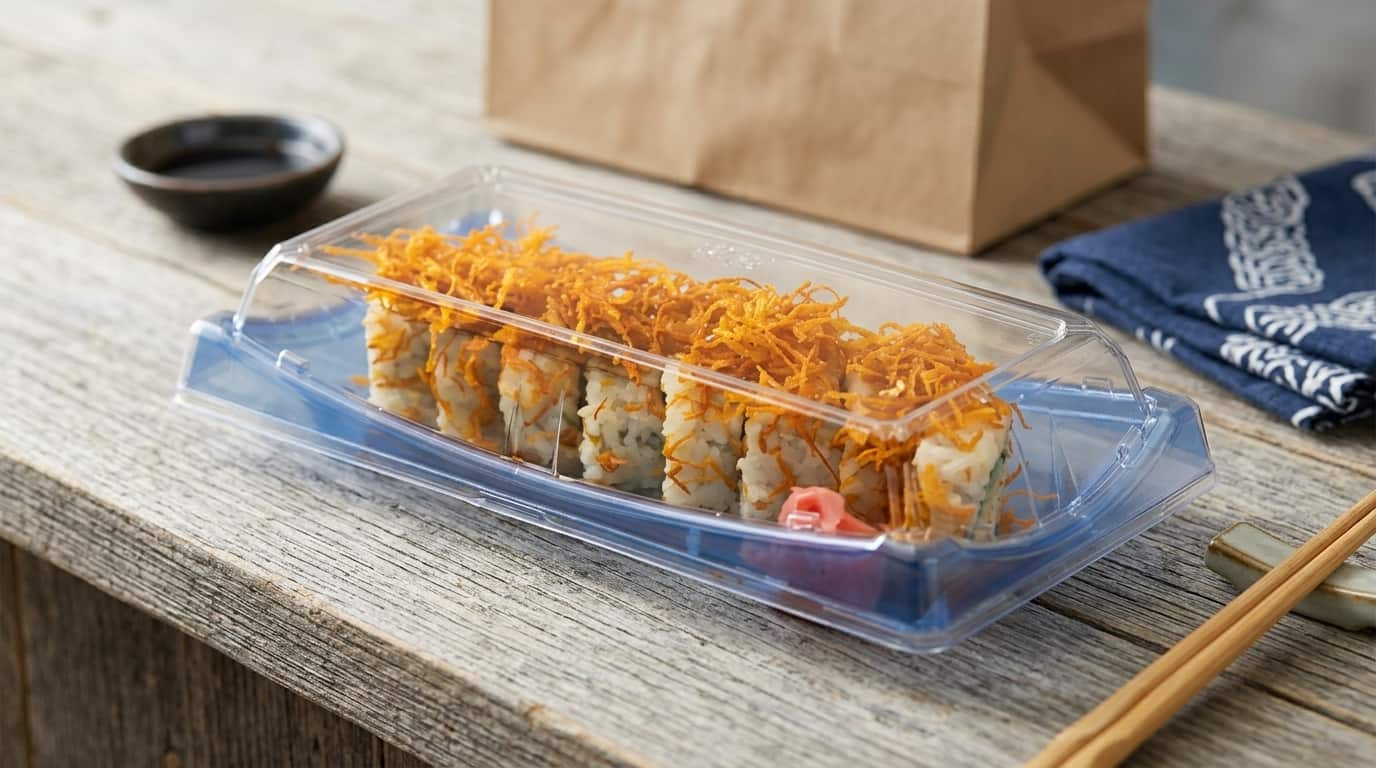
Sushi packaging for restaurants comes down to five decisions: material, size and shape, base style, sauce separation and case quantity. Work them in that order and the rest is paperwork. This guide covers each at overview level, flags the claims you should never assume, and points you to the deep dives. Test one finished order before you commit to a case.
Choosing the right sushi takeout container for delivery comes down to checking the exact SKU's closure and listed stackability, confirming any microwave claim, and testing one packed order on your normal route. This guide walks through exactly what to check before you order a case, plus the food-safety basics that belong in the conversation.
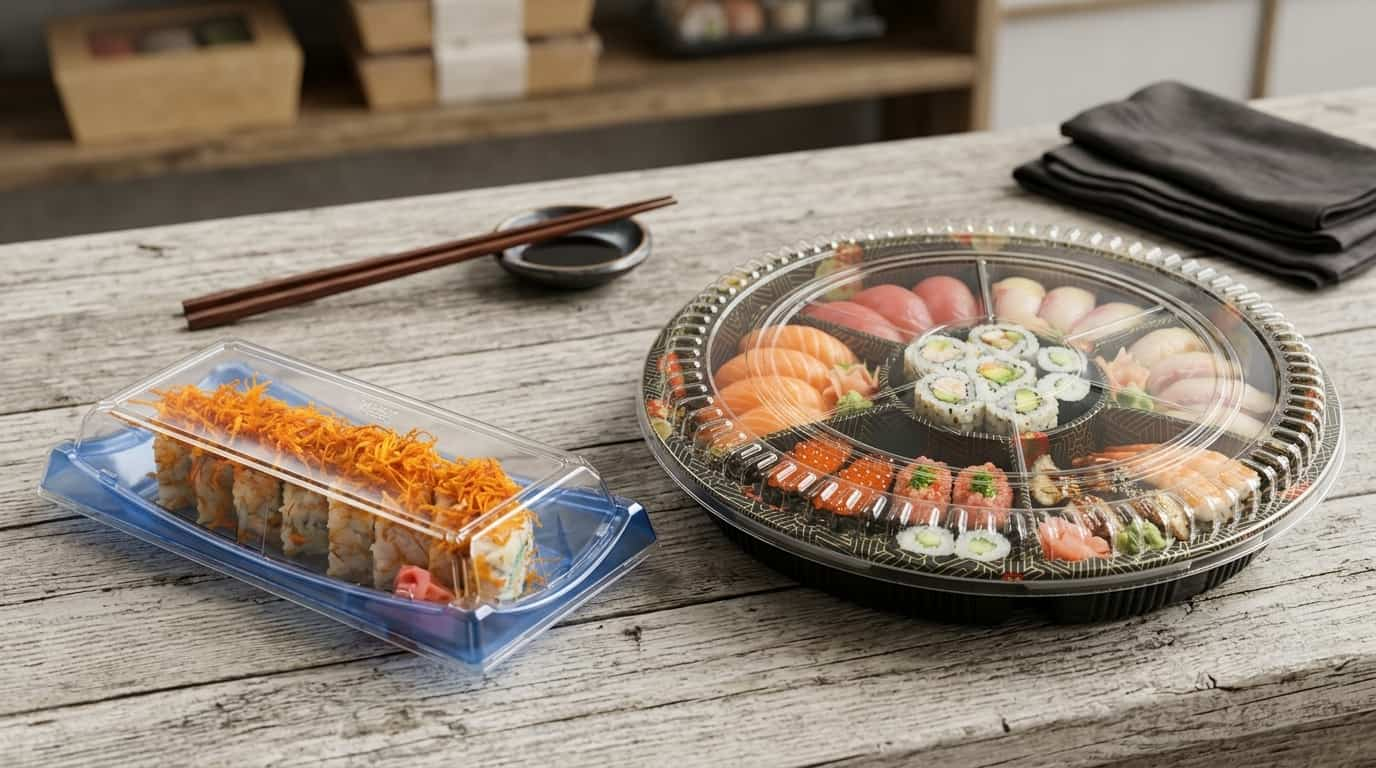
A sushi tray size guide only helps if it also tells you how many cases to order. This piece compares Plastic Container City's seven rectangular sizes and three round party trays, dimensions, case counts and current pricing, then shows how to turn a tested order into a case count. Confirm the fit first, then scale to cases.
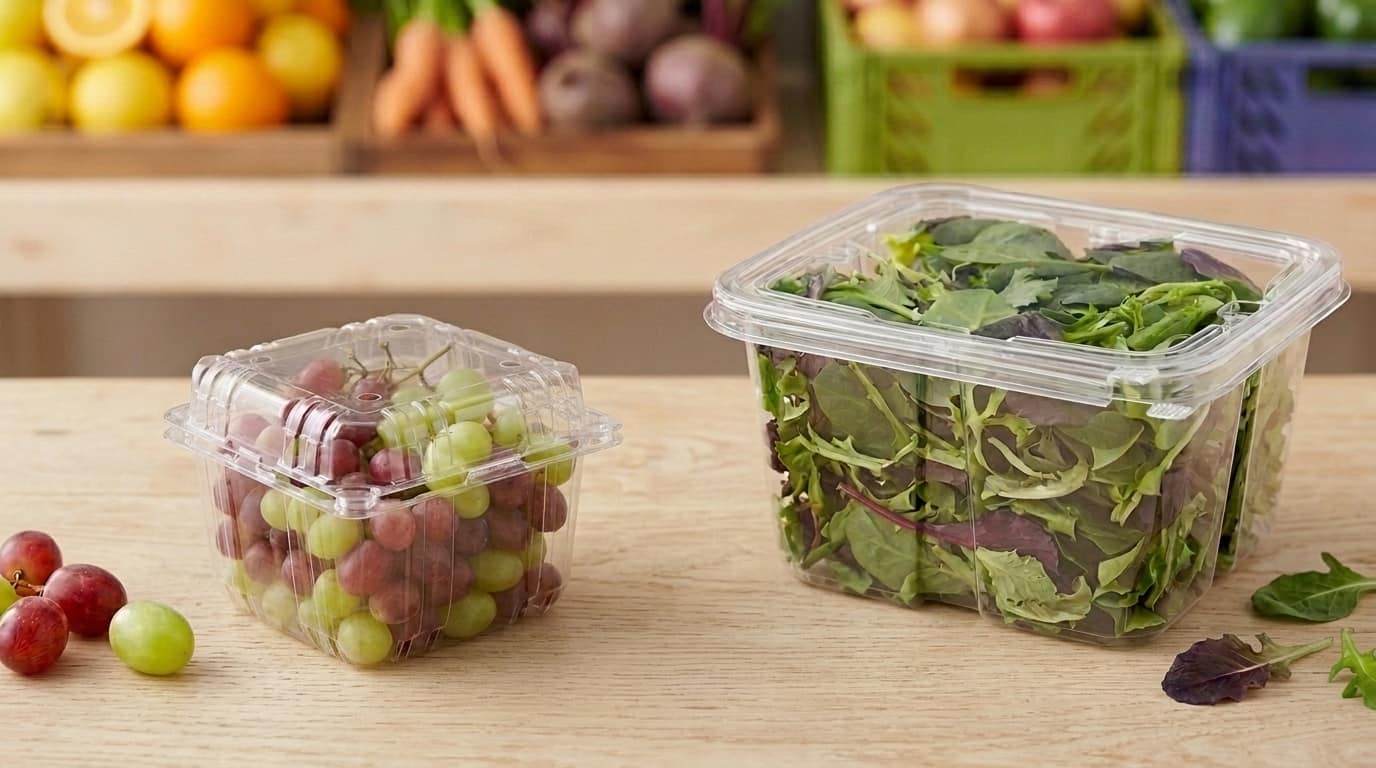
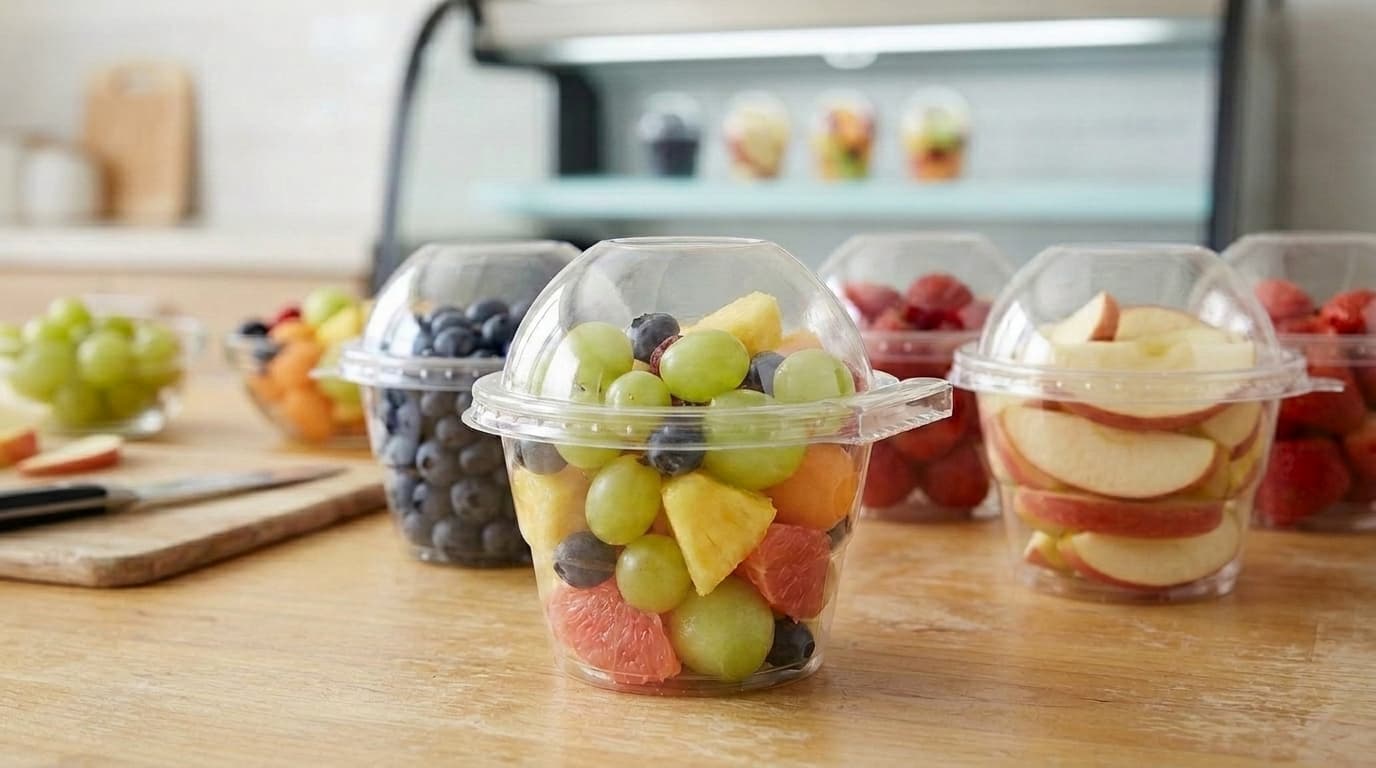
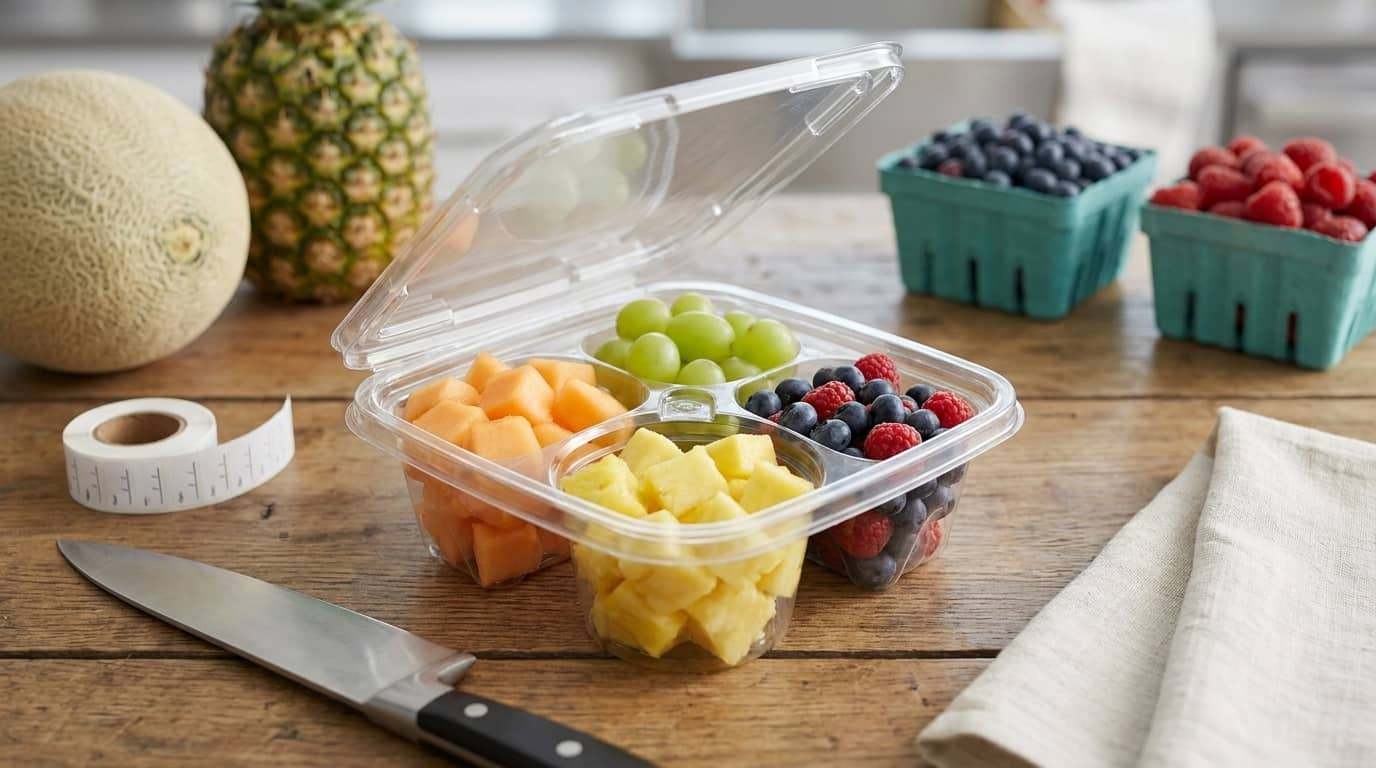
Vented and non-vented produce containers solve different problems. Vented clamshells manage airflow, gas exchange, and moisture escape for berries, grapes, greens, and whole apples. Sealed or tamper-evident containers control air contact and build customer trust for cut fruit and grab-and-go display. Match the container to the produce, and remember that airtight is never a shortcut for cold holding.
To keep cut fruit from turning brown for display, use a verified acid treatment, cold holding, sealed packaging that limits air contact, and shorter prep windows. Apples are the strongest sourced browning example. Treat high-risk fruit first, keep cut produce cold, and rotate displays before color fades.
You can usually cut fruit a day or two ahead of service and hold quality best within 3 to 4 days refrigerated. Get it cut, covered, and cold within 2 hours, hold cut melon and other TCS fruit at 41°F or below, date-mark ready-to-eat items held past 24 hours, and toss anything with mold, off smell, or slime. Prep hardy fruit early and delicate fruit close to service.