

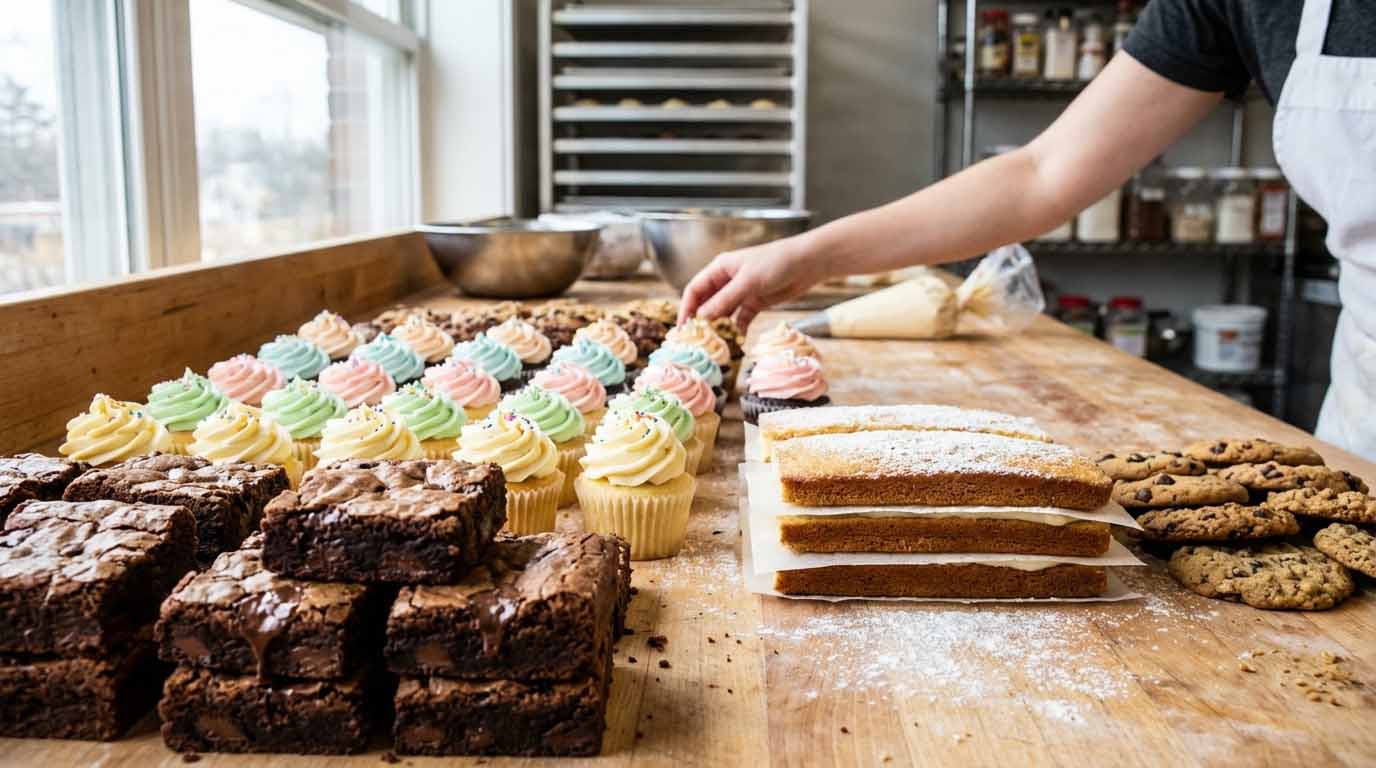
Thinking about adding catering to your bakery business but don't know where to start? How to start catering as a small bakery begins with choosing one simple service lane, setting protective minimums, and pricing your labor correctly from day one. Too many bakers jump into catering without capacity, only to burn out or lose money on every order.
Catering looks tempting. Corporate orders, wedding cakes, dessert platters for 200 guests. But here's what nobody mentions upfront: catering will either scale your bakery smartly or wreck your production schedule. The difference comes down to knowing when you're ready, what to offer first, and how to charge without leaving money on the table.
At Plastic Container City, we work with thousands of food professionals across the U.S. We've watched bakeries grow into six figure catering operations and seen well meaning owners take on jobs they weren't equipped to handle. This guide gives you the real playbook for small operations.
Is My Bakery Ready to Start Catering?
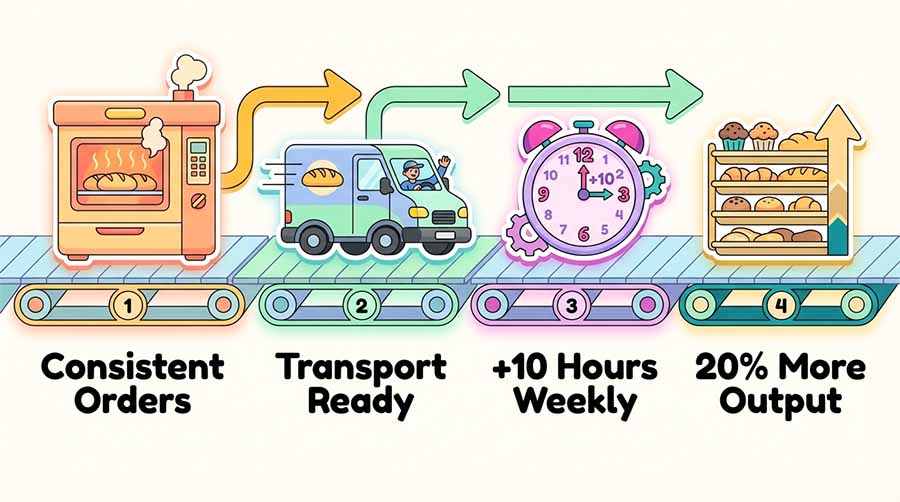
Your bakery is ready when you can fulfill current orders consistently, have reliable transport, and can add 10 production hours weekly. If you're running behind on retail orders, catering will break your workflow before it builds revenue.
Can you bake 100 cupcakes while maintaining regular daily production? If that makes you nervous, you're not ready. Catering demands batch consistency. Track your production time. Can you add 20% more output without staying until midnight?
Who's driving the delivery? Commercial auto insurance is required for business deliveries since personal policies won't cover paid transport accidents.
What Type of Catering Should a Small Bakery Start With?
Small bakeries should start with drop-off dessert catering for corporate events. This lane requires minimal setup and tests your systems safely.
Pick one lane to start. Don't try to offer custom cakes, breakfast bundles, and corporate platters simultaneously.
Corporate catering orders typically require a $150 minimum for delivery. Build a set menu of items that travel well: bundtinis, brownie boxes, mini cheesecakes, cookie assortments. Bake during regular hours, pack the night before, deliver early morning.
- Breakfast bundles: Pastries, biscuits, scones for corporate meetings. Package items you already produce daily.
Don't start with custom cakes unless you're confident with tiered designs. Wedding cake orders require 21 day lead time minimum for production planning and client consultations. Save this lane for year two.

What Products Travel Well for Bakery Catering?
Ideal catering products are sturdy, room temperature stable, and hold shape during transit. Avoid fragile items like macarons or fresh whipped cream.
If you've never made 150 cupcakes in one day, don't promise 150 for next week. Test recipes at scale first. Sheet cakes and bar cookies freeze well, then finish closer to delivery to spread your workload.
How Should I Price Bakery Catering Services?
Price catering with food cost at 25 to 35% and labor at 25 to 35%, then add overhead, delivery, packaging, and admin time. Most small bakeries fail because they only price ingredients and forget their time.
Target food cost for catering should be 25 to 35% of total price. Labor should represent 25 to 35% of revenue. If you spend five hours on a $200 order without paying yourself, you're working for free.
Beginners lose money on hours spent emailing clients, creating quotes, shopping, and delivering. Track and bill for administrative time and packaging costs.
Wedding cakes start at $7 to $10 per slice. A 100 guest cake at $8 per slice generates $800 but requires 12 to 15 hours of labor, clearing maybe $200 to $300 profit. Don't compete with grocery store pricing.
For more strategies on profitable bakery pricing that retains customers, check out our comprehensive pricing guide.
| Product Type | Food Cost | Labor | Total Base Price | Delivery Fee |
|---|---|---|---|---|
| Cookie Platter (4 dozen) | $25 | $35 | $85 to $110 | $15 to $25 |
| Cupcake Box (2 dozen) | $18 | $28 | $65 to $85 | $15 to $25 |
| Sheet Cake (serves 40) | $35 | $50 | $125 to $165 | $20 to $30 |
| Breakfast Bundle (serves 20) | $45 | $55 | $150 to $185 | $20 to $30 |
Delivery fees should be separate line items. Most bakeries charge $15 to $30 for local deliveries within 10 miles.
What Minimums and Lead Times Should I Set?
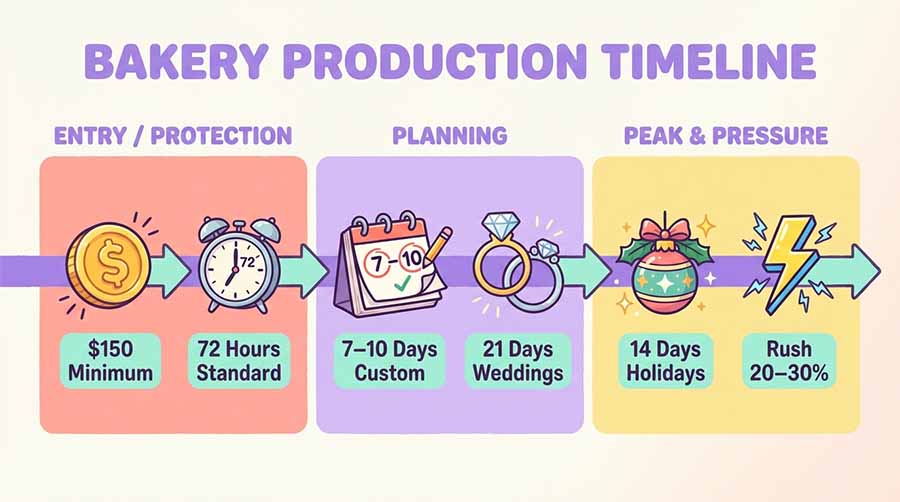
Set a $150 order minimum for delivery and require 72 hours lead time for standard orders, with longer times for complex items. Wedding cakes need 21 days, holiday events need 14 days.
Order minimums protect profitability. If someone wants six cupcakes delivered across town, your time and gas cost more than the product revenue.
- Standard orders: 72 hours for shopping and production scheduling.
- Custom cakes: 7 to 10 days for consultations and sourcing.
- Wedding cakes: 21 days for tastings, revisions, and production.
- Holiday events: 14 days. Peak seasons fill fast.
- Short notice orders: Charge a 20 to 30% rush fee and limit menu options.
What Deposit and Payment Terms Should I Require?
Require a 50% non-refundable deposit when orders are confirmed, with the remaining balance due at least 10 days before events. For orders within two weeks, collect 100% upfront.
A 50% non-refundable deposit secures your calendar and covers ingredients. Collect final payment 10 days before events to protect against last minute cancellations.
Cancellations within 7 days result in non-refundable payment because you've purchased perishables. Put this in writing and email with every quote.
How Do I Package and Deliver Catering Orders Without Problems?
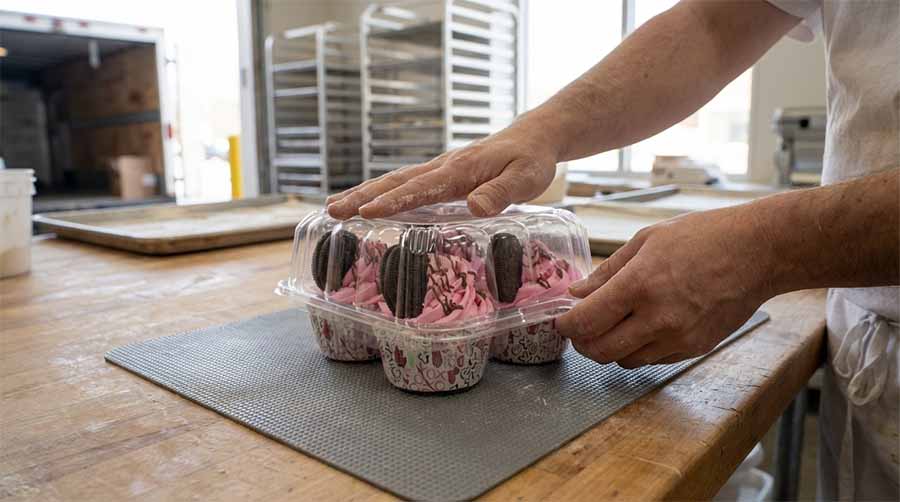
Package orders in sturdy, food safe containers with clear labels and transport in climate controlled vehicles using non-slip mats. Confirm delivery details 24 hours before events.
Sheet cakes need boxes with 2 inches clearance. Cupcakes require inserts. Multi-tiered cakes require internal dowels and sturdy baseboards. Non-slip mats are non-negotiable. A $3 mat prevents hundreds in ruined product. Buttercream melts at 75°F. Run AC even in spring and use ice packs for summer.
2026 packaging note: Consumer demand for sustainable packaging and ingredient transparency continues to rise. Consider eco-friendly containers and clear labeling of allergens to align with current industry priorities.
For professional food safe containers, bakery boxes, and packaging supplies designed for catering, visit Plastic Container City.
Confirm 24 hours before: Verify address, time, contact person, and building access. Plan parking and scout locations on Google Maps. Bring backup supplies: tape, scissors, paper towels for repairs.
What Insurance Does a Catering Bakery Need?
Catering bakeries need general liability and product liability insurance, plus commercial auto coverage if delivering products. Venues require a Certificate of Insurance before allowing vendors on site.
General liability covers property damage. Product liability covers illness. Annual costs vary based on your coverage level and catering revenue.
A Certificate of Insurance shows coverage details. Your agent generates one within 48 hours. Venues often require Additional Insured status at no extra cost. Commercial auto insurance is required for business deliveries.
What Permits and Legal Requirements Do I Need for Catering?
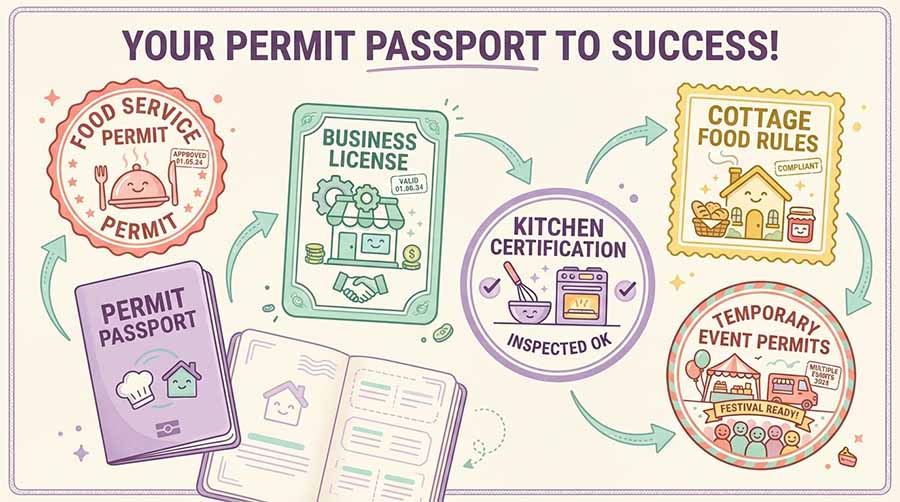
Catering bakeries need the same permits as retail bakeries: food service establishment permit, business license, and proper kitchen certification. If operating from home, check cottage food laws since many restrict catering.
Food service permits are required before legally selling food. Requirements vary by state. For example, New York's Assembly Bill A5836 addresses 2026 food safety standards. Always verify your local kitchen certification rules with your state health department.
Cottage food laws restrict home bakers to non-hazardous foods and may prohibit catering or cap annual revenue at $15,000 to $50,000. Check your state's rules before booking orders. If your state restricts catering from home, rent commercial kitchen space. Temporary permits are required for outdoor events.
If you're considering starting from home, our complete home bakery startup plan walks through the full legal setup and launch process.
Your First 5 Catering Orders: Action Plan
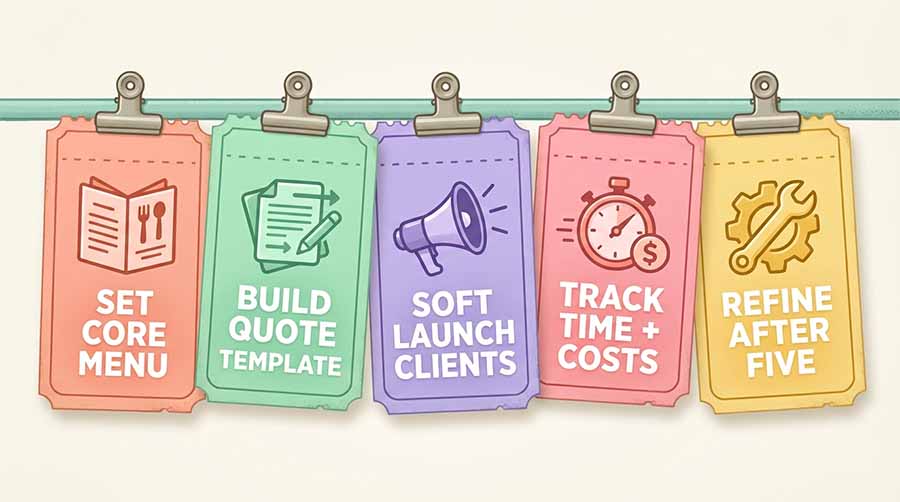
- Order 1: Create a menu with 3 to 5 core items. Focus on products you already make well. Test packaging and transport first.
- Order 2: Build a quote template with itemized pricing, fees, deposit terms, and cancellation policy.
- Order 3: Soft launch to existing customers. Corporate clients who trust your quality are easiest first sales.
- Order 4: Track production time, ingredient costs, delivery problems, and feedback. Use this data to refine pricing.
- Order 5: After five orders, you'll know which products work and what pricing holds.
- Master simple drop-off orders before adding custom cakes. The difference between bakeries that thrive and those that fail at catering comes down to smart lane selection, protective policies, and accurate pricing. When you know how to start catering as a small bakery using these fundamentals, you'll build profitable revenue without sacrificing the quality that got you into baking.
For more bakery business insights, operational tips, and industry trends, visit the Plastic Container City blog.
Frequently Asked Questions
How much does it cost to start a bakery catering business?
Starting costs range from $2,000 to $8,000 for home operations, covering insurance, permits, packaging, and inventory. Commercial kitchen rental adds $500 to $1,500 monthly.
What bakery items make the most money for catering?
Custom cakes and wedding cakes generate highest profit margins per order but require advanced skills and longer production time. For beginners, cookie platters and cupcake boxes offer the best balance of profit, efficiency, and repeat business.
What should my cancellation policy include?
Your cancellation policy should require 50% non-refundable deposits to secure dates and make cancellations within 7 days of the event fully non-refundable. This protects your business from last minute cancellations after you've purchased perishable ingredients and turned away other orders. Put the policy in writing and require clients to initial it on order forms.
How do I get my first catering clients?
Start with existing customers. Email retail clients about your catering menu with introductory discounts. Connect with event planners and corporate office managers. Post catering offerings on social media with professional photos.
What's a good profit margin for bakery catering?
Target 15 to 25% net profit after all costs. This accounts for food at 25 to 35%, labor at 25 to 35%, overhead, delivery, and packaging. If you're not clearing 15% profit per order, adjust pricing or improve efficiency.
