

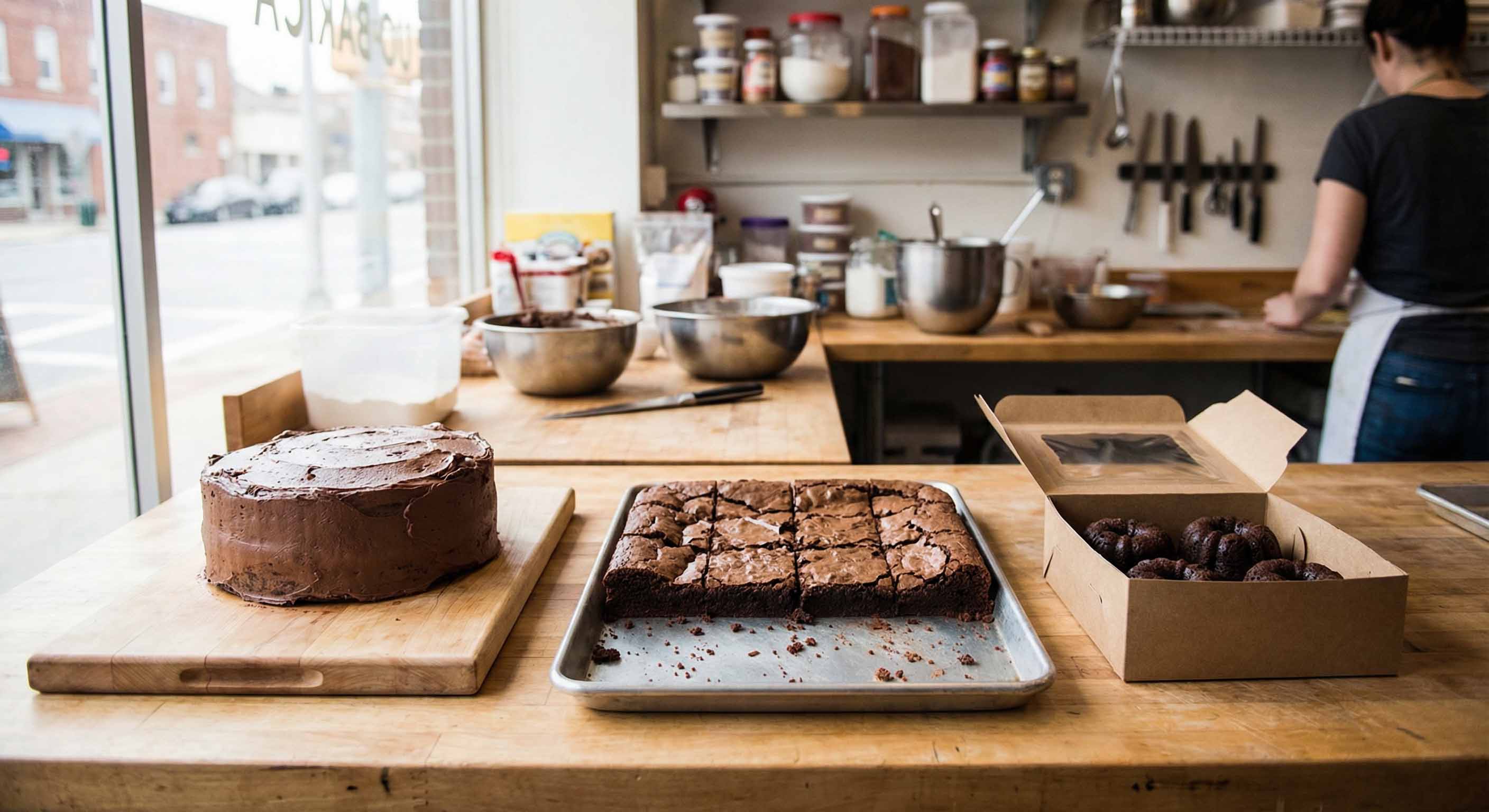
Want to know how to expand your bakery business by adding products without increasing costs? Start with what's already in your kitchen. Most owners think scaling means buying new mixers, hiring staff, or ordering different ingredients. Wrong. Your signature item already has everything you need to launch two companion products that share 70% of the same ingredient base, use the same equipment during idle hours, and require zero additional overhead. You're not expanding. You're multiplying what you've already built.
This guide shows you the exact system to turn one bestseller into a focused three-product line. No extra costs. No wasted capital. Just smarter use of what's sitting in front of you.
Check Your Foundation Before You Build
You can't add floors to a house with a cracked foundation. Same rule applies here. Before selecting new products, run three diagnostic checks to confirm your operation can handle the load.
Equipment Capacity
Walk through your production schedule and measure idle time. If your ovens, mixers, or proofers sit unused for 30% or more of your workday, you have capacity to layer in companion products without buying new equipment. That's free expansion space, one of the smartest ways to reduce costs in a bakery without cutting quality.
Many bakery owners think they're maxed out when they're actually running closer to 60 or 70% capacity. The difference is scheduling, not equipment. If you're genuinely at 90% during peak hours, you'll need to stagger production times or accept that growth requires investment. Better to know now than six weeks into a launch.
This kind of expansion uses what you already own instead of demanding new capital.
POS System
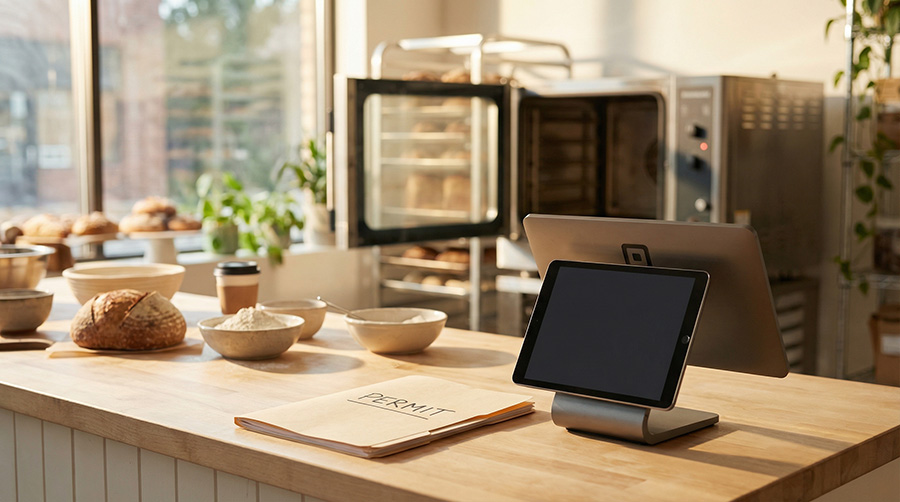
Your point of sale must track three separate SKUs without breaking. Many home bakery setups use basic invoicing that can't separate a chocolate cake from brownies made with the same base. If you can't see individual product margins and ingredient costs per item, you're guessing on profitability. Fix this before you scale.
Regulatory Compliance
Check your state's cottage food laws now to avoid expensive compliance fixes later. Many states distinguish between shelf-stable items and TCS (Time and Temperature Control for Safety) foods like cream fillings or dairy-based products. If your signature item is a simple cookie and you're considering cream-filled pastries, verify legality before investing in recipe development. Finding out you can't sell a product after you've bought ingredients and packaging kills momentum and drains capital.
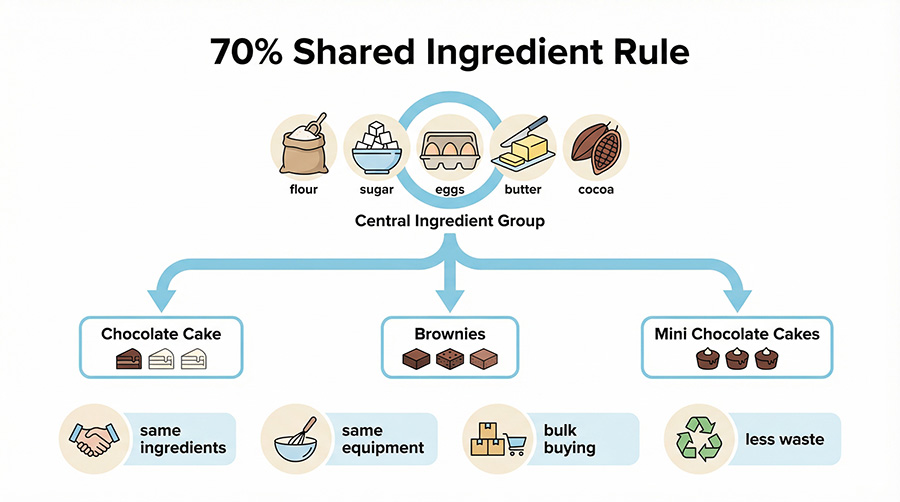
The 70% Shared Ingredient Rule
Here's where most bakery owners blow it. They pick companion products because they sound fun or look trendy. That's how you end up with a cluttered menu and skyrocketing ingredient costs.
The smarter move: choose products that share at least 70% of your signature item's ingredient base.
If your bestseller is a chocolate cake made with cocoa powder, butter, flour, sugar, and eggs, your companion products should be brownies and mini chocolate cupcakes. Same core ingredients. Same bulk purchasing. Same supplier relationships. You're not adding complexity. You're multiplying output from the same supply chain.
Shared ingredients mean you're buying larger quantities at better prices. Less waste. Simpler inventory management. Your labor stays flat because you're already prepping most of what you need for the signature item. The companion products just use different portions or pan sizes.
Think of it as the Bulk Buy Bonus. When you use the same flour for three products instead of one, you stop buying small retail bags and start ordering 50 kg wholesale sacks. That switch alone can slash costs by 8 to 15%. Scale up to 500 kg orders and you unlock even lower wholesale pricing tiers. The savings multiply fast when three products share the same base.
At Plastic Container City, we supply thousands of food professionals across the U.S., and the bakeries using this shared-ingredient approach consistently achieve 72 to 78% margins on pastries and viennoiseries without hiring staff or upgrading equipment.
| Product Example | Price | Margin | Profit Per Unit |
|---|---|---|---|
| Signature Chocolate Cake | ~$45 | ~60% | ~$27 |
| Brownies (9 pack) | ~$6 | ~65% | ~$3.90 |
| Mini Chocolate Cakes (4 pack) | ~$15 | ~62% | ~$9.30 |
| Combined Bundle | ~$66 | ~61% | ~$40 |
The takeaway? You aren't working more hours. You're just making the hours you already spend in the kitchen way more valuable.
Margin Stacking, Not Revenue Chasing
Look at how this works in practice. Say your signature cake sells for around $45 with a 60% margin. That's roughly $27 profit per unit. Now add brownies at $6 with a 65% margin and mini cakes at $15 with a 62% margin. A customer buying all three delivers about $40 in profit. That's a 48% jump from the same ingredient base and production flow.
This is profit per labor hour thinking. You're not working more. You're earning more from the time you're already spending.
The psychology behind this matters. Approximately 35% of bakery purchases are unplanned impulse buys. By offering a bundle, you're not just selling more. You're capturing that impulse decision. Research shows bundled meal deals can increase average transaction values by up to 40% compared to customers buying single items.
Test Demand Before You Scale
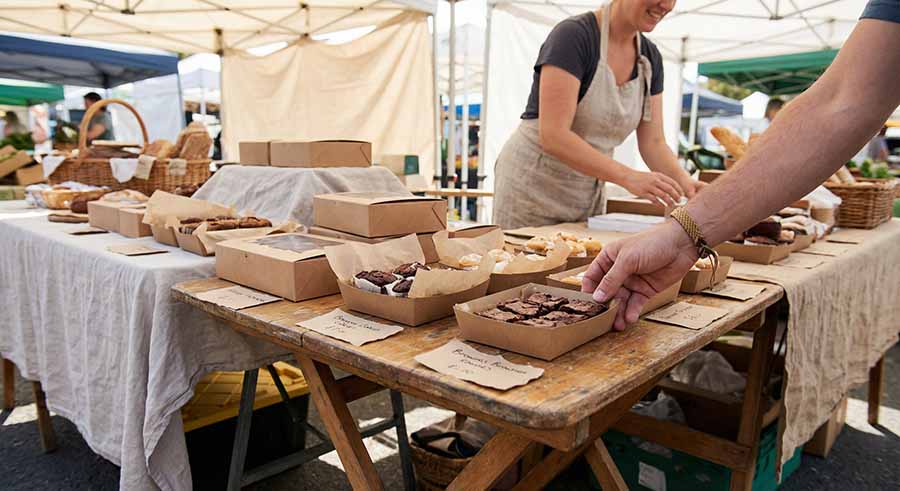
Don't commit to full production until you validate demand. The micro-testing protocol takes six to eight weeks and costs almost nothing. This uses your existing customer base, email list, and weekend market slots. No ad spend. No new infrastructure.
Reality check: Don't let the what-ifs stop you. Market insurance usually costs less than $300 a year. That's basically the price of selling one signature cake a month. Tiny price for total peace of mind while you test your new items.
Pick two or three companion products. Bake small batches in the 50 to 100-unit range and sell them at farmers markets, pop-up events, or through pre-order emails to your existing customers. Track what sells out first, what generates repeat orders, and where customers hesitate on price.
If brownies at $6 fly off the table but mini cakes at $15 sit untouched, that's your signal. Adjust before you scale. This isn't guesswork. You're watching real customers make real purchase decisions with their own money.
This phase isn't about making money. It's about gathering data so you don't waste capital on products nobody wants. The bakers who skip this step are the ones calling us six months later asking about packaging for inventory they can't move.
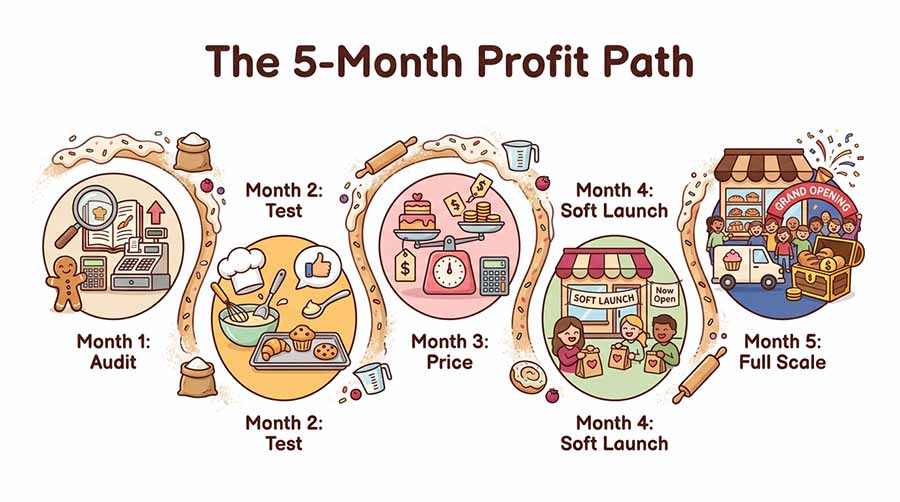
A 5-Month Plan to Add Products Without Cost Increases
Here is the timeline to take your signature item from solo act to profit-driven product line.
- Month 1: Audit. Run the three diagnostic checks. Measure equipment capacity. Audit your POS. Confirm regulatory compliance. Select products using the 70% shared ingredient rule.
- Month 2: Test. Bake small batches and test through low-cost channels. Aim for feedback on taste, pricing, and packaging. If one product flops, replace it before Month 3.
- Month 3: Price. Lock in your three-tier pricing structure: entry level, core offering, and premium option. Refine recipes and portion sizes based on testing data.
- Month 4: Soft Launch. Introduce companion products to your existing customers with limited quantities. Test your production flow and identify bottlenecks.
- Month 5: Go Big. Ramp up production using your validated recipes. Update your website. Create bundle offers. All three products now flow through your refined production schedule.
Pricing to Avoid Cannibalization
Here's the trap: pricing companion products so low that customers stop buying your signature item. If your chocolate cake sells for $45 and brownies cost $6, some customers will trade down and pocket the difference. That's revenue erosion, not growth.
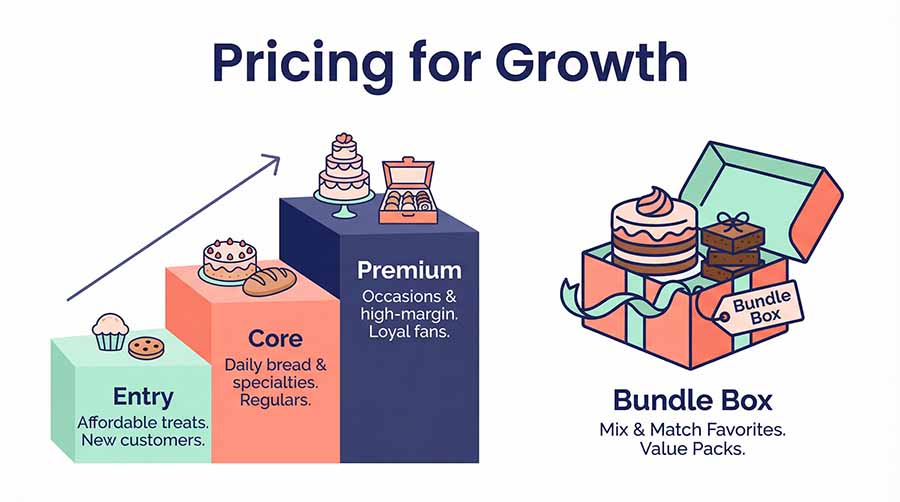
Structure pricing so each product occupies a distinct tier. Brownies are the entry point, a low-risk purchase for new customers. Your signature cake is the core offering, the item that built your reputation. Mini cakes are the premium upsell, positioned between brownies and the full cake.
When customers see this range, they buy multiple items instead of choosing one or the other. You're not competing with yourself. You're offering options that fit different occasions and budgets. This tiered structure makes customers more likely to purchase bundles, which research shows can increase transaction values by up to 40%. For a deeper dive into strategic pricing structures, our comprehensive guide breaks down how to implement this system across your entire product line.
Bundle Strategy
Encourage multi-product purchases by offering small bundle discounts. For instance, if a customer would pay $66 buying all three items individually, you might price the bundle at $60. The $6 savings feels generous, but you're still capturing roughly $40 in profit, far more than selling one cake alone.
The psychology here matters. Bundles reduce decision fatigue and give customers permission to spend more. They walk in thinking they'll buy one cake, see the bundle, and suddenly they're walking out with three products. You didn't upsell them. The pricing structure did.
We see this play out constantly with the bakeries we supply. The ones running bundle offers often report that a third or more of their customers choose the bundle over single items. That's pure margin expansion from the same production flow you're already running.
Execute the System
Your signature bake proved the concept. Now multiply it.
That's how to expand your bakery business by adding products without increasing costs. You're not building a new house. You're adding rooms to the one you already own.
For more bakery insights, profit strategies, and food industry tactics that actually work, visit the Plastic Container City blog.
Frequently Asked Questions
What makes the most money in a bakery?
Products with high margins and shared ingredient bases. Signature cakes, custom orders, and premium mini versions of bestsellers typically hit 60 to 65% margins. The key is stacking multiple items that use the same supplies and equipment to maximize profit per labor hour.
Why do small bakeries fail?
They scale before their operations are ready. They add products without validating demand, ignore equipment capacity limits, and price new items in ways that cannibalize existing sales. Poor cash flow management and weak quality control finish the job.
How to expand a bakery business?
Build on what already works. Use the 70% shared ingredient rule to select companion products. Test demand with small batches before scaling. Follow a structured five-month launch plan. Focus on margin stacking, not revenue chasing.
What is the most profitable bakery item to sell?
Items that combine high perceived value with low ingredient costs. Mini cakes, brownies, and specialty cookies often hit 65% margins or higher when made with shared ingredients from a proven recipe. Profitability depends more on efficient production and smart pricing than the item itself.
What mistakes do startup bakeries make?
Launching too many products at once. Underpricing to compete. Skipping demand validation before scaling production. Neglecting regulatory compliance. Ignoring equipment capacity limits. Not tracking individual product margins. The result is cash flow problems and operational chaos within the first year.
