
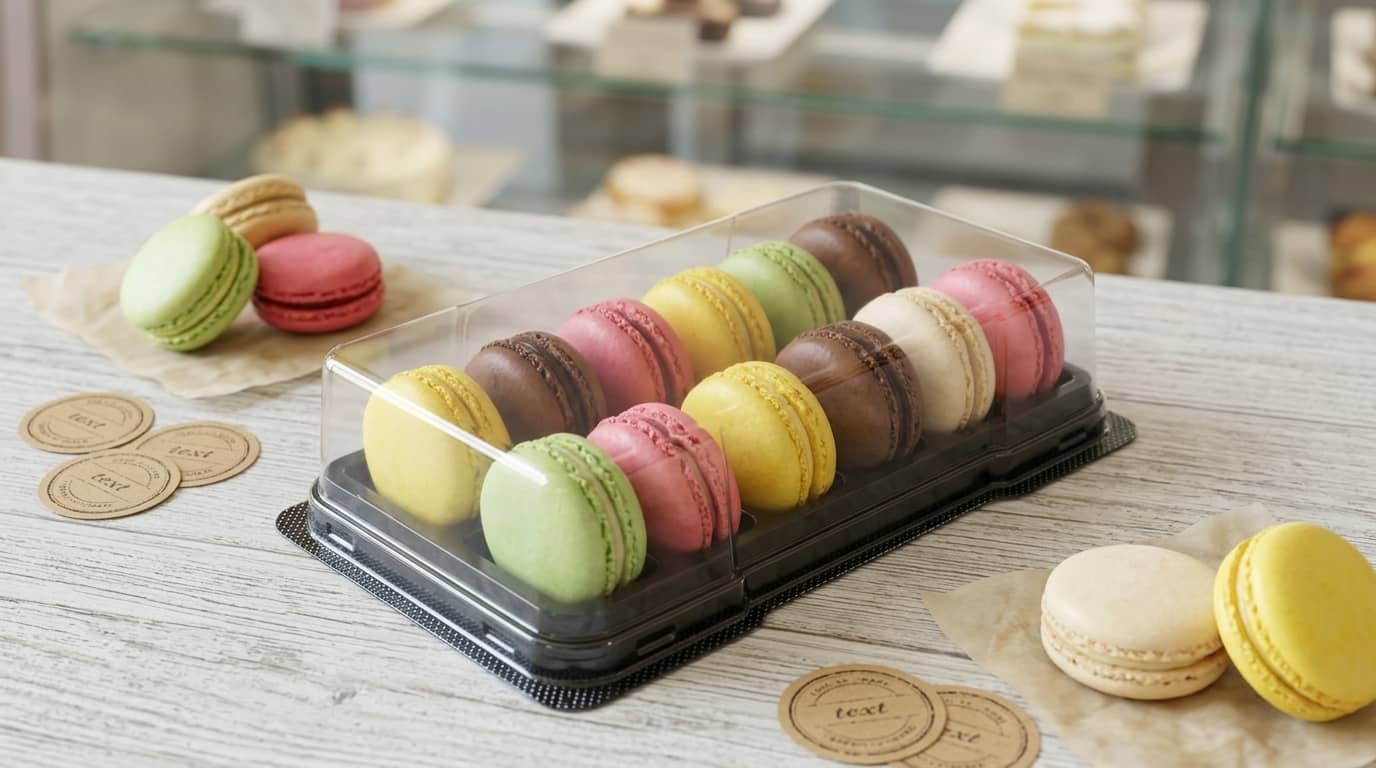
TL;DR: Figuring out how to package macarons to sell starts with one enemy: humidity. A clear, rigid container with a snap-shut airtight closure helps protect shell texture, supports the structure, and shows the product off, without pushing the operator into a custom packaging route. Match the container to your batch size, mind your filling type, and let the package do the selling.
If you want to know how to package macarons to sell without watching crisp shells turn soft and sticky overnight, you already know the real problem. Macarons are fussy. They cost real money in almond flour and labor, and the wrong container undoes all of it before a customer ever picks one up.
Most small-batch operators land in one of two ditches. They reach for a generic cookie clamshell that does not seal properly, and the shells absorb moisture from the air. Or they commit to custom printed boxes before their volume is steady enough to justify the order.
There is a middle path: a clear wholesale container built for macarons. This guide covers why humidity is the core packaging problem, what to look for in a seal, the two dedicated macaron containers we carry, how filling type changes storage, and how a clear pack stacks up against custom boxes. For the full picture across every single-serve dessert format, see How to Package Bakery Desserts to Sell.
Why Does the Wrong Container Ruin Macarons?
Direct Answer: Moisture is the culprit. A loose or unsealed container lets humid air reach the shells, softening the crisp exterior and turning the texture sticky.
A macaron shell is a meringue, and its whole appeal is that snap on the outside over the slight chew underneath. That contrast lives or dies on moisture. Water activity drives the chemical changes that affect food over time, as UC Agriculture and Natural Resources explains. For a macaron, the practical version is simple: the more humid air that reaches the shell, the faster the crispness fades.
Packaging acts as a barrier between the food and the air around it, limiting exposure to moisture, oxygen, and contamination. University of Minnesota Extension also notes that even sealed packaging can let moisture creep in over time, so no container makes a macaron last forever. A good one simply slows the clock. For more on how packaging shapes both freshness and how fresh a product looks, read Bakery Packaging Freshness: Science and Perceived Quality.
Do Macarons Need to Be Stored in an Airtight Container?
Direct Answer: Yes, an airtight or near-airtight container is the safest choice. A tight seal limits the moist air and stray odors that soften and flatten delicate shells.
Airtight is the word that matters here, but it gets thrown around loosely on wholesale sites. In a rigid plastic container, it means a closure that seats fully and stays shut, so air is not moving freely in and out every time the pack is handled.
A snap-shut closure that clicks into place does two jobs. It slows moisture exchange, and it keeps the lid from popping open when packs are stacked, bagged, or carried. One honest caveat: read the product description before you trust a seal, and look for clear language about the closure rather than assuming a snug-looking lid is airtight.
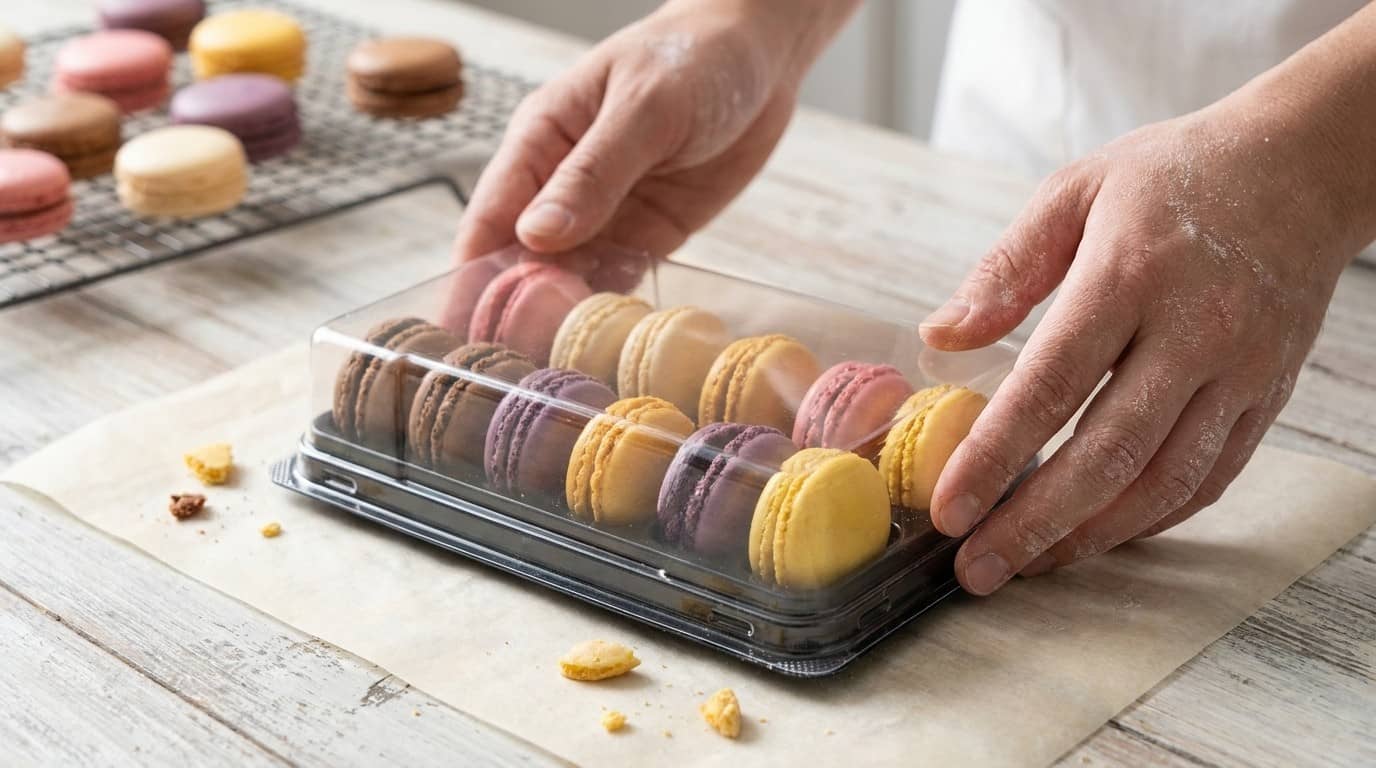
What Should You Look for in a Macaron Container?
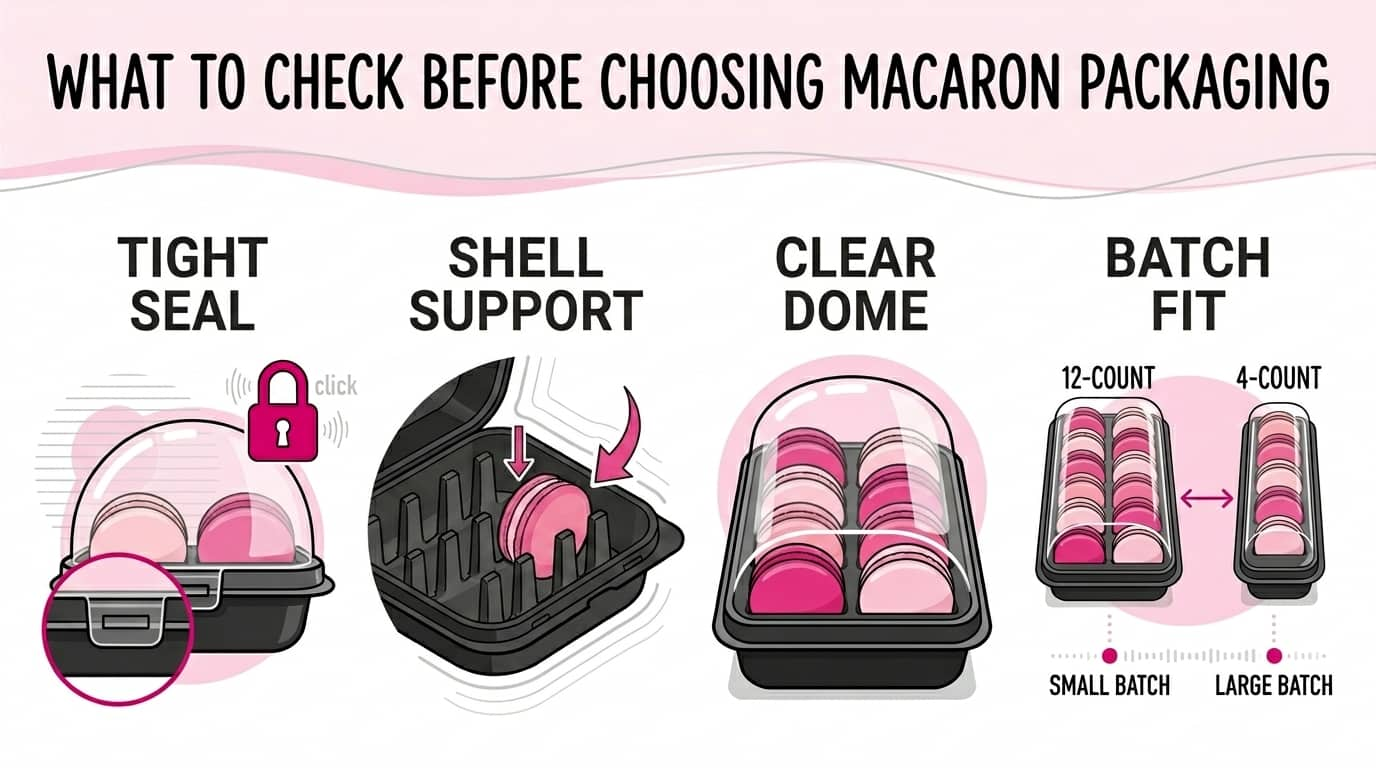
Direct Answer: Look for a clear rigid dome, snap-shut seal, and shell support. Check material, stackability, and cold-storage fit before buying.
A macaron container has a harder job than a cookie pack. It has to keep the shell crisp, stop the macaron from sliding into its neighbor, and look good enough to sell on sight. Here is what separates a real macaron container from a repurposed one:
- A snap-shut, near-airtight closure: slows moisture exchange and stays shut in transit
- A clear rigid dome: shows color and detail while protecting the shell from being knocked or crushed
- Shell support or cavities: holds each macaron in place so shells do not crack against each other
- Food-safe, recyclable plastic: PET keeps the view crystal clear and is recyclable as PET #1
- Stackable, fridge and freezer friendly: works for display, storage, and pickup without a format change
Get those five right and the container quietly does the work of protection and presentation at the same time.
Which Macaron Containers Does Plastic Container City Carry?
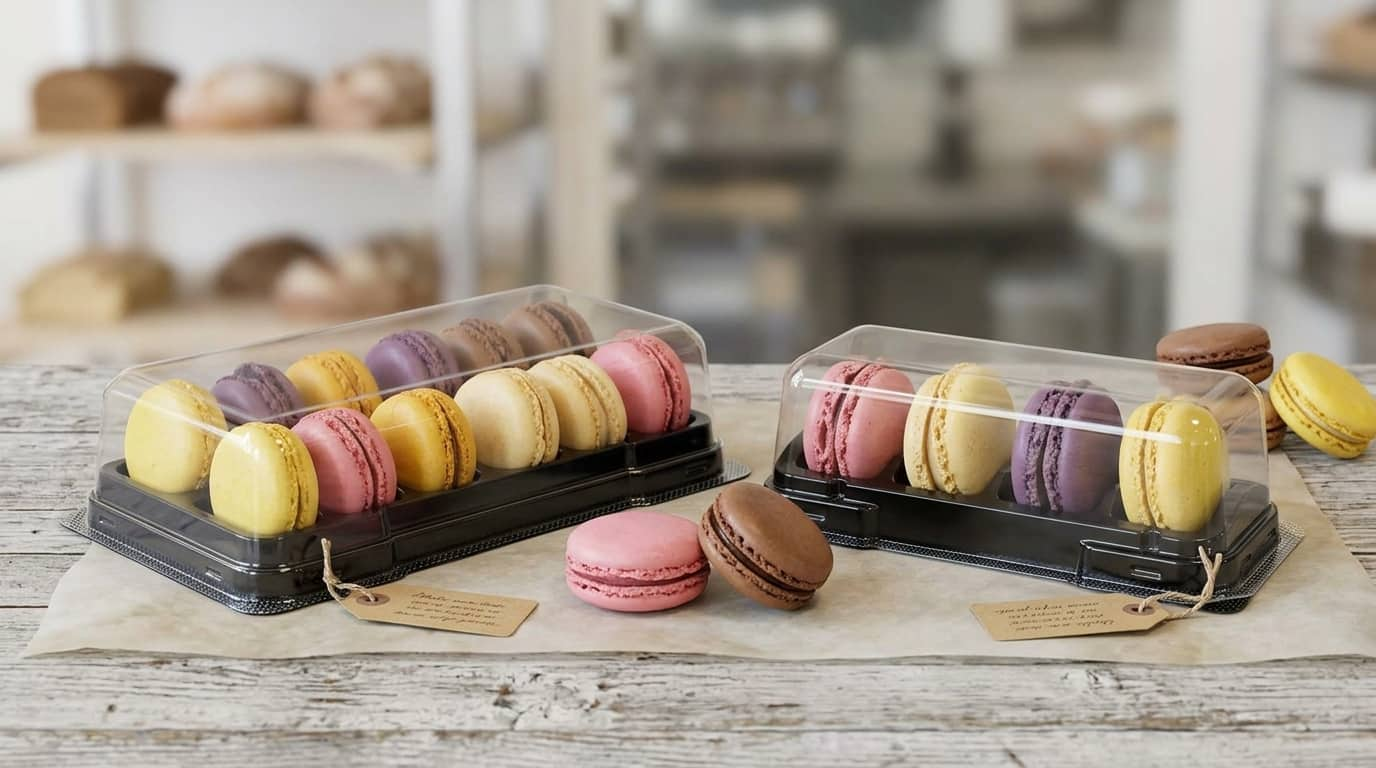
Direct Answer: Plastic Container City carries two dedicated macaron container formats. A 12-cavity black base with clear dome, and a 4-cavity version, both PET with a snap-shut airtight closure.
We are not going to pretend there are a dozen macaron formats here. Plastic Container City carries two, and both are designed for macarons rather than borrowed from another product. We supply bakeries, cafes, and cottage food operators across the U.S., and these two formats cover the batch sizes many macaron sellers actually run.
The 12 Cavity Macaron Container, Black Base Clear Dome holds a full dozen and measures 7 3/4 by 4 1/4 by 1 3/4 inches. It is available in 50-pack and 200-case options. The 4 Cavity Macaron Container, Black Base Clear Dome holds four and measures 5 3/8 by 2 3/4 by 1 3/4 inches. It comes in a 400-case format, which suits gift sets, sampler packs, and add-on sales at the register.
| 12-Cavity | 4-Cavity | |
|---|---|---|
| Holds | 12 macarons | 4 macarons |
| Dimensions | 7 3/4 x 4 1/4 x 1 3/4 inches | 5 3/8 x 2 3/4 x 1 3/4 inches |
| Build | Black base, clear dome | Black base, clear dome |
| Closure | Snap-shut, airtight | Snap-shut, airtight |
| Material | BPA-free PET, recyclable PET #1 | BPA-free PET, recyclable PET #1 |
| Fridge / freezer safe | Yes | Yes |
| Pack format | 50-pack / 200-case options | 400-case |
Both are stackable and built around the same idea: a clear dome that sells the look and a snap-shut closure that protects the shell. Pick the cavity count by how you sell.
How Long Do Macarons Last in a Sealed Container?
Direct Answer: There is no single reliable day count. Shelf life depends on your filling, how the shells were cooled before sealing, and your storage conditions.
This is where a lot of packaging content quietly makes things up. We will not. There is no verified, one-size source that says a macaron lasts an exact number of days in a sealed clear pack, because the answer changes with the filling and the conditions.
A buttercream-filled macaron behaves differently from one with a ganache or fruit filling, and how dry your shells were when you sealed them matters too. Test your own product, with the container you plan to use, and base any freshness promise on what you actually see. A good container gives you a fair shot by limiting the moisture and air that work against the shell, so your tested window holds up better than it would in a loose pack.
Are Macarons Shelf Stable Without Refrigeration?
Direct Answer: It depends on the filling. Non-TCS fillings may be treated differently than cream, custard, or refrigeration-required fillings.
Macaron status is a filling question, not a shell question. State cottage food rules draw the line clearly. California's approved cottage food list includes macarons with approved fillings or buttercream under baked goods without cream, custard, or meat fillings.
Utah's cottage food guidance says macaron fillings must be non-TCS, meaning they do not require temperature control for safety, such as frosting, caramel, or chocolate, and that foods needing refrigeration for safety are not allowed under cottage food registration. Both are state-level rules, not national law, but they point the same way: the filling decides whether your macaron is treated as shelf stable.
The takeaway is practical: pick your filling with your sales channel in mind, and check your own state's rules before you label anything shelf stable. A container protects the product; it does not change the food safety category of the filling inside.
How Do You Display Macarons for Same-Day Sale?
Direct Answer: Keep them in a clear closed container, not loose on a tray. A sealed clear pack shows color while shielding shells from case humidity and handling.
Macarons sell on looks, so the instinct is to fan them out bare on a tray. The problem is that an open display leaves shells exposed to the case's ambient humidity and to every customer who leans in for a closer look.
A clear closed container settles the trade-off. The dome keeps the color and the rows on full view, while the snap-shut lid holds the moisture and the fingerprints out. The FDA Food Code says food on display should be protected from contamination through packaging, food guards, display cases, or another effective method, and a sealed clear container is one way to do that at the package level.
Case conditions still matter even after packaging, so it pays to know whether your display runs dry or refrigerated. Refrigerated vs Dry Bakery Display Case: The 2026 Rule breaks down which case suits which product.
Should You Use Clear Wholesale Containers or Custom Printed Boxes?
Direct Answer: For small and medium batches, clear wholesale containers are lower commitment. They protect and display without turning packaging into a custom print project.
Custom printed boxes can look fantastic. The catch is that custom packaging usually needs more planning, more commitment, and more volume confidence than many small-batch macaron sellers have at the start.
A clear wholesale container solves the same two problems a custom box does, protecting the shell and presenting the product, without locking up cash in inventory you cannot turn over. You buy by the pack or the case, reorder when you need to, and the clear dome puts the macarons themselves front and center.
None of this makes custom boxes wrong. Once your volume is steady and your brand is the selling point, branded packaging can earn its place. For the operator still finding that footing, a clear container is the lower-risk way to look professional today.
What Is the Short Version for Packaging Macarons to Sell?
Three things carry the whole decision. Beat the humidity with a snap-shut, near-airtight seal. Protect the shells with a rigid clear dome that also sells the look. And match your filling to the rules in your state so the product you package is the product you are allowed to sell.
A clear, dedicated wholesale container does the protecting and the presenting without making the packaging more complicated than the product needs. For more on how to package macarons to sell, plus other bakery packaging and selling insights, visit the Plastic Container City blog.
Frequently Asked Questions
Does humidity affect macarons?
Yes. Humid air softens a macaron's crisp shell and can turn the texture sticky. Water activity influences how food changes over time, which is why a sealed container that limits moisture exposure helps protect the shell texture between baking and sale.
How do you store macaron shells?
Keep unfilled shells in a closed, near-airtight container to limit the moisture and air that soften them. Cool them fully before sealing, since trapping warm air works against you. Store filled and unfilled shells based on your own testing and any local rules that apply to your filling.
How do professional bakers store macarons?
Most rely on closed, near-airtight containers that limit moisture and keep shells from knocking together. Beyond that, storage choices depend on the filling and the local food safety rules, so practices vary by operator and state rather than following one universal method.
Can you freeze macarons to extend shelf life?
Macaron containers like ours are freezer safe, but there is no single verified source that sets exact freezing times by filling type. Treat freezing as something to test with your own recipe and filling, and follow any food safety guidance that applies in your state before making freshness claims to customers.