
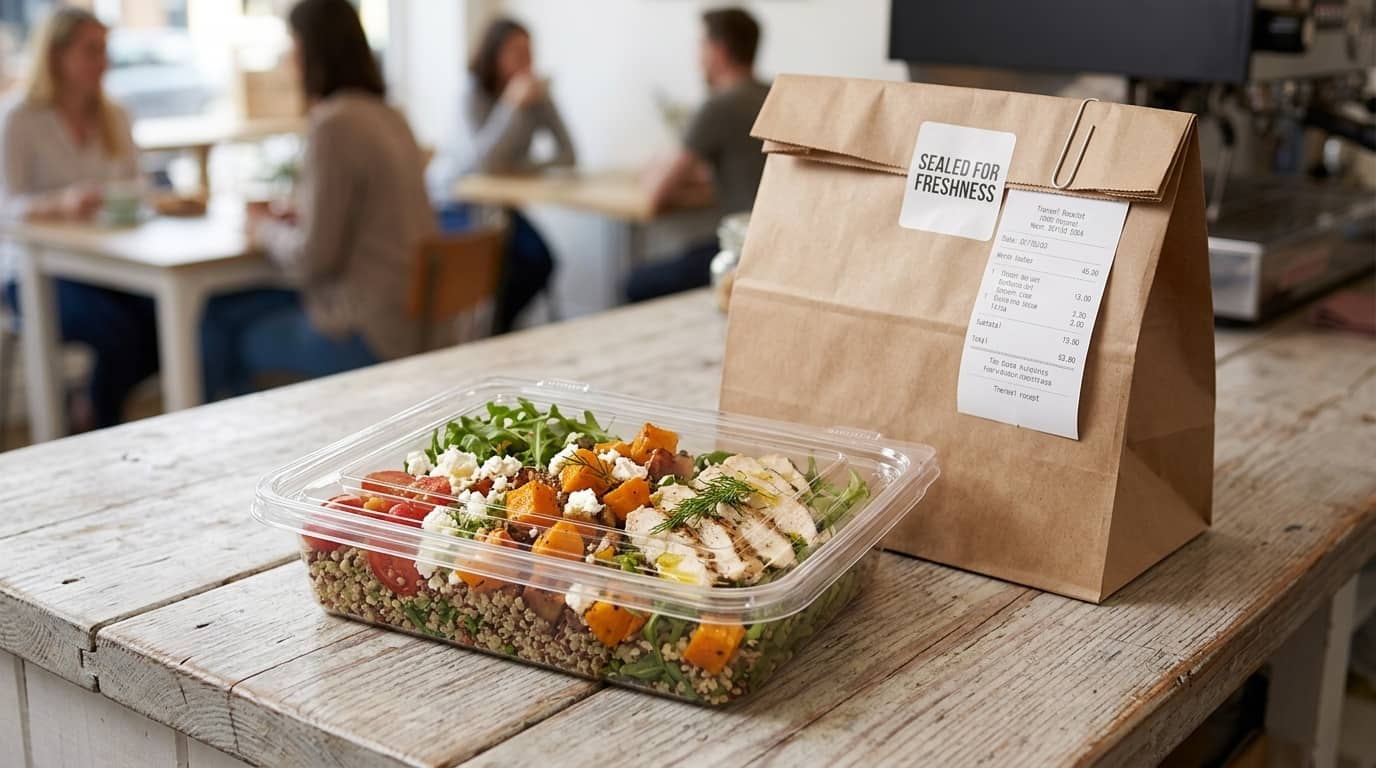
How to prevent spills, condensation, and crushed food in delivery packaging is one of the most pressing questions in off-premises food operations, and the answer starts by treating each problem as an engineering failure rather than bad luck. The National Restaurant Association reported in May 2025 that nearly 75% of all restaurant traffic now happens off-premises. When three-quarters of your revenue is traveling in a bag, the container is no longer packaging. It is the dining room.
The problem is that most operators treat bad delivery outcomes as random. Soup leaks. Food steams itself into a soggy mess. Multi-order bags arrive with the bottom item crushed. None of it is random. Each failure has a mechanical root cause and a direct container fix. This guide breaks down all three and gives you the troubleshooting framework to solve them. For the full material and size selection overview, see How to Choose Takeout Containers for Your Restaurant.
Why Does Delivery Packaging Fail?
Think of delivery failures as a diagnostic tree. When a customer sends a complaint photo, you can almost always trace it back to one of three failure modes. Spilled contents point to lid mechanics. Soggy food points to moisture management. Crushed portions point to structural stacking decisions. These are not abstract quality problems. They are engineering problems with clear fixes.
The commercial stakes are real. Research from the National Restaurant Association found that 90% of off-premises customers say they would likely order a wider variety of food if upgraded packaging kept meals closer to dine-in quality, and more than half said they would pay extra for packaging that maintains that standard. That number is worth keeping in mind the next time you are reviewing container specs.
What Seal Type Prevents Delivery Spills?
The difference between a snap-fit and a press-fit lid is not just a product description. It is the difference between a container that holds through a courier's sharp turn and one that leaks at the first bump in the road.
A press-fit lid rests on the container rim under downward pressure. It seals vertically, which is fine on a flat prep counter. The moment lateral force is applied from a bag shifting in a car, the lid moves and the seal breaks. Many press-fit lids are marketed as leak-resistant, but that does not always mean delivery-rated under side movement.
A snap-fit lid uses a rim-lock: the lid edge clicks into a groove or channel on the container flange. The seal holds under lateral movement because the mechanical connection is not just pressure, it is a physical lock. For soups, curries, ramen, and any dish where sauce can migrate, this is the baseline spec for delivery orders.
The practical test: fill a container to 80% capacity with water, seal the lid, and lay it on its side for 30 seconds. If it leaks, it is not delivery-rated, regardless of what the product sheet says. The NRA's operator packaging guidance recommends testing with real delivery runs from your own menu, noting that failure points typically only become clear when the product is moving.
What Causes Condensation in Hot Containers?
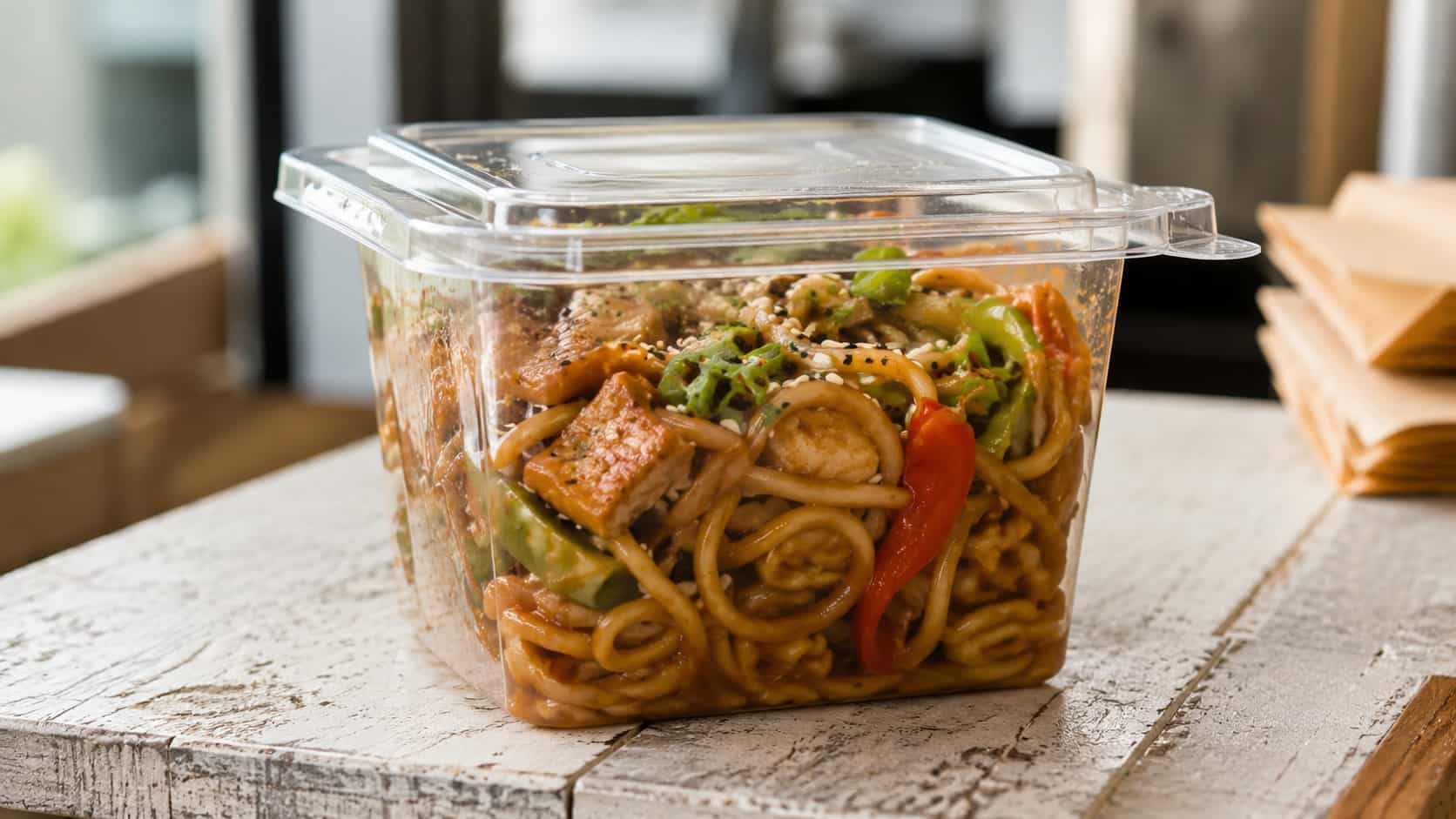
Hot food going into a sealed container is still releasing moisture vapor. That vapor rises to the lid, hits a surface cooler than the food, and condenses back into water droplets. Those droplets then fall onto the food. For fried and textured items, this is what destroys the crust. For salads, it wilts the leaves. For any dish that left your kitchen looking great, trapped steam is the silent culprit.
Should You Use Vented or Anti-Fog Lids?
Vented lids have openings, usually at the corners or on the top face, that let steam exit during transit. Rather than condensing on the lid, moisture escapes. This is the right call for hot, textured foods: fried chicken, roasted vegetables, noodle dishes, anything where steam build-up is the primary risk. The tradeoff is that food cools slightly faster, but texture is preserved in a way that a sealed container cannot match.
Anti-fog lids use design features or coatings that reduce visible fogging on the lid, helping the food stay visible when clarity matters. This is most effective for cold display items and grab-and-go packaging where condensation on the lid ruins visual appeal and the first impression when a customer opens the bag.
If you are packing fried or crispy items, ventilation is the priority. See How to Keep Fried Food Crispy in Takeout Containers for the full protocol on managing steam and oil migration for fried foods, including pre-pack rest timing and venting spec details. That article covers what this one does not need to repeat.
One note on insulated delivery bags: they slow cooling but they also trap steam inside the container. An insulated bag is not a substitute for the right lid. Without a vented lid, an insulated bag can make condensation worse, not better.
How Do You Stop Food Getting Crushed in Delivery?
Crush damage is the failure mode operators most commonly blame on the courier. In most cases, the packaging created the conditions for it.
Stacking order matters. Dense, heavy items such as rice bowls or casseroles in rigid polypropylene containers should sit at the base of the bag. Fragile items or anything in a domed-lid container goes on top. A simple labeling protocol for your packing station, telling staff which container type sits at the base, solves this at zero extra cost.
Flat lids versus domed lids. Domed lids look great for presentation, but they are more vulnerable under vertical load. When another container or a heavy bag is placed on top of a domed lid, the dome deforms inward and compresses the food beneath. For any multi-order bag where stacking will occur, flat lids are the correct spec. Reserve domed lids for single-item orders or packages where nothing will be placed on top.
Container footprint consistency. When container bases share the same dimensions across your order, they stack flat against each other and stay stable. Mismatched shapes create tipping and point pressure that crushes whatever is underneath. A container system with cross-compatible bases and interchangeable lids, one lid fitting multiple container sizes, reduces both your SKU count and your crush incidents at the same time. The NRA's packaging guidance identifies this as a key inventory control lever.
What Are Tamper-Evident Seals Used For?
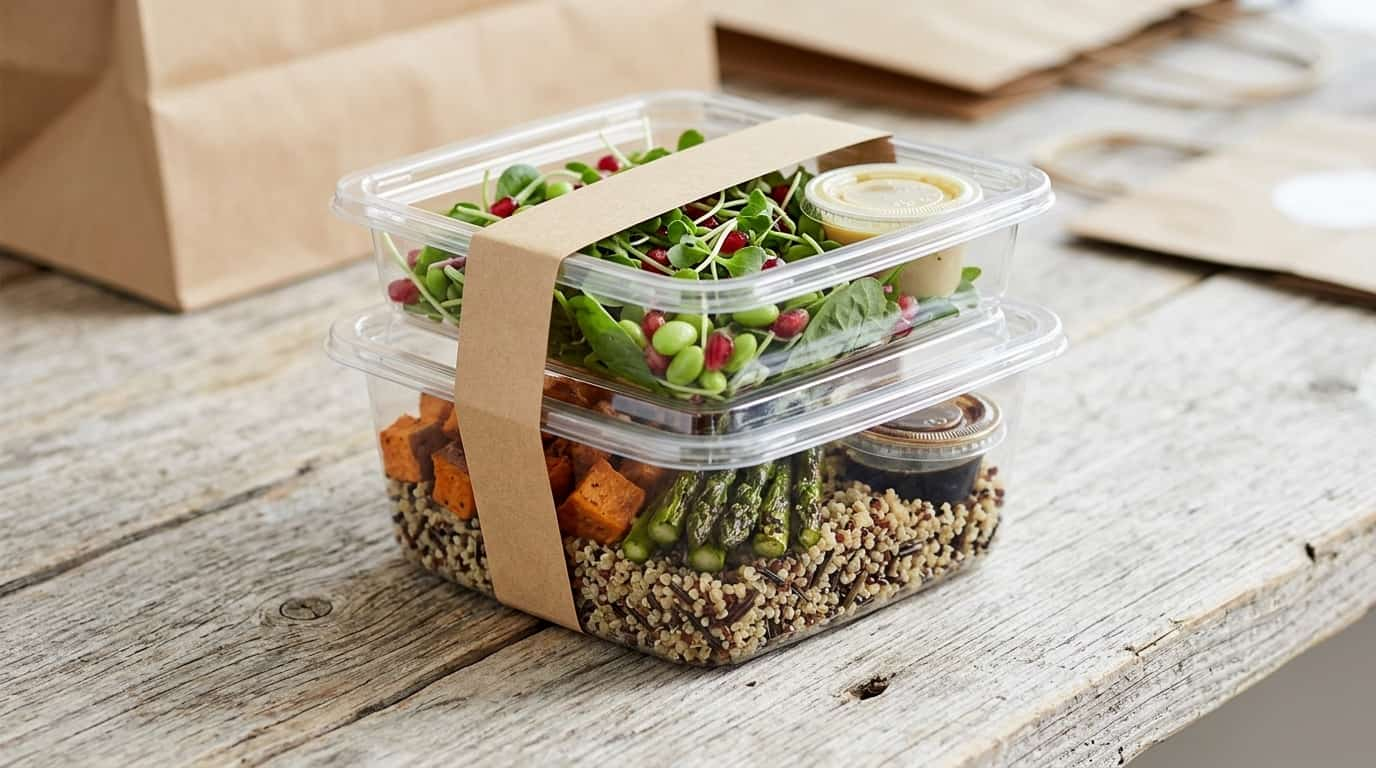
The tamper-evident seal is most often framed as a security feature against courier interference. It is also a spill prevention tool. A seal that wraps around a lid or closes a bag opening helps reduce accidental lid shift during courier handoffs and vehicle transit. Treat it as both.
Common options include bag seals, stickers placed over lid closures, and tamper-evident containers where the closure shows visible opening.
Uber Eats merchant guidance says operators should seal each order bag with tamper-evident materials, write the five-digit order number on the bag, number multiple bags in the same order, and double-check handoff to the right courier. DoorDash merchant guidance recommends tamper-proof stickers to keep order contents secure throughout delivery. These are common third-party delivery best practices, not just packaging extras.
For a broader look at tamper-evident options and where they apply across different foodservice formats, the tamper-evident packaging guide on the Plastic Container City blog covers the practical options and what the rules actually require versus what is best practice.
What Does a Spilled or Damaged Order Actually Cost You?
This is where the container choice math becomes very clear. A stronger lid spec often costs less than repeated refunds, remakes, and complaint handling. A single delivery refund can wipe out many orders' worth of lid-spec savings, plus the reputational cost of a one-star review that stays visible to future customers. Multiply that across a handful of incidents per month and the case for better containers stops being a discussion. For delivery-heavy menus, the better container is often the cheaper long-term choice.
Cost pressure in packaging is real. The Foodservice Packaging Institute's Q1 2025 State of the Industry survey found that more than 80% of foodservice packaging manufacturers and suppliers saw profits worsen or stay flat in 2024. The right response to cost pressure is container consolidation, not spec downgrade. Fewer container types, better specs, interchangeable lids across sizes. At Plastic Container City, we work with food professionals across the U.S., and we often see operators reduce packaging costs first by cutting duplicate container formats, not by dropping to weaker lid specs.
How Do You Fix Delivery Packaging Failures Fast?
| Failure Mode | Root Cause | Container Fix |
|---|---|---|
| Spilled liquid | Press-fit lid, no rim lock | Snap-fit lid with rim-lock seal |
| Soggy texture | Trapped steam, no exit path | Vented PP clamshell |
| Condensation dripping on food | Steam cooling on inner lid surface | Anti-fog lid or vented release |
| Crushed portion | Domed lid collapsing under stack load | Flat lid for any stacked bag position |
| Unstable bag stack | Mismatched container footprints | Cross-compatible base and lid system |
| Tamper concern or lid shift | No tamper seal on bag or lid | Tamper-evident seal per order bag |

What Is the Bottom Line on Delivery-Proof Packaging?
Delivery packaging fails in patterns, not at random. Spills trace back to lid mechanics. Soggy food traces back to unmanaged steam. Crushed portions trace back to stacking order and container geometry. Tamper issues trace back to missing seals. When you treat each failure mode separately and match the right container feature to the right problem, the fix is almost always cheaper than the cost of one bad order.
The practical checklist is short: snap-fit lids for liquid-heavy dishes, vented clamshells for hot textured food, flat lids for any bag where stacking will happen, matched footprints across your order, and a tamper-evident seal on every outgoing bag. Get those five right and you have covered the main delivery packaging failures in this guide. For more practical guidance on how to prevent spills, condensation, and crushed food in delivery packaging, visit the Plastic Container City blog.
Frequently Asked Questions
How do I know if my takeout containers are truly leak-proof?
Fill the container to 80%, seal the lid, and tilt it on its side for 30 seconds over a dry surface. If any moisture escapes, the container is not delivery-rated. Marketing language like "leak-resistant" is not the same as delivery-rated under lateral movement conditions.
Can I use the same containers for hot and cold food?
When rated for hot food, polypropylene is better suited to hot dishes. PET is for cold items, grab-and-go, and anything where clarity matters for display. Putting hot food into a container that is not hot-food rated can cause distortion, warping, or seal failure. Check the supplier's heat-use guidance before packing hot dishes.
How many bags should I seal per order?
Each bag in a multi-bag order should be sealed individually with tamper-evident materials. Number each bag (1 of 3, 2 of 3, and so on) so both the courier and the customer can confirm the full order arrived. Uber Eats merchant guidance and DoorDash merchant guidance both reference this as an operating standard.
What is the most common stacking mistake that causes crush damage?
The dome deforms under the weight of containers stacked above it and compresses the food. Always place flat-lid, structurally rigid containers at the bottom and reserve domed or lighter containers for the top of the bag.