
TL;DR
Knowing how to keep fried food crispy in takeout containers comes down to two root causes: steam trap and oil migration. Fix both by resting food on a wire rack for 2 to 3 minutes before sealing, choosing a vented PP #5 clamshell, lining the base, avoiding crowding, and packing sauces separately. Long holds need a partial cooling protocol. The right container matters, but protocol matters equally.
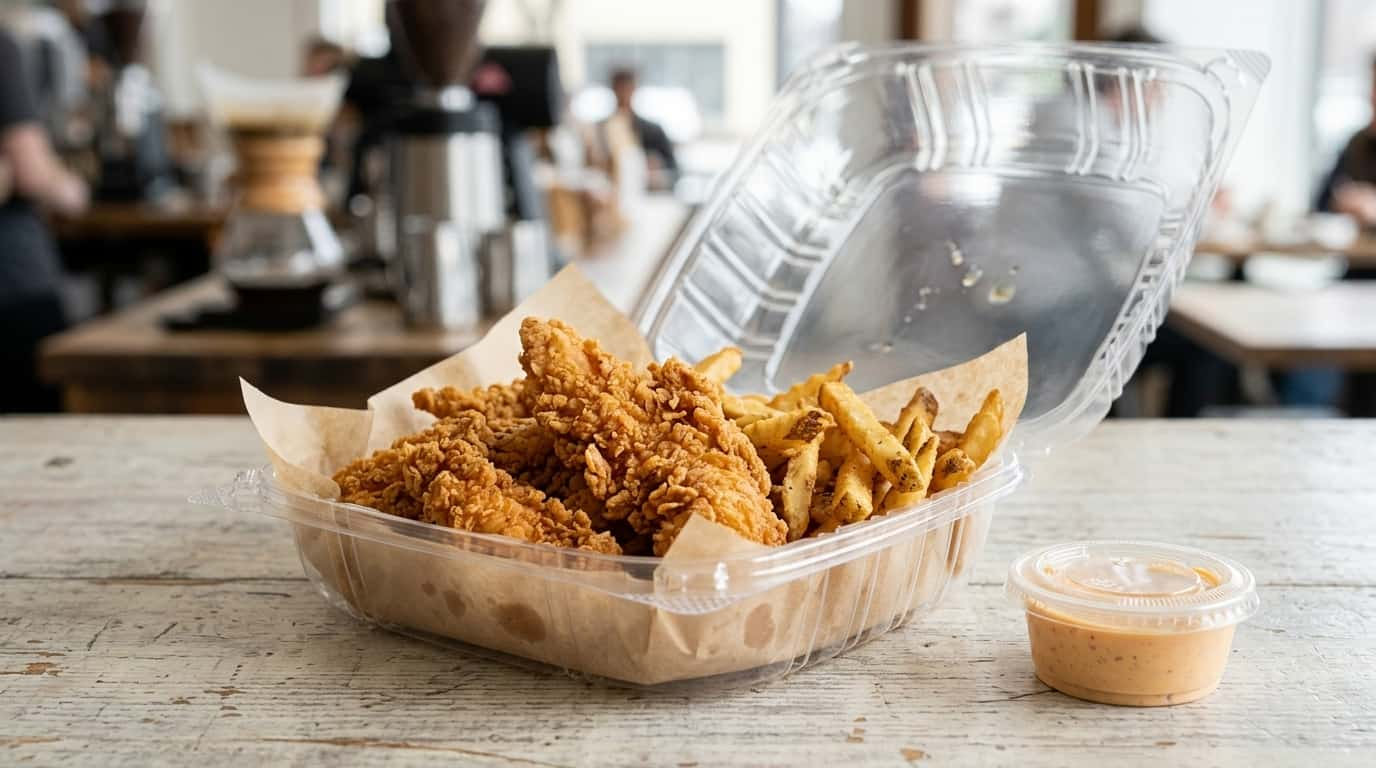
Knowing how to keep fried food crispy in takeout containers is one of the most persistent problems in food service, and the container itself is almost never the only answer. A perfect batch of fried chicken or golden fries can leave your fryer looking exactly right and arrive at a customer's door as a limp, steam-soaked mess. The fryer did its job. The packing protocol did not.
The stakes are real. 90% of off-premises customers say they would order a wider variety of food if upgraded packaging held meals closer to dine-in quality. For fried items, that is a direct commercial signal. Every soggy delivery is a star rating at risk and a customer quietly choosing somewhere else next time. Bad packaging costs more than most operators realize. With fried food, the gap between a good pack and a bad one closes fast.
This guide covers the full picture: why fried food goes soggy, how to choose the right container, the five-step packing protocol that actually works, and what to do differently when you are holding food for a catering event or farmers market where the window stretches from a quick pickup to two hours or more.
Why Does Fried Food Go Soggy Inside a Takeout Container?
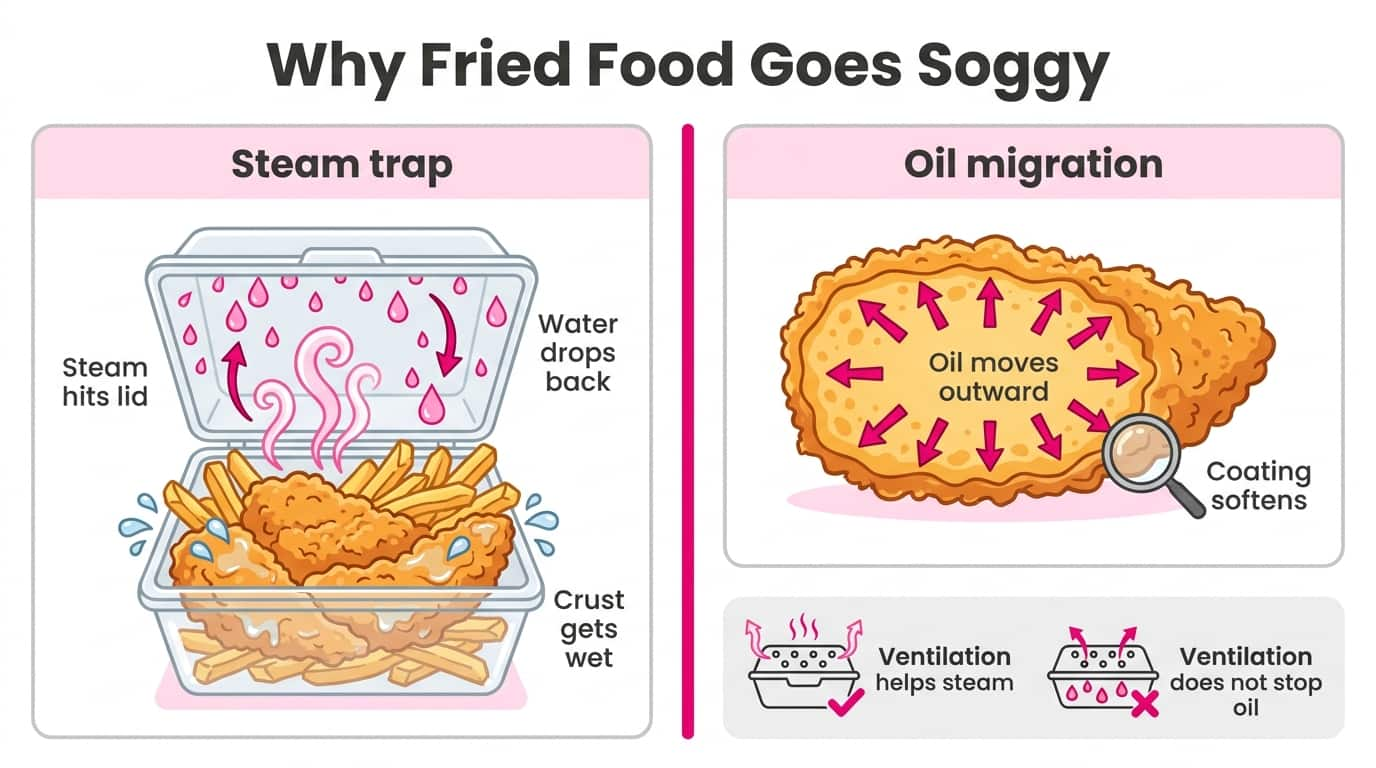
Direct Answer: Two separate mechanisms cause sogginess: steam trap and oil migration. Steam condenses on the container walls and drops back onto the crust. Oil from the breading migrates outward as the food cools, softening it from within. Ventilation only addresses one of the two.
Two things happen the moment fried food goes into a container. The first is the steam trap. Food coming straight from a fryer is still releasing moisture vapor from its hot interior. Inside a closed container, that steam hits the cooler walls and lid, condenses into water droplets, and falls back directly onto the crust. This is why perfectly fried food can turn soft inside what looks like a perfectly good container.
The second mechanism is oil migration. Hot oil in the breading does not stay locked in place as the food cools. It moves outward toward the surface, wicking into the coating and softening it from the inside out. No amount of ventilation fixes oil migration. It is a chemistry process, not an airflow problem.
This two-failure model is why operators who switch to a vented container but skip the pre-pack rest still end up with soggy food. Both mechanisms need to be managed separately. The five-step protocol below addresses each one at a different stage of the pack.
What Is the Correct Pre-Pack Rest Time Before Sealing Fried Food?
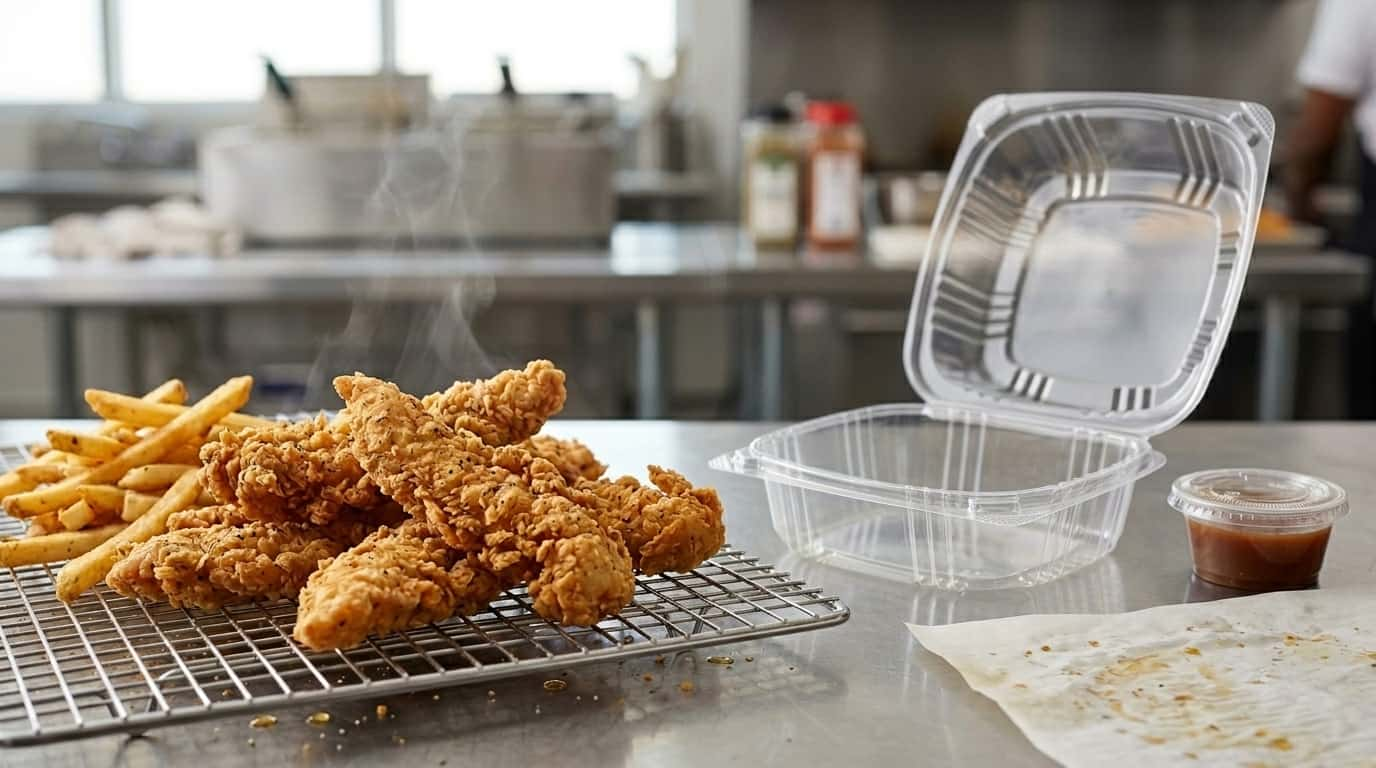
Direct Answer: Rest fried food uncovered on a wire rack for 2 to 3 minutes before sealing. This purges the initial and heaviest wave of surface steam before it enters and condenses inside the container.
The wire rack is not optional here. Placing food directly on a flat tray traps steam underneath the crust at the same time more steam is building above it. A rack allows airflow on all sides, releasing the first and most intense load of moisture vapor into the open air rather than into the sealed container.
Two to three minutes is a useful starting point, but each menu should be tested through real pickup and delivery runs. Rushing this step to speed up service is the single most common packing error. That short wait protects the crust far more than any container upgrade on its own. The National Restaurant Association's operator packaging guidance recommends testing packaging with real delivery runs from your own menu, noting that temperature testing at each handoff stage is where most operators discover their failure points.
The "keep it warm" instinct is also worth calling out here. Sealing food immediately after frying to retain maximum heat traps exactly the steam you are trying to manage. Heat and crispness are not the same thing. A brief rest sacrifices minimal temperature while preserving the texture that gets reviewed.
Does Container Ventilation Actually Keep Fried Food Crispy?
Direct Answer: Yes, but ventilation only manages ongoing steam during transit, not the initial steam load. A vented clamshell buys time. The pre-pack rest eliminates steam at the source. You need both working together.
In a vented container, steam escaping from the food has a release path. This slows condensation buildup on the lid and interior walls during transit. For a typical delivery window, that difference preserves meaningful crust texture compared to a sealed container where moisture has nowhere to go.
In a non-vented container, steam rises, hits the lid, cools into water droplets, and falls back onto the crust. It compounds fast. The critical misconception to clear up is the "just buy vented containers" trap. Ventilation does not eliminate moisture. It buys time during transit. The pre-pack rest is what eliminates the first and heaviest wave of steam before it ever enters the container. Neither step is sufficient alone.
What Venting Specs Should You Look for When Buying Clamshells?
Direct Answer: Look for upper vents, raised base channels, and lid venting that still works when the clamshell is fully closed during service.
Not all vented clamshells perform equally. When sourcing containers for fried food, look for three practical features:
- Corner or side vents: Positioned at the upper corners of the clamshell lid, these help steam escape because they stay above the food line and remain unobstructed during stacking.
- Raised base channels: A ribbed or channeled interior base elevates food slightly above the container floor. This prevents the crust from sitting in any condensation that collects at the base during transit.
- Through-closure lid venting: Some containers include venting that runs through the hinge closure itself, allowing steam to escape even when the lid is fully sealed. Worth the marginal cost increase for longer service windows or holds beyond a standard delivery run.
You do not need the most expensive clamshell on the market. These three specs are what matter functionally, and they are available across a range of price points. At Plastic Container City, we supply these formats to food operations across every service type in the U.S., and budget options can still work well when the venting, base, and lid design are right.
What Is the Best Container Material for Hot Fried Food?
Direct Answer: Polypropylene (PP #5) is the correct material for hot fried food. It holds structural shape at serving temperatures and keeps vent geometry intact during transit. Some plastics can degrade or distort above 140°F, so PET should not be used unless the supplier confirms it is hot-food rated.
Polypropylene (resin code #5) is heat-stable, shape-retentive at serving temperatures, and does not warp during the temperature changes of a typical delivery run. A PP clamshell keeps its lid geometry intact throughout transit, which means the venting you paid for actually stays functional. It does not transfer off-flavors, and its rigidity means the lid stays properly positioned rather than drooping onto the food.
PET (resin code #1) is excellent for cold items, salads, and grab-and-go counter display. For hot fried food, some plastics can degrade or distort above 140°F, so PET should not be used unless the supplier confirms it is hot-food rated. The National Restaurant Association's packaging guidance flags temperature distortion as a key variable to test when selecting containers for hot items. A distorted lid eliminates whatever vent geometry the container was designed with, creating two problems at once: steam trapped and crust damaged from the lid pressing down on it.
Foam and broader compliance questions belong in the How to Choose Takeout Containers for Your Restaurant. For this article, the practical point is simple: hot fried food needs a hot-food-rated, vented container that manages steam without crushing the crust.
What Is the 5-Step Packing Protocol for Crispy Fried Food?
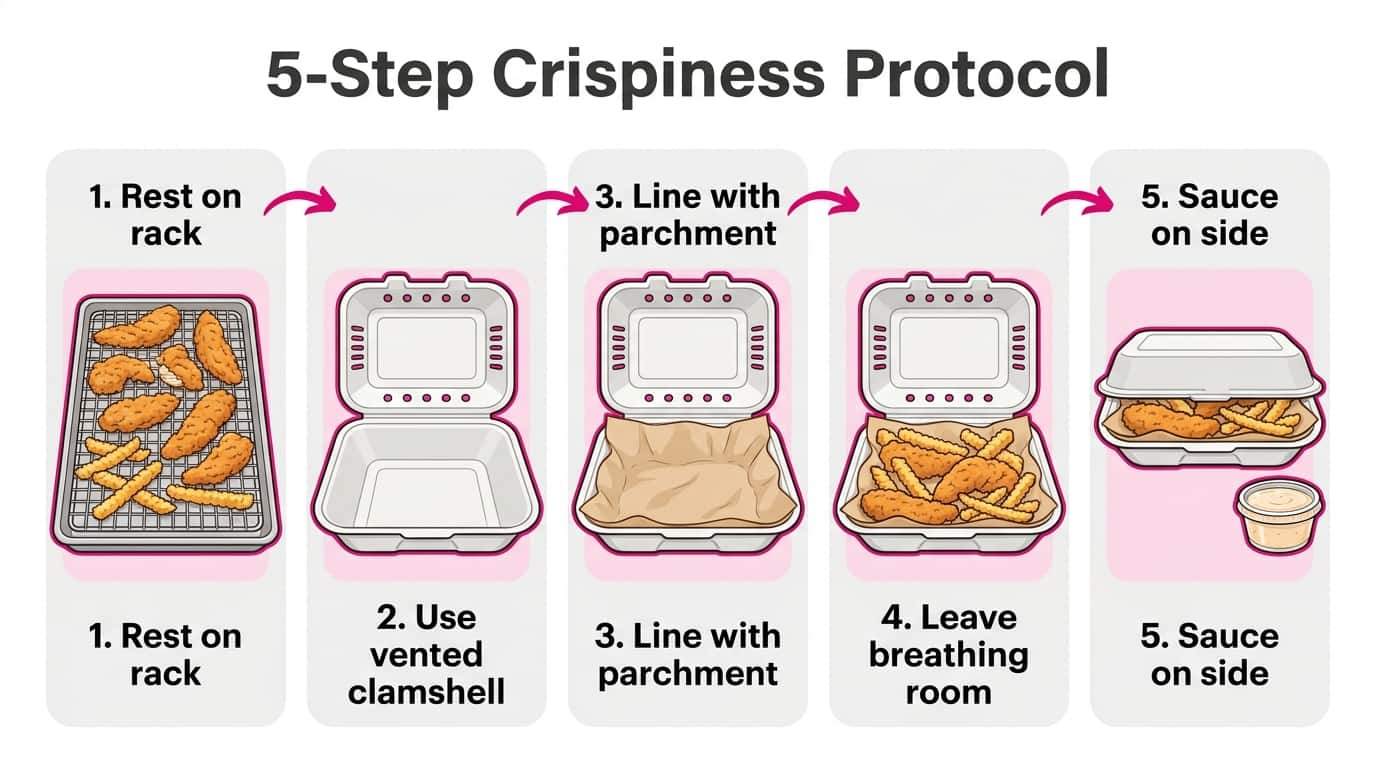
Direct Answer: Rest first. Use a vented PP #5 clamshell. Line the base. Do not crowd. Pack sauces separately. Skipping any single step undoes the benefit of the others. The order matters as much as the container.
Each step in this protocol targets one of the two failure mechanisms. Follow them in sequence:
- Step 1: Rest on a wire rack for 2 to 3 minutes. This purges the initial steam load before it enters the container. Without this step, you are trapping the heaviest moisture surge at the exact moment of sealing.
- Step 2: Choose a vented PP #5 clamshell. Correct material, correct geometry. The vents manage residual steam during transit. If the container is non-vented or made of PET, the remaining steps lose much of their value.
- Step 3: Line the base with parchment paper. A single parchment layer absorbs any condensation that does collect at the container floor during transit. Paper towels work for shorter pickup and delivery runs but saturate quickly. Parchment holds up longer and does not stick to the crust the way a saturated towel can.
- Step 4: Do not crowd the container. Every piece needs clear space around it for steam to move. Packing pieces tightly together traps steam between them, creates hot spots, and defeats the venting entirely. If it does not fit with breathing room, use a larger size or a second container.
- Step 5: Pack sauces and wet components separately. Pre-saucing any fried item adds direct moisture to the crust before transit even begins. Use separate portion cups for dips and sauces to protect the crust all the way to the customer's hands. For the full size breakdown, see Portion Cups and Sauce Containers: Size Guide for Restaurants.
At Plastic Container City, we work with food professionals across every service format in the U.S., from quick-service kitchens to food trucks and catering operations, and this five-step sequence is consistently what separates operators who deliver quality fried food from those who keep blaming the fryer.
How Do You Keep Fried Food Crispy for Long Holds and Catering?
Direct Answer: For longer holds, use the partial cooling protocol: let food drop slightly from peak temperature before sealing in a vented PP container. Full-temperature sealing creates the highest possible steam load. Insulated bags are for transit only, not pre-service holding.
Short delivery windows and long catering holds are fundamentally different problems. The standard five-step protocol works well for shorter pickup and delivery runs. For farmers market setups, food truck service, and catering events where food may sit for 45 to 90 minutes or more, additional steps are needed.
The partial cooling protocol for long holds:
- Extend the pre-pack rest. Let food sit on a wire rack until the surface temperature drops noticeably while the interior remains hot. Sealing at peak temperature creates the highest possible steam load inside the container. A longer rest meaningfully reduces that initial burst before the food is ever enclosed.
- Hold open, seal to order where the format allows. Keep food on an open rack and seal individual portions as orders come in rather than pre-packing everything at once. This applies particularly to food truck and market-stall operators with display-style counter service.
- Avoid insulated bags during holding. Placing containers inside insulated bags during the pre-service hold traps exactly the steam you are trying to manage. Use insulated bags for the transit leg only, once the food is sealed and leaving your setup.
- Refresh between serves. A brief high-heat blast in an oven or air fryer re-crisps the exterior without drying the interior. For farmers markets and catering events where quality over time matters as much as speed, this is the practical tool most operators underuse.
One advantage worth noting in these settings: food trucks and market vendors who use clear-sided or clear-lid PP clamshells give customers a direct view of the product before purchase. Visibility drives impulse buying at counter-service and market formats, and rigid PP containers stay presentable across a long hold in a way that softer or less structured formats do not.
Long holds are a different operational format, not just a longer version of delivery. Food held for 90 minutes at a market needs to be treated as a production-and-serve flow, not a pre-packed product waiting in a bag.
What Container Should You Use for Fried Food?
Direct Answer: Use vented PP #5 for hot fried food, avoid sealed PET for fryer-hot items, and reserve insulated bags for the transit leg only.
| Container Type | Vented | Material | Best Use | Do Not Use For |
|---|---|---|---|---|
| Vented PP clamshell | Yes | PP #5 | Fried chicken, wings, fries, onion rings | Cold items or display-only products |
| Non-vented PP clamshell | No | PP #5 | Cold sandwiches, baked goods, dry items | Any hot fried food |
| Clear PET container | No | PET #1 | Salads, cold grab-and-go, sushi | Hot food unless hot-food rated |
| Paper bag (kraft) | Partial | Kraft paper | Very short handoff windows only | Longer holds or delivery runs |
| Insulated delivery bag | No | Various | Transit only, after food is sealed | Pre-service holding of fried food |
Keeping fried food crispy in takeout containers is a protocol problem as much as it is a packaging problem. The right container handles moisture during transit. The right pre-pack rest handles moisture before transit. For operators choosing containers across a full menu, including soups, cold display items, and state compliance concerns, the full breakdown belongs in How to Choose Takeout Containers for Your Restaurant. For more food service packaging guidance, visit the Plastic Container City blog and keep refining how to keep fried food crispy in takeout containers.
Frequently Asked Questions
How to keep fried food crispy in a container?
Use a vented PP #5 clamshell, rest the food uncovered on a wire rack for 2 to 3 minutes before sealing, line the base with parchment paper, give each piece space in the container, and keep sauces in a separate portion cup. Follow all five steps in sequence. Skipping any one undoes the benefit of the others.
What to use instead of paper towels for frying?
Parchment paper is more reliable for longer holds. It absorbs condensation without saturating and does not stick to the crust the way a wet paper towel can after sitting through a delivery run. During the rest phase before sealing, a wire rack is the correct tool: it allows steam to escape from all sides of the food rather than trapping it underneath.
How to crisp up takeout fries?
Spread them in a single layer on a wire rack or baking sheet and use a hot oven at 400°F or above for 3 to 5 minutes, or an air fryer for 2 to 3 minutes. Avoid the microwave, which adds moisture rather than removing it. For food service operators refreshing fries during extended holds, this approach keeps quality consistent across a long service window.
How do you store fried chicken so it stays crispy?
Rest it uncovered on a wire rack after frying, then store in a vented PP clamshell with a parchment liner at the base. Do not stack pieces directly on top of each other and do not seal while the food is still at full temperature. For longer holds, extend the pre-pack rest until the surface temperature drops noticeably before sealing.
What is the secret to crispy fried food?
Two things working together: a dry, high-starch crust that resists moisture uptake during cooking, and a packing protocol that manages both steam and oil migration after the food leaves the fryer. The best frying technique in the kitchen does not help if the packaging process traps steam against the crust during the minutes between the fryer and the customer's hands. Both halves of the process matter equally. This is where keeping fried food crispy in takeout containers becomes an operational discipline, not just a packaging choice.