
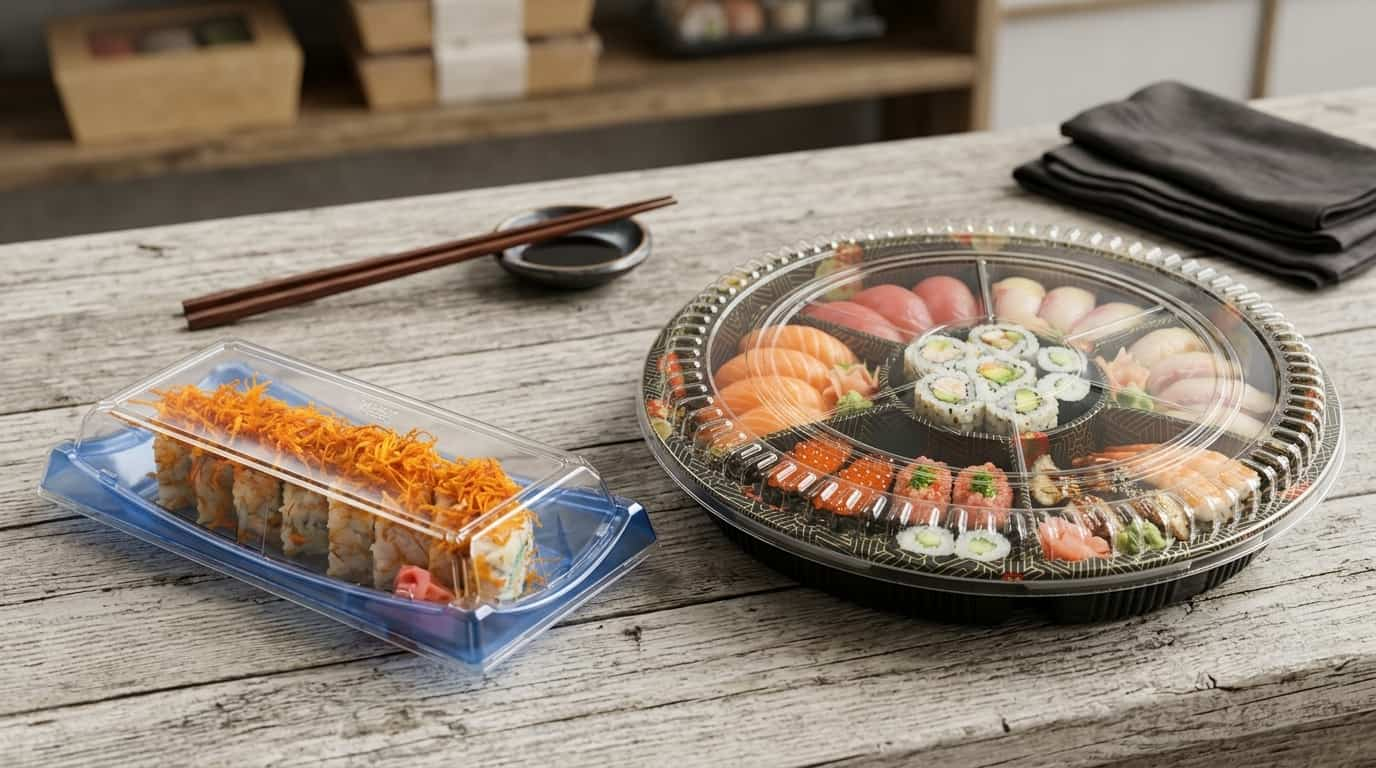
TL;DR: A sushi tray size guide only helps if it also tells you how many cases to order. This piece compares Plastic Container City's seven rectangular sizes and three round party trays, dimensions, case counts and current pricing, then shows how to turn a tested order into a case count. Confirm the fit first, then scale to cases.
Picking the right container starts with a sushi tray size guide, but sizing is only half the order. Get the dimensions wrong and you're either cramming a garnish against a lid that will not snap shut, or paying for empty plastic on every single order. Get the case quantity wrong and you're either sitting on stock you do not need, or short three days before your next delivery. Restaurants, ghost kitchens, grocery sushi counters and catering teams all hit the same two questions back to back: what size, and how many. This guide treats them as one buying decision instead of two separate research projects. We will go through the rectangular takeout line, the round party trays, and the case math that connects a tested fit to your real order volume, so the next order is the last one you have to think this hard about.
Is There a Standard Sushi Tray Size for Restaurants?
Direct Answer: There is no single industry standard sushi tray size. Plastic Container City's line runs seven rectangular sizes, from the #.6 at 6.58 x 3.62 inches up to the #40 at 7.48 x 7.48 inches, plus three round party trays at 11.42, 13.75 and 15 inches across.
| SKU | Dimensions | Case size | Price per case | Material |
|---|---|---|---|---|
| #.6 | 6.58" x 3.62" x 1.22" | 600 | $72.14 | OPS |
| #1 | 9" x 4" x 2" | 600 | $93.65 | OPS |
| #8 | 6.75" x 4.75" x 2" | 600 | $82.27 | OPS |
| #10 | 7.625" x 5.25" x 2" | 400 | $75.03 | OPS |
| #15 | 8.62" x 5.47" x 1.18" | 400 | $105.99 | OPS |
| #30 | 9.5" x 4.625" x 2.25" | 300 | $84.83 | PET |
| #40 | 7.48" x 7.48" x 1.57" | 300 | $113.72 | OPS |
Dimensions, case counts and pricing confirmed on the sushi container page and individual product pages as of July 2026. Case pricing can change, so confirm current numbers before a bulk order.
Six of the seven rectangular sizes are listed as OPS with a black base and clear dome. The #30 product page lists clear PET and a snap-locking lid. Material varies by SKU, so check the finished product page before relying on any fridge, freezer, or handling claim.
What's a Good Size for a Serving Tray?
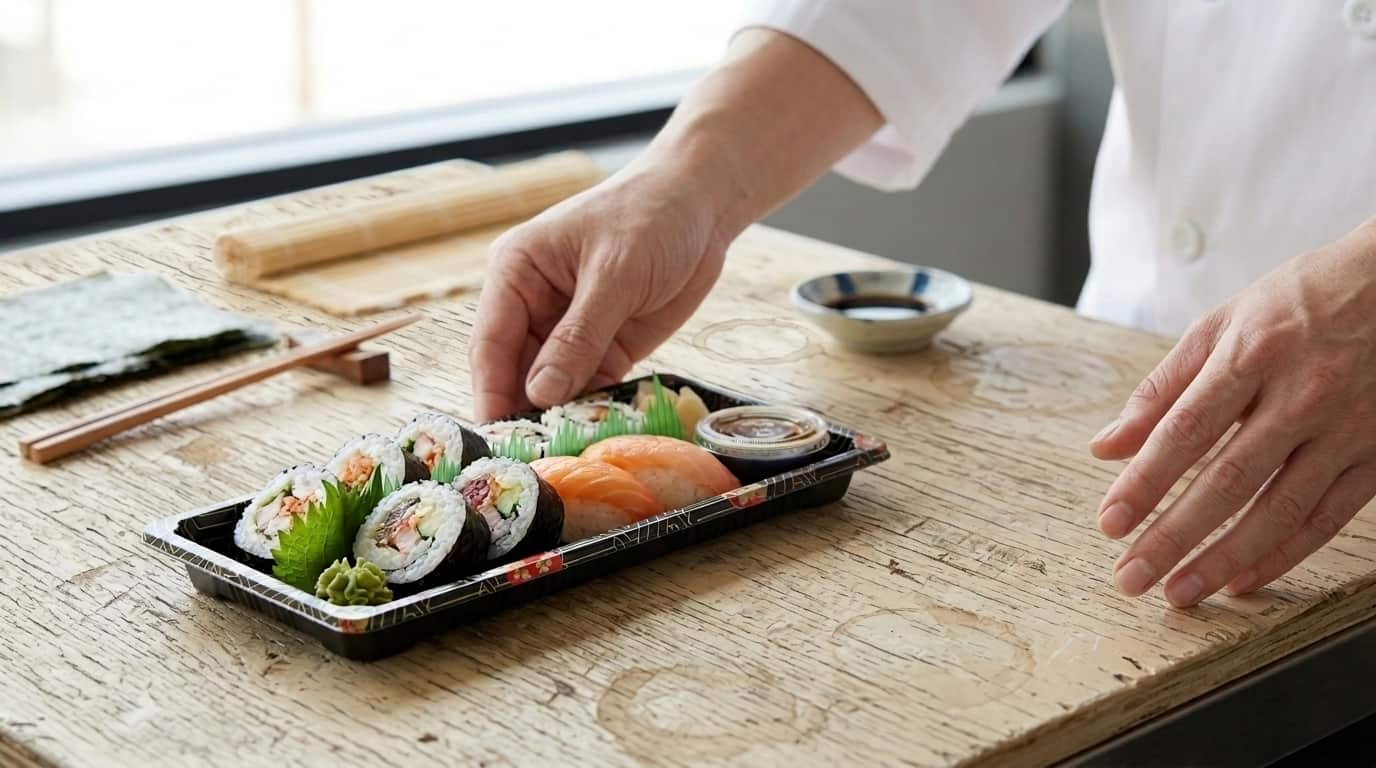
Direct Answer: A good serving tray size depends on the finished order you're packing, not a fixed number of inches. A small rectangular container works for individual and small takeout orders, while a shared platter for a table or an office order needs a round tray built for presentation.
That split matters more than it sounds. Rectangular formats use a compact footprint for individual and small takeout orders. Round party trays are built around a table, a buffet line, or a catering drop-off, where the plating itself is part of what the customer is paying for. Before you settle on a size, picture the actual handoff: is this going into a bag for one customer, or onto a table for a group? Then test that exact arrangement in the container before you commit to a case. Plastic Container City recommends packing one finished order, closing the lid, and checking that garnish and sauce cups clear before you order at scale.
What Size Is a Large Party Tray?
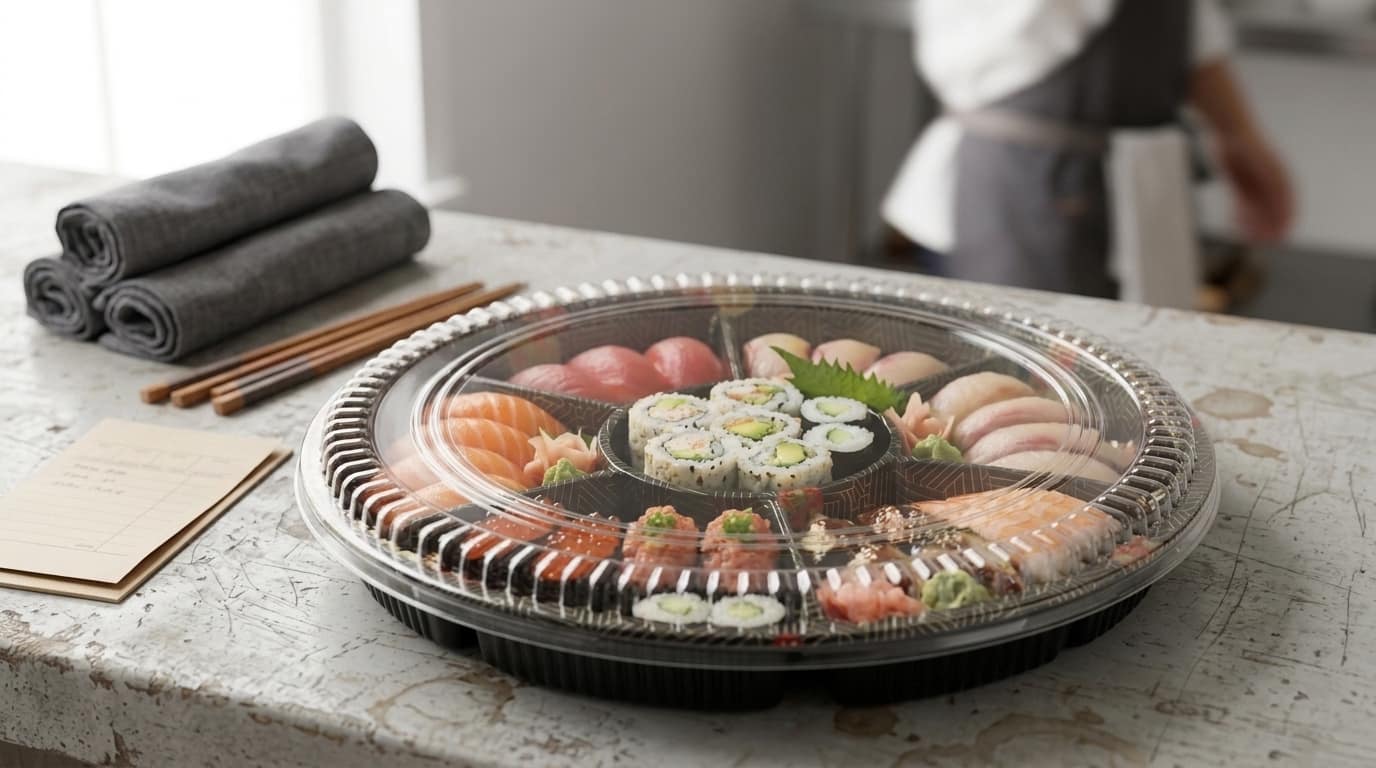
Direct Answer: Plastic Container City's largest round sushi party tray is the #65 at 15 inches across, sitting above the 13.75-inch #64 and the 11.42-inch #61. All three ship 100 to a case and are built from OPS with a black base and clear dome.
| SKU | Diameter x height | Case size | Price per case |
|---|---|---|---|
| #61 | 11.42" x 0.67" | 100 | $84.37 |
| #64 | 13.75" x 2.25" | 100 | $117.68 |
| #65 | 15" x 2.29" | 100 | $143.73 |
The #64 round sushi party tray has an airtight snap-shut lid, and the black base with clear dome carries across all three round sizes. That combination matters for catering: the black base holds presentation while the clear dome lets the tray double as its own display case on a buffet table.
We won't hand you a fixed headcount number for these trays, and here's why: how many guests a round tray serves depends on your roll style, cut count, and whether sushi is the main course or a side dish, not just the diameter. The more reliable method is a fit test. Pack one finished order at your standard cut count, close the lid, check that garnish and sauce cups clear the dome, and use that arrangement as your baseline before you scale it up for a bigger event.
Round or Rectangular Sushi Trays: Which Is Better?
Direct Answer: Rectangular trays suit individual and small group orders; round trays suit shared, presentation-first service. The decision usually comes down to whether the tray is meant to be opened by one customer or set down in front of a group.
Some operations need both formats, because daily takeout and shared catering orders place different demands on tray shape. Rectangular containers cover daily takeout and delivery, where stacking, lid security and fridge space matter more than presentation. Round trays cover catering, office lunches and holiday platters, where the tray itself is part of the table setting. Base the mix on your own takeout, display and catering volume rather than asking one tray shape to cover every order.
How Many Cases of Sushi Trays Should You Order?
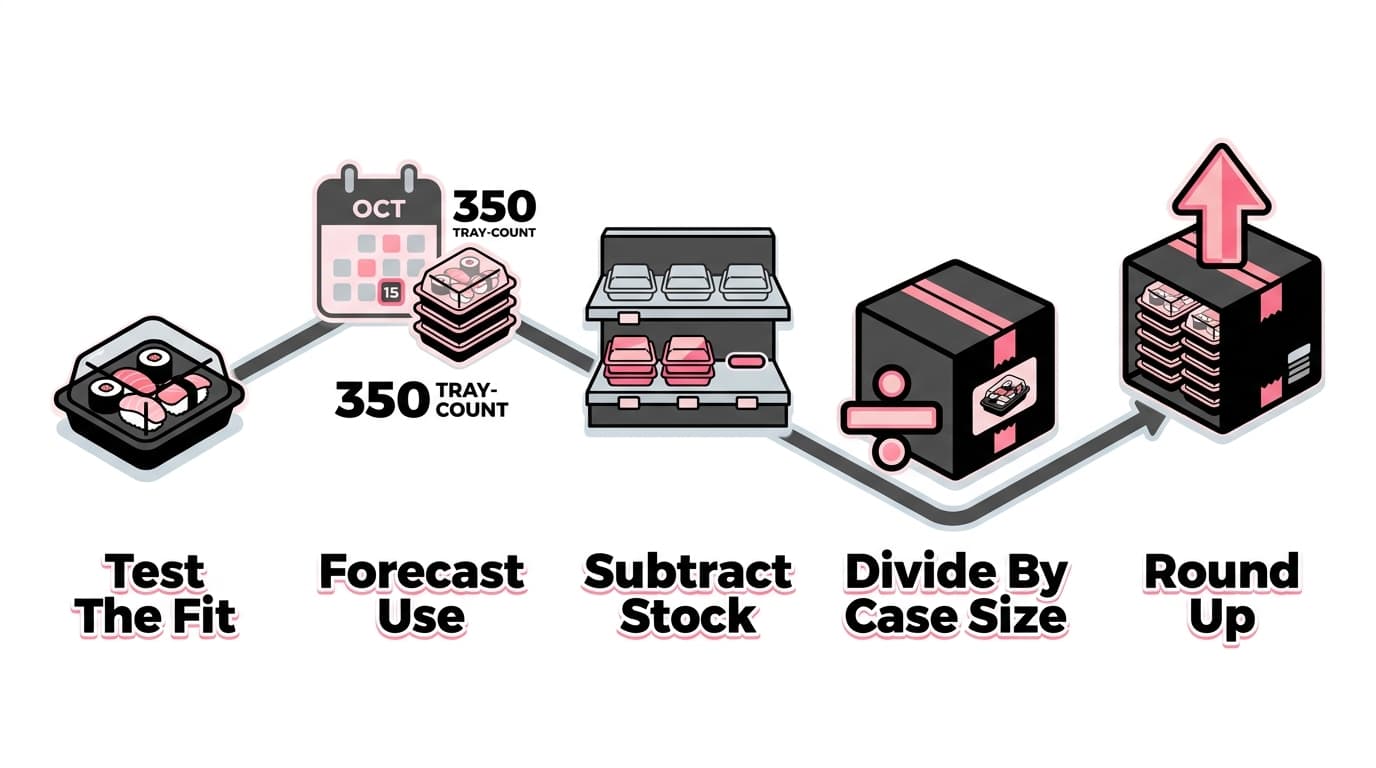
Direct Answer: Start with forecast use, subtract stock already on hand, divide by the SKU's case size, and round up. A round tray case holds 100 units, so an event needing 40 party trays and zero units in stock still calls for a full case.
This is where sizing and case quantity connect. Once a tested arrangement confirms the container fits, the case math is straightforward: (forecast use minus stock on hand) divided by the case size, rounded up to the next full case, tells you how many cases to order. To estimate how long one case lasts, divide the case quantity by average weekly use. A 600-count case of the #1 used at 30 units a week lasts about 20 weeks. The risk is ordering by price or case quantity before testing the container against the finished order, and ending up with a case of the wrong size in the back of a walk-in.
When Should Restaurants Reorder Sushi Trays?
Direct Answer: Reorder based on your own lead-time demand and a buffer you set, not a generic seasonal calendar. Demand patterns vary by restaurant, so the safest reorder point is built from your own use and your supplier's lead time rather than an industry-wide schedule.
Build a reorder trigger in three steps:
- Calculate lead-time use. Multiply your average weekly use by the number of weeks between placing an order and receiving it.
- Add a buffer. Size it to your storage space, how far ahead you can see bookings, and how costly running out would be.
- Move the order earlier for confirmed demand. Add confirmed catering orders and known busy dates to the forecast. Higher expected use may move the reorder date forward.
That approach holds up whether you're ordering weekly rectangular containers for daily service or a one-time case of round party trays for a single event.
For delivery orders, our Sushi Takeout Container for Delivery guide covers what to check before a tray goes out on a delivery route.
Sizing and case quantity are really one decision made in two steps: test the finished arrangement, then match the case count to the order. Get those two steps right and reordering becomes a formality instead of a guessing game. For more packaging guidance for restaurants and caterers, visit the Plastic Container City blog, and for the full picture on sushi packaging, start with our Sushi Packaging Guide for Restaurants. Keep this sushi tray size guide close at hand and the next case order becomes easier to calculate and easier to repeat.
Frequently Asked Questions
Do sushi trays come in different materials?
Direct Answer: PCC sushi trays use OPS or PET depending on the SKU. Six of Plastic Container City's seven rectangular sizes and all three round party trays are OPS with a black base and clear dome, while the #30 rectangular container is clear PET. Check the individual product page before relying on a material, fridge, or freezer claim for a size you have not confirmed.
When should restaurants order wholesale sushi party trays?
Direct Answer: Order once the event quantity and tested tray arrangement are confirmed. Subtract stock on hand, divide the remaining tray requirement by 100, round up, and allow the supplier's stated lead time.
Can Round and Rectangular Trays Share a Case?
Direct Answer: Cases are ordered by individual SKU, so mixing sizes means ordering separate cases for each container rather than one blended case. If your order includes both formats, plan for a minimum case quantity on each SKU you're using.