
Vented vs non-vented produce containers is a decision most sellers make on autopilot, right up until strawberries turn soft and mushy, or a lid fogs over so badly customers can't see what's inside. Berries can suffer when condensation has nowhere to go. Cut fruit browns when air exposure and prep timing aren't managed right. Lettuce can wilt in the wrong container. The container isn't decoration; it's doing a job, and picking the wrong one shows up as shrink, markdowns, and produce nobody wants to grab.
This isn't a guessing game. Produce behaves differently depending on how fast it breathes, how much moisture it holds, and whether it's whole or cut for display. Once you know that, matching a container to a product gets simpler.
At Plastic Container City, we supply vented and sealed produce packaging to grocers, farm stands, caterers, and grab-and-go counters across the U.S., so this question crosses our desk often. Below is the decision framework: why airflow matters, when a seal earns its keep, and where cut-fruit display and prep timing fit in.
What's the Difference: Vented vs Sealed Containers?
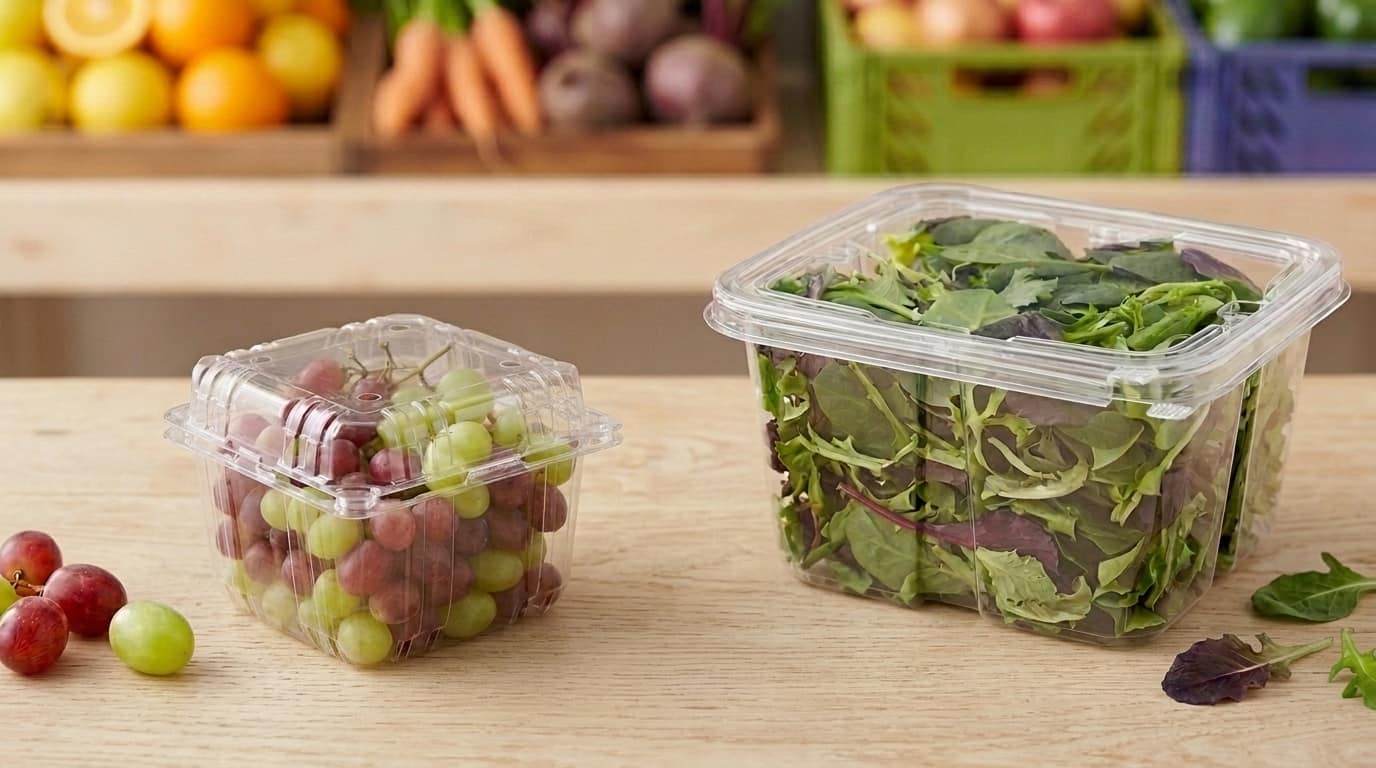
Picture the produce aisle: berries and grapes usually sit in clamshells punched with small vents, while a fruit cup at the deli counter is sealed tight with a tamper strip. Vented packs are built for produce that's still respiring and shedding moisture after harvest. Sealed packs are built for cut, prepped, or ready-to-eat items where air contact and customer trust matter more than gas exchange.
Should Vents Be Open or Closed for Vegetables?
Some vegetables and fruits respire harder than others. Extension research splits them into climacteric items, like tomatoes and avocados, which keep ripening after harvest, and nonclimacteric items, like citrus, grapes, and peppers, which don't. Either way, heat and physical stress push respiration rate higher, and higher respiration means faster breakdown. Vents give that process somewhere to go instead of letting heat and moisture build up inside a closed shell.
Is Condensation the Real Threat to a Produce Display?
FDA fresh-cut guidance backs this up from the safety side, warning that condensate dripping onto produce or packaging is a hazard on its own, separate from temperature control. A fogged-up clamshell isn't just unattractive; it can signal excess moisture inside the pack, which may contribute to faster quality loss.
Which Produce Needs a Vented Container vs a Sealed One?
| Produce Type | Best Container Style | Why It Works |
|---|---|---|
| Berries & grapes | Vented clamshell | Berries need moisture escape and cooling; grapes still benefit from airflow and moisture control |
| Leafy greens & lettuce | Vented / perforated | Perforated packaging suits high-moisture greens and keeps humidity from pooling |
| Whole apples | Vented | Vented formats support cooling and gas exchange for whole apple display packs |
| Cut fruit for display | Sealed, clear | Limits air contact that speeds browning; must pair with cold holding and moisture control |
| Mixed fruit cups / grab-and-go | Sealed, tamper-evident | Supports self-serve trust and helps customers see whether the pack has been opened |
Our vented produce containers are built around this exact logic, punched for berries, grapes, apples, and greens headed straight to a retail shelf or farm stand table.
For product fit, match the format to what you're packing: vented berry containers for berries, vented grape clamshells for grapes, vented apple containers for whole apple sets, and lettuce containers for greens. Check each product page for dimensions, pack count, and current stock before ordering.
Should Strawberries Be Stored in a Vented Container?
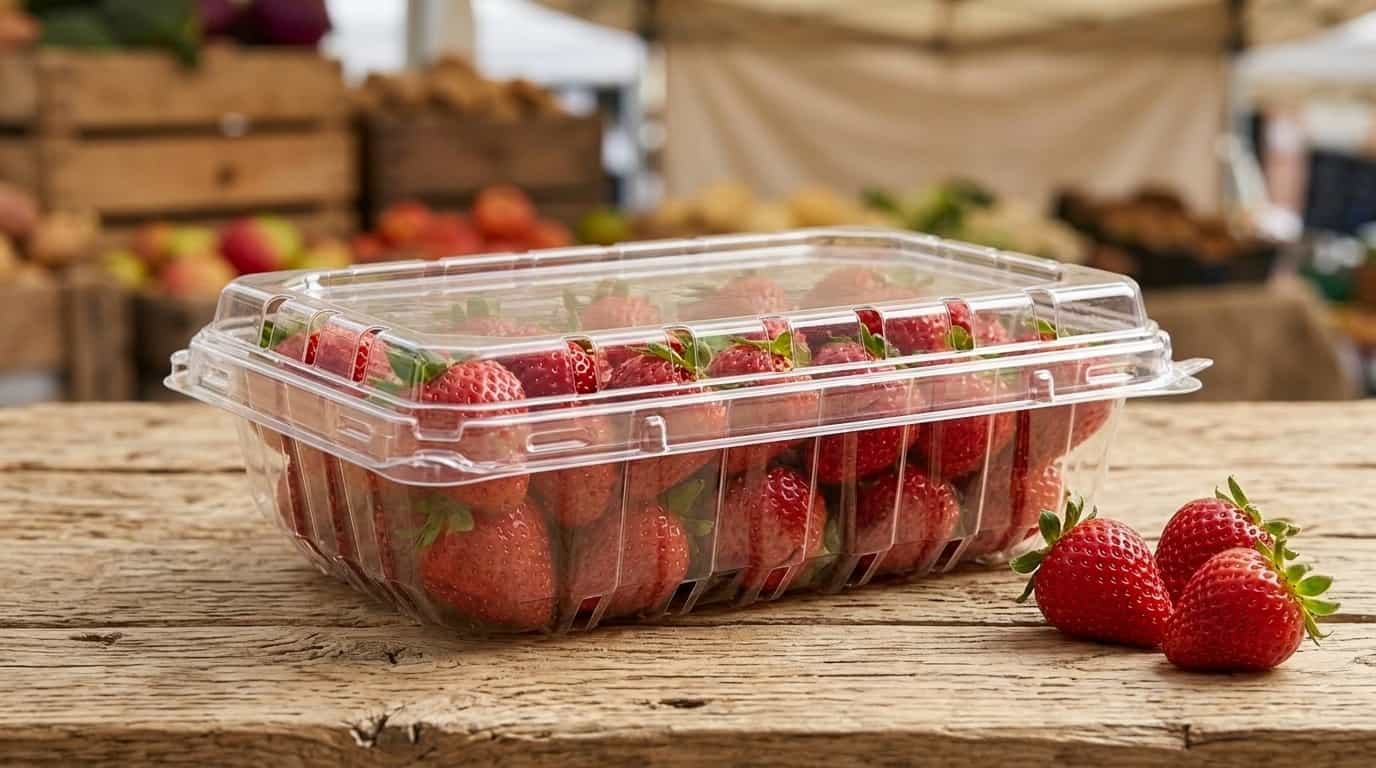
Strawberries are the poster child for this question, mostly because they mold so visibly and so fast. Extension research ties clamshell vent holes directly to cooling, gas exchange, and moisture escape, and strawberries are one of the products those vents were designed around. A vented 11 oz berry container gives the fruit somewhere to shed condensation instead of pooling into a soggy bottom layer nobody wants to buy.
Does Mixing Produce Types in One Container Cause Problems?
Mixed produce packs are convenient, but they're not neutral. If you're building a combo pack, keep ethylene producers away from ethylene-sensitive vegetables unless that exact mix has already been tested for it. When in doubt, separate packaging beats guessing.
Is an Airtight Container Automatically Safer for Produce?
The FDA Food Code sets cold holding for TCS food (cut melon, cut tomatoes, cut leafy greens) at 41°F or below, and that number matters more than whether the lid has a vent. Trapped moisture in a sealed container can create better conditions for spoilage and microbial risk if time and temperature aren't controlled. An airtight seal with warm holding is still a safety problem; a vented pack only works when the produce is also handled cleanly and held cold. Match the packaging to the product, then let temperature control, sanitation, and handling do the actual safety work.
When Does a Sealed or Tamper-Evident Pack Win?
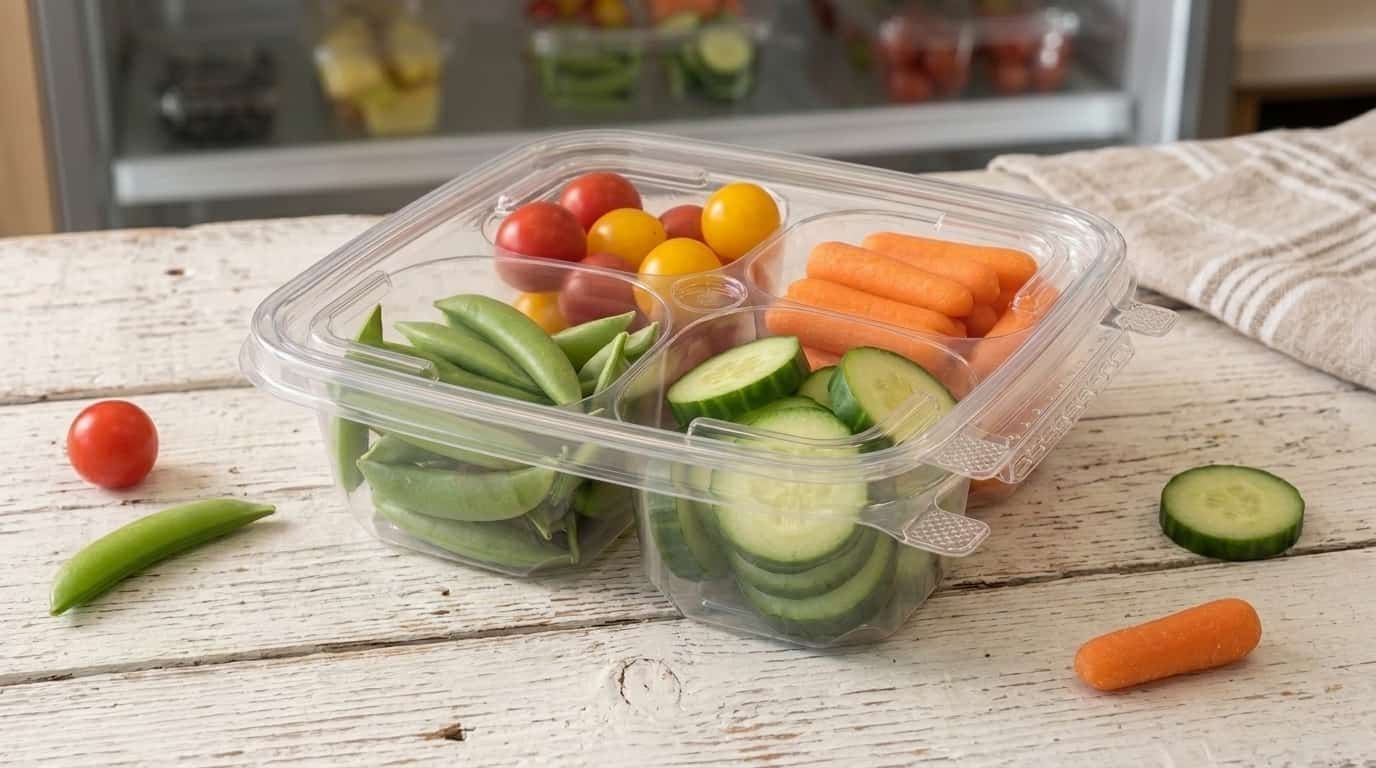
Cut fruit cups, mixed berry bowls on a self-serve shelf, and grab-and-go salad toppings all shift the priority from airflow to trust. A tamper-evident container with a visible tear strip helps customers see whether the package has been opened before checkout, which matters more at a self-serve bar than a punched vent ever would.
How Do You Stop Cut Fruit From Browning on Display?
Cutting exposes fruit flesh to oxygen, and that reaction is the whole reason a browned apple wedge reads as old stock quickly on display. A sealed, clear cup can help reduce oxygen contact, but the fuller playbook, acid treatments, cold holding numbers, and a repeatable prep line, lives in our guide: How to Keep Cut Fruit From Turning Brown for Display.
How Far Ahead Can You Cut Fruit Before Service?
Cantaloupe and pineapple have sourced prep-ahead figures; berries and cut apples need more careful handling. The general 3 to 4 day refrigerated window for cut produce comes from university extension guidance, though display-ready quality often fades before then, and cold holding and date marking still matter. We walk through fruit-by-fruit prep windows, cold-holding rules, and how to build a batch schedule around a service window in How Far Ahead Can You Cut Fruit for Service?
Vented and sealed produce containers aren't competing options. They're two tools for two different jobs. Give berries, grapes, greens, and whole apples room to breathe, and reach for a sealed or tamper-evident pack once produce is cut, portioned, or built for self-serve trust. Airtight was never the safety shortcut it sounds like; cold holding and clean handling still do that work. Get the container right first, and mold risk, browning control, and prep timing all get easier to manage. Whatever you're packing next, the vented vs non-vented produce containers decision starts with the produce, not the shelf.
Frequently Asked Questions
Why do berry containers have holes?
Berry clamshells use vent holes for cooling, gas exchange, and excess moisture escape.
Can bacteria grow in an airtight container?
Yes, if temperature and moisture aren't controlled. An airtight seal does not replace cold holding, clean handling, or date marking for TCS produce.
Why do my berries mold so fast?
Trapped moisture is a common problem. Prolonged wetness is linked with decay and mold, so moisture control matters. A vented container helps excess moisture escape instead of sitting against the fruit.
What vegetables need to be vented?
Leafy greens and other high-moisture vegetables generally do best in vented or perforated packaging. Grapes benefit from the same kind of packaging, but they're a fruit, not a vegetable.
How do professional chefs store strawberries?
The same principle used in retail display carries into commercial kitchens: keep strawberries cold, dry, and in a container that lets moisture escape rather than pool. Exact prep routines vary by kitchen, but the underlying logic stays consistent.