
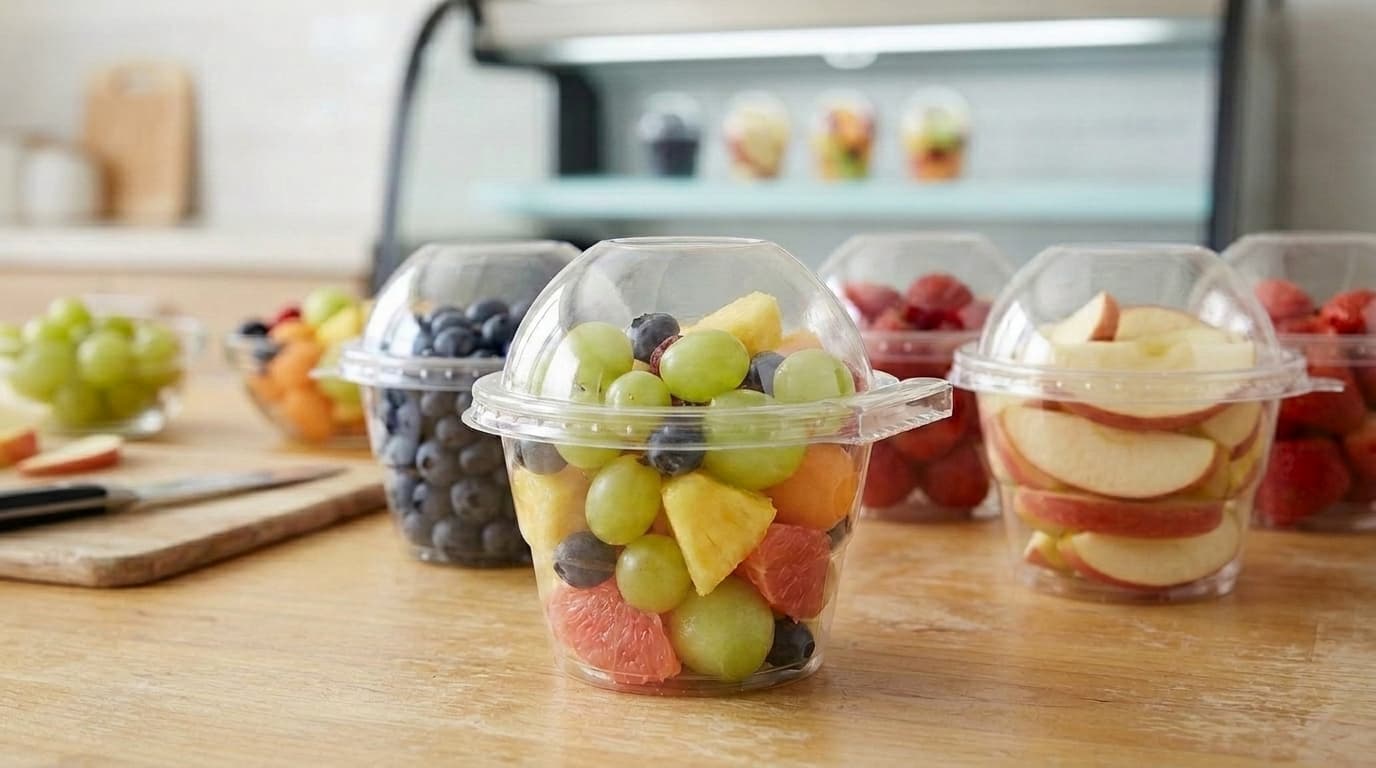
If you sell cut fruit, how to keep cut fruit from turning brown is the line between a tray that sells out and one that gets marked down by lunch. A browned apple wedge or dull-looking pineapple spear reads as old, even when it was cut an hour ago. Customers buy with their eyes, and dull fruit kills the impulse grab.
Search this problem and you mostly find home tips: squeeze a lemon, eat it soon. That is fine for a lunchbox. It does not hold a display through a selling window. What you want is the same basic system used in commercial fresh-cut fruit handling, written for an operator who needs fruit to look fresh on the shelf.
At Plastic Container City, we supply cut-fruit cups and clear clamshells to cafés, grab-and-go counters, food trucks, and caterers across the U.S. The browning question comes up constantly. Here is the part most articles skip: the science, the treatment, the packaging lever, and a sensible prep window.
What causes cut fruit to turn brown?
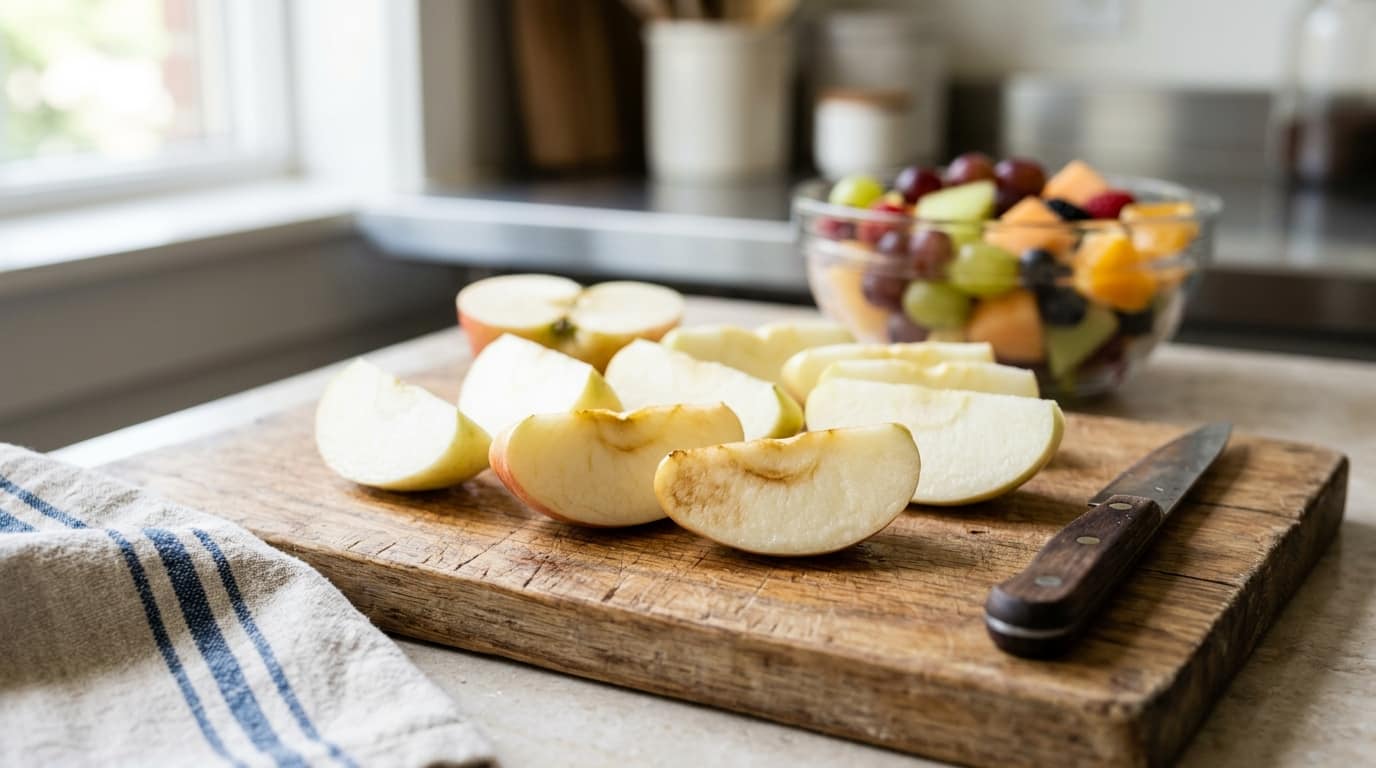
Whole fruit keeps its enzymes and its phenolic compounds physically apart. When you cut, you break that separation and let them meet oxygen. Research on apples describes enzymatic browning as the enzyme PPO oxidizing those phenols, which then form the brown pigments you see on a cut face.
Three things push the reaction faster: oxygen on the cut surface, warmth, and time. That is the operator's whole playbook in reverse. Take away air, take away heat, and shorten the wait, and brown shows up far slower. Every fix below pulls one of those three levers.
How do supermarkets stop cut apples from going brown?
The home version is a lemon squeeze. The commercial version follows the same anti-browning idea, but with more control. A short bath in an acid solution slows the browning enzyme on the cut surface. The agents supported in current research are citric acid, ascorbic acid, and calcium ascorbate, the last of which has been used in the fresh-cut apple trade for years.
From there the fruit goes cold and stays cold, which slows the enzyme and the microbes together. Packaging that limits air contact does the rest, and we cover that below. Use all three and the fruit has a better chance of holding color through the selling window.
Does an acid dip really stop browning, and what do you use?
Vitamin C is ascorbic acid, so a vitamin C based fresh-fruit preserver and a research-backed acid dip are doing related jobs. A 2025 study on fresh-cut apple coatings found that ascorbic acid paired with a coating suppressed browning and held quality during cold storage.
For foodservice, use a verified product label, supplier sheet, or written prep SOP for the exact treatment and strength. Approved sources confirm which acids work, but they do not publish a single foodservice dip ratio for display fruit. Do not over-soak either, since too much acid leaves a sour edge customers can taste.
Which fruits brown the fastest?
If your tray mixes fruit, start with the fruit most likely to discolor. Apples deserve first attention because they are strongly supported in current browning research. Pears and bananas are also discussed in browning literature, but the research does not confirm a clean fruit-by-fruit ranking. Use your prep SOP for those items, then rely on cold holding, packaging, and fast rotation for the rest of the cup.
Here is the operator cheat sheet for what each lever actually does:
| Anti-browning lever | What it does | Operator note |
|---|---|---|
| Acid dip (ascorbic / citric) | Slows the browning enzyme on the cut face | Strongest support for apples; use SOP guidance for other browning-prone fruits |
| Cold holding at 41°F or below | Slows browning and microbial growth together | Non-negotiable for cut melon and other TCS fruit |
| Sealed packaging that limits air contact | Reduces oxygen contact on cut surfaces | Pair with cold holding, not a substitute for it |
| Cut close to service | Shortens the time browning has to develop | Batch prep to your selling window, not the whole day |
Does a sealed container keep cut fruit from browning?
Packaging is your third lever after the treatment and the chill. FDA fresh-cut guidance calls for cold storage of cut fruit that needs it and warns against condensate dripping onto the product. A sealed cup is not a safety shortcut. Temperature control still does the real work.
This is the sealed-versus-vented trade-off, and it deserves its own breakdown. For the full comparison of when to reach for each, see Vented vs Non-Vented Produce Containers: When to Use Each. For cut fruit on display, the priorities are visibility and reduced air contact, which is why a clear, tight-sealing cup tends to win.
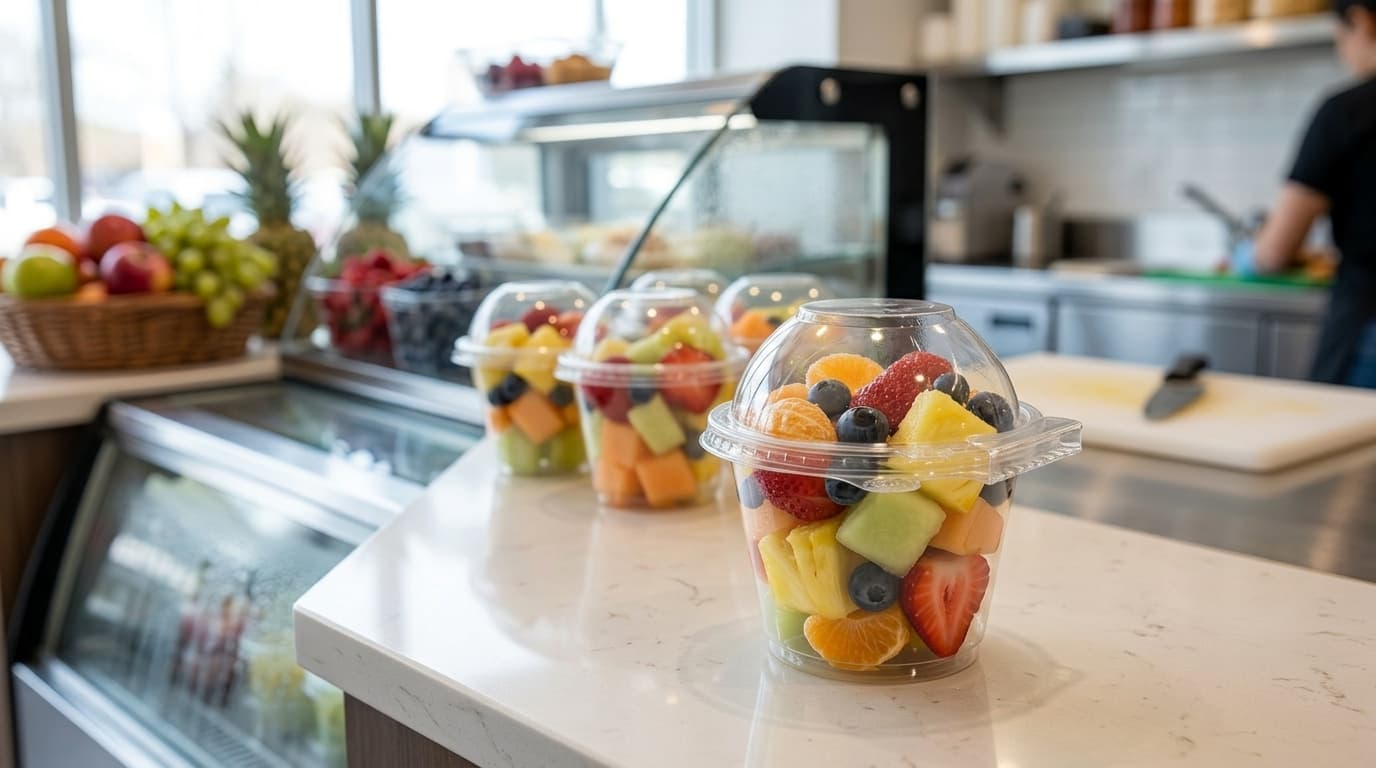
That is the fit for an 8 oz tamper-evident fruit cup: it is crystal-clear, recyclable PET #1 and BPA-free, with an airtight seal for freshness plus a tear strip that shows whether the cup has been opened. It is hinged and single-compartment, rated for the fridge and freezer, and packed 272 to a case, which suits a chilled grab-and-go shelf. For other sizes and formats, browse the full produce container range.
How far ahead can you cut fruit before browning shows?
Quality and safety are two different windows, and operators get burned mixing them up. University extension guidance keeps cut, covered fruit at its best for 3 to 4 days refrigerated, and figures like cut pineapple holding up to 4 days sit inside that range. Those are storage windows, not a promise the fruit still looks sellable on day four.
For display, the honest answer is shorter. Cut to your selling window, not your whole day, and rotate. The deeper prep-ahead and date-marking detail for service sits in How Far Ahead Can You Cut Fruit for Service?, so use this rule of thumb here: treat the high-risk fruit, hold it cold, and refresh the front of the display before it dulls.
What does this look like on a real prep line?
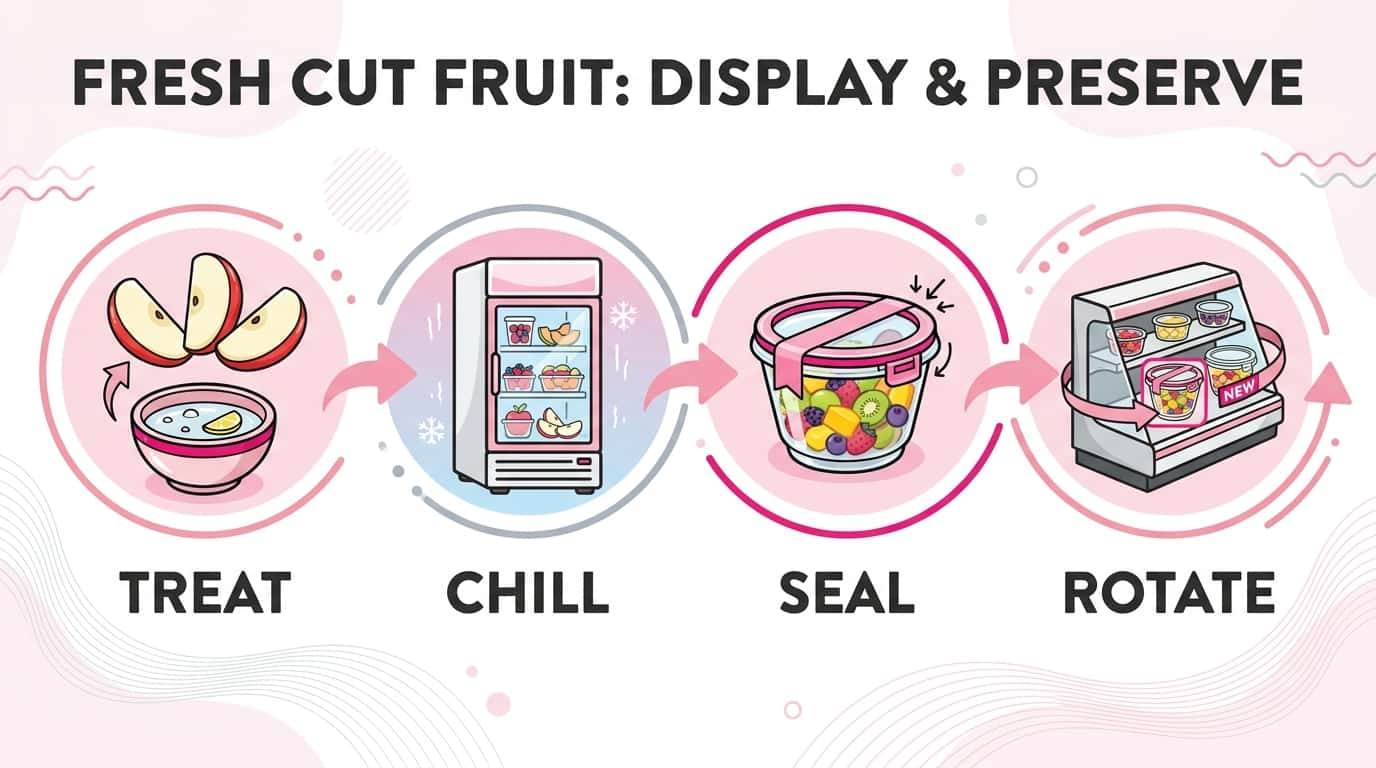
A repeatable line keeps the look consistent shift to shift:
- Wash after cutting to rinse off surface juices, then drain well so cups do not pool liquid.
- Treat apples first, then follow your SOP for other browning-prone fruits. Use cold holding, packaging, and fast rotation for the rest of the cup.
- Pack into clear, tight-sealing cups so buyers see fresh color and air contact stays low.
- Hold and display at 41°F or below, the cold-holding line for cut melon and other cut produce treated as TCS.
- Prep to the selling window, label, and rotate so the freshest cups face the customer.
Get those five steps tight and browning stops being the thing that decides your shrink. The fruit you worked to prep has a better chance of staying the fruit customers reach for. For related shelf-life pointers, our fresh produce storage tips pair well with this one.
Frequently Asked Questions
Does sugar water prevent browning?
Sugar water is not the best commercial answer for cut-fruit display. For apples, approved anti-browning support is stronger for ascorbic acid, citric acid, and calcium ascorbate, paired with cold holding and packaging that limits air contact.
What product do you sprinkle on fruit to prevent browning?
Commercial fruit preservers are often based on anti-browning acids such as ascorbic acid or citric acid. For a foodservice display, follow the product label or supplier sheet for the exact use rate.
What liquid will prevent the apple from turning brown?
A verified ascorbic acid, citric acid, or calcium ascorbate solution can slow browning on cut apples. Use an approved label or SOP for the correct strength and dip time.
Does cold holding stop cut fruit from turning brown?
Cold holding slows browning, but it does not stop it on its own. For apples and other browning-prone fruit, pair cold holding with an approved anti-browning treatment and packaging that limits air contact.
Can sealed fruit cups stop browning by themselves?
No. Sealed cups can reduce air contact, but they do not replace acid treatment, cold holding, drainage, and display rotation. Use packaging as one part of the process.
Brown fruit is a solved problem once you treat it like a process instead of a hack. Treat the fruit that needs it, keep the cold chain honest, limit air contact, and cut close to service. That is the cleanest way to keep cut fruit from turning brown for display.