TL;DR: Foam food service containers are now banned in 12 U.S. states plus Washington D.C., with Connecticut pending and Hawaii handled county by county. The most urgent deadline for 2026 is Virginia, where the ban extends to ALL food vendors on July 1, 2026. This guide gives you a state-by-state reference table, penalty figures, and the practical steps to take if your state is already covered.
In what states is Styrofoam illegal? If you're running a bakery, a food truck, a catering operation, or any grab-and-go food business, this is not a theoretical question anymore. Bans are live, enforcement is active in several states, and the deadline map is getting busier every year. Getting this wrong carries real financial penalties, not just compliance headaches.
This post gives you the facts: which states have banned foam, exactly who the ban covers, when it took effect, and what the penalty is if you're caught using foam after the ban. Scan the table below, find your state, and then take the steps outlined at the bottom. This is the kind of post you want to bookmark and share with your operations team.
For the full rundown on what to use instead, including a product-by-product guide for bakeries, see What Is Replacing Styrofoam? Bakery Packaging Alternatives.
.
In What States Is Styrofoam Illegal?
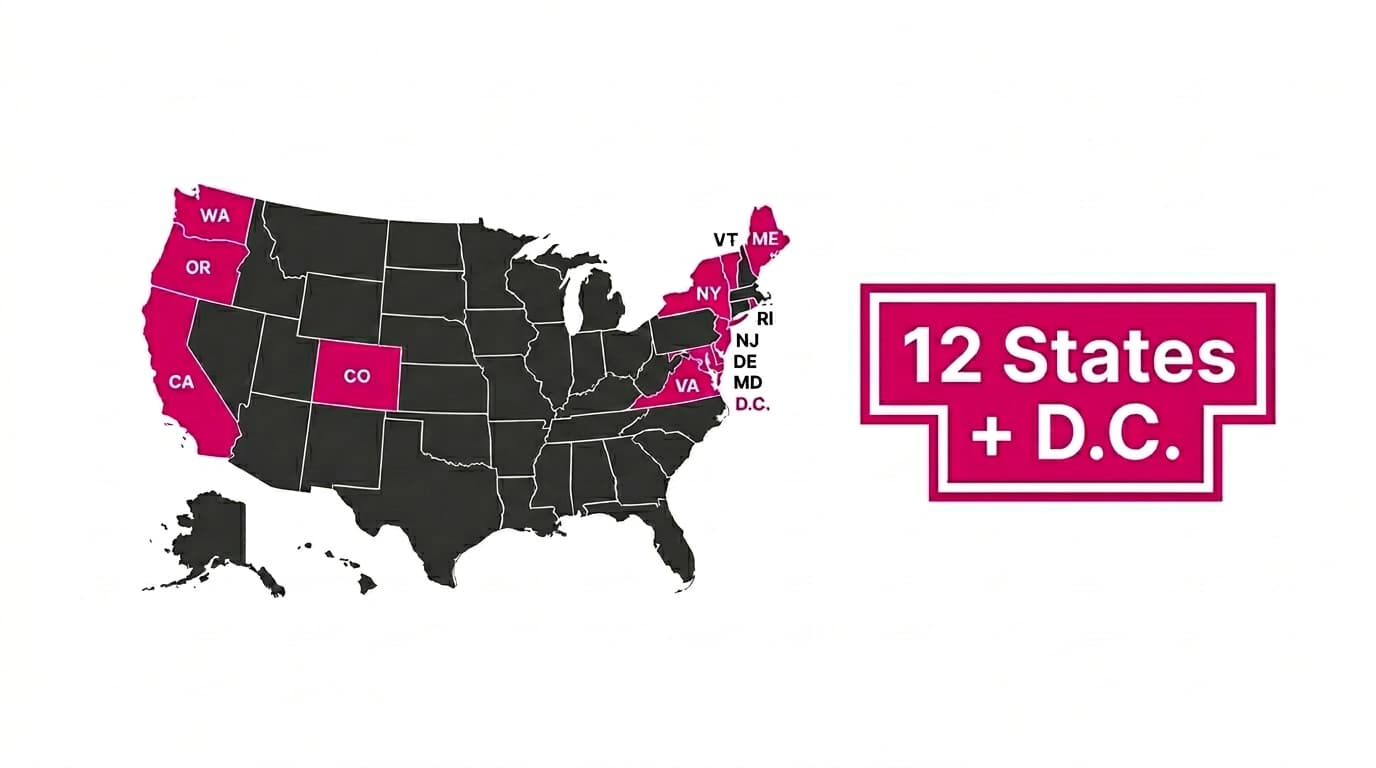
Direct Answer: Styrofoam food service containers are banned in 12 states plus D.C. including CA, NY, VA, and WA. Connecticut has pending legislation; Hawaii is county-level only.
The term "Styrofoam ban" covers EPS (expanded polystyrene) foam food service containers: clamshells, cups, bowls, trays, plates, lids, and similar single-use items. The bans generally apply to food service businesses that sell, distribute, or serve food in foam containers, though the exact scope varies by state. Some states target producers and sellers; others target the food operator directly. Check the table below for your state.
The 2026 State-by-State Foam Ban Reference Table
Confirmed state rows use official sources where available. Pending or limited rows are clearly marked. Penalty data is included only where verified from authoritative official sources.
| State | Effective Date | Who Is Covered | Items Banned | Penalty | Official Source |
|---|---|---|---|---|---|
| California | Jan 1, 2025 (enforcement triggered) | Producers, sellers, distributors, and importers of EPS food service ware | All EPS food service containers | Up to $50,000/day (CalRecycle admin civil penalties) | CA AG Notice |
| Colorado | Jan 1, 2024 | Retail food establishments | EPS products distributed to customers for ready-to-eat food (some old inventory allowed until depleted) | Up to $500 (2nd violation); up to $1,000 (3rd or later, where local enforcement applies) | CO HB21-1162 |
| Connecticut | Pending (HB 5524 proposed Jul 1, 2028; not yet enacted as of March 2026) | TBC if enacted | Polystyrene takeout containers (proposed) | TBC if enacted | CT Mirror, Mar 2026 |
| Delaware | Jul 1, 2025 | Food establishments serving ready-to-eat food | Polystyrene foam food service packaging | Not confirmed in qualifying official source | DE Chapter 66 |
| Hawaii | County level only; no confirmed statewide statute | Varies by county | Varies by county | Varies by county | Check county authority |
| Maine | In effect (ongoing) | Food service businesses | Disposable food service containers for take-out and bakery products | Not confirmed in qualifying official source | Maine DEP |
| Maryland | Jul 1, 2020 | Food service businesses, schools, government food operations, manufacturers, distributors, retailers | Nearly all EPS food service products | Written notice, 3-month correction period, then up to $250 | Maryland MDE |
| New Jersey | May 4, 2022 | Food service businesses; restaurants may not serve or deliver food in EPS foam | Polystyrene foam food service products | Warning (1st offense); up to $1,000/day (2nd); up to $5,000/day (3rd and later) | NJ DEP Plastic Pollution Law |
| New York | Jan 1, 2022 (general ban); Jan 1, 2026 (cold storage expansion) | Restaurants, groceries, schools, hospitals, caterers, mobile food service, stores; online sales into NY covered | Bowls, cartons, clamshells, cups, lids, plates, trays; from Jan 2026: cold storage containers, coolers, ice chests | Not confirmed in qualifying official source | NY DEC |
| Oregon | Jan 1, 2025 | All food vendors; no industry exempt | Polystyrene foam containers for prepared food; polystyrene foam packing peanuts; foodware with intentionally added PFAS | Not confirmed in qualifying official source | Oregon DEQ |
| Rhode Island | Jan 1, 2025 | Food service establishments | All polystyrene foam disposable food service containers: bowls, plates, trays, cartons, cups, lids, sleeves, stirrers | Up to $100 per violation | RI Dept of Health |
| Vermont | Act 69 in effect | All persons selling EPS food service products; stores and food service establishments providing food or beverages in EPS | EPS food service products; EPS containers for food and beverages | Written warning (1st offense); $25 (2nd); $100 (3rd and later); each day constitutes a separate offense | VT Act 69 (S.148) |
| Virginia | Phase 1: Jul 1, 2025 (20+ locations); Phase 2: Jul 1, 2026 (all food vendors) | All food vendors: stores, restaurants, grocery stores, supermarkets, delicatessens, catering trucks, government entities, schools | EPS food service containers | Up to $50/day (civil penalty); hardship relief available from localities | Virginia DEQ |
| Washington State | Packing peanuts: Jun 1, 2023; Food service products and cold-storage containers: Jun 1, 2024 | Food service businesses | EPS packing peanuts; EPS food service products; EPS cold-storage containers (exemptions: raw meat, fish, eggs, produce, block/sheet EPS) | Not confirmed in qualifying official source | WA Ecology |
| Washington D.C. | Jan 1, 2016 (ban); Jan 1, 2017 (recyclable/compostable required) | All businesses and organizations that serve food in the District | Foamed-polystyrene food service products; recyclable or compostable products required from 2017 | Not confirmed in qualifying official source | Zero Waste DC |
Note: Penalty data is included only where verified from authoritative official sources. Where penalties are not confirmed, verify current enforcement directly with your state or local authority before assuming no penalty applies.
Virginia: The 2026 Deadline That Catches Operators Off Guard
Virginia Foam Ban: Phase 2 Deadline
- Phase 1 (already active): July 1, 2025 applied to food vendors with 20 or more Virginia locations
- Phase 2 (coming up): July 1, 2026 applies to ALL other food vendors, including small bakeries, food trucks, caterers, and independent operators
- Penalty: Up to $50 per day civil penalty
- Relief option: Localities may grant up to one year of hardship relief and may renew it
- Covered operators: Stores, restaurants, grocery stores, supermarkets, delicatessens, catering trucks, state and local government entities, and schools
Official source: Virginia DEQ Foam-Free Resources
Virginia's phased approach means large chains were already required to switch by July 1, 2025. Every remaining food vendor in the state, including independent bakeries, market stalls, food trucks, and small catering businesses, must be foam-free by July 1, 2026. If you operate in Virginia and have not yet made the switch, that deadline is the one that matters most right now.
Hardship relief is available from localities and can be renewed. Use your state authority's official guidance to confirm current enforcement status, and contact your local authority directly to start the hardship relief process if you need it.
Does the Foam Ban Apply to Small Bakeries?
Direct Answer: In most states, yes. The majority of active foam bans cover all food service establishments regardless of size. Virginia's Phase 2 ban, taking effect July 1, 2026, explicitly covers all food vendors. Maine's ban specifically covers bakery products sold for take-out.
One of the most common misconceptions among independent food operators is that these bans only target large chains. That is not accurate in most states with active legislation. Here is how the scope breaks down:
- Oregon: The state DEQ's own FAQ confirms the law does not exempt any industry and that businesses may not use or sell prohibited inventory after January 1, 2025.
- Maine: The ban covers disposable food service containers used specifically for take-out foods and bakery products, making it directly relevant to any bakery selling grab-and-go items.
- Maryland: Covers food service businesses, schools, government food operations, manufacturers, distributors, and retailers, with no size exemption.
- Virginia Phase 2: Covers all food vendors, with no size threshold. Small businesses that received hardship relief during Phase 1 still need to comply by July 1, 2026, or renew their exemption.
- Rhode Island: Applies to all food service establishments with penalties up to $100 per violation.
The small-business assumption is one of the most common compliance gaps we hear about across the industry. If your state is on the list, the ban almost certainly covers you.
What Are the Penalties for Using Foam After the Ban?
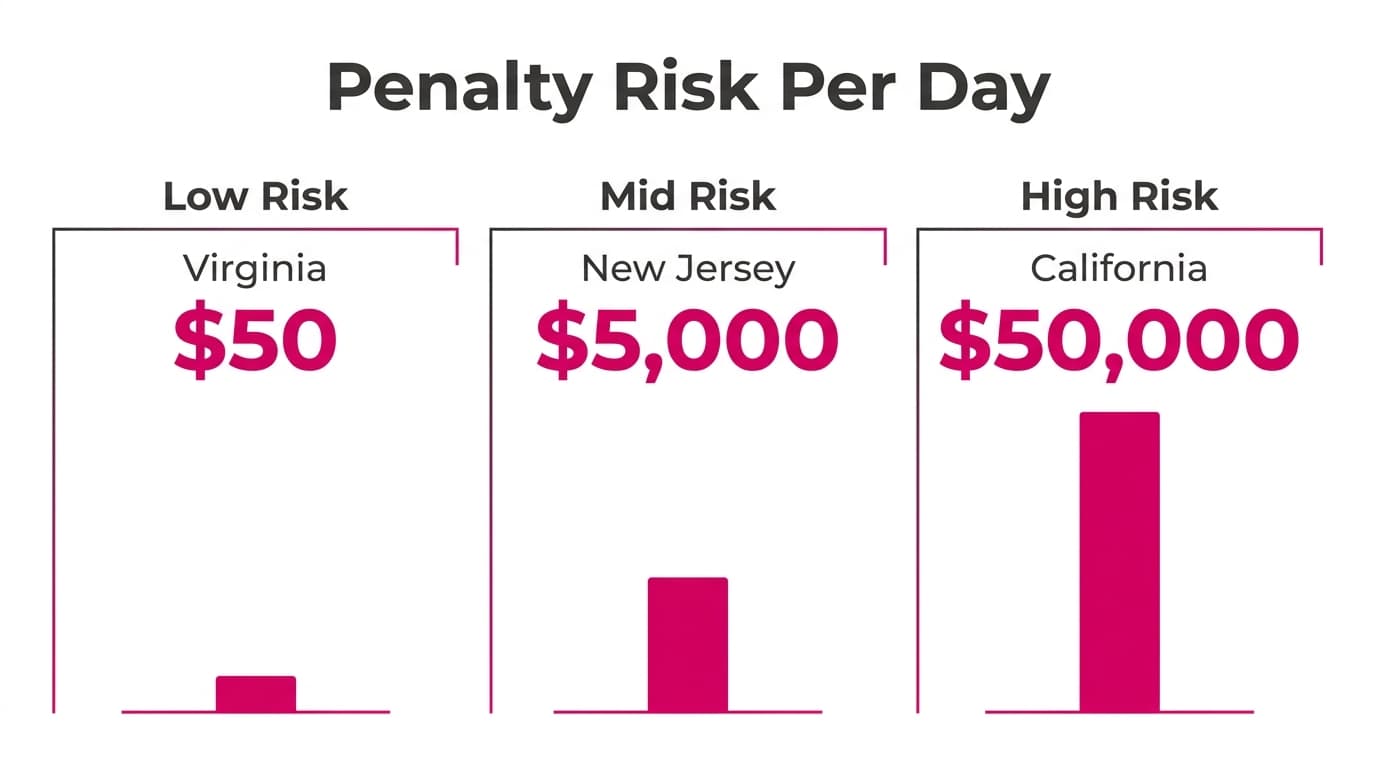
Direct Answer: Penalties vary widely by state. California carries the highest exposure at up to $50,000 per day for producers and sellers of EPS food service ware. Virginia runs up to $50 per day. Rhode Island fines up to $100 per violation. Maryland issues a written notice followed by a correction period before financial penalties apply.
Here is the verified penalty data from official state sources:
| State | Penalty | Notes |
|---|---|---|
| California | Up to $50,000/day | Applies to producers, sellers, and distributors of EPS food service ware; CalRecycle enforcement |
| Maryland | Up to $250 | Written notice issued first; 3-month correction period before financial penalty; local rules may add more |
| Rhode Island | Up to $100 per violation | Per current Rhode Island Department of Health guidance |
| Virginia | Up to $50/day (civil penalty) | Hardship relief available from localities; renewable |
| Colorado | Up to $500 (2nd violation); up to $1,000 (3rd or later) | Applies where local enforcement is active; verify with local authority |
| New Jersey | Warning (1st); up to $1,000/day (2nd); up to $5,000/day (3rd and later) | Per NJ DEP enforcement guidance |
| Vermont | Written warning (1st); $25 (2nd); $100 (3rd and later); each day is a separate offense | Per Vermont Act 69 |
| Delaware, Maine, Oregon, Washington, New York, D.C. | Not confirmed in qualifying official sources | Verify directly with your state or local authority |
The California figure deserves special attention. The 2025 enforcement notices from the California Attorney General and CalRecycle are directed at producers, sellers, and importers of EPS food service ware, not simply at restaurant operators using foam containers. If you source or resell foam packaging in California, that $50,000/day exposure applies to you directly.
Is There a Federal Foam Ban Coming?
Direct Answer: A federal Styrofoam ban has been proposed but not enacted. The Farewell to Foam Act (H.R. 1918), reintroduced in March 2025, proposes a federal ban on EPS food service ware effective January 1, 2028, if passed.
The Farewell to Foam Act (H.R. 1918) was reintroduced in the 119th Congress in March 2025. The official bill text sets a federal EPS food service ware ban effective January 1, 2028, and would also cover EPS loose fill and coolers. As of the qualifying sources available for this publication, the bill had not been enacted.
This means operators in non-ban states are not yet under federal obligation, but the legislative direction is clear. Operators planning packaging procurement for 2026 and beyond would be prudent to factor the federal timeline into sourcing decisions, particularly if they operate across multiple states with different regulatory timelines.
What Should You Do If Your State Has Banned Foam?
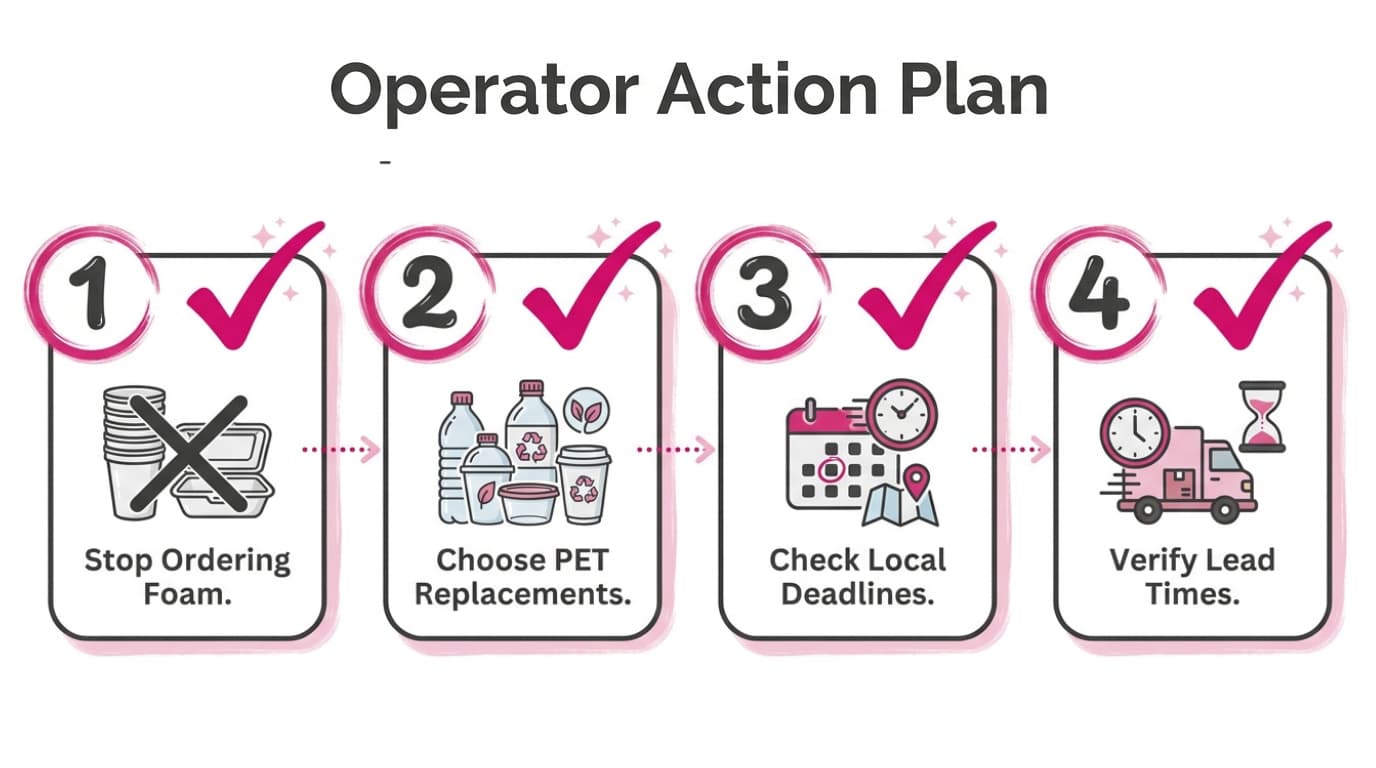
If your state is on the list above and you have not yet switched, here are the practical steps to take:
- Stop ordering foam now. Do not place new orders for EPS food service containers. Run down existing stock only if your state has a transition period that permits it.
- Identify your replacement. For most bakery products, clear PET clamshells are the practical first choice. Check the material guide for a product-by-product breakdown by product type.
- Verify your official state source. Use the links in the table above to confirm the current enforcement status directly with your state authority. Requirements can change and your local jurisdiction may have additional rules on top of state law.
- Check your supplier lead times. Ask your supplier about lead times before the effective date, especially if you need a less common size, count format, or case quantity.
- Virginia operators only: If you have genuine sourcing hardship, contact your local authority about hardship relief before July 1, 2026. The relief is renewable and designed for operators in real transition difficulty.
Because we supply food businesses across the U.S., the team at Plastic Container City sees how this transition plays out at the operator level. Businesses that get ahead of the deadline have choices. Those that wait until enforcement begins often scramble into the wrong container at the wrong price. Early action always wins here.
For the full packaging compliance picture beyond just foam, including label requirements, allergen rules, and container standards, see the Bakery Packaging Laws 2026 guide.
Where Foam Is Not Yet Banned: A Note on Non-Ban States
If your state is not on the confirmed ban list, you are not yet under a state-level obligation to stop using foam containers. However, a few things are worth noting:
- City and county ordinances may still apply. Even in non-ban states, individual cities and counties sometimes have their own foam restrictions. Check local rules if you operate in or near a major metro area.
- Federal legislation is in progress. H.R. 1918 would bring a nationwide ban by January 1, 2028 if enacted. Operators planning packaging infrastructure for the next two years should factor this in.
- Buyer expectations are shifting. A growing number of retailers, corporate cafeterias, and event venues are applying their own foam-free policies regardless of state law. Operating in ban-adjacent markets often means the switch comes from the customer before it comes from the regulator.
The Takeaway
In what states is Styrofoam illegal? At mid-2026, the confirmed list covers 12 states plus D.C.: California, Colorado, Delaware, Maine, Maryland, New Jersey, New York, Oregon, Rhode Island, Vermont, Virginia (all vendors from July 1, 2026), Washington state, and Washington D.C. Connecticut's legislation is pending. Hawaii operates at county level only.
If your state is on this list and you have not yet made the switch, the time to act is now, not after a violation notice arrives. The replacement options are practical and widely available. Keep this page bookmarked when you need to check in what states Styrofoam is illegal for food service in 2026.
For more on packaging compliance, display best practices, and what food businesses need to know in 2026, visit the Plastic Container City blog.
Frequently Asked Questions
Where is Styrofoam banned in the US?
As of mid-2026, confirmed statewide bans on EPS foam food service containers are in effect in 12 states plus D.C.: California, Colorado, Delaware, Maine, Maryland, New Jersey, New York, Oregon, Rhode Island, Vermont, Virginia (all vendors from July 1, 2026), and Washington state. Connecticut has pending legislation. Hawaii has county-level restrictions only. Individual cities and counties in non-ban states may also have their own local restrictions.
Can you still buy Styrofoam cups in California?
No. The 2025 enforcement action from CalRecycle and the California Attorney General's office prohibits the sale, distribution, and import of EPS food service ware into California. The ban targets producers and sellers, with penalties up to $50,000 per day. This is not simply a restaurant-use restriction; it applies to anyone selling or distributing foam food service containers in or into the state.
Can you buy Styrofoam cups in New York?
No. New York's foam disposable food service container ban has been in effect since January 1, 2022, and covers restaurants, groceries, schools, hospitals, caterers, mobile food service operations, and retail stores. Online sales of foam food service containers shipped into New York are also covered under the ban.
Are foam coolers banned in New York?
Yes, from January 1, 2026. New York expanded its ban to cover non-encapsulated EPS containers designed or intended for cold storage, which includes coolers and ice chests. The original 2022 ban covered food service containers; the 2026 expansion adds cold-storage EPS products.
Is Styrofoam going to be banned everywhere?
At the federal level, the Farewell to Foam Act (H.R. 1918) proposes a nationwide ban on EPS food service ware effective January 1, 2028, if enacted. It had not been passed as of the qualifying sources for this publication. At the state level, bans continue to spread, with Connecticut's legislation pending and the confirmed ban list now covering 12 states plus D.C.