
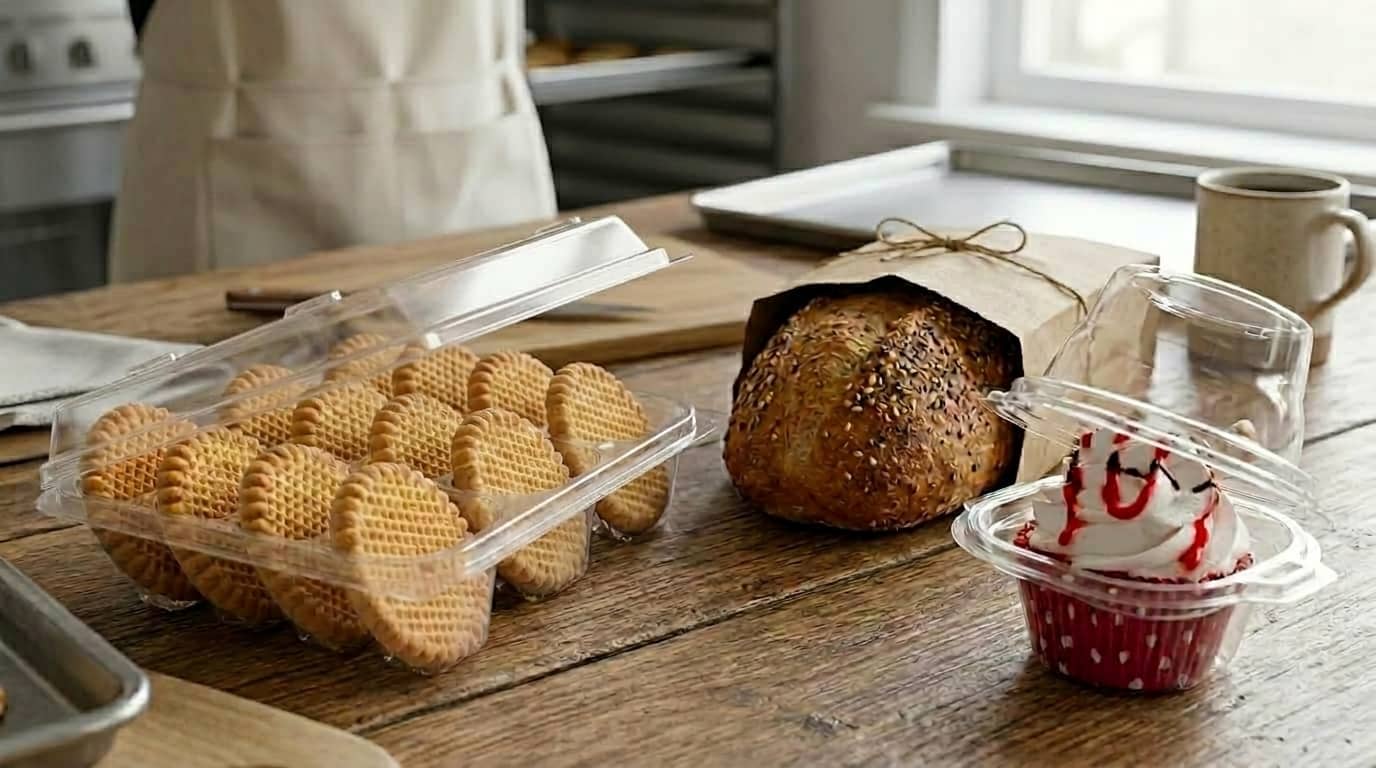
TL;DR: Most bakeries need 5 to 6 packaging formats, not 15. This guide covers the core bakery packaging types every operator actually needs, which material goes with which format, freshness windows by container, when to upgrade from a bag to a rigid container, and what is legally required on your label. If you are stocking more than 6 SKUs and still feeling under-packaged, this article is for you.
What bakery packaging types does a bakery actually need? Not what looks good in a supplier catalog. Not 18 SKUs across 4 formats with 3 color options each. The answer, for most food businesses, is six. Six formats cover cookies, cupcakes, cakes, slices, bread, and carry-out. Everything else is either a luxury or a duplication.
At Plastic Container City, we work with food professionals across the U.S. at every scale, from home kitchen cottage food operators to catering operations running multiple events a week. The question we hear most often is not "which container is best?" It is "how do I know what I actually need?" That is what this guide answers.
What Are the Core Types of Bakery Packaging?
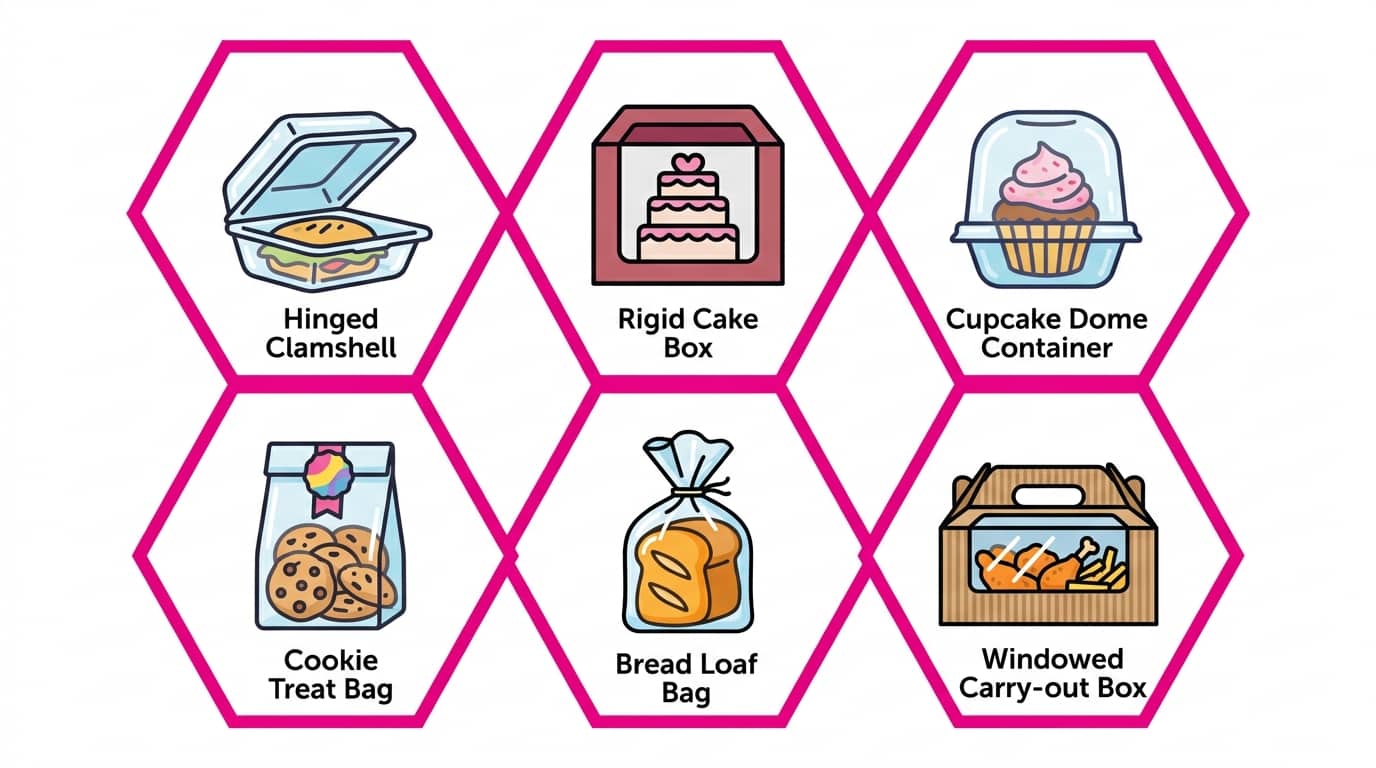
Direct Answer: Six formats cover most bakeries: hinged clamshells, rigid boxes, cupcake containers, treat bags, bread bags, and windowed carry-out boxes.
These are not arbitrary categories. Each format serves a specific product type, a specific handling requirement, and a specific sales channel. Here is what each one does and why it exists.
- Hinged clamshell: A clear, rigid, one-piece container with an integrated hinge. Opens and closes in one motion. Works for cookies, brownies, bars, single cupcakes, cake slices, and anything that benefits from full display visibility and a quick close.
- Rigid cake container or box: A structured container with a separate base and lid, designed for full cakes, sheet cakes, and large single items. Available in corrugated cardboard (solid or windowed) and clear rigid PET.
- Cupcake container with dome lid: A tray-and-lid system with individual cavities for each cupcake. The dome lid provides clearance for frosting without compressing it. Available in multiple cavity counts and dome heights.
- Cookie or treat bag: A flat or gusseted bag in OPP cellophane or kraft with a window. Seals with a twist tie, heat seal, or adhesive strip. Works for cookies, brownies, macarons, and small individual items sold by unit or weight.
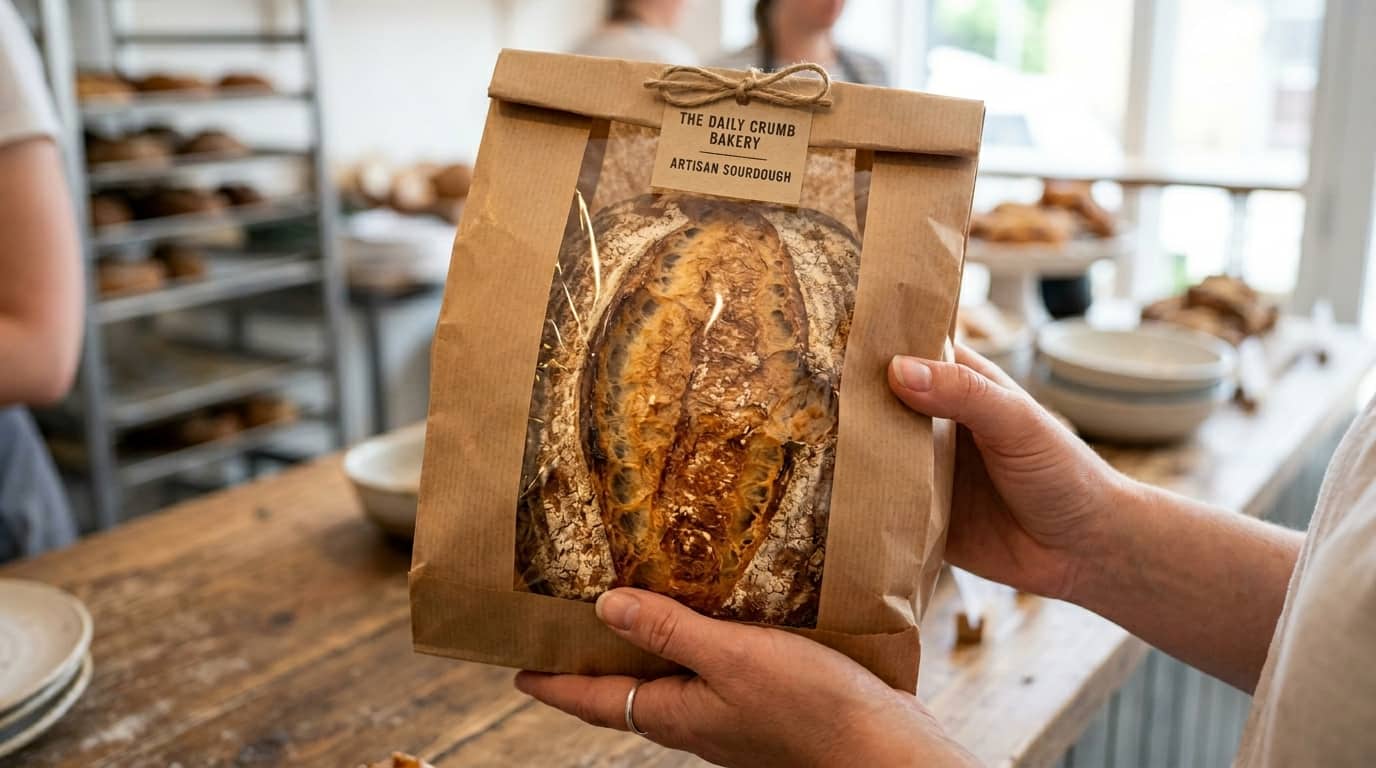
- Bread or loaf bag: A wide-mouth bag in polypropylene or wax-lined kraft, sized to hold an entire loaf. Some versions are perforated for venting, which prevents condensation on the crust.
- Windowed kraft or carry-out box: A sturdy box with a clear viewing window, often used for gifting, retail display, or items that need to look premium without full clear visibility. Useful for pastries, cookies, and small mixed assortments.
What Is the Minimum Packaging Kit for Your Bakery Type?
Direct Answer: Most bakeries only need 5 to 6 active packaging SKUs. Matching your kit to your selling channel reduces storage costs and ordering complexity.
For details on the compliance requirements that apply to each business type below, see our guide to bakery packaging laws in 2026.
| Business Type | Core Formats Needed | Label Required? | Notes |
|---|---|---|---|
| Cottage food operator | Clamshell, treat bag, cake box | Yes (state-specific) | Must be prepackaged in most states |
| Farmers market seller | Clamshell, treat bag, cupcake container | Yes | Visibility sells at market; focus on clear formats |
| Retail storefront | Clamshell, cupcake container, cake box, bread bag | Yes (retail labeling rules) | Display-focused; windowed options increase sell-through |
| Food truck | Clamshell, treat bag, carry-out box | Varies by state | Speed of pack-out matters; choose one-motion formats |
| Caterer | Cupcake container, cake box, carry-out box | Event-specific | Volume transport; choose stackable formats |
The first mistake new operators make is stocking 12 to 15 packaging SKUs before they know their product mix. Start with the formats your top 3 products need. Add formats only when a new product or channel demands it, not speculatively.
Which Packaging Material Goes with Which Format?
Material choice affects clarity, durability, food safety, recyclability, and cost. Here is how the most common materials map to the formats that use them.
| Material | Common Format | Key Characteristics |
|---|---|---|
| PET (clear rigid) | Clamshell, cupcake container, cake container | High clarity, food-safe, #1 recycling code, good seal |
| PP (polypropylene) | Bread bags, some clamshells | Food-safe, flexible, #5 recycling code |
| OPP cellophane | Cookie bags, treat bags | Crystal clear, heat-sealable, moisture resistant |
| Corrugated cardboard | Cake boxes | Structural strength for stacking, absorbs some moisture |
| Kraft paper (plain or windowed) | Treat bags, bread bags, carry-out boxes | Recyclable, printable, natural aesthetic |
| Wax-lined kraft | Bread bags | Moisture barrier with breathability; extends crust texture |
Industrial compostable PLA (polylactic acid) options are also available for bakeries seeking eco-friendly alternatives. While compostable PLA options exist, they typically carry a 20–30% price premium over standard recyclable PET. PLA requires industrial composting facilities to break down properly and is not suitable for home compost bins.
Multi-Use Packaging: One Format, Many Products
The fastest way to cut your packaging SKU count without cutting your product range is multi-use formats. A single hinged clamshell in the right size handles cookies, brownies, bars, cake slices, and single cupcakes with no frosting concern. That is five product types covered by one container.
This is not about compromise. A clear PET clamshell with a snug hinge actually outperforms a product-specific container in most of those categories. It seals better than a bag, it displays better than a cardboard box, and it stacks better than most individual formats.
The operational win is real. Fewer SKUs mean smaller storage requirements, simpler ordering cycles, more consistent brand presentation across your product range, and lower risk of running out of the one container that fits your best-seller. At Plastic Container City, we regularly hear from bakers who cut from 12 packaging SKUs to 5 and found their pack-out time dropped considerably.
Bakery Packaging and Freshness: Which Container Lasts Longest?
Direct Answer: Airtight PET clamshells keep cookies fresh for 3 weeks. Wax-lined PP bags extend bread for 5 days. Paper bags are best for same-day sales.
Container type is one of the biggest variables in how long a baked good stays at its best quality. Based on the practical experience of working with bakeries and food operators across the U.S., here are the freshness windows we see most consistently for each format.
| Container Type | Cookies | Cupcakes | Cake Slices | Bread |
|---|---|---|---|---|
| Airtight PET clamshell | 2 to 3 weeks | 2 to 3 days | 2 to 3 days | Not recommended |
| Windowed kraft box | 5 to 7 days | 1 to 2 days | 1 to 2 days | 2 to 3 days |
| OPP treat bag (sealed) | 1 to 2 weeks | 1 to 2 days | 1 to 2 days | Not recommended |
| PP or wax-lined bread bag | Not typical | Not typical | Not typical | 3 to 5 days |
| Paper bag (open or twist-closed) | 1 to 3 days | Same day | Same day | 1 to 2 days |
One important note on bread: an airtight seal is not always better. Sourdough and artisan breads with hard crusts go soggy inside a sealed plastic bag. A wax-lined kraft bag or a loosely closed PP bag keeps the crust texture intact while preventing the loaf from drying out. Match the container to the product, not just the freshness target.
When Should You Upgrade Your Packaging Format?
Most bakers start with treat bags because they are cheap, light, and easy to source. That is the right call at low volume. At some point, the economics and the product protection logic shift. To understand what staying in the wrong format actually costs, the real cost of bad bakery packaging makes the case with specific numbers.
- Bag to clamshell: Upgrade when your product is being damaged in transport (broken cookies, crushed decorations), when customers are asking to see the product before buying, or when you start selling through a retail shelf where presentation matters more than raw unit cost.
- Clamshell to rigid container: Upgrade when products are large or delicate enough that a flexible clamshell does not give enough structural protection (whole cakes, tall cupcakes with elaborate toppers, tiered items), or when you need stacking reliability for volume catering transport.
- Retail unit pricing to case buying: Most bakeries break even on case buying within the first 4 to 6 weeks of consistent ordering. If you are packing more than 50 units a week in any one format, buying by the case rather than unit is almost always cheaper. The per-unit saving at case volume typically covers the cost of the case within the same week.
What Does "Food-Safe" Actually Mean for Bakery Containers?
Direct Answer: Food-safe containers are FDA-authorized for direct contact and meet migration limits under 21 CFR §174.5. Look for PET #1 or PP #5 resin codes.
PET containers are authorized for food contact under 21 CFR §177.1630. PP containers are authorized under 21 CFR §177.1520. These are the two most common materials you will find in clear bakery containers from established suppliers.
Standard PET does not use BPA in its manufacturing. Polystyrene-based containers, including expanded polystyrene foam, are a separate category with a different regulatory profile and, in several states, active restrictions on use. The FDA's food contact substance framework covers authorization pathways and GMP limits if you need to verify a specific material. For a full breakdown of packaging compliance for 2026, see our guide to bakery packaging laws in 2026.
Are Foam Containers Still Legal for Bakeries in 2026?
Direct Answer: Foam is banned in California (2025) and New York (2022). Virginia phases in a ban by July 2026. Non-compliance risks $50,000 daily fines in California.
These are verified, confirmed bans with real financial penalties. California's SB 54 authorizes penalties of up to $50,000 per day per violation for noncompliance with the EPS food service ware ban. If you are operating in any of these three states and still have foam containers in your kitchen, that is an active compliance risk.
Compliance Alert: If you are in CA or NY, your foam inventory is now a liability. SB 54 allows for fines of $50,000 per day.
The swap is straightforward. PET clamshells replace foam clamshells directly with better clarity and similar structural performance. PP containers replace foam trays. Neither switch requires a major operational change. The cost difference between foam and PET has narrowed considerably as PET volumes have increased industry-wide.
For the full picture of state packaging laws in 2026, including Virginia's phased rollout and PFAS coating changes that affect grease-proof liners, the Packaging Dive roundup from January 2026 is the most current and comprehensive source available.
What Must Appear on Your Bakery Packaging Label?
Direct Answer: U.S. labels must show the product name, ingredients, allergens, net weight, business info, and cottage food disclosures where required.
Label requirements vary by business type and selling channel. For cottage food operators, the prepackaged label requirement is non-negotiable in most states. For retail sales, general food labeling rules apply. Here is what most U.S. regulatory frameworks require at a minimum.
- Product name
- Ingredient list (in descending order by weight)
- Major allergen declaration (the Big 9: milk, eggs, fish, shellfish, tree nuts, peanuts, wheat, soybeans, sesame)
- Net weight (in both ounces and grams for products in the U.S.)
- Business name and address (or unique identification number in states like Texas that have registered operator systems)
- Cottage food disclosure statement where required (phrasing varies by state, but all require a statement that the product was made in a home kitchen not subject to government inspection)
The disclosure statement wording matters. California requires "Made in a Home Kitchen" in 12-point type on the primary display panel. Florida requires a statement that the product "is not subject to Florida's food safety regulations" in at least 10-point type. Illinois requires a consumer-notification phrase noting the kitchen is uninspected and may process allergens. Each state's phrasing is distinct. Copy the state-specific language from the official source, not from a third-party summary.
The Packaging Kit That Works Is the Smallest One That Covers Everything
Six formats. Five to six SKUs per operator type. One decision framework for upgrades. That is the entire system for bakery packaging types done right. The bakeries that overstock packaging SKUs spend more on storage, more on ordering management, and end up with inconsistent presentation across their product range. The ones that get lean on their packaging kit spend that saved time and money on the product.
Know your three most-sold products. Know what channel they go through. Build your kit from there and only add formats when a new product or legal requirement makes it genuinely necessary. That is the bakery packaging checklist that actually works in practice.
For the full guide to packaging cupcakes, cakes, and cookies for sale, see how to package cupcakes for sale. For more on bakery packaging types, container selection, and compliance, visit the Plastic Container City blog.
Frequently Asked Questions
What is the best packaging to keep baked goods fresh?
Direct Answer: An airtight PET clamshell is the best format for cookies and small items, keeping them fresh for 2 to 3 weeks. For cupcakes and cake slices, an airtight PET container extends freshness to 2 to 3 days at room temperature. Bread is best in a wax-lined kraft bag or perforated PP bag, which maintains crust texture while preventing the loaf from drying out.
What legally needs to be on food packaging?
Direct Answer: At minimum, U.S. prepackaged food sold to consumers must display: product name, ingredient list in descending order by weight, major allergen declaration, net weight, and business name and address. Cottage food operators must also include a state-mandated disclosure statement confirming the product was made in a home kitchen not inspected by government authorities.
What are eco-friendly packaging types for bakeries?
Direct Answer: The most practically available eco-friendly bakery packaging formats are: kraft paper bags (recyclable), PET containers with a #1 recycling code (curbside recyclable in most U.S. regions), PP containers with a #5 recycling code, and compostable PLA clamshells (compostable in industrial facilities, not home compost). Foam containers are not eco-friendly and are now banned in California, New York, and Virginia.
What are the four types of food packaging?
Direct Answer: Food packaging is typically classified as: primary packaging (in direct contact with the food, such as a clamshell or bag), secondary packaging (groups primary packages, such as a case box), tertiary packaging (bulk transport packaging, such as a pallet wrap), and modified atmosphere packaging (gas-flushed for extended shelf life, used in commercial bakery distribution). For most small and mid-size bakeries, primary packaging is the only category that applies to daily operations.
How do bakeries keep baked goods fresh?
Direct Answer: Bakeries keep baked goods fresh by matching the container type to the product. Cookies and bars go into airtight sealed containers. Cupcakes go into dome containers that prevent frosting contact. Cakes go into sealed rigid boxes stored at room temperature unless the frosting requires refrigeration. Bread goes into breathable bags, not sealed plastic. The container choice matters as much as the storage location.
