

How much money are you losing to the menu items nobody buys? The trick? Bakery menu simplification pairs a tight core menu (your reliable moneymakers) with strategic seasonal rotation (capitalizing on ingredient pricing cycles) so profits climb as waste drops and speed picks up. If your team is scrambling between 40 pastries, your packaging closet looks like a game of Tetris, and you're tossing stale product every night, a smaller menu might be the smartest move you make this year.
Here's the thing: most bakeries think more options equal more sales. But the math tells a different story. Reducing menu items by 15 to 20% can lower your Cost of Goods Sold by up to 5%. That's real money back in your pocket, not tied up in ingredients that spoil before they sell.
This post walks through a Keep/Cut/Rotate system that helps you decide what stays on the menu year round, what gets the ax, and what becomes a seasonal star. You'll also get messaging scripts so your regulars see the change as "curated and premium," not "we're cutting corners."
Why Smaller Menus Actually Make More Money
Let's start with the obvious: every item on your menu costs you something. Ingredient inventory, staff training time, packaging formats, recipe testing, shelf space. When you're running 50 SKUs, half of them are probably breaking even or worse.
At Plastic Container City, we work with thousands of food professionals across the U.S., from independent bakeries to catering operations. The pattern is clear. Shops that tighten their menu see three big wins: lower waste, faster production, and higher ticket averages because customers aren't paralyzed by choice.
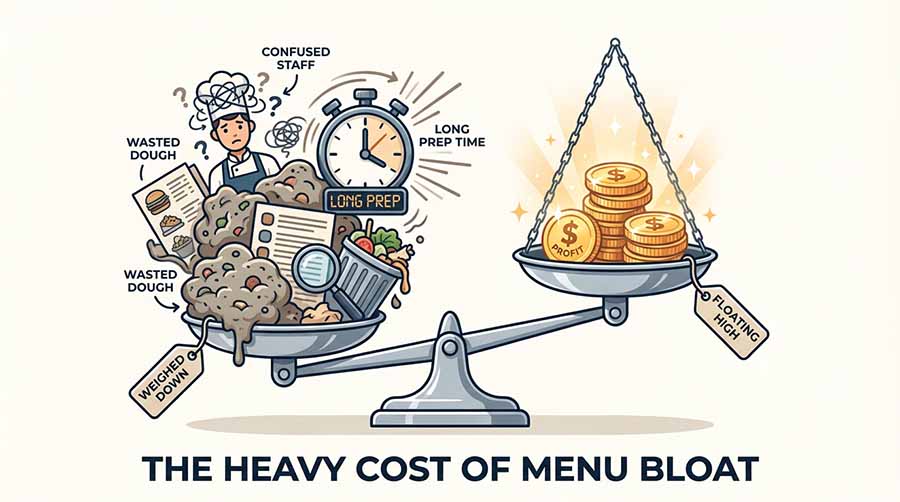
The Real Cost of Menu Bloat
Every bakery item you make carries hidden costs. Raw materials consume 50% to 70% of total production in a typical small bakery, so ingredient management is your biggest profit lever. When you stock ingredients for 40 items instead of 20, spoilage climbs, supplier orders get complicated, and your walk-in becomes a mess.
Then there's labor. Training a new hire on 15 core recipes takes half the time of teaching 30. Prep moves faster. Packaging decisions get simpler. Your team isn't mentally juggling dozens of recipes during the morning rush.
And here's the kicker: 54% of restaurant operators changed menu items in 2024 to address rising input costs. Bakeries are no different. When flour, butter, and eggs all climb in price at once, a leaner menu gives you room to maneuver.
The Psychology Behind "Too Many Choices"
You've probably heard about choice overload, the idea that customers get overwhelmed by too many options. But it's not that simple. The real issue is complexity combined with uncertainty.
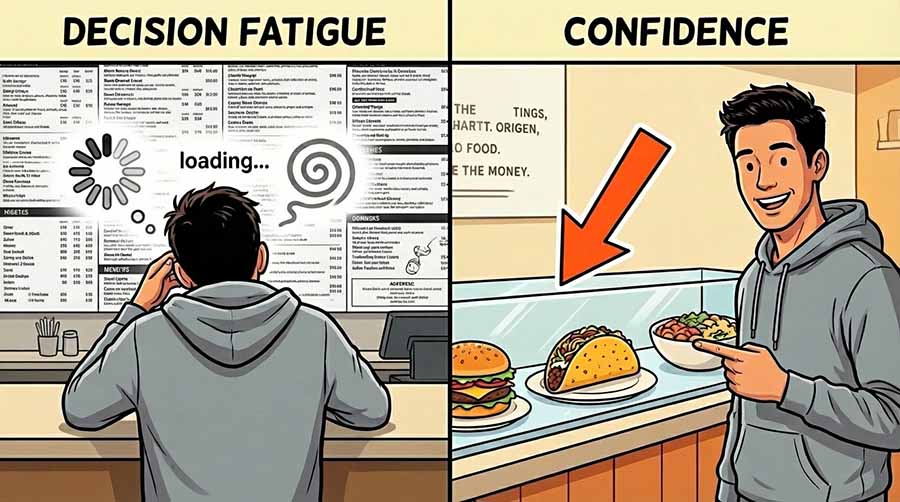
When customers face too many similar options or are uncertain about their preferences, the mental effort required for decision making causes cognitive overload, also known as decision fatigue. This exhaustion prompts buyers to seek shortcuts, often choosing the lowest priced option, sticking to the familiar, or walking out without buying. A curated selection eliminates guesswork and makes consumers 50% more likely to purchase.
Translation: if your case has 12 types of cookies and they all look great, your customer might default to "the usual" or grab the cheapest. If you offer six standout cookies with clear flavor profiles, they're more likely to try something new and spend more doing it.
This isn't just theory. When you curate down to your best sellers and eliminate the paralysis, average transaction size climbs because customers feel confident exploring premium options instead of playing it safe.
The Keep/Cut/Rotate Decision System
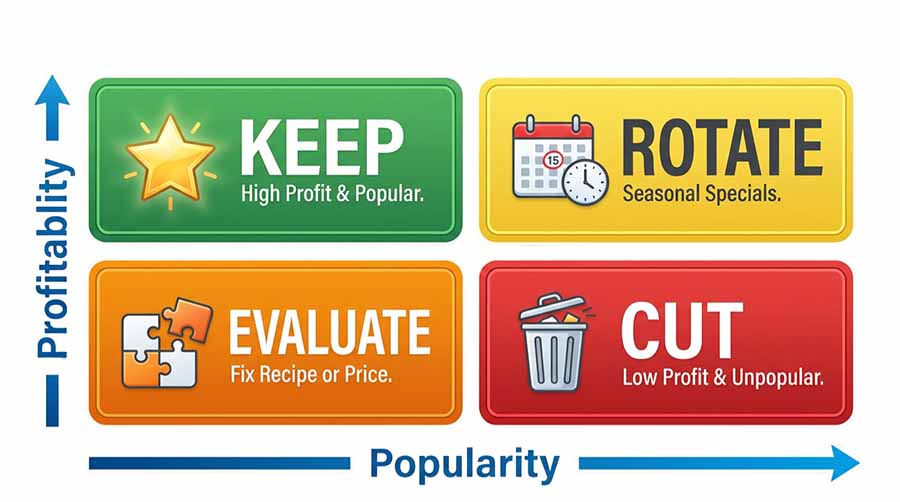
Not every item on your menu deserves the same treatment. Some are workhorses that pay the bills. Some are dead weight. Some just need better timing.
What to Keep: Your Stars
High popularity, high profit. These are your signature items. The sourdough that people drive across town for. The croissants that sell out by 10 a.m. The custom cakes that book three weeks out.
Keep anything that's both a customer favorite and a strong margin generator. These items anchor your brand and fund everything else. If it's selling consistently and making money, don't touch it. (Need help identifying your most profitable offerings? This profit playbook breaks down which desserts deliver the best margins.)
What to Cut: The Dogs
Low popularity, low profit. These items are taking up mental space, ingredient inventory, and packaging stock for no good reason. Maybe it's a rye bread that three people buy per month, or a Danish flavor that never caught on.
Cut them. No ceremony. If you're worried about losing the occasional customer who orders it, weigh that against the cost of keeping 14 ingredients in stock for a twice monthly sale. The math doesn't work.
What to Rotate: Seasonal and Limited Offers
Some items are fantastic but don't need to run all year. Pumpkin spice anything in July? Hard pass. Lemon bars in February? Same energy.
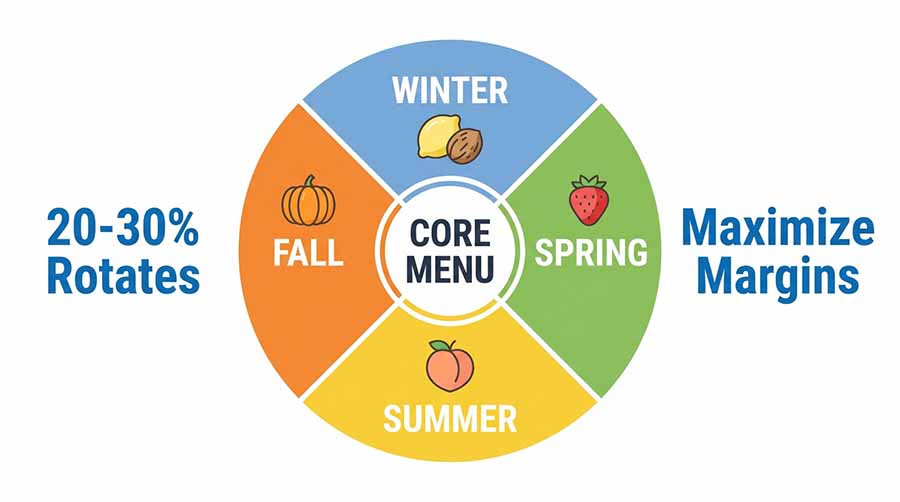
Build a rotation calendar. Your core menu should represent 60 to 70% of your offerings, staying consistent so customers know what to expect. The remaining 20 to 30% can shift quarterly, bringing in seasonal ingredients when they're cheap and fresh.
Seasonal ingredients are typically cheaper when abundant, giving you better margins. And rotating flavors keeps regulars interested without forcing your team to master 40 recipes at once.
Your Quarterly Rotation Calendar
Here's a simple framework. Keep your bread, signature pastries, and bestselling desserts on the menu year round. Then layer in seasonal rotations that match ingredient availability and customer mood. (For a deeper dive into building a profitable seasonal menu strategy, we've got you covered.)
The profit play: buy ingredients at peak season when prices drop, feature them heavily during that quarter, then rotate out before costs climb again. Here's how it breaks down:
Winter: January to March
Focus on comfort. Think chocolate, cinnamon, nuts, dried fruits. Citrus is at its peak, so blood orange scones or meyer lemon tarts fit beautifully. Customers want warmth and richness when it's cold outside. (Cost advantage: citrus peaks now, chocolate and nut prices stabilize.)
Spring: April to June
Lighten up. Berries start coming in, and people want fresher flavors. Strawberry shortcake, blueberry muffins, lavender cookies. This is when you can test new items because customers are more open to trying something different. (Cost advantage: berries drop 30 to 40% as local supply floods the market.)
Summer: July to September
Go bright and simple. Peaches, cherries, stone fruits. Keep baking to a minimum in the heat. Offer chilled items if your setup allows it. Lemon, lime, and coconut all perform well. (Cost advantage: stone fruits are abundant, and you're not competing with holiday demand.)
Fall: October to December
Bring out the big guns. Pumpkin, apple, pear, maple, spice blends. This is your highest revenue season for most bakeries, so your rotation should lean into what people expect and crave. Don't get cute. Give them the classics done well. (Cost advantage: apples, pumpkins, and squash are cheapest during harvest months.)
How to Message a Smaller Menu Without Losing Customers
This is where most bakeries panic. You're cutting items, and you're worried regulars will revolt. Here's the profit angle: when you position a smaller menu as curated and premium rather than cost cutting, you maintain pricing power. Confident messaging protects your margins while keeping customers loyal. (If you're rethinking your pricing strategy altogether, here's how to charge what you're worth without losing customers.)
Email Script: The Focused Menu Announcement
"We're sharpening our focus. After months of listening to what you love most, we're streamlining our daily menu to spotlight the items that make us who we are. You'll still find your favorites, plus room for us to rotate seasonal specials that celebrate the best ingredients each quarter. Expect the same quality, faster service, and some exciting limited offers on the way."
Signage Lines for Your Storefront
- "Curated Daily. Rotated Seasonally."
- "Small Menu. Big Flavor. Zero Compromise."
- "What's Here is What We Do Best."
Counter Scripts for Your Team
Train your staff to handle questions about missing items with confidence, not apology.
- "We're focusing on what we do best so everything is as fresh as possible."
- "That item is coming back as a seasonal special in the fall. Want me to put you on the list?"
- "We streamlined to make sure every single thing we bake gets the attention it deserves."
Notice the language. You're not cutting. You're focusing, curating, perfecting. Frame it as a benefit, because it is.

The Packaging Bonus You Didn't Expect
One more thing. While you're streamlining your menu and training your team on confident messaging, your packaging situation is about to get a whole lot simpler too.
When you're running 40 pastries, you need clamshells, boxes, bags, sleeves, inserts, and label variations for all of them. It's expensive. It's messy. It slows down fulfillment. (If you're reevaluating your entire packaging setup, check out these essential packaging solutions that streamline operations.)
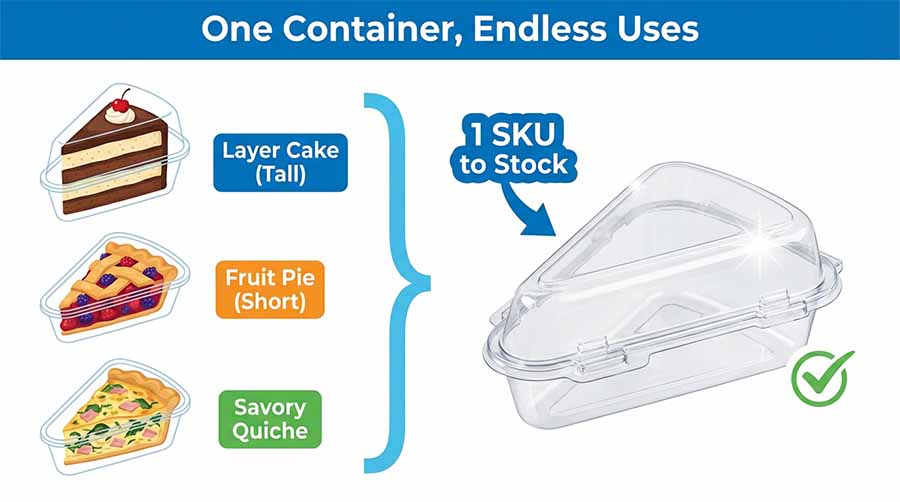
Cut your menu to 25 core items, and suddenly you're ordering three types of containers instead of nine. Your packaging closet makes sense again. Your team knows exactly which box goes with which product. Reordering is simpler. Costs drop.
Examples: a universal slice container works for cake, pie, and quiche. A standard cupcake dome covers muffins and single serve desserts. A hinged clamshell handles cookies, brownies, and bars. Fewer SKUs, better inventory control, cleaner operations.
Bakery Menu Simplification: The Keep/Cut/Rotate Checklist
Use this monthly to keep your menu tight and profitable.
| Category | Criteria | Action |
|---|---|---|
| Keep (Stars) | High popularity + High profit margin | Core menu. Never remove. |
| Cut (Dogs) | Low popularity + Low profit margin | Remove immediately. Free up resources. |
| Evaluate (Puzzles) | High profit + Low popularity | Test promotion or reposition. Cut if no improvement in 60 days. |
| Evaluate (Plow Horses) | High popularity + Low profit | Keep for traffic. Look for cost reduction or slight price increase. |
| Rotate (Seasonal) | Strong performance but ingredient dependent | Move to quarterly rotation calendar. Promote as limited time. |
Run this analysis every 30 to 60 days. Sales data doesn't lie. If something isn't pulling its weight, it goes.
What Happens When You Actually Do This
The results aren't subtle. Bakeries that simplify see faster morning prep, less end of day waste, and staff who can actually master the recipes instead of half remembering 40 of them. More importantly, they see 3 to 7 point improvements in food cost percentage within 90 days. When you're not stockpiling ingredients for 15% of your menu that barely sells, those dollars go straight to the bottom line.
Your regulars notice too. Instead of scanning a chaotic case, they see a focused lineup of your best work. Decision time drops. Confidence in quality goes up. And when you bring back a seasonal favorite, it feels like an event instead of just another Tuesday.
One more number worth knowing: the ROI for seasonal menu planning typically hits 400 to 800% in the first year, driven by lower food costs and revenue spikes during seasonal periods. That's not a small bump. That's game changing.
Final Thoughts
A tight core menu gives you operational control. Seasonal rotation keeps things exciting without the chaos. And when you message it as a refinement rather than a reduction, customers see it as a sign of confidence, not compromise.
Start with your numbers. Identify your stars, cut the dead weight, and build a rotation calendar that matches ingredient pricing and customer expectations. Bakery menu simplification isn't about doing less, it's about doing what matters better. Your profit margins will thank you, your team will breathe easier, and your packaging closet might finally make sense.
FAQ
What is the best layout for a bakery menu?
The best bakery layout groups items by type: bread in one section, pastries in another, custom cakes separately. Keep your stars at eye level in the display case. Use clear signage for seasonal items so customers know what's limited time. The goal is to guide decision making without overwhelming people.
What is the most profitable bakery item to sell?
Custom orders and catering typically generate the highest profit because production waste from unsold inventory is nearly zero. You're making exactly what's been paid for in advance. Among daily items, signature cakes, specialty breads, and high margin pastries with simple ingredient lists tend to perform best.
How do I attract customers to my bakery with a smaller menu?
Position your smaller menu as curated and premium. Use signage that emphasizes focus and quality. Promote seasonal rotations as exclusive, limited time offers to create urgency. Train your staff to speak confidently about why each item earned its place. Customers respond to expertise and intention.
What is trending in bakery menus right now?
Portion controlled indulgences are rising as customers seek emotional satisfaction without overcommitting. Dietary options like gluten free and high protein desserts continue to grow. Seasonal, locally sourced ingredients are becoming standard expectations rather than premium features. And pre-orders paired with limited daily menus help bakeries match supply with demand.
Why do small bakeries fail?
Most fail because of cash flow problems tied to waste, inconsistent pricing, and menu complexity that overwhelms operations. When you're trying to make too many things, quality suffers, costs climb, and your team burns out. A focused menu solves most of these issues by improving margins, reducing waste, and simplifying training.
What's a good profit margin for a bakery?
A healthy bakery profit margin falls between 4% and 9% after all expenses. Specialty bakeries with strong branding and efficient operations can push higher. The key is controlling your two biggest costs: raw materials and labor. Menu simplification helps with both by reducing waste and speeding up production.
