

Are coffee business trends keeping you awake at night – and we're not talking about the caffeine? The coffee industry is buzzing with more changes than a Monday morning rush, and smart operators know that staying ahead means more than just serving a decent cup of joe.
The game has changed. We're looking at a market that's worth a staggering $256.29 billion in 2025, set to climb to $381.52 billion by 2034. That's some serious beans. But here's the kicker – success isn't just about riding the wave anymore. It's about understanding which trends will stick around longer than that customer camping with their laptop for six hours.
Let's cut through the froth and get to what really matters for your bottom line.
What is the Trend in Coffee Shop in 2025?
The specialty coffee segment is absolutely crushing it right now. We're talking about a robust $112 billion market with a 10.4% compound annual growth rate that would make any investor's heart skip a beat. But what's driving this growth isn't just people wanting fancier drinks – it's a complete shift in how consumers think about their daily caffeine fix.
Cold brew coffee represents the fastest-growing segment, jumping from $3.16 billion in 2024 to $3.87 billion in 2025, projecting explosive growth to $16.22 billion by 2032 at a 22.7% CAGR. If that doesn't get your attention, check your pulse.
But here's where it gets interesting for operators. Consumer behavior data shows that 73% of Americans drink coffee daily, and their purchasing patterns remain surprisingly stable even when prices climb. That's what we call coffee loyalty at its finest.

The Mushroom Coffee Market Revolution
Let's talk about the elephant in the room – or should we say, the mushroom in the cup? The mushroom coffee market has exploded from $2.72 billion in 2024 to $2.91 billion in 2025, with projections hitting $3.78 billion by 2029.
Now, before you start picturing button mushrooms floating in your americano, we're talking about adaptogenic varieties like reishi, chaga, lion's mane, and cordyceps. These aren't just trendy add-ins – they're backed by serious consumer interest. Search interest for mushroom coffee increased by 87% in 2024, with 38% of millennials finding the concept appealing.
Market Leaders and Growth: Four Sigmatic has emerged as the poster child for this movement, while brands like Ryze experienced a 26% increase in search interest in 2025, reaching 540,000 monthly searches. The functional mushroom market overall is projected to grow from $36.1 billion in 2025 to $59.3 billion by 2032.
But here's the reality check – 18% of users report mild to moderate digestive issues according to ConsumerLab reviews. Healthcare professionals have raised concerns about potential medication interactions, particularly with blood-thinning properties of certain functional mushrooms. Smart operators are addressing this by offering sample sizes and educating customers about proper consumption.

Pistachio: The Social Media Phenomenon
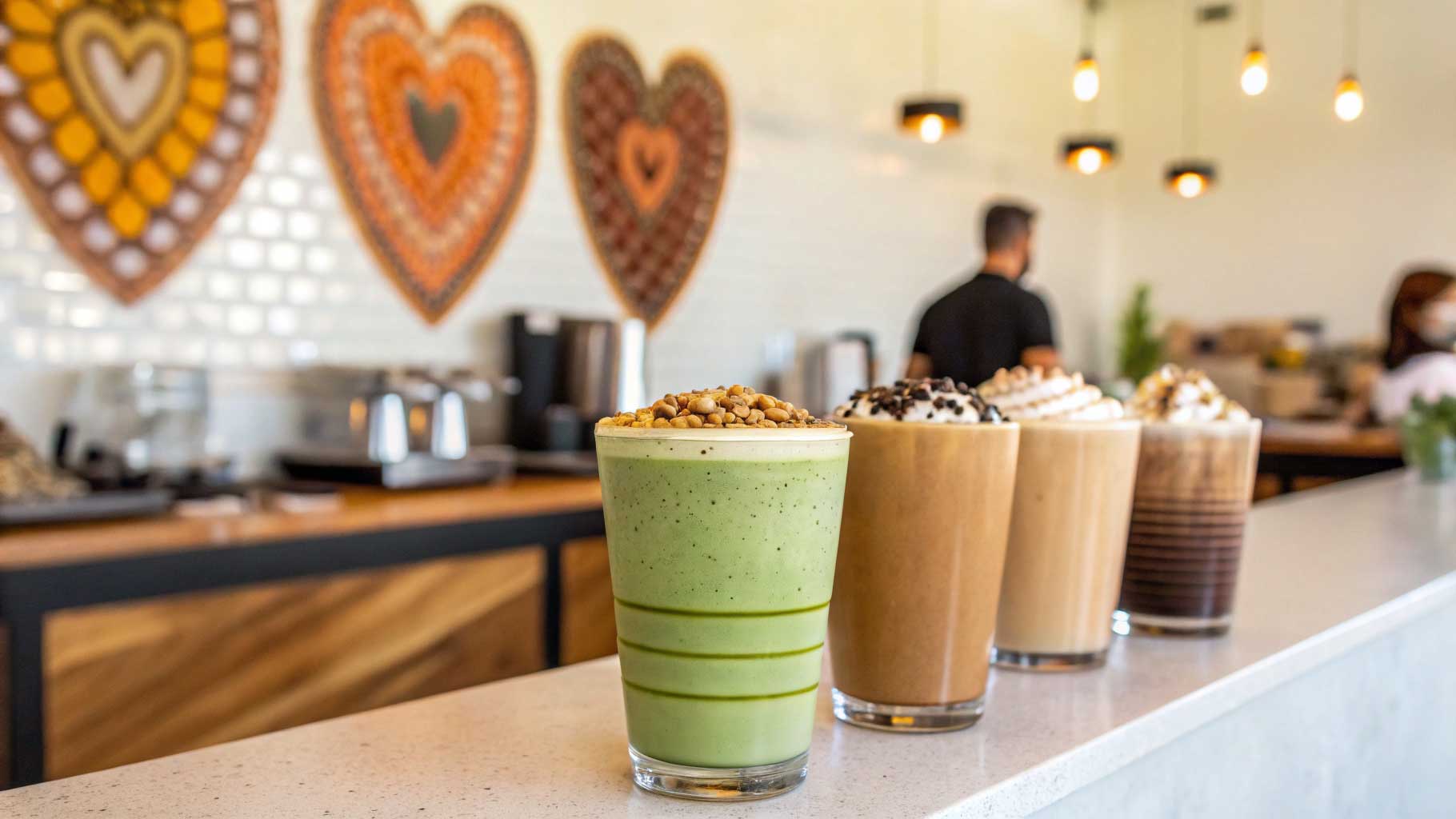
Here's where things get nutty – literally. Pistachio-flavored coffee has emerged as the dominant trend of 2025, driven primarily by social media platforms TikTok and Instagram. This trend shows 120% market growth with a consumer interest score of 9.1 out of 10, commanding a 35% price premium over standard offerings.
This trend didn't come out of nowhere. It originated from Dubai chocolate influences in 2024 and rapidly gained mainstream adoption across coffee shop menus globally.
The appeal lies in pistachio's unique flavor profile – combining buttery smoothness with subtle earthy undertones that complement espresso's natural notes perfectly. Plus, it aligns with rising health consciousness since pistachios are associated with heart health and protein content.

Beetroot: The Colorful Innovation
Now this one might raise eyebrows, but beetroot has emerged as a novel coffee ingredient, showing 45% market growth as consumers seek visually striking and health-conscious alternatives.
We're not suggesting you toss beets into your espresso machine. Instead, beetroot powder offers natural nitrates that support oxygen delivery and energy enhancement without caffeine dependency. The Instagram factor is undeniable – these drinks photograph beautifully with their vibrant purple hues.
Coffee-baked beetroot preparations and beetroot lattes have gained traction in artisanal cafes, offering Instagram-worthy presentation while delivering potential health benefits. The ingredient's earthy flavor profile pairs surprisingly well with coffee's natural notes, creating unique menu opportunities for differentiation.

Is the Coffee Industry Growing or Declining?
So, is this growth a fluke? Not at all. As we touched on earlier, the numbers show a resilient market that's thriving despite some serious headwinds. Coffee pricing has experienced unprecedented volatility, with arabica futures reaching a historic peak of $4.41 per pound in February 2025, representing over a 100% increase since 2022.
Current pricing has moderated to $3.36 per pound as of April 2025, yet retail coffee prices have increased to an average of $7.25 per pound – the highest levels on record. But here's the remarkable thing: despite these dramatic price increases, coffee sales continue to demonstrate remarkable resilience.
Consumer Spending Patterns That Matter: Here's where it gets really interesting for operators targeting the right customers. For home brewing, 31% of consumers invest $11-20 monthly, while 11% spend over $40 monthly. But the real goldmine? Coffee shop spending shows 54% spend $20 or less monthly, though a crucial 14% spend $40 or more. That high-value 14% segment represents your bread and butter customers.
And here's a demographic insight that might surprise you: retirees demonstrate the highest daily consumption rates at 81%, representing a stable customer base for consistent revenue generation. While everyone chases the millennial crowd, smart operators are building loyalty with this reliable demographic.
To put this growth in perspective, here's how the key segments stack up against each other:
What Coffee Does Gen Z Drink?
Here's where traditional coffee wisdom gets turned upside down. Only 18% of consumers now prefer black coffee, marking a 56% decrease from 2022. This dramatic shift indicates increased willingness to experiment with flavor enhancements and functional additions.
The data reveals some fascinating patterns: 77% of consumers prefer plant-based milk alternatives, representing a 35% increase from 2022. Meanwhile, 48% of consumers express interest in functional ingredients, representing an 85% increase in health-focused consumption patterns.
Gen Z particularly gravitates toward:
. Cold brew preparations with flavor additions
. Plant-based milk alternatives (oat milk leading the charge)
. Functional ingredients for wellness benefits
. Visually appealing drinks for social media sharing
. Sustainable and ethically sourced options

What is the Biggest Issue Facing Coffee Production?
The elephant in the plantation? Climate change impacts on major producing regions Brazil and Vietnam are creating unprecedented challenges. Infrastructure strain, including port congestion and aging rail systems, has created persistent delays and increased transportation costs.
Add to this a critical shortage of over 70,000 drivers, while warehousing operations struggle with labor availability, and you've got a supply chain that's more fragile than your grandmother's china.
But the hidden costs might surprise you. A comprehensive Food and Agriculture Organization report reveals significant hidden costs in coffee production that remain unaccounted for in market pricing. These externalities include environmental impacts such as greenhouse gas emissions and water usage, social issues including child labor and gender wage gaps, and the critical living income gap affecting smallholder farmers.

Actionable Implementation Strategies
Smart operators should prioritize a phased approach to trend integration, beginning with high-consumer-interest, low-risk options like pistachio flavoring and plant-based milk alternatives.
Menu Development Framework:
1. Test and Learn: Start with limited-time offerings to gauge customer response
2. Portion Strategy: Offering multiple sizes of trending beverages can maximize revenue per customer
3. Combo Pricing: Bundle innovative drinks with complementary food items
4. Cost Management: Maintain food cost percentages between 15-25% while commanding premium pricing for unique ingredient combinations. For detailed guidance on strategic menu pricing, understanding cost structures becomes essential.
Technology Integration: Modern coffee operations increasingly rely on technology for competitive advantage. AI-powered espresso machines can customize drinks to individual preferences, while inventory optimization systems help manage the complexity of diverse ingredient portfolios. IoT-enabled equipment monitoring reduces downtime and ensures consistent quality during peak periods.
Blockchain technology offers opportunities for supply chain transparency, appealing to environmentally conscious consumers willing to pay premiums for ethical sourcing.
Pricing Strategy: The key lies in balancing rising input costs with customer price sensitivity. Target audience analysis becomes crucial – office workers may accept premium pricing for superior quality, while price-conscious segments require value-oriented positioning.

What is the Outlook for the Coffee Industry?
The crystal ball looks pretty promising, actually. Digital integration, sustainable practices, and community engagement will increasingly differentiate successful operators from competitors. The ability to adapt quickly to changing consumer preferences while maintaining operational efficiency will determine long-term viability.
Success stories are emerging everywhere. Four Sigmatic has established market leadership in mushroom coffee through strategic positioning as a wellness-focused brand, successfully combining functional benefits with taste appeal.
Ryze achieved 26% search interest growth in 2025, reaching 540,000 monthly searches through direct-to-consumer marketing focused on sustainable, jitter-free coffee alternatives.
Meanwhile, Camper Cafe represents successful mobile coffee operation, generating £150,000 revenue from working only 70 days annually. This case demonstrates how operational efficiency and strategic event placement can create highly profitable business models.
But here's another brilliant example that addresses the "laptop camper" challenge head-on: Momentum Coffee and Coworking achieved $156,000 annual revenue by combining coffee service with co-working spaces, creating dual revenue streams that enhance customer lifetime value. Their success during the 2020 pandemic demonstrates the importance of diversified business models and strong customer relationships.
The Ready-to-Drink coffee market expansion to $40.7 billion indicates strong consumer preference for convenience-oriented products, while North America dominates the cold brew market with a 35.76% share.

Looking Forward
The coffee industry's future belongs to operators who can successfully navigate the complex interplay of consumer trends, supply chain challenges, and technological opportunities while maintaining the fundamental appeal that makes coffee essential for billions worldwide.
Investment in staff training becomes crucial for maintaining quality consistency with new ingredients and preparation methods. Employee retention strategies gain importance as skilled barista availability decreases amid industry-wide labor shortages.
Sustainability initiatives should align with consumer values while creating operational efficiencies. Waste reduction, energy efficiency, and ethical sourcing programs can reduce costs while enhancing brand appeal to environmentally conscious consumers.
The evolution toward health-focused, technologically enhanced experiences requires operators to balance tradition with innovation. Success depends on maintaining coffee quality fundamentals while strategically adopting trends that align with target customer preferences and operational capabilities.
Ready to brew up some success? The trends are clear, the data is solid, and the opportunities are steaming hot. The question isn't whether these trends will impact your business – it's whether you'll be ready to capitalize on them.
Want to stay ahead of the curve? From pricing strategies to the latest food trends shaping 2025, we've got the insights that keep food professionals winning. Explore our complete collection of industry guides and trend reports at Plastic Container City's blog – because staying informed isn't just smart business, it's survival.
Frequently Asked Questions
What is the most profitable coffee trend in 2025?
Pistachio-flavored coffee leads profitability with a 35% price premium over standard offerings and 120% market growth, making it the most financially attractive trend for operators.
Is mushroom coffee safe for all customers?
While generally safe, operators should offer sample sizes and educate customers about proper consumption, especially for those on blood-thinning medications due to certain functional mushrooms having blood-thinning properties.
How much should coffee shops raise prices in 2025?
With retail coffee prices averaging $7.25 per pound (highest on record), strategic price increases of 8-12% can be absorbed by loyal customers when justified through quality improvements or unique offerings.
What challenges are coffee shops facing in 2025?
Primary challenges include supply chain disruptions, a shortage of over 70,000 truck drivers, climate change impacts on production regions, and balancing innovation with operational efficiency.
Which coffee segment shows the fastest growth?
Cold brew coffee represents the fastest-growing segment with a 22.7% CAGR, projected to reach $16.22 billion by 2032, driven by consumer preference for smoother, less acidic experiences.
