
Are you building a bakery email list full of customers who never buy again? Building a list that actually drives repeat sales means capturing the right subscribers at the right moments, then sending campaigns they want to open. Most bakery owners are sitting on untapped revenue because their email lists are full of dead leads or one-time buyers who forgot they signed up.
Email marketing delivers $36 to $38 for every dollar you spend, with the food and beverage sector earning $0.16 per recipient, the joint-highest of any ecommerce industry. That's trackable revenue, not guesswork."
Here's what separates bakery email lists that generate cash from ones that just sit there taking up space on Mailchimp.
Where to Capture Email Addresses (Without Being Annoying)
The best email signups happen where your customers are already paying attention: at checkout, inside packaging, and on your website.
At the Point of Sale
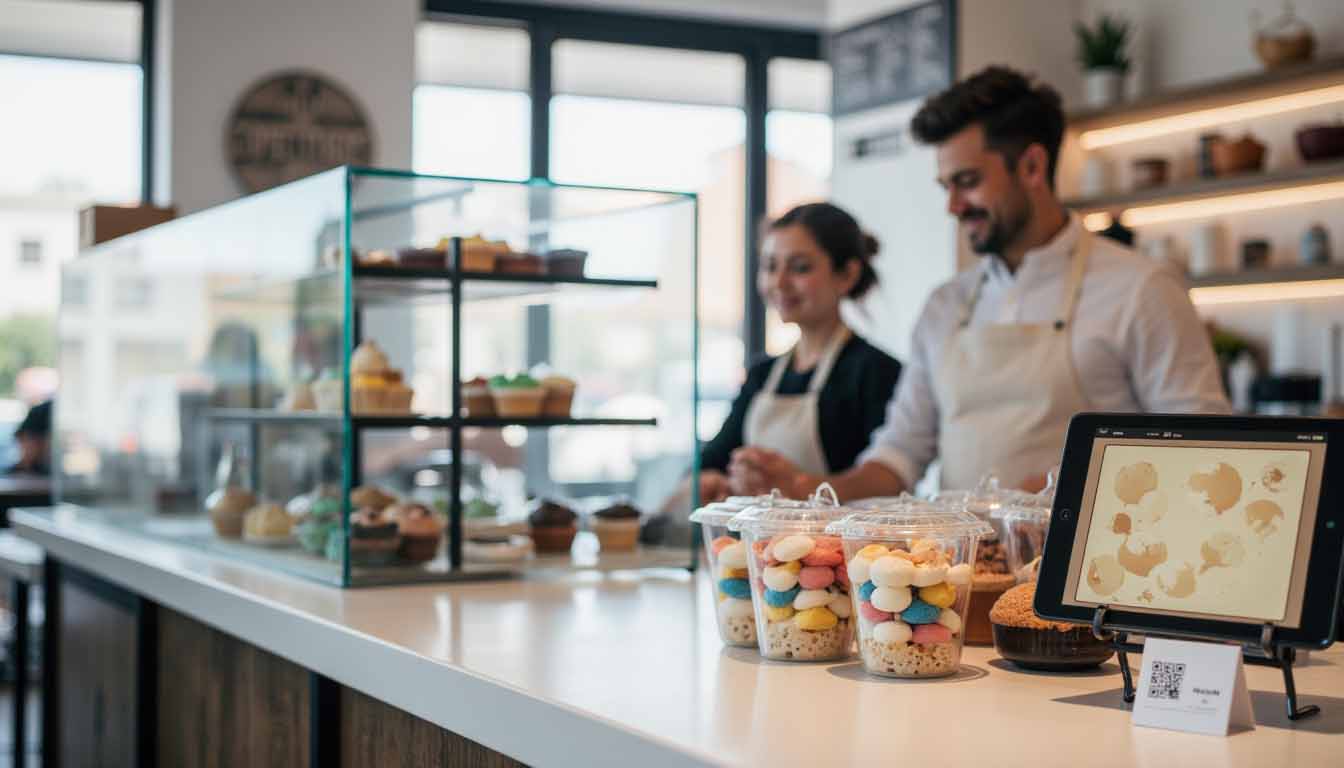
Your POS system should automatically collect emails during checkout. Not as an awkward ask, but as part of the transaction flow. Modern bakery POS platforms like Square, Toast, and Clover let you capture emails while processing loyalty rewards, digital receipts, or order confirmations.
Restaurants using automated email campaigns through commerce platforms saw an average 15% boost in repeat orders among both new and returning customers. No extra effort required.
Inside Your Packaging
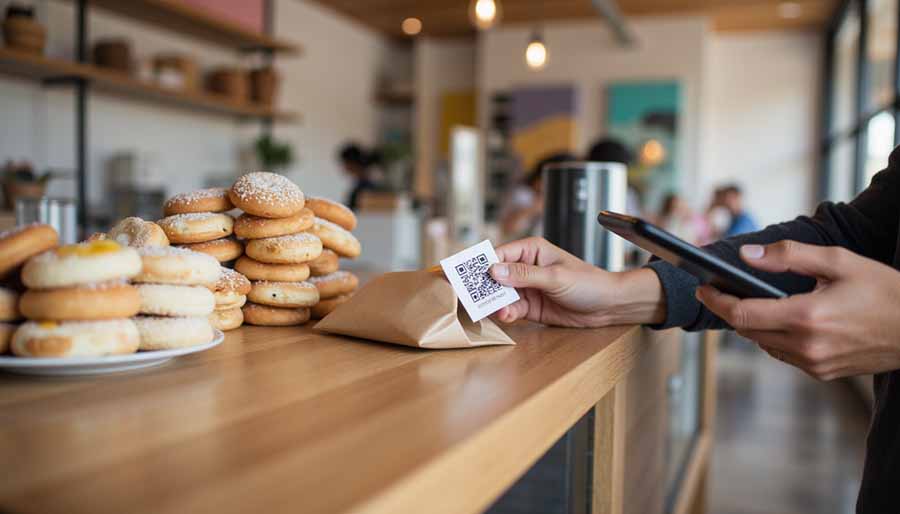
Every box, bag, and container that leaves your bakery is real estate. A small card with a QR code linking to a signup page works better than handing someone a clipboard.
The offer matters. "Scan for 10% off your next order" or "Get our monthly recipe guide" gives people a reason to pull out their phone. Packaging inserts with discount incentives can significantly increase repeat orders.
At Plastic Container City, we work with bakeries across the U.S. who slip these cards into cake boxes and pastry bags. It's simple, it's trackable, and customers actually use them. The right packaging doesn't just protect your products—it directly impacts whether customers come back.
On Your Website and Online Ordering
If you take online orders, email capture should be built into the checkout process, not buried at the bottom of a homepage.
Pop-ups work when they're timed right. Exit-intent pop-ups (triggered when someone's about to leave your site) convert better than ones that slam the screen the second someone arrives. Offer something specific: a first-order discount, a free baking tip sheet, early access to seasonal items.
Gamify the ask. Spin-to-win wheels (e.g., 'Spin for a free cookie' or 'Win 20% off') convert significantly higher than standard 'Sign up for updates' forms. People like the instant gratification, and it feels fun instead of transactional.
Social media bios should link directly to a landing page with a signup form. Instagram and Facebook don't let you collect emails natively, so send followers somewhere you control.
Email Campaigns That Actually Convert
Once you've captured those emails, here's how to turn them into paying customers.
Welcome Sequences That Set the Tone
Welcome emails consistently achieve the highest open rates of any email type Platforms like GetResponse report open rates of 83.63%. That's your moment to lock in a relationship.
A solid welcome sequence looks like this:
Email 1 (immediate): Deliver the promised discount or freebie. Include your story, your hours, and what makes your bakery different.
Email 2 (3 days later): Highlight bestsellers or customer favorites. Add photos, not just product names.
Email 3 (7 days later): Share a customer testimonial or a behind-the-scenes look at how you make a signature item.
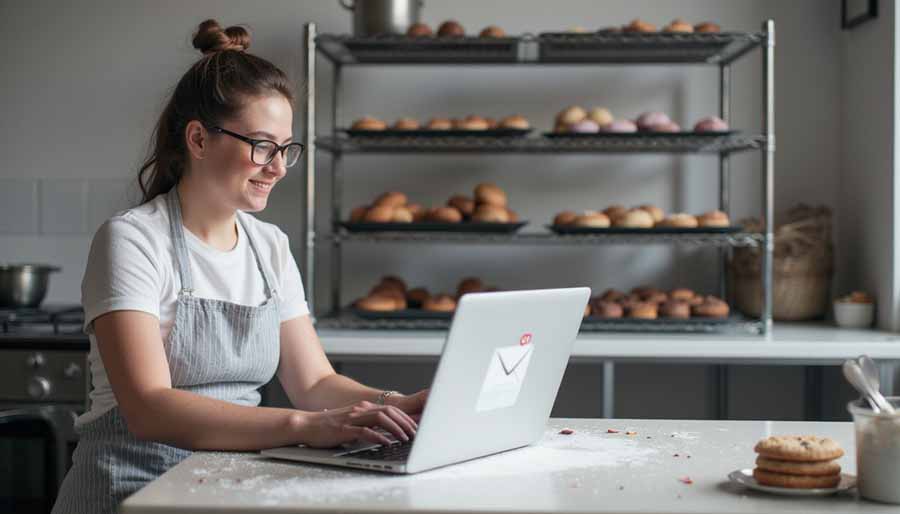
Automation handles this once you set it up. Platforms like Mailchimp, Klaviyo, and ActiveCampaign let you build these sequences without sending each email manually.
Segmentation Separates the Pros from the Amateurs
Segmented email campaigns get 65% higher open rates than generic blasts. If you're sending the same email to everyone on your list, you're leaving money on the table.
Segment by behavior, not demographics. Here's what that looks like:
| Segment Type | Example | Campaign Idea |
|---|---|---|
| Purchase Frequency | Weekly buyers vs. one-time customers | VIP early access vs. win-back discount |
| Dietary Preferences | Gluten-free, vegan, nut-free | New product alerts for specific diets |
| Engagement Level | Active openers vs. inactive | Exclusive offers vs. re-engagement |
| Geographic Location | Within 5 miles vs. 20+ miles | Same-day pickup vs. delivery promos |
Your email platform should let you tag subscribers based on their actions. Use those tags to send relevant campaigns, not random ones.
Storytelling Over Selling
Mike's Bakery, a family-owned shop in Ohio, shifted from generic product announcements to storytelling-focused emails and saw a 45% revenue increase in three months. They stopped writing "Fresh bread available today" and started writing about Sunday mornings, handmade traditions, and the smell of dough rising at 4 a.m.
Customers started referencing those stories when they came into the shop. That's when Mike knew the emails were working.
Your bakery has stories. Use them. Talk about where your ingredients come from. Share a recipe your grandmother taught you. Show what happens behind the counter before the doors open. People buy from bakeries they feel connected to, not just ones with good Yelp reviews. Social media and email work best together—learn how food businesses use social platforms to build lasting customer connections.
More Real-World Wins
These aren't marketing fairy tales. They're real bakeries using the exact strategies above to drive measurable revenue growth.
A small bakery in Birmingham used Mailchimp automation to send personalized birthday discounts to repeat customers and saw a 34% boost in return sales. They weren't running complicated campaigns. Just a simple automated email triggered by customer birthdays with a free cupcake offer.
Another bakery added 500 new email subscribers in one year, reaching a total of 700. They focused on consistent newsletters with baking tips, exclusive offers, and behind-the-scenes content. The result: increased customer loyalty and repeat purchases.
The pattern is clear. Bakeries that treat email as a relationship tool, not a sales tool, see better results. The same principle applies across your entire customer experience—discover why value, not just price, determines whether customers stick around.
Timing, Frequency, and Subject Lines
When to Send (Timing That Works)
Tuesday and Thursday mornings between 9 and 11 a.m. see the highest engagement for most industries, including food. But the food and beverage sector also sees strong performance between 3 p.m. and 6 p.m., when people are planning dinner or weekend errands.
Test your own audience. Send the same email at different times over a few weeks and track open rates. Your customers might behave differently.
How Often to Email
Highly engaged customers can handle two to three emails per week. Less engaged segments prefer weekly or biweekly.
Monthly newsletters work if they're packed with value: recipes, baking tips, exclusive discounts, event invitations. If your emails are just sales pitches, once a week is too much.
Subject Lines That Get Opened
Keep them short. 30 to 50 characters display best on mobile.
Front-load the benefit. "Free croissant with your next order" beats "Check out this week's deals."
Personalization with the recipient's name increases opens. Combine names with urgency or location for even better results: "Sarah, your birthday treat expires tomorrow" or "New gluten-free options in Brooklyn."
Ask a question that makes people curious: "What if you could skip the morning rush?" Works better than "Try our breakfast menu."
Use numbers: "3 ways to make your cakes last longer" gets more clicks than "Tips for storing cakes."
Avoid spam triggers like "Free," "Buy now," "Limited time," and "Guaranteed." Those words tank deliverability.
Compliance: The Stuff You Can't Skip
Email marketing in the U.S. is governed by the CAN-SPAM Act. Penalties reach $50,112 per email if you violate these rules.
Here's what you need to do:
Include a physical address in every email (your bakery's street address works).
Provide a clear unsubscribe link in every email.
Honor unsubscribe requests within 10 business days.
Use honest subject lines. Don't lie about what's inside the email.
Identify the email as an ad if it's promotional.
If you're targeting customers in Europe, GDPR requires explicit consent before you send any marketing emails. That means a checkbox they have to actively tick, not a pre-checked box buried in your terms and conditions.
Most email platforms handle the technical side of compliance automatically. You just need to follow the rules.
Tools That Make This Easier
You don't need a marketing degree to run a successful bakery email list. You need the right platform.
Mailchimp, Klaviyo, and ActiveCampaign are the most popular for small bakeries. They handle automation, segmentation, and compliance without a steep learning curve.
If your POS system integrates with your email platform, even better. Square syncs with Mailchimp. Toast works with Klaviyo. That means customer data flows directly into your campaigns without manual uploads.
Automation is what separates bakeries that email consistently from ones that forget for three months and then panic-send a generic "We miss you" blast. Set up your welcome sequence once. Build a birthday campaign once. Let the system do the rest.
Your Next Move
A bakery email list is only as good as the strategy behind it. You need quality signups from real customers, not random leads. You need campaigns that tell stories and solve problems, not just push products. You need segmentation, personalization, and automation to make the whole system run without eating up your entire day.
Start small. Pick one or two tactics from this article. Set up a welcome sequence. Add a QR code to your packaging. Test a new subject line. Build from there. The bakeries doing this well didn't get there overnight. They just kept showing up in their customers' inboxes with something worth opening, turning their bakery email list into a consistent revenue driver.
For more bakery insights, food-industry news, and actionable marketing strategies, visit the Plastic Container City blog.
FAQ
How much is a 1,000 email list worth?
It depends on your conversion rate and average order value. If 10% of your list buys once a month and your average order is $25, that's $2,500 in monthly revenue from 1,000 subscribers.
Can you make money with an email list?
Yes. Email consistently outperforms social media for direct sales. A bakery email list turns one-time customers into repeat buyers, which is where the real profit lives.
Is buying an email list worth it?
No. Bought lists are full of people who never asked to hear from you. They'll mark you as spam, which tanks your deliverability and gets your account flagged. Build your own list.
What is the 60/40 rule in email?
It refers to a content balance: 60% educational or entertaining content, 40% promotional. If every email is a sales pitch, people unsubscribe. If you never sell anything, you're wasting the list.
How to grow an email list fast?
Offer something valuable at signup (discount, recipe guide, free sample). Use QR codes on packaging. Capture emails at POS. Run a giveaway that requires an email to enter. Promote your signup page on social media.
