


Struggling to stand out while your costs keep climbing? You're not alone. How to find local partners starts with recognizing that collaboration beats competition when margins are tight and customers demand authenticity.
Picture this: your ingredient costs keep climbing, foot traffic feels sluggish, and that new coffee chain just opened down the street. Sound familiar? Many food business owners face this exact scenario, watching profits shrink while trying to do everything solo.
Here's the thing - the smartest operators aren't fighting this battle alone anymore. They're building strategic alliances that slash costs, expand customer reach, and create buzz-worthy experiences that big chains simply can't replicate.
The Wins: What a Good Partnership Delivers
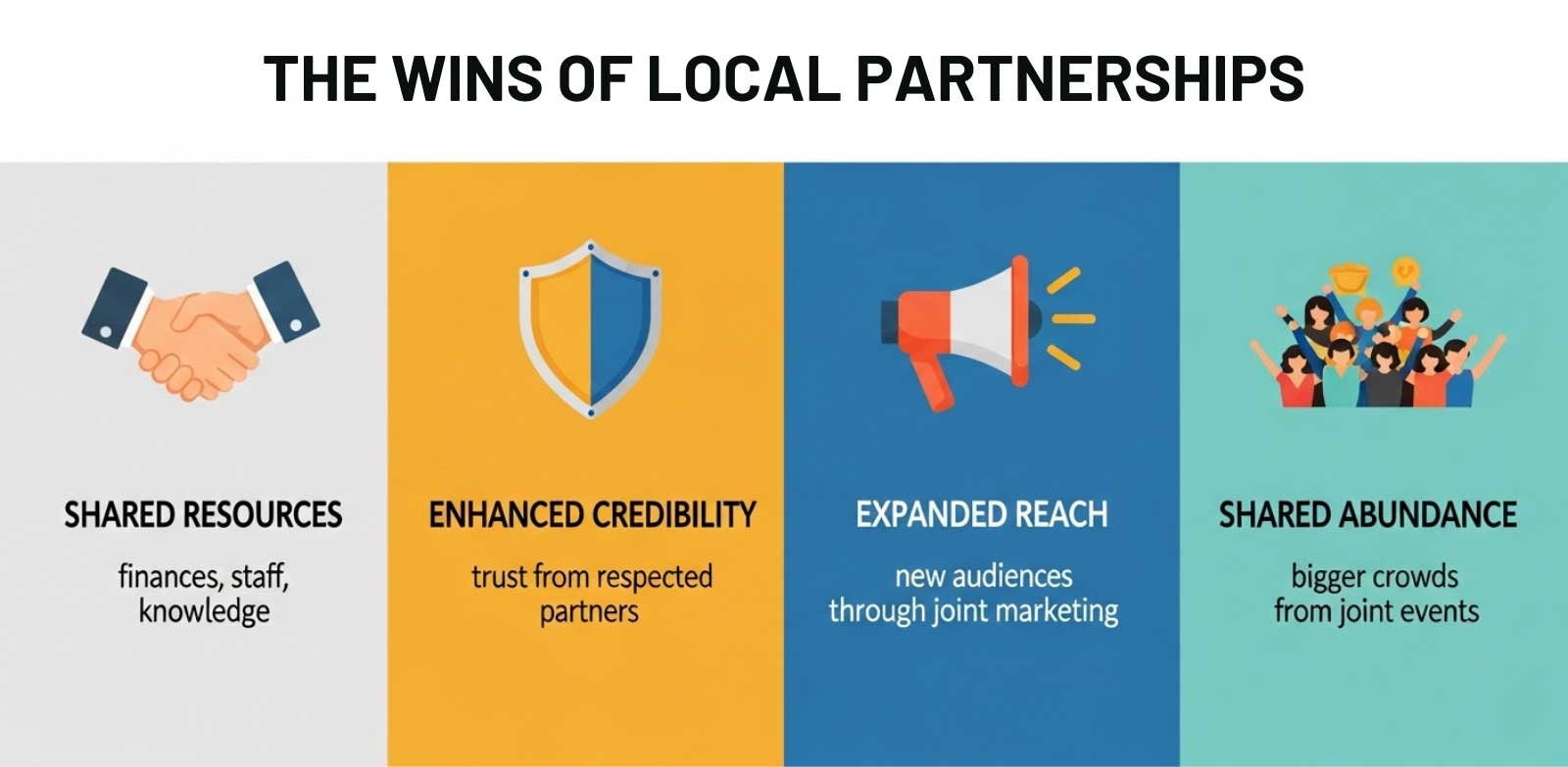
When businesses share finances, staff, and industry knowledge, operational efficiency skyrockets. This becomes particularly powerful for smaller operations that gain access to resources they'd otherwise lack.
Enhanced credibility follows naturally. When your food business partners with a respected local farmer or beloved community institution, it significantly boosts trustworthiness and public image.
A primary benefit is the expansion of customer reach. By collaborating with complementary brands, a business can tap into new customer segments and increase its brand visibility through joint marketing initiatives and referral partnerships.
The traditional business mindset often views competitors as rivals in a zero-sum game. However, a collaborative approach reframes this dynamic into a mutually beneficial network. By organizing joint festivals or co-promotions, local businesses can attract a significantly larger crowd than they could individually, turning competitive scarcity into shared abundance.
What Are the 4 Types of Partnerships in Business?
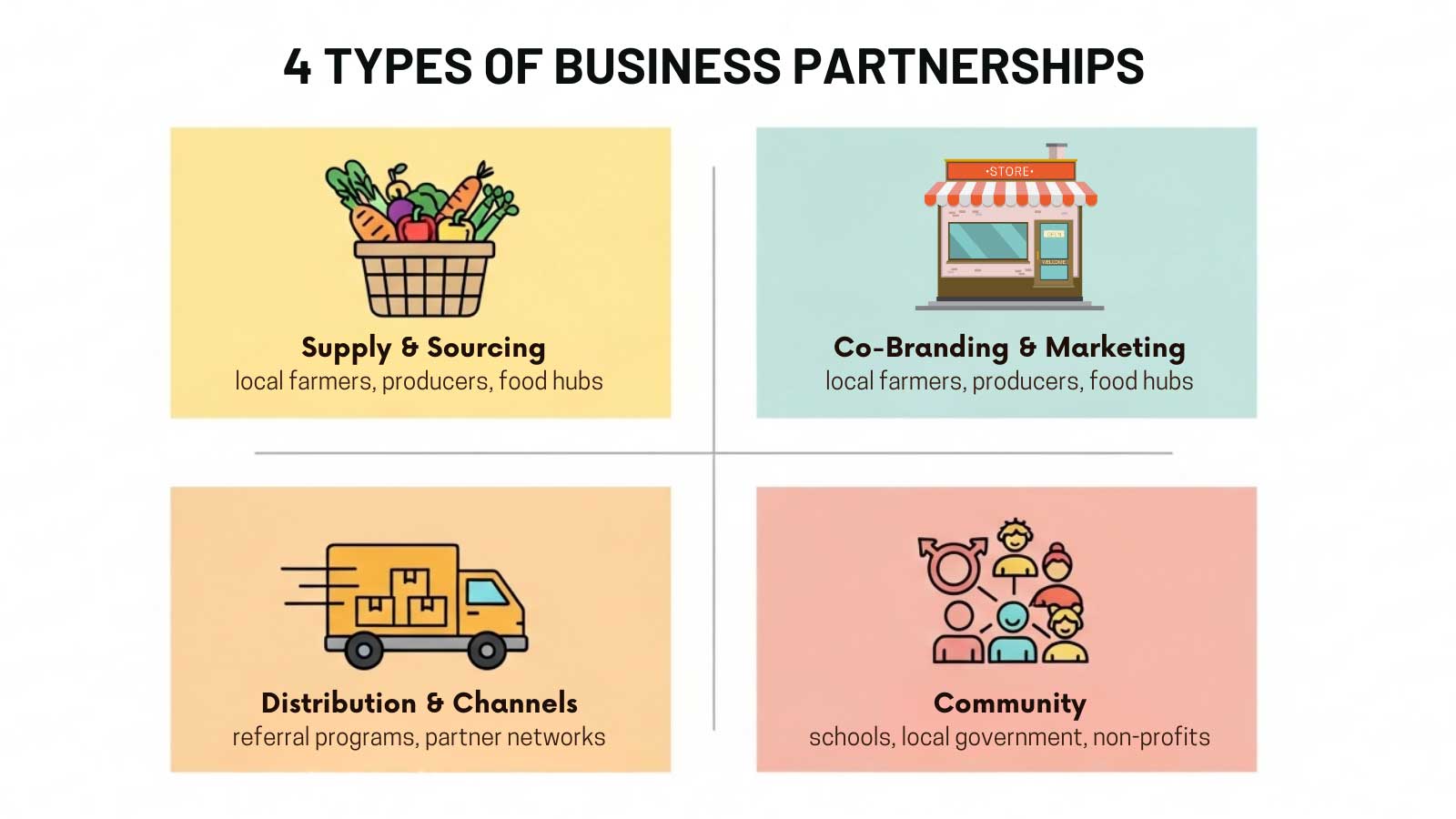
The four main partnership types are supply partnerships, co-branding collaborations, distribution alliances, and community partnerships. Each serves different business goals, from reducing ingredient costs to expanding market reach.
At Plastic Container City, we work with thousands of food professionals across the U.S., and we've noticed a sharp increase in container orders tied to collaborative ventures and joint promotions. Let's break down each type:
Supply & Sourcing Partnerships
Direct-to-producer relationships form the backbone of authentic food partnerships. These connections with local farmers, cheesemakers, or specialty producers give you access to premium ingredients while building compelling stories around your menu. Mastering local sourcing becomes even more powerful when done collaboratively.
Chef Rachel McGill exemplifies this approach, emphasizing that locally sourced ingredients create a "hyper seasonal menu" where "the freshness and quality simply tastes better, period."
Food hubs offer another pathway, especially for businesses needing variety or volume. 89% of food hubs purchase exclusively from small- to mid-size farms, making them perfect intermediaries for restaurants and caterers seeking consistent local sourcing.
Co-Branding & Joint Marketing
Cross-sector partnerships generate immediate wins for both parties. Think food trucks at breweries, coffee shops featuring local bakery pastries, or restaurants highlighting regional spice blends. These partnerships work especially well when combined with proven marketing strategies that drive real foot traffic.
The magic happens when complementary businesses pool their customer bases. A food truck partnering with a brewery gains exposure to a loyal new audience while providing the brewery's customers with quality food options. This audience expansion works even better with strategic influencer partnerships that amplify your reach.
Social media amplifies these collaborations beautifully. Joint promotions and cross-pollination of audiences happen naturally without significant marketing spend. Smart food businesses are turning social media into a sales engine through strategic partnerships.
Distribution & Channel Partnerships
These partnerships focus on expanding market reach through strategic distribution alliances. Channel partners help businesses access new customer segments and geographic markets they couldn't reach alone.
Referral partnerships create win-win scenarios where businesses recommend complementary services to their customers. A catering company might partner with an event planning business, creating a natural referral network that benefits both parties.
Partner programs formalize these relationships, establishing clear guidelines for commission structures, marketing support, and performance metrics.
Community Partnerships
These are broader, more strategic collaborations that align a business with a larger mission or community initiative, often involving non-profit or institutional partners.
Community and institutional partnerships with local government initiatives, such as a Mayor's Local Food Challenge, provide access to new wholesale channels, including employee cafeterias and school lunch programs. These partnerships not only generate new revenue but also demonstrate a commitment to community wellness and sustainable practices, enhancing a brand's public reputation.
The Strategic Reality: Why Local Matters More Than Ever
The economic climate demands smart partnerships. Food prices are predicted to increase by 2.9% in 2025, with some categories like eggs rising by a staggering 24.6%.
Consumer behavior has shifted dramatically too. Today's customers prioritize ingredient awareness, with younger consumers focusing on non-GMO and organic certifications. They're willing to pay premiums for transparency and sustainable practices. This demand for quality now extends beyond the restaurant table. With nearly 75% of meals enjoyed off-site, the 'elevated takeout' trend means customers expect the same premium experience at home—a detail that makes packaging just as important as the product. At Plastic Container City, we've seen a surge in demand for premium, mess-free containers as businesses adapt to this elevated takeout trend. Local partnerships deliver exactly what modern consumers crave: authentic stories, verifiable sourcing, and community connection that national chains can't replicate.

Finding Your Perfect Match
Step 1: Define Your Partnership Goals
Before reaching out to potential partners, conduct an honest internal assessment. What gaps exist in your operation? Are you seeking cost reduction, market expansion, or innovation opportunities?
Clear objectives prevent mismatched partnerships that waste time and resources.
Step 2: Research and Vet Candidates
Strategic alignment proves most critical. Misalignment on vision can lead to fundamental clashes that undermine entire collaborations.
Step 3: Approach and Negotiate
When reaching out to potential partners, lead with mutual benefits. Many of our customers tell us that successful partnerships begin with conversations about shared challenges rather than immediate asks.
LinkedIn serves as an excellent starting point for connecting with local business owners. Industry events and trade shows provide face-to-face networking opportunities that often prove more effective than cold outreach.
Success Stories: Partnerships That Work
Bold Bean Co. x GAIL's Bakery
This collaboration between Bold Bean Co. and artisanal bakery chain GAIL's demonstrates values-driven partnerships perfectly. Their menu item featuring sustainably sourced products succeeded commercially while resonating with conscious consumers.
The authentic connection - Bold Bean's founder previously worked at GAIL's - created a genuine narrative reinforcing both companies' quality and sustainability commitments.
PerfectTed x The Good Grain
This matcha and oats collaboration addressed a specific consumer need: convenient, nutritious breakfast options. Their co-branded Matcha Latte Overnight Oats combined trending flavors with functional benefits.
The partnership succeeded by identifying a problem neither brand could solve alone, then delivering a unique solution.

Avoiding Common Partnership Pitfalls
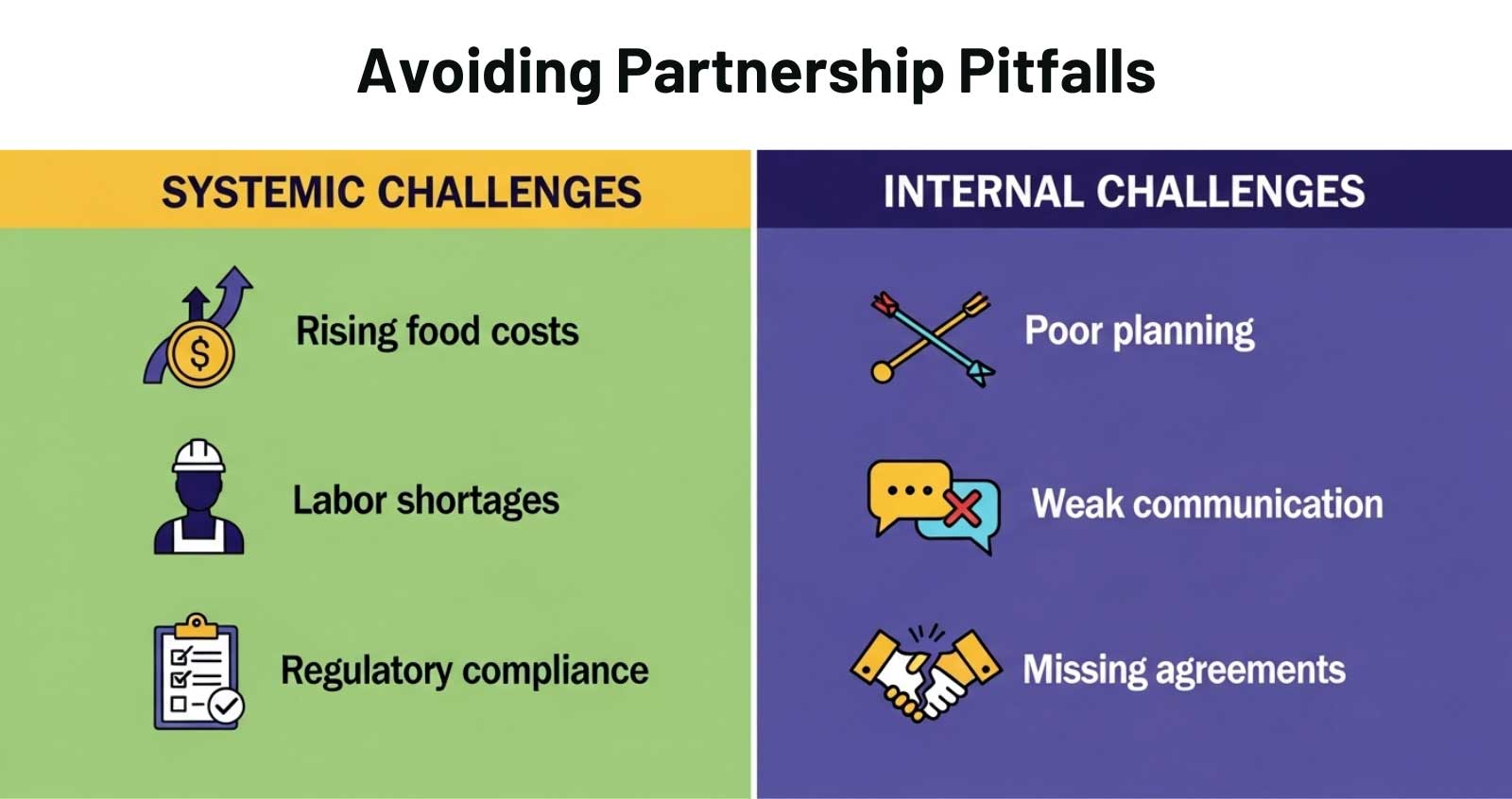
Even the best partnerships face hurdles. The key is distinguishing between two types of challenges. First are the systemic challenges you can't avoid—rising food costs or a tough labor market. The second, and more dangerous, are the internal challenges born from poor planning and unclear communication. A strong partnership helps you weather the systemic storms by having the right frameworks in place to prevent the internal ones.
We often hear from clients struggling with supply logistics, which is why forming strong local sourcing partnerships has become so critical.
Legal and Financial Structure
Formal agreements protect all parties involved. Partnership relationships establish fiduciary duties, obligating each partner to act in the business's best interests.
Breaches - including financial misconduct or withholding critical information - can lead to costly litigation and business dissolution. Written agreements turn handshake deals into legally sound collaborations.
Managing Operational Challenges
The local food community faces real hurdles. Lack of large-scale distribution networks creates logistical difficulties, while small producers compete against subsidized industrial operations.
Regulatory compliance, particularly Food Safety Modernization Act requirements, can burden small businesses financially. Partnership agreements should address these shared challenges upfront.
Making It Happen: Your Action Plan
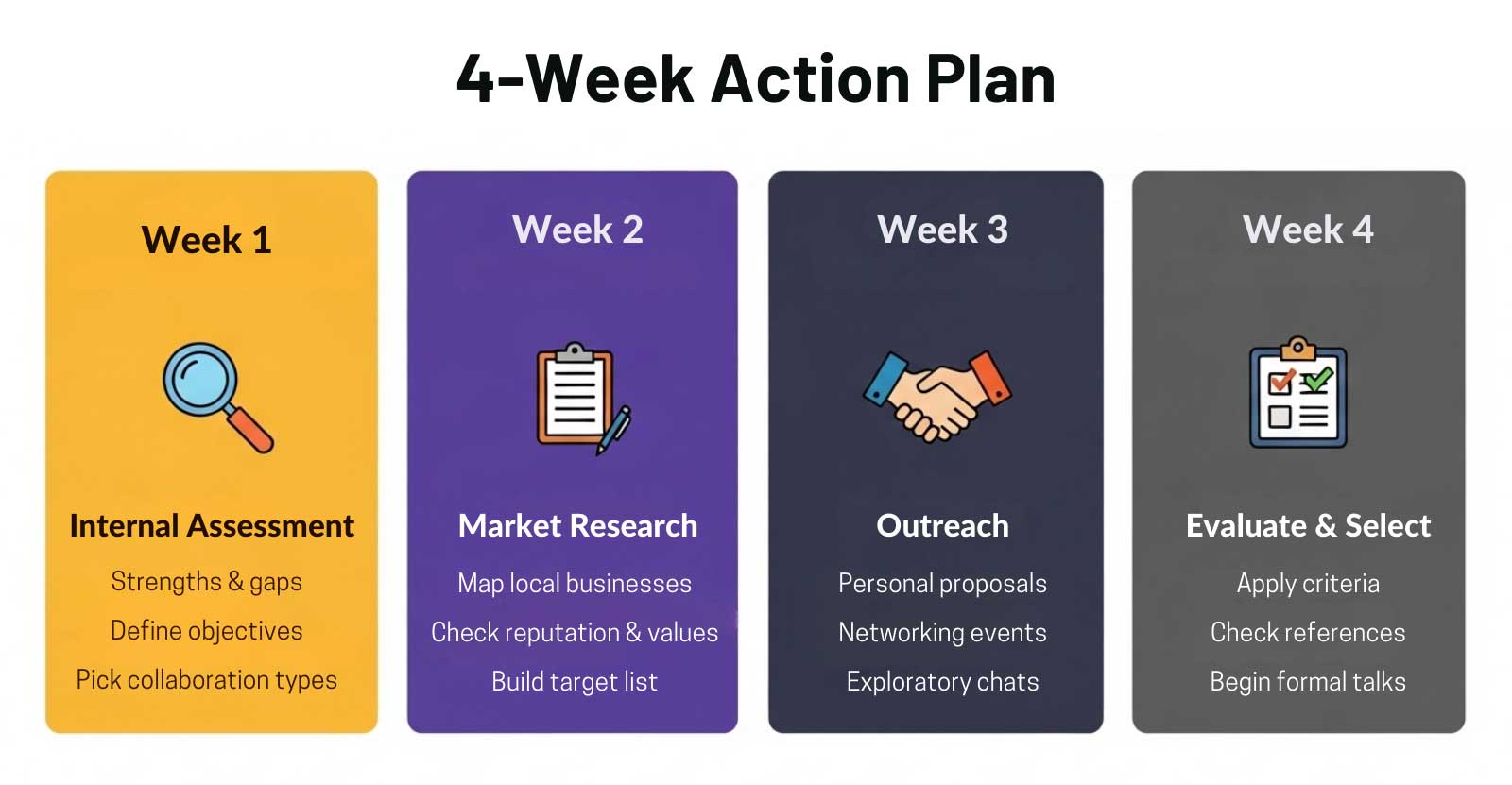
Week 1: Internal Assessment
. List your business strengths and gaps
. Define partnership objectives
. Identify potential collaboration types
Week 2: Market Research
. Map local businesses in complementary sectors
. Research their reputation and values
. Create target partnership list
Week 3: Initial Outreach
. Craft personalized partnership proposals
. Attend local business networking events
. Schedule exploratory conversations
Week 4: Evaluation and Selection
. Apply vetting criteria systematically
. Check references and track records
. Begin formal discussions with top candidates
The Future of Food Collaboration
Local partnerships represent more than cost-saving measures - they're competitive advantages built on community trust and shared values. As consumer demand for authenticity and transparency continues growing, businesses that tell genuine stories through partnerships will capture market share.
The era of purely competitive thinking is ending. Forward-thinking food professionals recognize that collaboration creates stronger networks where everyone thrives. Your next partnership could transform your business. The question isn't whether you can afford to collaborate - it's whether you can afford not to.
Ready to stay ahead of every shift in the food industry? Explore our complete collection of expert insights, trend analysis, and practical guides - your trusted resource for thriving in today's competitive market.
Frequently Asked Questions
How much should a business partner make?
Partner compensation varies widely based on investment, responsibilities, and profit-sharing agreements. Equal partners typically split profits 50/50, while silent partners might receive 10-30% returns on their investment.
What makes a partnership successful?
Successful partnerships require clear communication, aligned values, defined roles, and formal agreements. Regular check-ins, shared goals, and mutual respect form the foundation of lasting collaborations.
How long does the average business partnership last?
Business partnerships typically last 3-7 years, though many factors influence longevity. Partnerships with clear agreements, aligned visions, and regular communication tend to last longer than informal arrangements.
What is the biggest threat to a partnership?
Poor communication and unclear expectations pose the greatest threats to partnerships. Financial disagreements, misaligned goals, and lack of formal agreements also frequently cause partnership failures.
How can two businesses work together?
Two businesses can collaborate through joint marketing, shared resources, cross-promotions, co-branded products, or referral programs. Success depends on complementary strengths and mutual benefits for both parties.
