

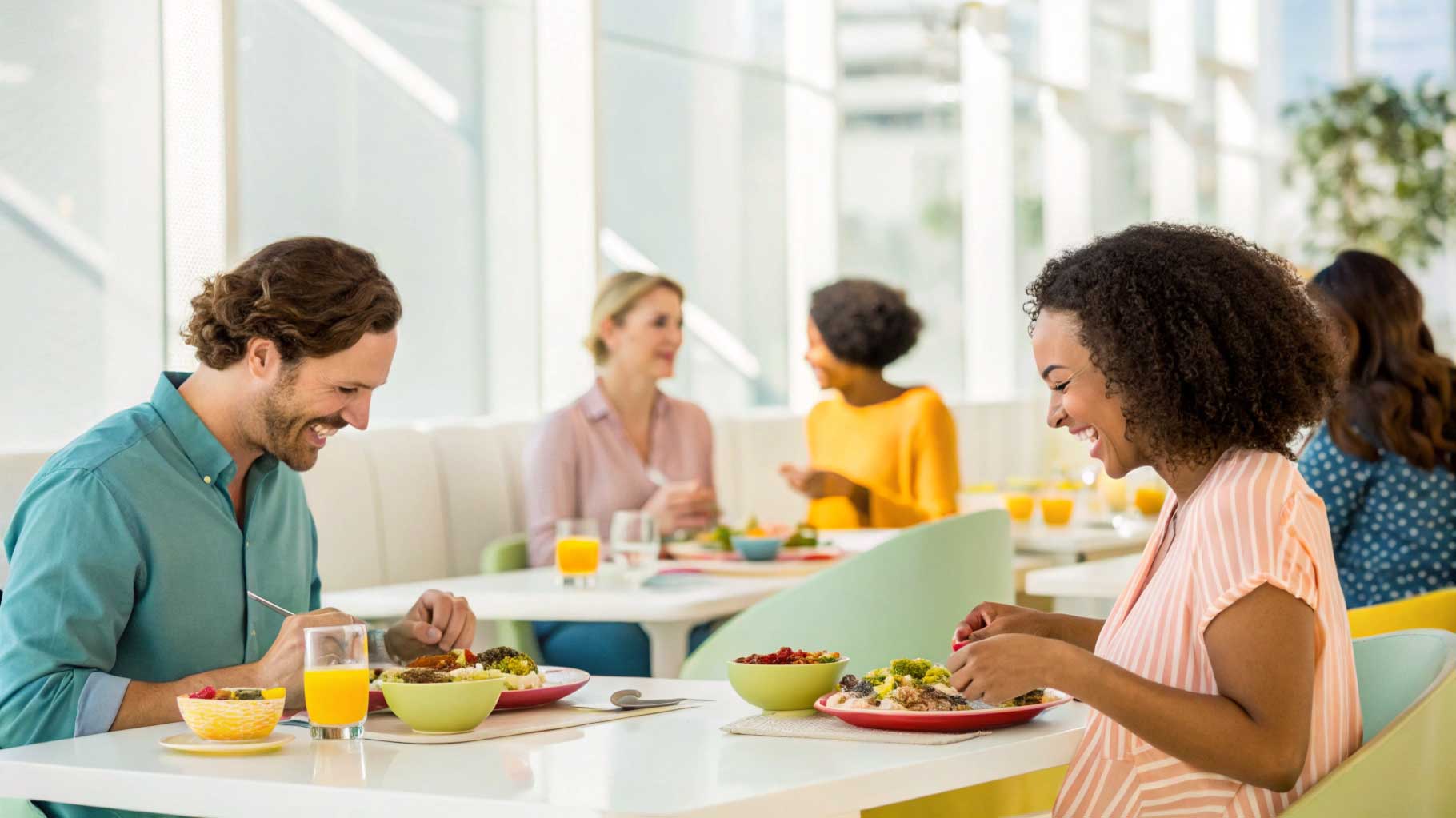
Why are your regulars suddenly ordering appetizers as main courses and leaving half their meals untouched? GLP-1 in restaurants is reshaping everything we thought we knew about dining out, and it's happening faster than most operators realize.
Your customers are skipping dessert, barely touching their drinks, and asking for takeout boxes before they've finished their starters. Traditional restaurant economics? Getting flipped upside down. And the smart money is already adapting.
The Numbers Don't Lie (And They're Pretty Wild)
Here's the deal. GLP-1 users consume 15-40% fewer calories than their pre-medication selves. That's not a small dip—that's your profit margin walking out the door.
But the real kicker? These medications don't just change how much people eat—they fundamentally alter the relationship with food itself. We're talking about a shift from emotional, comfort-driven eating to purely physiological hunger cues. Your customers aren't just eating less; they're eating for completely different reasons.
The market projections are staggering with 135 million worldwide users by the end of this decade. The drug market? Potentially climbing to over $200 billion in just six years. Right now, more than 8% of Americans are taking these medications, with another 35% eyeing them like the last slice of pizza.
Economic Reality Check: What's Really Happening (2025)
The Reality Check: Market Volatility and the Rebound Effect
Here's what keeps smart operators up at night: nearly half of diabetes patients and 65% of obesity patients quit within a year. High costs. Side effects. Mission accomplished.
But here's the business risk nobody's talking about: some people revert to old eating habits when they stop the medication. This creates market volatility that could leave you with a menu full of high-protein, small-portion items that half your customer base no longer wants.
The solution? Don't bet your entire strategy on one trend. Build flexibility into your operations. Be "along for the journey" as customers cycle on and off medications, rather than committing everything to one demographic that might shrink next year.

The Psychology Game-Changer Nobody's Talking About
Here's what most operators are missing: GLP-1 medications shift eating from emotional triggers to purely physiological ones. Your customers used to eat when they were stressed, celebrating, or just because something smelled amazing. Now? They eat when their body actually needs fuel.
This changes everything about why people dine out. The traditional appeal—indulgence, comfort food, "treating yourself"—doesn't work anymore. The sensory and emotional appeal of rich foods loses its power when someone's brain is getting clear "I'm full" signals.
Smart operators are reframing the dining experience around social connection, mindful enjoyment, and quality ingredients rather than portion size or indulgent excess. The meal becomes secondary to the experience itself.
The proof is already showing up in profit statements. McDonald's took a 3.6% hit in U.S. same-store sales in Q1 2025—their worst showing since the pandemic. A single percentage point drop in visits could cost them $428 million annually. When your business model is built on high-fat, processed, super-sized offerings, and your customers' medications make those foods unappealing, that's not a challenge—that's an existential crisis.
But here's where it gets interesting. While traditional fast food struggles, GLP-1 users are gradually shifting toward casual dining and midscale spots that offer better protein variety and customization. Translation: there's opportunity if you know where to look.

What Foods Are Allowed on GLP-1?
Think clean, lean, and green. GLP-1 users gravitate toward fruits, lean proteins, and plant-based options while running from anything fatty, sticky, or dense enough to double as construction material.
The magic formula? High protein (20+ grams), high fiber, zero added sugar. Grilled chicken, fresh veggies, nuts, eggs, yogurt—these aren't just preferences, they're physiological necessities.
Plot twist: even some "healthy" foods can backfire. Broccoli, cauliflower, and cabbage can actually make GLP-1 side effects worse. So much for your virtuous vegetable medley.
The Operators Who Are Crushing It
Some restaurants are already laughing all the way to the bank. Smoothie King rolled out a "GLP-1 Support Menu"—smoothies packed with 20+ grams of protein, loaded with fiber, and cleaner than a monastery kitchen.
Chipotle and Domino's are gaining GLP-1 customers without even trying. Their secret? "Control, protein, and customization." Build-your-own bowls let diners craft exactly what their medication-altered bodies can handle.
The big food companies are paying attention too. Nestlé launched "Vital Pursuit" frozen meals specifically for this crowd. Conagra slapped "on track" badges on Healthy Choice products. Even General Mills is pushing high-protein soups and lower-sugar baking mixes.
Message received: portion-conscious, nutrient-dense isn't a trend. It's table stakes.

Can You Eat Pizza on GLP-1?
Absolutely, but it's not your grandfather's pizza. Traditional pies loaded with cheese, pepperoni, and thick crust can trigger a digestive rebellion that makes food poisoning look pleasant.
The workaround? Lighter preparations that don't wage war on sensitive stomachs. Think thin crust, lean proteins, vegetable toppings, and reasonable cheese portions. Some pizzerias are experimenting with cauliflower crusts and plant-based proteins.
The real money move? Offering customizable options. Let diners control every topping, every sauce drizzle, every cheese sprinkle. Because when your stomach has turned into a picky food critic, having options isn't nice-to-have—it's survival.
Projected GLP-1 User Growth: Buckle Up
The trajectory is steeper than a San Francisco street:
. Right Now: Over 8% of Americans are users, 35% are interested
. 2030: Up to 150 million users worldwide
Federal policies are actively working to make these drugs cheaper and more accessible. That could dump another 7 million users into the market. This isn't a niche anymore—it's becoming mainstream faster than TikTok dances.
The Marketing Tightrope: Speak to Everyone, Not Just the Medicine Cabinet
Here's the tricky part: you want to capture GLP-1 users without alienating everyone else. Slapping "GLP-1 Friendly" labels all over your menu might attract one segment while making others feel like they're in a medical facility instead of a restaurant.
The winning strategy? Use broader language that appeals to all health-conscious diners. Terms like "nutrient-dense," "high-protein," or "balanced" attract GLP-1 users while still appealing to fitness enthusiasts, diabetics, and anyone trying to eat better. You're speaking to the broader wellness movement, not just a specific medication.

The Real-World Playbook: Beyond Menu Changes
Start with what you already have. Seriously. You probably offer grilled proteins, salads, and vegetable sides right now. The magic isn't in creating new dishes—it's in identifying and remarketing your existing winners.
But here's what most guides miss: the operational challenges. Adjusting supply chains for new ingredients, managing food waste with different portion sizes, and potentially investing in kitchen equipment for precision portioning. These aren't just menu tweaks—they're business model adjustments that require smart waste reduction strategies and careful planning.
Train your team. Not to become nutritionists, but to understand the basics. When someone asks about high-protein options or mentions GLP-1, your staff should know which dishes fit the bill without fumbling through ingredient lists.
Embrace portion flexibility. Half-sizes of popular entrees. Encouragement to share. Zero shame about takeout boxes. These customers are eating with purpose now, so every bite needs to deliver nutritional value.
Don't ignore the beverage program. GLP-1 users often cut back on alcohol, so mocktails, flavored waters, and protein-enhanced drinks become your new profit centers. This shift aligns perfectly with broader emerging food trends focusing on health-conscious alternatives.

Can You Eat Pasta on GLP-1?
Yes, but think quality over quantity. Smaller portions, whole grain when possible, and skip the cream sauces that could trigger digestive chaos. The key is pairing pasta with lean proteins and vegetables to create a balanced, satisfying meal that won't leave diners feeling like they swallowed a bowling ball.
Smart pasta joints are offering half-portions as standard options, not special requests. Some are experimenting with alternative noodles made from lentils or chickpeas that pack more protein and fiber.
The Bottom Line: Adapt or Get Left Behind
Restaurant margins are already thinner than supermodel eyebrows—6-10% for quick-service, 3-6% for full-service. When households with GLP-1 users slash spending by 6% and dining frequency drops by more than half, every adaptation becomes mission-critical.
But here's the opportunity hiding in plain sight: GLP-1 users aren't just eating less—they're eating more intentionally. They'll pay premium prices for meals that align with their health goals, as long as you can clearly communicate the value.
The winners will be operators who embrace transparency, offer genuine customization, and understand that value now means nutrient density per dollar, not just volume per dollar.
This isn't about jumping on a health food bandwagon. It's about recognizing a fundamental shift in how a growing chunk of your customer base experiences food. The businesses that adapt quickly and authentically will capture market share from those still pushing yesterday's playbook.
The GLP-1 revolution isn't coming—it's already here, rewriting every rule about what people want when they eat out. The question isn't whether you'll adapt, but how quickly you can make the changes that keep customers coming back, even when they're eating half as much as they used to.
Ready to stay ahead of the curve? We're constantly tracking the latest shifts in food industry trends, operational insights, and practical strategies that help food professionals thrive. Check out our complete collection of industry insights and expert guides for everything from cutting costs to spotting the next big trend before your competition does.
Frequently Asked Questions
How does Ozempic affect the restaurant industry?
Ozempic significantly impacts restaurant revenue by reducing customer appetite and dining frequency. GLP-1 users spend $30 less per week on restaurant meals and cut their dining frequency by more than 50%. Restaurants are adapting with smaller portions, healthier options, and transparent nutrition info to retain this growing customer segment.
What is a GLP-1 menu?
A GLP-1 menu is basically a collection of smaller, protein-packed dishes designed for people whose medications have turned them into selective eaters. Think 20+ grams of protein, high fiber, minimal sugar, and easy-to-digest ingredients. These menus feature grilled proteins, fresh vegetables, and portions that won't overwhelm sensitive stomachs.
Should I create new 'GLP-1 friendly' dishes or just offer smaller portions of my existing menu?
Start by identifying and remarketing existing winners—like grilled chicken or salads—with clear nutritional information. Offering half-portions of popular entrees is a quick, low-cost win that requires minimal operational changes. Creating entirely new dishes can follow once you understand what your specific GLP-1 clientele is actually ordering and requesting.
Can you eat pasta on GLP-1?
Absolutely, but forget about those massive bowls of creamy carbonara. GLP-1 users need smaller portions, preferably whole grain pasta, paired with lean proteins and vegetables. Skip the heavy cream sauces that can trigger nausea and stick to lighter preparations that won't cause digestive issues.
How should I train my staff to handle questions about GLP-1?
Train staff to identify high-protein, high-fiber, and low-sugar options on your current menu without making them nutritionists. They should confidently guide customers toward suitable dishes, be comfortable with requests for smaller portions or early takeout boxes, and understand that these diners are eating more purposefully than before.
