


What is the future of chocolate when your ingredient costs swing wildly and customers demand both indulgence and sustainability? The future of chocolate lies in upcycled alternatives like date seed flour that deliver authentic taste while building resilient supply chains—giving food professionals stability in an unpredictable market.
Running a food business means juggling cost control with customer satisfaction. When cocoa prices jumped overnight in 2024, many of our clients at Plastic Container City found themselves caught between maintaining quality and protecting margins.
The chocolate industry faces a turning point. Traditional cocoa farming struggles with climate disruption, supply shortages, and price swings that affect everything from your menu pricing to profit margins. But smart food professionals are discovering that the solution isn't just finding alternatives—it's about transforming waste into valuable ingredients that work better than the originals.
Are There Alternatives to Cocoa?
Yes, several cocoa alternatives exist today, from fermentation-based ingredients using sunflower seeds to upcycled date seed flour that matches chocolate's taste profile. These alternatives help food professionals manage costs while meeting sustainability goals.
The alternative market has moved beyond simple substitution. Companies like Planet A Foods create chocolate-like products through fermentation technology, while Ardent Mills' Cocoa Replace offers a wheat-based solution that's up to 50% cheaper than traditional cocoa.
Understanding Taste Replication
Food scientists analyze cocoa's flavor compounds at the molecular level, then recreate that experience using different ingredients. This approach goes far beyond basic substitution—it's precision engineering for taste.
The real test happens with customers. After 4,000 years of chocolate history, people notice even small differences. That's why successful alternatives focus on getting the sensory experience right first, then highlighting the sustainability benefits.
Consumer acceptance grows when the product tastes right. The vegan chocolate market projects 15% annual growth through 2030, showing that alternatives can win when they deliver on taste.
What is the Solution to the Cocoa Shortage?
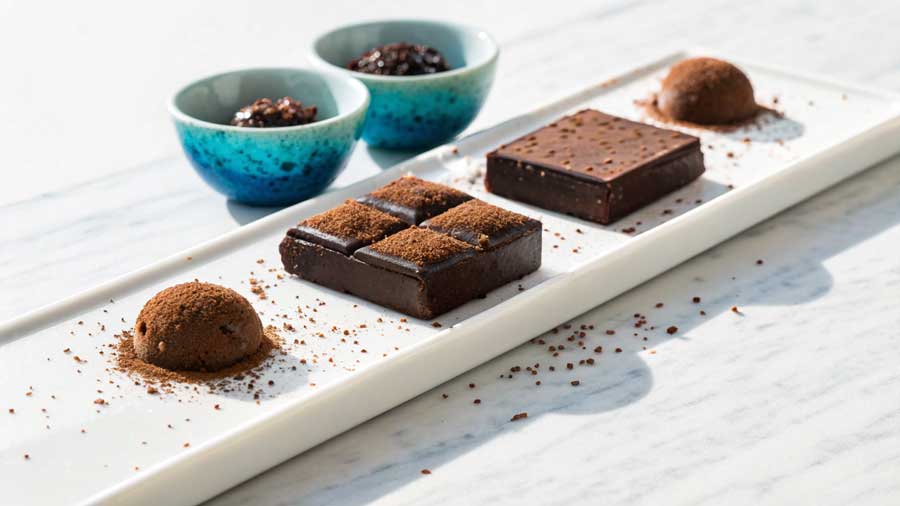
Upcycled ingredients provide the most practical solution to cocoa shortages by transforming food waste into functional alternatives, reducing market dependency while creating more stable supply chains for manufacturers.
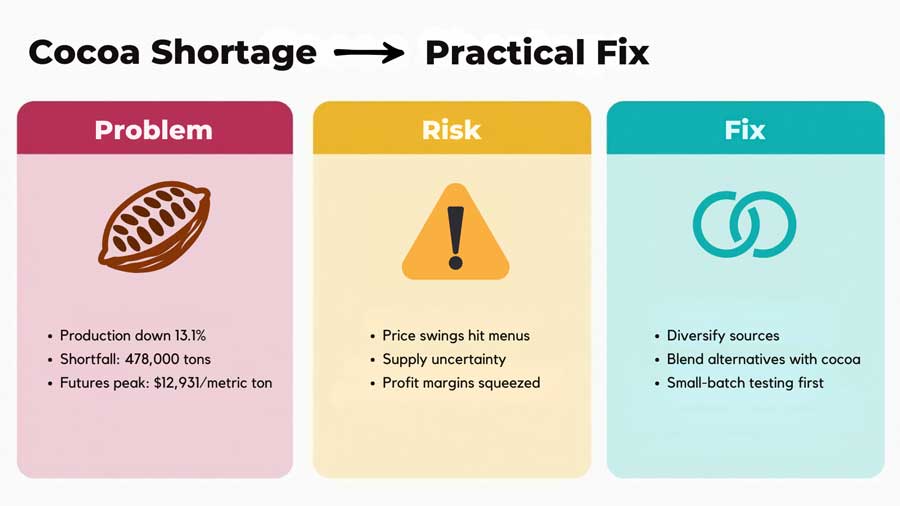
The numbers paint a clear picture. Global cocoa production dropped 13.1% in 2023-24, creating a 478,000-ton shortage. When futures prices hit $12,931 per metric ton in late 2024, relying solely on traditional cocoa became a serious business risk.
Building Stable Operations
Food professionals are treating ingredient sourcing like portfolio management—diversifying to reduce risk. Many blend traditional cocoa with alternatives, maintaining familiar taste while protecting against market volatility.
We've noticed increased inquiries about packaging for ingredient testing and small-batch production. Food businesses are actively experimenting rather than waiting for the market to stabilize.
The smart approach involves gradual integration. Start with products where slight taste variations won't affect core offerings, then expand as you refine recipes and customer acceptance grows.
What are the Biggest Threats to Cocoa Production?
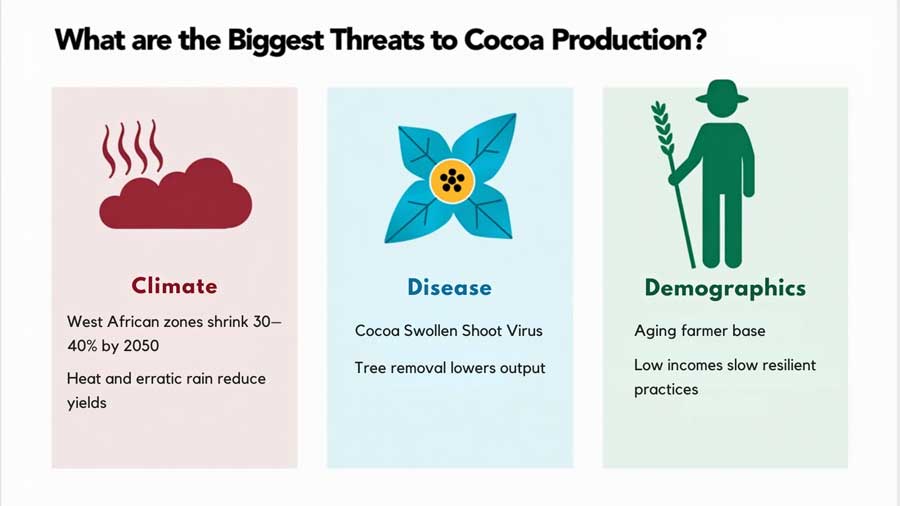
Climate change, crop diseases, and demographic shifts pose the primary threats to cocoa production, with West African growing regions expected to shrink 30-40% by 2050 due to rising temperatures and changing rainfall patterns.
West Africa's climate problems are happening now, not in some distant future. Extreme weather disrupts tree flowering cycles and reduces yields significantly. The Cocoa Swollen Shoot Virus forces farmers to destroy infected plants, further reducing short-term production.
The human factor complicates recovery efforts. Cocoa farmers are aging, and younger generations avoid farming due to poor economic prospects. Without decent wages, farmers can't invest in climate-resistant practices, creating a cycle where poverty perpetuates unsustainable methods.
The Economic Reality
Current cocoa farming often prioritizes immediate yields over long-term sustainability. Farmers lacking fair compensation can't afford to transition to more resilient growing methods like agroforestry, where cocoa grows under shade trees.
Research shows shaded plantations store 2.5 times more carbon than unshaded ones, benefiting both climate and farm resilience. However, financial barriers slow adoption of these better practices.
What is Upcycled Chocolate?
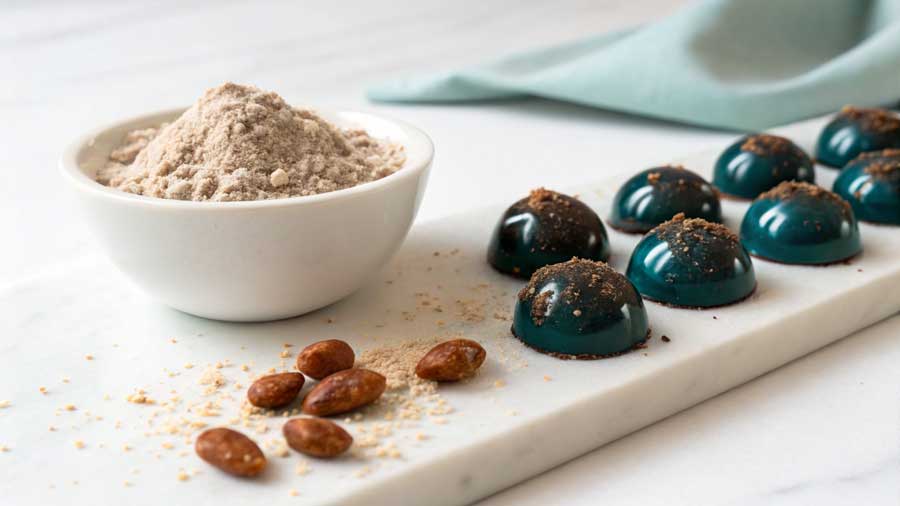
Upcycled chocolate transforms food waste—like date pits, grape seeds, or processing byproducts—into functional chocolate alternatives that deliver similar taste, nutrition, and functionality while reducing environmental impact. This goes beyond just the cocoa bean itself; innovative cacao upcycling now finds uses for the entire cocoa pod, including the often-discarded cocoa pulp and husks, to create a truly zero-waste ingredient.
The Upcycled Food Association defines these products as using ingredients that "otherwise would not have gone to human consumption" through verified supply chains. It's about capturing value from materials that would typically end up in landfills.
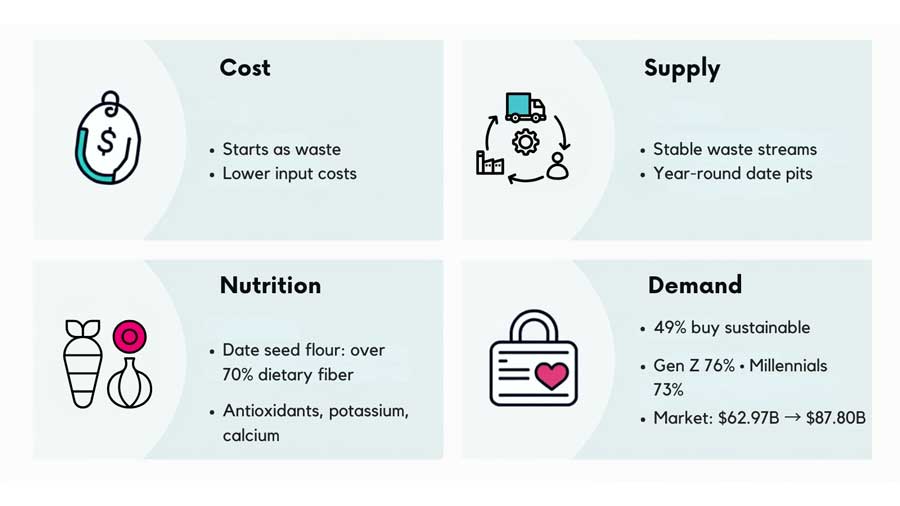
Date seeds represent the poster child for smart upcycling. After date processing, these pits usually take a one-way trip to the landfill. Plot twist: they're actually nutritional powerhouses loaded with over 70% dietary fiber plus antioxidants and minerals like potassium and calcium. Who knew trash could be this talented?
Creating Value from Waste
Emirati innovator Noora Al Mazroui developed a systematic process for transforming date pits into functional flour. Her method involves washing, boiling, drying, and grinding the pits into fine powder suitable for various food applications.
Laboratory testing ensures safety and quality standards. This approach creates premium ingredients from waste materials with traceable supply chains—exactly what food professionals need for consistent production.
The process scales well because date processing generates steady waste streams, unlike weather-dependent crops that create supply uncertainty.
What are the Benefits of Upcycled Foods?
Upcycled foods reduce costs, minimize waste, provide enhanced nutrition, and create supply resilience while meeting consumer demand for sustainable products—with 49% of Americans buying sustainable items monthly.
Practical Business Advantages
Cost Management: Upcycled ingredients often cost less than premium alternatives since they start as waste materials. Processing adds value without the markup of specialty commodities.
Supply Predictability: Agricultural waste streams are more consistent than commodity markets. Date processing creates reliable pit availability year-round, unlike cocoa's seasonal volatility.
Nutritional Enhancement: Many upcycled ingredients exceed traditional options nutritionally. Date seed flour's fiber content surpasses most conventional flours, appealing to health-conscious consumers.
Marketing Value: 76% of Gen Z and 73% of Millennials prioritize sustainability when purchasing. Upcycled certification becomes a competitive advantage.
Market Growth Reality
The global upcycled food market reached $62.97 billion in 2025 and projects growth to $87.80 billion by 2030. North America leads with 37.4% market share, indicating strong domestic opportunities.
However, challenges exist. Taste differences can affect acceptance, and waste supply streams sometimes create sourcing inconsistencies. Brands using date-sweetened products receive positive quality reviews but face criticism for higher pricing, highlighting the need to achieve scale economies.
Strategic Implementation for Food Professionals
Phase 1: Testing and Market Response
Start with limited menu items or seasonal offerings to gauge customer response without risking core products. This approach lets you refine recipes and understand market acceptance.
Many clients tell us they're experimenting with 25% alternative ingredients mixed with traditional chocolate. This strategy maintains familiar taste while introducing sustainability benefits and cost protection.
Phase 2: Supply Relationships
Building relationships with upcycled ingredient suppliers requires different considerations than traditional sourcing. Verify supply consistency, quality standards, and certification processes.
The Upcycled Certified label provides consumer recognition and marketing credibility. 83% of consumers want brands to be transparent about sustainability efforts.
Phase 3: Customer Communication
Transparency builds trust. Share your ingredient stories, explaining the waste-to-resource transformation and highlighting nutritional benefits. Consumers respond positively to authentic sustainability narratives.
Position upcycled ingredients as improvements rather than substitutes. Emphasize enhanced nutrition, environmental benefits, and supply stability alongside taste quality.
Comparison of Leading Alternatives
Moving Forward
The future of chocolate isn't about abandoning tradition—it's about building resilience through innovation. Food professionals who integrate upcycled alternatives now position themselves ahead of industry shifts while creating more stable, profitable operations.
At Plastic Container City, we've observed that the most successful food businesses don't just react to market changes—they anticipate them. The shift toward sustainable, functional ingredients isn't coming; it's here.
The question facing your business isn't whether upcycled alternatives will reshape chocolate—it's whether you'll lead that transformation or find yourself adapting to changes others initiated.
Start small, test thoroughly, and communicate transparently. The tools exist today to build a more resilient chocolate future. For more insights on staying ahead of food industry shifts, check out our industry blog where we track what's working for food professionals across the country.
Frequently Asked Questions
Will chocolate exist in 2050?
Yes, chocolate will exist in 2050, but it will likely include significant proportions of upcycled and alternative ingredients due to climate change impacts on traditional cocoa farming and evolving consumer preferences for sustainable products.
Is cocoa farming sustainable?
Current cocoa farming practices are largely unsustainable due to deforestation, poor farmer wages, and climate vulnerability, though agroforestry methods and fair trade initiatives are improving sustainability in some regions.
Can cocoa be grown in the US?
Cocoa can only be grown commercially in Hawaii within the U.S. due to specific climate requirements, making the country dependent on imports for 99% of its cocoa supply.
What does "upcycled" mean in food?
Upcycled food uses ingredients that would otherwise become waste—like fruit peels, vegetable pulp, or processing byproducts—transforming them into valuable food products while reducing environmental impact.
Which country produces the most cocoa?
Côte d'Ivoire (Ivory Coast) produces the most cocoa globally, followed by Ghana, with West Africa supplying over 70% of the world's cocoa beans despite facing significant climate and economic challenges.
