

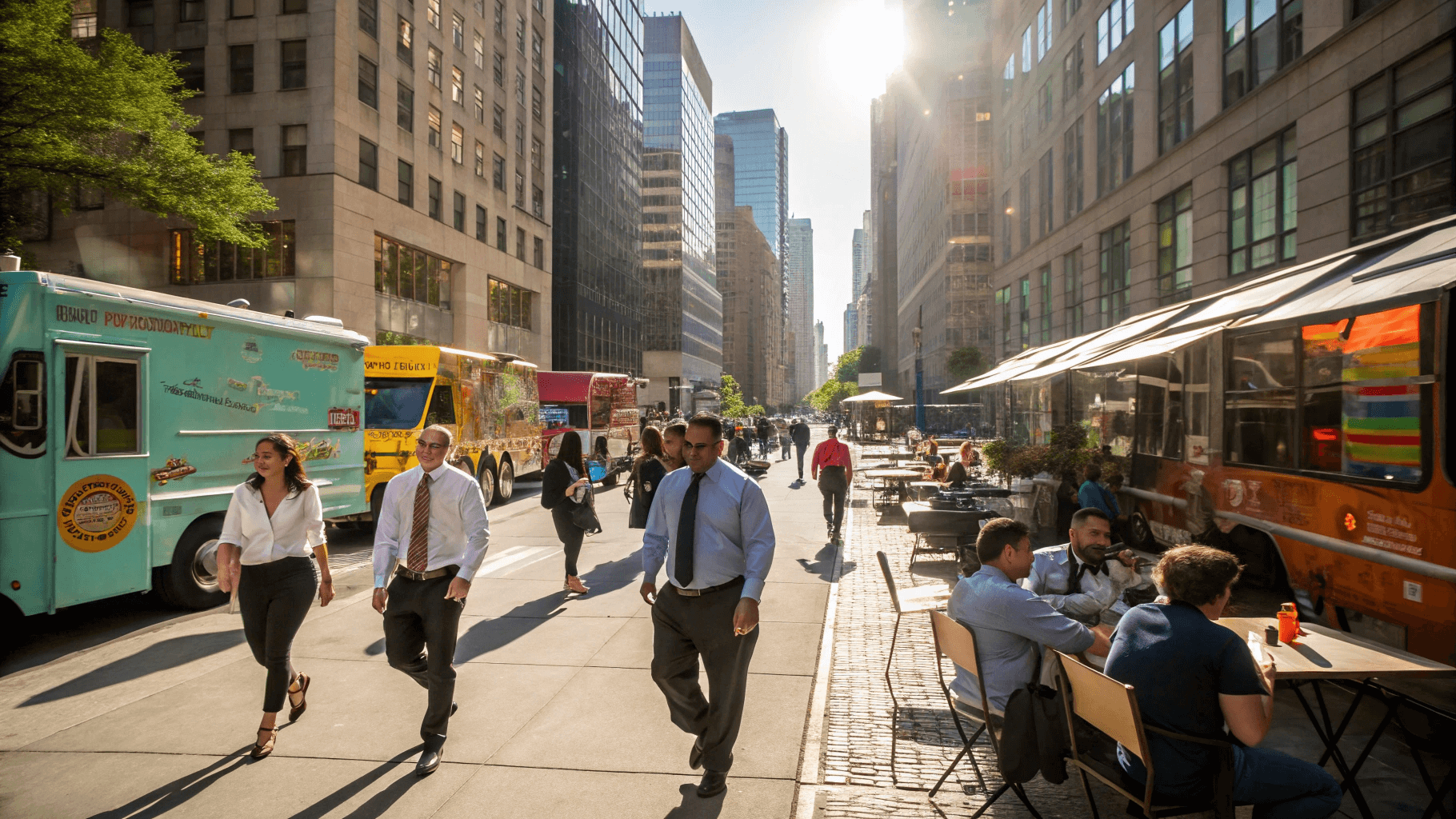
Missing your lunch rush yet? Well, dust off those order pads, because the suits are back in town. Return to office lunch is quickly becoming 2025's hottest food trend as workers ditch their home offices for downtown cubicles. That ghostly echo in your restaurant at noon? Gone. The lunch crowd is back—and they're hungry.
The Lunch Rush Returns: What's Driving the Change?
Let's face it—downtown was looking rough for a while. But the tide has turned. Office buildings are filling up again, with major US cities now hitting 65-75% of pre-pandemic occupancy, up from a mere 50% in 2023. Approximately 80% of employed folks are now working either full-time in-office or in hybrid arrangements, creating a massive customer base for midday meals.
Even more telling, a substantial 63% of workers who went remote during the pandemic have returned to an office setting. The numbers paint a clear picture: in-office workers are 29% more likely to grab restaurant meals during the week compared to their work-from-home counterparts (19%). Two-thirds of office dwellers will hit up a quick-service spot, versus just 56% of remote workers.
"The revival of shared meals is a modest yet crucial element in smoothing the transition back to in-office work," says workplace sociologist Dr. Tracy Brower. Companies are actively encouraging employees to return to physical workspaces, with food often serving as part of the incentive package.
This revival stands in stark contrast to what we saw just a year ago. The Restaurant Performance Index for April 2024 showed a slight decline, with restaurant operators reporting softer customer traffic. Toast's analysis for the same period revealed decreasing sales for lunchtime favorites like burritos and tacos. The current surge represents a genuine turnaround in the industry's fortunes.

Who's Ordering What? Understanding the New Office Lunch Customer
Today's office lunch crowd isn't the same group that disappeared in 2020. Their needs have evolved:
1. Time constraints – That 30-minute lunch break hasn't gotten any longer
2. Convenience – They need quick, hassle-free ordering systems
3. Social aspects – Many are eating with colleagues as part of team building
4. Value – Multiple lunches per week adds up quickly
This shift in work location is directly impacting dining habits. PYMNTS.com research shows in-office and hybrid workers significantly prefer restaurant meals during the week, while remote workers tend to favor dining out more on weekends.

Beyond Individual Orders: The Catering Comeback
Individual lunch orders are just part of the picture. Corporate catering has seen a notable revival as companies provide meals for:
. Team meetings and collaborative sessions
. Client presentations and business development
. Employee appreciation events
. Regular office lunch programs as workplace perks
Food has become a strategic tool for companies encouraging in-office attendance. As Dr. Brower notes, office lunches play a key role in fostering workplace community that may have diminished during remote work periods.
However, Dr. Brower also offers a more nuanced perspective: while office lunches can play a positive role, they shouldn't be viewed as a singular solution for deeper workplace culture issues. The sustained success of this lunch revival may depend not just on return-to-office mandates but on broader workplace experience and employee engagement.

The Numbers Behind the Boom
Let's talk facts:
The intensity of this lunch rush revival varies geographically. Cities with stronger return-to-office movements like New York, Miami, and Austin are seeing more pronounced surges compared to San Francisco, Chicago, and Seattle. The varying success in return-to-office efforts directly influences the lunchtime economy, with downtown revitalization playing a crucial role in attracting workers back and boosting business for local eateries.
Challenges Food Businesses Face
This lunch rush comes with significant operational challenges:
Staffing Shortages
The labor shortage continues in 2025. More lunch orders combined with staff shortages can lead to slower service times, increased stress levels for existing staff, and potentially higher labor costs if you need to offer overtime or incentives to meet demand.
Technology Reliability
Technology failures during peak lunch hours can be disastrous. As reliance on online ordering systems and self-service kiosks increases, ensuring their reliability becomes essential for handling the increased volume.
Supply Chain Strain
The research indicates that increased lunch demand could place greater strain on supply chains for key ingredients, potentially leading to price increases and requiring more sophisticated inventory management systems.
Intensified Competition
The renewed focus on lunch is likely to intensify competition among restaurants during these hours, requiring businesses to differentiate themselves through unique offerings, compelling value, or exceptional service. Many food businesses are creating quality service restaurants to better serve time-pressed office workers.

Strategies for Success
Smart food businesses are adapting their approaches to capitalize on this opportunity:
Efficient Service Models
Streamline operations to handle peak volume:
. Express pickup zones for online orders
. Simplified lunch menus focused on fast preparation
. Pre-ordering options that minimize wait times
Menu Innovation
Create offerings specifically for the office lunch crowd:
. Grab and go" options in proper food containers that travel well
. Group meal packages for team lunches
. Nutritious choices that provide sustained energy
Innovative flavors are also key - trying new flavor fusion combinations can help your offerings stand out from competitors.
Drive-Thru Optimization
Drive-thru concepts are seeing further innovation as they cater to the lunch crowd seeking efficient service. Investing in drive-thru improvements can significantly improve throughput during peak lunch hours.
Automation & Technology
The research suggests that increased lunch demand may accelerate adoption of automation and artificial intelligence technologies, particularly for tasks like order taking and food preparation, to help address labor shortages and improve speed during peak hours.
Corporate Relationship Building
Develop strategic relationships with nearby offices:
. Customizable catering packages with standout event food ideas
. Loyalty programs for regular customers
. Volume discounts for larger orders

Industry Experts Weigh In
Cities are responding to the lunch trend enthusiastically. New York's Restaurant Week Winter 2025 featured over 500 restaurants with lunch specials. Boston's "Dine Out Boston" program now includes dedicated lunch options to attract midday diners.
Chef Greg Vernick of Philadelphia has observed an increase in lunch service diners in 2025, attributing this to flexible work schedules. This shift in dining patterns shows a tangible movement toward increased lunchtime demand.
In San Francisco, Mayor Daniel Lurie's push for city workers to return full-time is expected to boost the downtown economy, with local restaurants as key beneficiaries of increased foot traffic.

Looking Forward: Will the Trend Continue?
All signs point to continued growth. Analyst projections suggest the number of people working entirely in-office will soon surpass those in hybrid arrangements, with remote workers falling below 10%.
However, the sustainability of this trend isn't guaranteed. The research indicates its reliance on continued in-office work arrangements makes it potentially susceptible to future shifts in work models or economic conditions. Building a business strategy that can adapt to potential fluctuations would be prudent.
The fast-food market is projected to reach $1.25 trillion by 2033, suggesting a sustained positive trajectory for the industry, with the lunch rush revival playing a role in this broader expansion.

Finding Your Place in the New Lunch Economy
As a food professional, your success depends on how well you understand and adapt to these changing patterns. Whether you run a restaurant, food truck, bakery, or catering service, the revival of office lunch presents real growth opportunities.
The key is adapting with intention. As Dr. Brower emphasizes, simply offering occasional food isn't enough to create meaningful experiences. Thoughtful approaches to menu design, service efficiency, and customer relationships will separate the businesses that merely survive from those that truly thrive in this new lunchtime landscape.
The lunch rush revival isn't just about more customers—it's about understanding a fundamental shift in workplace dining habits
When analyzing these trends with prompting AI reasoning models, it becomes clear this is a measurable shift reshaping how and where people eat during the workday.
For more industry insights and practical tips for food professionals, explore our collection of expert guides and trend analysis at Plastic Container City.
FAQ
How significant is the return to office trend for food businesses?
Very significant – with 80% of employed consumers now working in-office or hybrid arrangements, and those workers being 29% more likely to purchase weekday meals, this represents a major opportunity for food businesses located near office buildings.
What types of food are office workers looking for at lunch?
Speed and convenience remain top priorities, but there's growing demand for nutritious options too. The ideal office lunch offers quick service without sacrificing quality, with grab-and-go options being particularly popular.
How can small food businesses compete with larger chains for the office lunch crowd?
Small businesses can differentiate themselves through personalized service, building relationships with nearby offices, creating unique menu items, and developing efficient pre-order systems that minimize wait times – all helping them stand out in an increasingly competitive lunch market.
Is corporate catering worth pursuing as part of a business strategy?
Absolutely. With companies increasingly using food as an incentive for office attendance, corporate catering represents a significant revenue stream. Building relationships with office managers and creating easy ordering systems for groups can lead to regular, high-volume business.
Will this lunch rush trend last, or should food businesses be cautious about investing too heavily?
While the trend appears strong now, the research suggests being mindful of its dependence on continued return-to-office policies. The data shows more people are heading back to offices, but smart food businesses should develop strategies that can adapt to potential shifts in workplace arrangements or economic conditions.
