

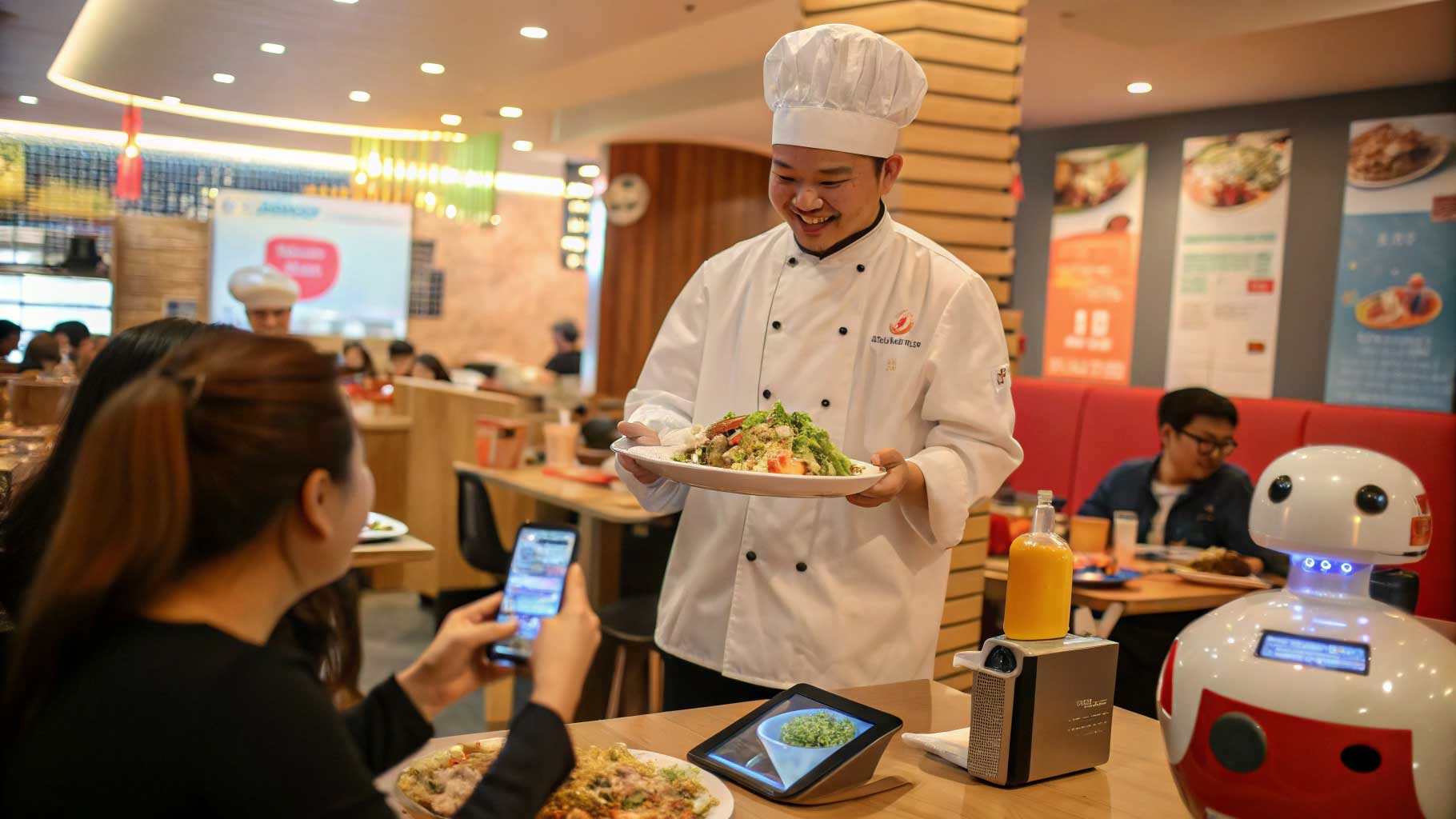
Remember that restaurant where your steak arrived with actual flames? Or the place where dessert came floating down on a mini parachute? That's experience driven dining – and it's changing the game for food businesses everywhere.
Gone are the days when a tasty meal at a fair price was enough. Today's food lovers want a story to tell, a photo to share, and a memory to keep. And smart food pros are giving it to them.
What Is Experience Driven Dining?
Think of it like this: experience driven dining turns an ordinary meal into a mini-adventure. It's not just about what's on your plate – it's about how you feel when you're there.
When you walk into a restaurant and find yourself transported to a Japanese village, complete with ninja servers who appear from hidden doors – that's experience driven dining. When your ice cream shop gives you a special spoon that changes color as you eat – that's experience driven dining too.
An OpenTable survey found that 87% of diners want to share special moments from these unique dining experiences with friends and family. That tells us something important: people aren't just buying food; they're buying moments worth talking about.

Why Food Businesses Should Care
Food businesses have been through tough times. But things are looking up. Black Box Intelligence tells us that restaurant sales, which stayed flat in 2024, started picking up in November and December with a 1.2% increase, signaling better days ahead in 2025.
This recovery gives food businesses a chance to stand out by creating better experiences. And the rewards are real:
. Places with higher ratings (4.2+ stars) make significantly more money
. Fast-food and fast-casual spots that added experience elements saw sales grow by 1.71% in 2024
. Fancy restaurants that didn't adapt struggled as people looked for better value

How Technology Is Making Food More Fun
Smart Menus That Know What You Like
Remember when you had to explain your food allergies every time you ordered? Or how you like your burger cooked? Those days are fading fast.
Today's restaurants use smart technology to remember what you like. A recent survey found that 95% of U.S. restaurants use some form of artificial intelligence, with 35% using it to customize their menus.
Panera Bread's MyPanera program, for example, suggests items based on what you've ordered before. This makes ordering easier for you and boosts sales for them. Everyone wins.
See Your Food Before You Order
Imagine pointing your phone at a menu and seeing a 3D model of your meal before you order it. Or watching a little cartoon story about where your coffee beans came from.
That's what augmented reality (AR) brings to dining. Industry reports say 75% of people will regularly use AR by the end of 2025, making it a big part of how we experience food.
Some restaurants are already using this tech in creative ways. At Le Petit Chef, tiny animated chefs appear on your table, "preparing" your meal before the real one arrives. It's dinner and a show all at once.
Food That Responds to Your Heartbeat
This one sounds like science fiction, but it's happening now. Researchers have created dishes that actually change appearance based on your heart rate. Using special LED lights, these foods display your bodily signals in real-time.
Studies show this makes people more aware of each bite, more attentive to their food, and more emotionally connected to what they're eating. Scientists have even developed a system called "Sharing Bio-Sync Food" that strengthens bonds between people eating together. All this has led to new tableware designs that make eating more interactive.
While your local café probably isn't tracking your heartbeat yet, this shows where food experiences might go next.

Creating Food Adventures
What Is An Immersive Dining Experience?
Restaurants that make you feel like you've stepped into another world are booming. These places don't just serve food – they create entire environments that tell a story.
Take the Ninja Restaurant in New York. Walking in feels like entering a Japanese village from centuries ago. Servers dressed as ninjas appear from hidden doors, perform magic tricks, and serve food with theatrical flair. Or the Heart Attack Grill in Las Vegas, where servers dress as nurses, customers wear hospital gowns, and the menu boasts impossibly unhealthy options. These places stay packed because they offer more than just food – they offer an adventure.
Food That Delights All Your Senses
Smart food businesses know that great experiences involve more than taste. They engage all your senses:
. Eyes: Beautiful plating that makes you reach for your phone camera
. Ears: Music that enhances flavor (yes, sounds can make food taste different!)
. Nose: Aromas that build anticipation, like dishes served under smoke-filled domes
. Touch: Interesting textures that make each bite more engaging
When a steak arrives sizzling on a hot stone, your ears and nose get excited before your taste buds even get a chance. That's not just dinner – that's an experience.

What Gives You The Best Dining Experience?
Menus That Flex for You
People love feeling special. Today's best food places use simple tricks to make everyone feel like the menu was made just for them:
. Offering easy customization options
. Training staff to remember regulars' preferences
. Creating secret menu items for loyal customers
. Finding creative ways to handle dietary needs
The Japanese concept of omakase ("I'll leave it to you") shows this perfectly. The chef creates dishes based on what's fresh and what they think you'll enjoy. Someone who likes lighter flavors might get different dishes than someone who loves bold tastes.
Health-Focused Options That Don't Sacrifice Fun
More people care about what's in their food now. A recent study found that 67% of Brazilian consumers choose plant-based products for health reasons – part of a global trend toward mindful eating. Many establishments are now exploring healthy baking substitutes and clever ingredient swaps to meet these changing preferences.
Smart food businesses respond by being transparent about ingredients and offering options for different diets without making anyone feel left out. The key is making healthy choices feel special, not like a punishment.

Social Media: The New Word of Mouth
Instagram and TikTok have changed how food businesses attract customers. A dish that looks amazing in photos can bring in crowds, even if it tastes just okay (though it should taste great too!).
Food businesses winning at social media:
. Create spaces with perfect photo spots
. Design signature dishes that stand out on camera
. Add interactive elements that beg to be filmed
. Train staff to help customers get great shots
. Use hashtag strategies to boost visibility
The phrase "we eat with our eyes first" has never been more true. Today's food businesses design everything – from lighting to plating – with social sharing in mind.
Check out our in depth guide on the role of social media in the food industry here.

The People Factor
All the technology and fancy presentation in the world can't replace a warm smile and genuine service. The most memorable dining experiences still come down to how people make you feel.
Successful food businesses:
. Train staff thoroughly on both food knowledge and people skills
. Empower employees to solve problems without asking managers
. Recognize and reward exceptional service
. Create growth paths that keep talented people around
A server who remembers your name or a chef who comes out to explain your dish personally – these human touches turn customers into regulars.
Making It Work for Every Food Business
For Quick Places and Fast Casual Spots
You don't need white tablecloths to create great experiences. Quick-service places can stand out by:
. Creating distinctive spaces with personality
. Letting customers see food being prepared
. Using technology to remember preferences
. Adding signature service touches that competitors don't have
For Food Trucks and Pop-Ups
Mobile food businesses have their own experience opportunities:
. Eye-catching truck designs that stand out on the street
. Making food preparation part of the show
. Creating limited-time offerings that drive urgency
. Building community through consistent presence
For Bakeries and Specialty Shops
Smaller food businesses can enhance experiences by:
. Offering samples and demonstrations
. Showing how products are made
. Telling stories about signature items
. Creating sensory moments with aromas and visual appeal

What's Coming Next in Food Experiences
Delivery Gets More Exciting
Food delivery isn't going anywhere, but it's getting cooler. Autonomous vehicles, drones, and sidewalk robots are already delivering meals in some cities, making the process faster and more fun. For those focusing on delivery, understanding how to safely transport your baked goods becomes more crucial than ever.
Virtual brands – restaurants that exist only online – are thriving because they can adapt quickly. Using shared kitchen spaces, these brands create specialized menus for specific tastes or neighborhoods. Smart data tools help them predict what people will crave next.
Finding the Sweet Spot Between Wow and Value
Industry reports show that while people love memorable experiences, they're still watching their wallets. The food businesses winning in 2025 find ways to create special moments without charging premium prices for everything.
Strategies for Success in Experience-Driven Dining in 2025
Creating memorable dining experiences isn't just about flashy presentations or high-tech gadgets. The most successful food businesses in 2025 are focusing on these key strategies:
. Find your value sweet spot: Black Box Intelligence reports that during inflation periods, customers still want experiences but become more price-sensitive. Look for low-cost, high-impact additions – like tableside finishing touches or personalized greetings – that feel special without hefty price tags.
. Use tech to work smarter: Technology isn't just for wowing guests – it should make your operation run better too. Digital reservation systems reduce no-shows by 38%, while smart kitchen tech can cut food waste by up to 40%, according to restaurant industry analyses. Every tech investment should pull double duty: enhancing experiences while boosting your bottom line.
. Put your people first: Staff who feel valued create better experiences. Research shows that restaurants with staff retention rates above industry averages generate 27% higher customer satisfaction scores. Train your team not just on tasks but on reading guests and personalizing interactions. When they feel empowered, the magic happens.
. Let data guide decisions: The most successful establishments don't guess what experiences work – they know. Use simple customer feedback tools, analyze online reviews, or track which menu items get photographed most. According to industry experts, restaurants that make data-backed decisions about their experiential elements see 23% higher return rates from first-time guests.
These strategies work across all food business types, from food trucks to fine dining. The secret isn't spending more – it's spending smarter on the elements that truly connect with your specific customers.

Starting Small With Big Results
The good news? You don't have to overhaul everything at once. Food businesses can start by:
1. Looking at every customer touchpoint for improvement opportunities
2. Identifying signature items that could become more experiential
3. Training staff to create consistent, memorable interactions
4. Gathering feedback on what resonates with your specific customers
5. Making small changes that build toward something special
What Is The Difference Between Immersive And Experiential?
While people often use these terms interchangeably, they have subtle differences worth noting for food professionals. Immersive dining typically refers to environments that transport you somewhere else completely – like stepping into a Japanese village at the Ninja Restaurant or dining underwater at "Under" in Norway.
Experiential dining is broader, covering any dining experience that creates memorable, engaging moments beyond just serving food. This could be as simple as tableside preparation or as complex as a multi-sensory tasting menu.
Why This All Matters
The food business is tougher than ever. What separates the successes from the struggles isn't just food quality or price – it's the full experience from first impression to last bite.
When people have countless options for where to eat, they choose places that make them feel something. Places that give them stories to tell. Places that treat them like they matter.
That's the heart of experience driven dining. And in 2025, it's not a luxury – it's a necessity.
For more industry insights and expert advice for food professionals, be sure to check out the Plastic Container City blog – your source for trending topics from AI in the food industry to the next big food trends of 2025.
FAQ
What is the meaning of experiential dining?
Experiential dining is when eating becomes more than just a meal. It's about creating memories through food that engages your senses, sparks emotions, and gives you stories to share. Think of it as dinner with an extra sprinkle of magic.
What are the three types of dining?
While there are many ways to categorize dining, the three main types are:
1. Fine Dining - Upscale places with premium ingredients, expert service, and elegant atmospheres
2. Casual Dining - Relaxed restaurants with table service and moderate prices
3. Fast Casual - Better quality than fast food, with limited service in a casual setting
What gives you the best dining experience?
The best dining experiences combine delicious food, attentive service, the right atmosphere, and something unique that makes you remember it. Today, personalization based on your preferences and moments that create emotional connections matter more than ever.
