
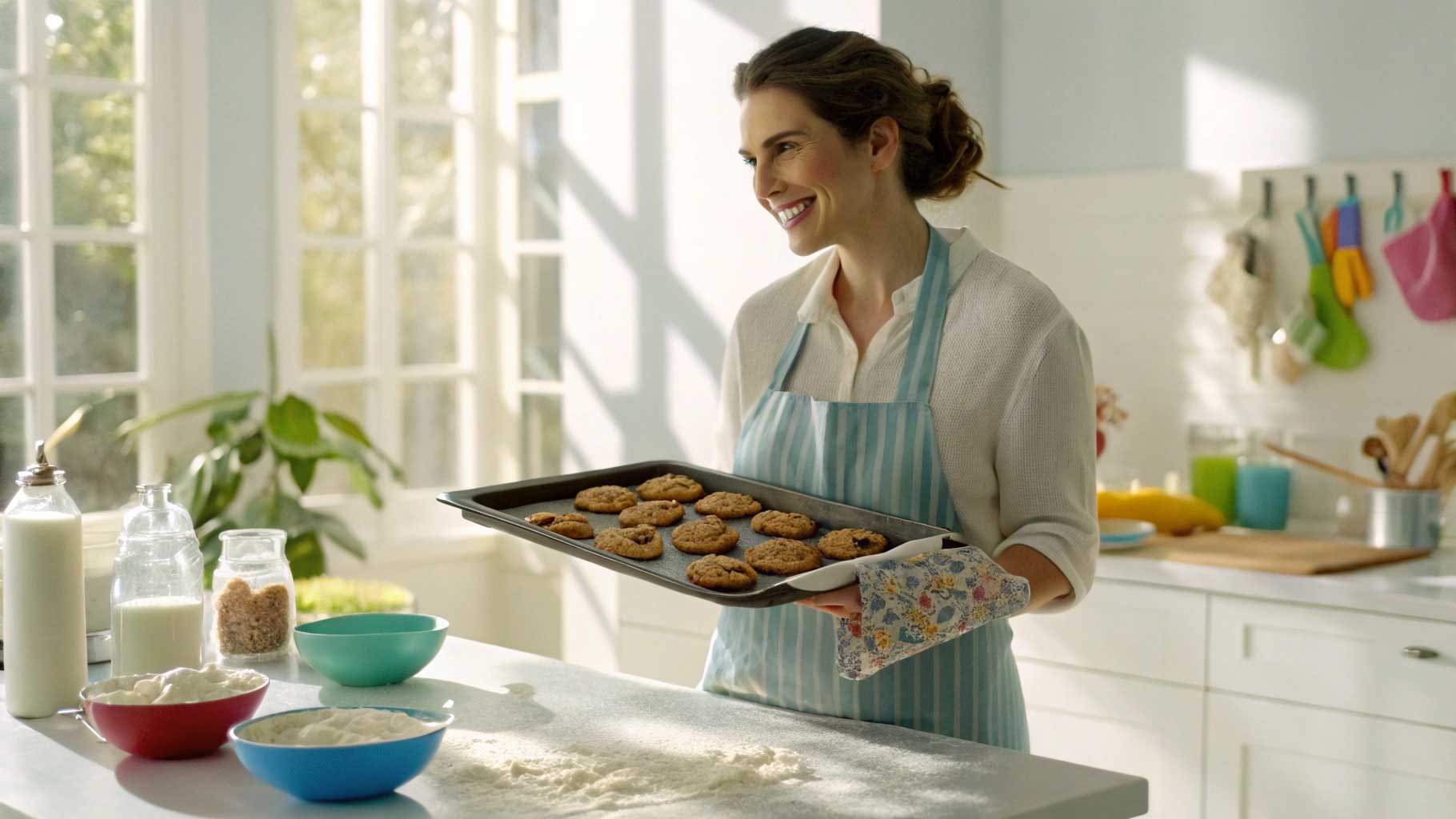
Ever fantasized about turning that killer cookie recipe into cold, hard cash? You're in good company. The cottage food revolution is heating up faster than a wood-fired oven, with kitchen virtuosos across the country transforming their culinary obsessions into legitimate profit centers. Gone are the days when launching a food business meant mortgaging your house for commercial kitchen space. Today's gastronomic entrepreneurs are skipping the traditional route and cooking up success right from their home kitchens.
What are Cottage Food Laws and Why They Are Relevant Now?
Think of cottage food laws as the VIP passes to the food business scene – they let the little guys play without jumping through all the hoops that make big food companies sweat. These state rules allow home cooks to sell certain foods directly to hungry customers without the headache of commercial licensing.
The catch? These laws typically cover only foods that won't spoil if left on the counter – your cookies, breads, jams, and candies are in; your cream-filled éclairs and chicken salad sandwiches are out. The whole point is to give the average Jane or Joe a shot at food entrepreneurship without emptying their savings, while still making sure nobody gets food poisoning.
Why is everyone suddenly talking about these laws? A perfect storm of factors:
. When COVID locked us all down, thousands discovered their inner pastry chef and needed cash. The cottage food movement exploded as kitchen tables became boardroom tables.
. Consumers got pickier – they want artisanal, small-batch, and local. Nothing says "artisanal" like buying a pie from the lady down the street who grew the apples herself.
. Instagram and TikTok turned home bakers into micro-celebrities overnight. One viral video of your rainbow layer cake, and suddenly you've got a waiting list.
. The "Food Freedom" movement gained traction, arguing that maybe – just maybe – you should be allowed to sell a loaf of bread without a hazmat suit and a PhD in food science.

Cottage Food Laws vs. Microenterprise Home Kitchen Laws: A Comparative Analysis
If cottage food laws are the casual Friday of food regulations, MEHKOs (Microenterprise Home Kitchen Operations) are the full business-casual ensemble. Both let you cook at home for profit, but they're as different as a soufflé and a sandwich.
Cottage food operations are the more conservative cousin – you can make shelf-stable goodies like cookies and breads that won't kill anyone if left out overnight. You can sell these treats at farmers' markets, online (in some states), and occasionally at retail stores if you're lucky.
MEHKOs are the bold, risk-taking relative that moved to California or Utah. These newer regulations allow for the whole enchilada – literally, you can make hot meals for immediate consumption. Want to run a mini-restaurant from your kitchen? MEHKOs might be your ticket. The trade-off? More rules, more oversight, and typically, tight restrictions on how many meals you can serve.
Think of MEHKOs as the natural evolution for when society realized that competent adults might actually be capable of safely preparing a wider range of foods at home for public consumption. Revolutionary concept, I know.
The State-by-State Regulatory Mosaic
Here's where things get about as clear as gravy – every state has decided to do its own thing with cottage food regulations. It's like 50 different chefs all given the same ingredients but producing wildly different dishes.
The result is a dizzying patchwork of rules where selling a chocolate chip cookie legally becomes an exercise in regulatory gymnastics depending on your ZIP code. States differ wildly on:
. What foods you're allowed to peddle (Wyoming says "go nuts," Pennsylvania says "slow your roll")
. Where you can sell (farmers' market only? online? from a blanket in your front yard?)
. How much you can rake in before upgrading to commercial status (from $5,000 to a whopping $250,000 in annual sales)
. What hoops you need to jump through (simple registration vs. inspections and food safety courses)
. How to label your masterpieces so consumers know they're buying food made in your kitchen while your cat watched
For entrepreneurs with dreams of multi-state cookie empires, this regulatory hodgepodge is about as welcome as soggy cereal. Relocation becomes a bureaucratic nightmare. Cross-state shipping might as well involve customs declarations.
And don't forget local ordinances! Just when you think you've figured out your state's rules, your city might throw in its own special spices to the regulatory stew. It's enough to make you need a cookie – ironically, one you're not sure you're legally allowed to sell.

The Challenges of Running a Cottage Food Business
Let's get real for a minute – cottage food businesses aren't all rainbow sprinkles and perfect pie crusts. They come with their own set of challenges that aspiring food entrepreneurs should know about.
Sales limitations and annual revenue caps can clip your wings just as business starts to soar. In some states, hitting that ceiling means facing a difficult choice: stay small or leap into the much more complex and expensive world of commercial food production.
Marketing can be a struggle too, especially in states that restrict online sales or shipping options. Building your customer base beyond the local farmers' market crowd requires creativity and persistence – though social media has been a game-changer for many.
Privacy concerns add another layer of complexity. Many states require your home address on product labels, which can be unsettling for those who prefer to keep their business and personal lives separate.
Finding affordable commercial kitchen space can become a critical bottleneck when you're ready to scale beyond your home. This is especially challenging in rural areas where such facilities may be scarce or non-existent.
Competition from established food businesses presents another hurdle. These larger operations, operating under more stringent regulations, sometimes view cottage food producers as having an unfair advantage due to their lower overhead costs. Navigating this tension while carving out your unique market position takes savvy positioning and clear differentiation.
Despite these hurdles, cottage food producers continue to find ways to thrive – often with support from advocacy groups like the Institute for Justice, which works to reform restrictive regulations and expand opportunities for home-based food entrepreneurs.

Food Safety in Home Kitchens: Addressing Concerns and Best Practices
"But what about food safety?" cry the skeptics, imagining hair-covered muffins and salmonella surprise cookies. It's a fair question – your home kitchen isn't exactly a sterile laboratory.
Surprisingly, research from the Institute for Justice shows no reported cases of foodborne illnesses definitively linked to cottage food operations in states with broad homemade food laws. It turns out that when your reputation, livelihood, and the health of your neighbors are on the line, most people take food safety pretty seriously.
Still, maintaining a kitchen that won't make health inspectors weep requires some common sense:
. Wash your hands like you've just chopped jalapeños and need to remove contact lenses
. Keep raw meat away from everything else – think of it as the kitchen pariah
. Use a food thermometer (that cake isn't done just because you're tired of waiting)
. Refrigerate perishables faster than a teenager hides their phone when asked about their evening plans
. For the adventurous picklers and fermenters, use tested recipes – botulism isn't a flavor enhancer
For comprehensive guidance, the USDA and FDA offer excellent resources on food safety best practices specifically designed for home food preparation. Their guidelines on everything from proper cooking temperatures to storage methods are invaluable references for cottage food operators.
The bottom line? Home kitchens can be perfectly safe production spaces when proper protocols are followed. And let's be honest – most cottage food producers are fastidious to the point of obsession about cleanliness. Their entire business relies on not making people sick. If you're running a bakery business, you might also find helpful tips on how to safely transport your baked goods to farmers' markets and other sales venues.

Mandatory Labeling Requirements: Ensuring Transparency for Consumers
If you're selling cottage foods, transparency isn't just ethical – it's non-negotiable. Labeling requirements ensure that consumers know exactly what they're getting and who made it.
Your lovingly crafted treats need labels that would make a pharmaceutical company proud:
. Your name and address (so customers know where to send thank-you notes or angry mobs)
. The actual name of the food (no, "Delicious Goodness" isn't clear enough)
. A full ingredients list that doesn't require a magnifying glass to read
. Allergen information, because surprise anaphylaxis isn't a selling point
. Net weight (because people want to know if they're getting 12 ounces of brownie or 12 ounces of air)
. The fateful disclaimer: "Made in a home kitchen not subject to inspection" (less scary than it sounds)
These requirements aren't just bureaucratic busywork – they're the foundation of trust between you and your customers. When someone with a nut allergy picks up your cookie, that allergen statement isn't just text – it's potentially life-saving information.
Most states require these labels to be legible, printed in English, and often in a minimum font size. No hiding the fact that your "healthy" banana bread contains three sticks of butter in 4-point font, thank you very much.
For bakery businesses especially, the right packaging solutions can make a huge difference – not just for compliance, but for preserving freshness and presenting your products professionally.

Economic Opportunity and Community Impact
Let's talk money, because this movement isn't just about fulfilling creative urges – it's creating legitimate economic opportunities.
In Nebraska, the cottage food industry generated $1 million in revenue in 2023, with over 2,000 registered producers getting a slice of that pie (sometimes literally). The cooking segment of the cottage industry economy reached an eye-popping $20 billion in 2023 nationally.
Alabama's cottage food law training program certified 1,286 individuals in 2024, with an impressive 85% of them launching businesses. Meanwhile, Minnesota's cottage food sector has exploded to over 10,800 licenses in 2025, up from 3,000 after the state expanded its law in 2015.
States keep raising revenue caps too. California now lets Class A operators earn up to $75,000 annually, with Class B operations capped at $150,000. Florida has gone even bigger, with a cap of $250,000.
Beyond individual bank accounts, cottage food operations pump resources into local economies. The tomatoes in your pasta sauce might come from the farm down the road, the honey in your granola from local beekeepers, and your custom packaging from the print shop in town. It's economic development with a delicious aftertaste.
There's another community benefit that often flies under the radar: cottage food businesses can improve food access in underserved areas, particularly in rural communities or food deserts where grocery options are limited. A home baker might be the only source of fresh bread for miles, creating both an economic opportunity and a vital community service.
Many cottage food producers also find these businesses serve as perfect stepping stones to larger food ventures. The low startup costs and simplified regulations let entrepreneurs test products, build a customer base, and refine their offerings before making the substantial investment in commercial facilities. Think of it as the food business equivalent of dipping your toe in the water before taking the plunge.

Future Trends and Opportunities in the Cottage Food Sector
The cottage food future looks about as bright as a freshly glazed donut. Several trends are giving this movement even more momentum:
. Plant-based and flexitarian fever is sweeping the nation, creating niches for cottage producers to fill
. Functional foods with wellness benefits are gaining traction – think adaptogens, probiotics, and other health-focused ingredients
. Sustainability is no longer optional – cottage producers using upcycled ingredients or eco-friendly packaging have a marketing edge
. Social media continues to be the great equalizer, letting micro-businesses build cult followings without massive marketing budgets
. More states may adopt MEHKO-style regulations, expanding opportunities beyond shelf-stable foods
. Novel product categories like artisanal freeze-dried treats and globally-inspired snacks are creating new market opportunities
What's often overlooked is the role of university extension programs and non-profit organizations that provide invaluable training and resources to cottage food entrepreneurs. From food safety guidance to business planning, these programs have become quiet heroes in the movement's growth, especially for those who might otherwise lack access to business education.
The cottage food sector also presents particular opportunities for women entrepreneurs and rural residents. With lower barriers to entry than traditional businesses and the ability to work from home, cottage food operations can provide economic independence in areas where traditional employment options may be limited.
Success stories like Tiffany from The Pink Crumbb show what's possible. She turned her baking passion into a thriving business that prioritizes work-life balance – the holy grail for many entrepreneurs. Her online community of home bakers proves there's room for both competition and collaboration in this space.
Conclusion
The cottage food movement isn't just creating delicious treats – it's democratizing the food industry one home kitchen at a time. It's allowing culinary creativity and entrepreneurship to flourish without the traditional barriers that kept so many talented cooks from turning pro.
While dealing with the regulatory maze can feel like trying to frost a cake during an earthquake, the economic and social benefits make it worth the effort. From stay-at-home parents supplementing family income to retirees monetizing long-perfected recipes, cottage food laws are creating accessible on-ramps to entrepreneurship.
As more states recognize the safety record and economic potential of home-based food businesses, we can expect even more growth in this sector. The future of food might not be in gleaming industrial kitchens, but in the home down the street, where someone is perfecting a recipe that will have you coming back for seconds.
For more industry insights, practical tips, and the latest food trends, check out the Plastic Container City blog, where we regularly serve up fresh content to help food professionals like you stay ahead of the curve – from how to start a profitable bakery business to cutting-edge culinary trends.
Frequently Asked Questions
What is the most profitable cottage food to sell?
While profitability varies based on location and market demand, bakery items like specialized cookies, custom cakes, and artisanal bread typically offer good margins due to their perceived value and relatively low ingredient costs.
Do I need a license to sell homemade food?
Requirements vary by state. While cottage food laws generally allow some home-based production without commercial licensing, most states still require registration, permits, or certifications for cottage food operations.
Can I sell cottage food online?
Online sales permissions vary by state. Some states allow unrestricted online sales, others permit them only within state boundaries, and some prohibit them entirely. Check your state rules before selling online.
What states have the most permissive cottage food laws?
Wyoming, North Dakota, and Utah are among states with the most permissive cottage food laws, allowing a wide variety of products and fewer restrictions on sales methods and venues.
How do I transition from a cottage food business to a commercial operation?
When your business outgrows cottage food limitations, consider renting commercial kitchen space, exploring co-packing partnerships, or investigating shared kitchens as intermediary steps before investing in your own commercial facility.
