

What if the best bakery marketing ideas for Valentine's Day actually start two weeks before February 14? The answer: your customers want a gift fast, and they won't ask if they don't see it. Americans are set to spend a record $27.5 billion this Valentine's season, with 56% planning to buy candy. The opportunity is real. But 22% of shoppers wait until the absolute last minute to buy, and most don't start looking until days before the holiday.
You're competing for attention during a short window when your team is already slammed, margins are tight, and every display choice matters. The trick isn't working harder or running bigger discounts. It's putting the right products in front of people at the right moment, making the decision easy, and protecting your profit while you do it.
This 14-day countdown gives you a realistic game plan that works whether you're running a small neighborhood bakery or managing multiple locations. No fluff, no unrealistic promises. Just practical moves that turn Valentine's demand into actual revenue.
Why Valentine's Is Different for Bakeries
Valentine's Day hits differently than other holidays. There's no Thanksgiving-style meal planning or Christmas cookie tradition spread across weeks. It's concentrated, emotional, and time-sensitive. Your customers are buying gifts, not groceries. They're shopping with their hearts, which means presentation and convenience matter more than usual.
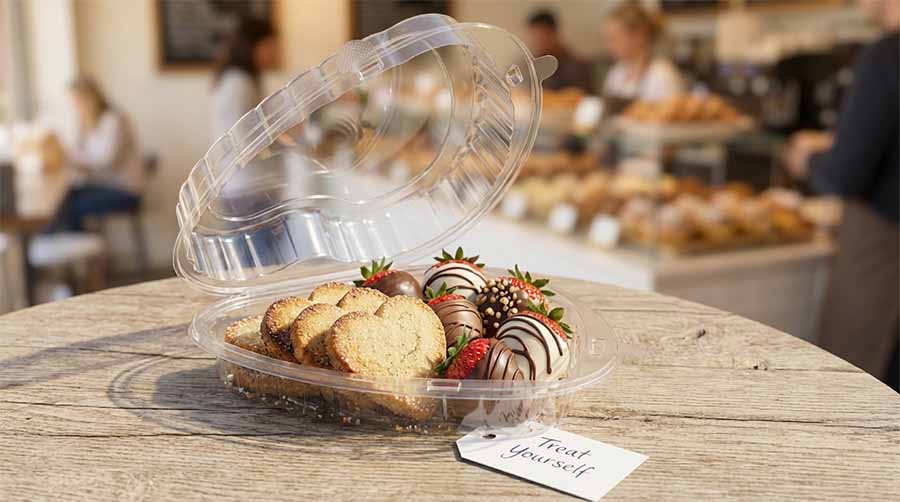
And it's not just for couples anymore. A record 32% of consumers now plan to buy Valentine's gifts for friends, which means your marketing needs to speak to more than just the romantic dinner crowd. Think "treat yourself" and "friendship gifts" alongside the traditional couple's angle.
At Plastic Container City, we work with thousands of food professionals across the U.S., and what we see every February is the same pattern: bakeries that set up their Valentine's displays early and keep them visible near checkout consistently move more product than those waiting until the week before.
The reason? Customers decide what they want based on what they see first, and impulse purchases drive a huge chunk of Valentine's revenue.
The other reality is labor. You can't add extra staff to upsell every ticket during the Valentine's rush. Your systems need to do the selling for you. That means strategic placement, clear signage, and bundled options that don't require explanation.
The 14-Day Framework: What to Do and When
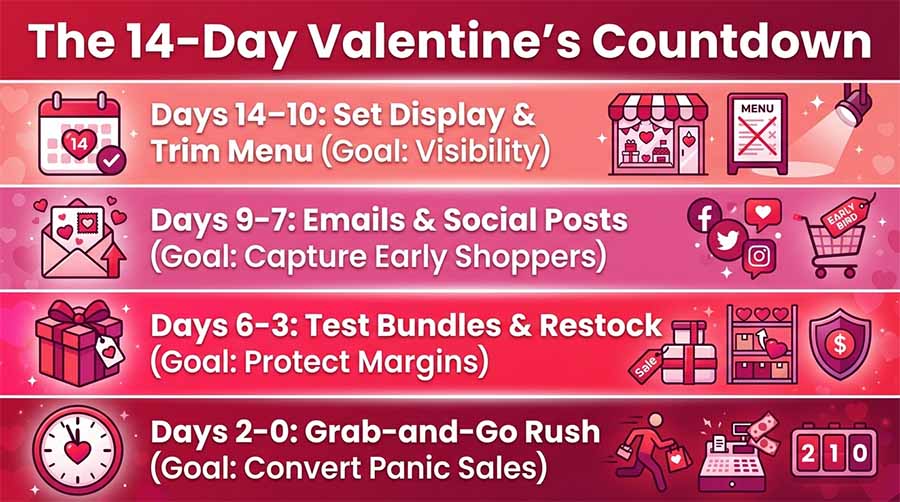
Here's your Valentine's roadmap broken into manageable chunks. Each phase builds on the last, so you're not scrambling at the end.
| Timeline | Key Actions | Goal |
|---|---|---|
| Days 14-10 | Set display, trim menu to 3-5 items, place near register | Create visibility and simplify choices |
| Days 9-7 | Launch email campaign, post on social media, enable pre-orders | Capture early shoppers before they commit elsewhere |
| Days 6-3 | Test bundles, restock fast movers, adjust production | Protect margins and prevent stockouts |
| Days 2-0 | Set up grab-and-go section, promote same-day options, focus on impulse | Convert last-minute panic into sales |
Days 14 to 10: Set Your Stage
Start by trimming your Valentine's range to 3 to 5 hero items. Smaller bakeries should focus on 2 to 3. You want items that share ingredients with your regular menu, can sell after February 14 without looking dated, and don't require specialty training for your team.
With cocoa prices forecasted to remain highly volatile through the end of 2026, range rationalization isn't just smart marketing. It's survival. Don't waste expensive ingredients on a dozen different SKUs when three strong items will move more volume and protect your margins.
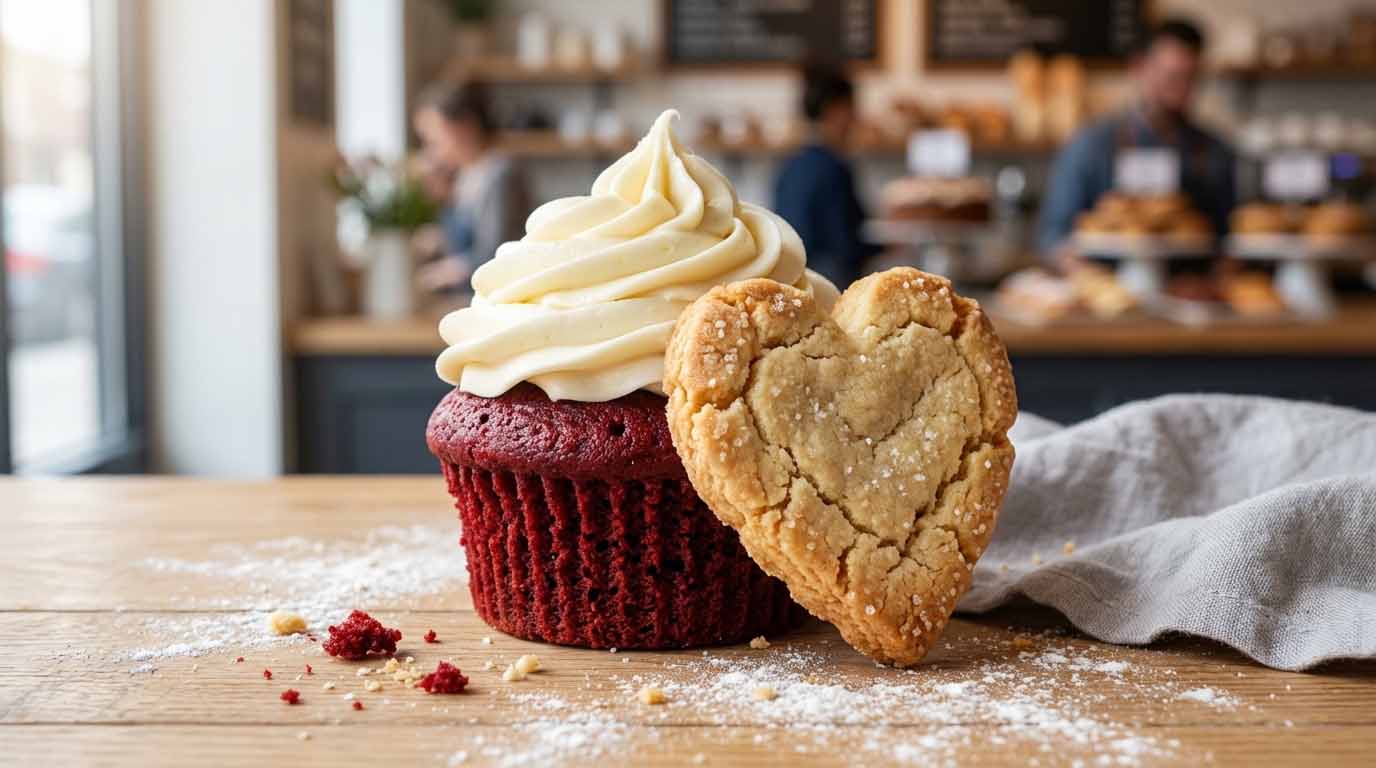
Best bets: heart-shaped sugar cookies with neutral designs, chocolate dipped treats, cupcakes with swappable toppers, mini dessert boxes, and red velvet items that work year-round.
Place your Valentine's display within three feet of your register. Not across the room. Not on a side table. Right at the decision point where customers are already reaching for their wallets. Small desserts near the register encourage impulse buys, and high-margin items at eye level convert better than anything tucked on a bottom shelf.
Your signage should answer the question "What is this for?" in under three seconds. Try "Valentine's Gifts Ready Now" or "Grab & Go Valentine's Treats" instead of generic "Valentine's Specials." Specificity sells.
Days 9 to 7: Launch Your Email and Make Noise
Most people start Valentine's shopping about one week before the holiday, which means your email needs to hit inboxes between Day 9 and Day 7. Don't wait until Day 3 and wonder why nobody showed up.
Here's the problem: 98.92% of Valentine's emails land in the Promotions tab, not the primary inbox. You're not special. Your beautiful email is competing with 50 others.
The fix? Send between 6:00 am and 9:00 am when inbox reach is highest, keep your subject line under 47 characters, and use urgency language like "ends soon" or "while supplies last."
Here's your competitive edge: only 11.43% of Valentine's subject lines currently use urgency-based language. While most bakeries are playing it safe with generic "Valentine's Specials" headers, you can stand out by creating actual scarcity. "Last Chance for Pre-Orders" beats "Valentine's Day is Coming" every time.
Your email should show exactly what's available, what it costs, and how to get it. Include a photo of your Valentine's display or your best-selling item. Make pre-orders easy with a direct link or a "reply to reserve" option. Skip the flowery language and get to the point.
Post the same content on Instagram and Facebook with a clear call to action. Tag your location. Use stories to show behind-the-scenes prep or a quick product demo. Social media works best when it feels immediate and real, not overly produced.
Days 6 to 3: Test Your Bundles and Restock
Bundles solve the "I don't know what to get" problem that stresses out 40% of gift shoppers. Pair a dessert with a card or a small add-on. Keep it simple: "Cupcake + Card = $12" or "Mini Cake + Chocolate Box = $25."
Since Americans are projected to spend $1.4 billion on greeting cards this year, adding a card to a bakery box is the easiest way to capture a share of that spend without extra labor. Source cards from a local supplier, price them at cost plus $2, and watch your average transaction value climb.
The goal is transparent value without discounting. Bundles let you pair high-margin items with faster-moving products, which protects your bottom line while giving customers an easy decision.
Check your stock on Days 6 and 4. Run out of your signature item on February 12, and you've just handed revenue to the bakery down the street. Plan for a 20 to 30% sales spike on the final three days and adjust your production schedule to match.
If something's moving faster than expected, bake more. If it's sitting, shift it to the front of your display and bundle it.
Days 2 to 0: Own the Last-Minute Scramble
The final 48 hours are when last-minute shoppers finally panic and start looking. Your job is to make their decision effortless. That means grab-and-go packaging, clear pricing, and zero friction at checkout.
Set up a dedicated "Valentine's Gifts" section separate from your regular bakery case. Label everything. Nothing kills a sale faster than a customer wondering if the cupcakes in the case are for Valentine's or just Tuesday.
If you offer same-day pickup or delivery, promote it loudly. Post it on your door, mention it at checkout, and update your Google Business profile. Speed is a competitive advantage when people are running out of time.
What Not to Do: Protecting Your Margins
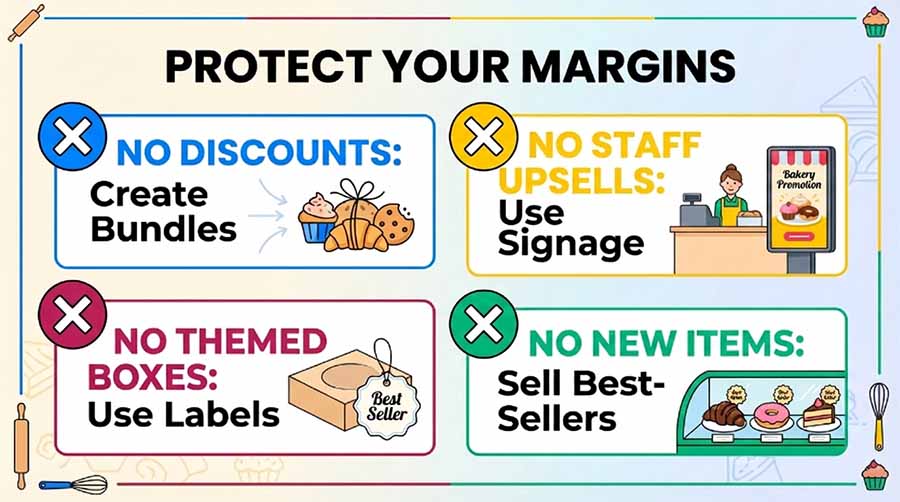
Don't discount. Slashing 20% off your Valentine's items might move product, but it trains customers to wait for sales and wrecks your profit. If you're worried about sell-through, create value bundles instead. Add something, don't subtract price.
Don't over-theme your packaging. Hearts and red foil look great on February 13. On February 15, they scream "leftover." Use neutral packaging with removable Valentine's labels or toppers so you can keep selling the same items without the holiday baggage.
Don't rely on your team to upsell every ticket. Your staff is busy. They're handling regulars, fielding questions, and boxing orders. Expecting them to pitch Valentine's gifts on every transaction during a rush is unrealistic. Your display and signage need to do that work.
Don't introduce complicated new items. Valentine's week is not the time to train your team on a new recipe or technique. Stick with products you've made a hundred times. Consistency matters more than novelty when you're moving volume.
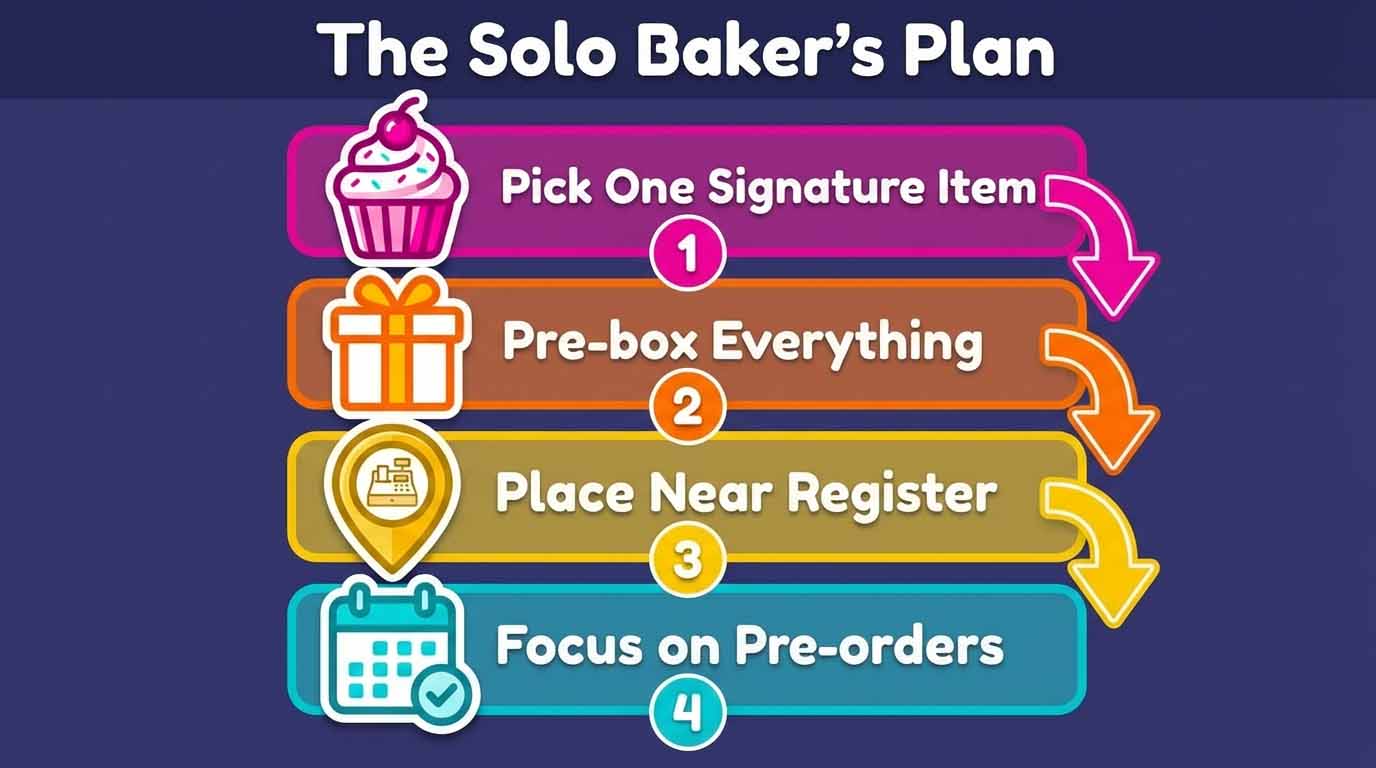
Minimum Viable Version for Small Teams
If you're running solo or with a skeleton crew, simplify everything. Pick one signature Valentine's item. Make it in batches. Pre-box it. Price it clearly. Put it near the register with a sign that says "Valentine's Gifts $X."
Send one email on Day 7. Post twice on social media. That's it. You don't need a 14-day content calendar or a dozen SKUs. You need one thing that's easy to make, easy to sell, and easy to explain.
Focus on pre-orders. They let you control production, reduce waste, and guarantee sales before you even start baking. Offer a small discount for pre-orders if you want, but make the real incentive "guaranteed availability" rather than price. People will pay full price to avoid the sold-out sign.
After February 14: What to Do With Leftovers
Plan your range so leftovers aren't a disaster. Cupcakes with removable toppers become regular cupcakes. Sugar cookies without dated messages sell as dessert. Chocolate items move anytime.
If you're stuck with themed inventory, bundle it into "After Valentine's Treats" and sell it at cost just to clear space. Take the lesson into next year's planning. The goal isn't perfection. It's learning what sold, what didn't, and adjusting your approach.
Making the Countdown Work for You
Valentine's Day is short, intense, and profitable if you set it up right. The 14-day countdown gives you enough lead time to prepare without burning out, enough flexibility to adapt as you go, and enough structure to stay focused when the rush hits.
Your customers want to buy. They're planning to spend an average of $188.81 per person this year. Your job is to show them what you've got, make it easy to say yes, and protect your margins while you do it.
Keep your range tight, your displays visible, and your systems simple. The best bakery marketing ideas for Valentine's Day are the ones that make gifting effortless.
For more bakery insights, seasonal strategies, and profit-focused guides, visit the Plastic Container City blog.
FAQ
What is the best way to promote Valentine's treats without cutting prices?
Build bundles that add value instead of slashing margins. Pair a cupcake with a card, combine cookies with a small chocolate box, or offer a mini cake with branded packaging. Customers see more for their money without you losing profit on individual items.
When should I start my Valentine's marketing?
Launch your email campaign 7 to 9 days before Valentine's Day and set up in-store displays by Day 10. Most shoppers don't start looking until a week out, so earlier than that risks your message getting lost. Later than that, and you miss the planning window entirely.
How do I avoid leftover Valentine's inventory?
Choose products that work beyond February 14. Use neutral packaging with removable Valentine's labels, stick with items already in your regular lineup, and skip anything with dated messages or overly themed designs. If you do end up with extras, bundle them as "After Valentine's Treats" and move them at cost.
What Valentine's items sell best in bakeries?
Heart-shaped cookies, chocolate-dipped treats, red velvet cupcakes, and mini dessert boxes consistently perform well because they feel special but use familiar ingredients. Focus on 2 to 5 signature items rather than spreading your effort across a dozen products.
How can I handle Valentine's rush with a small team?
Let your displays and signage do the selling instead of relying on staff upsells. Place pre-boxed Valentine's gifts near the register, price everything clearly, and focus on grab-and-go options. Consider offering pre-orders to control production and reduce last-minute chaos.
