

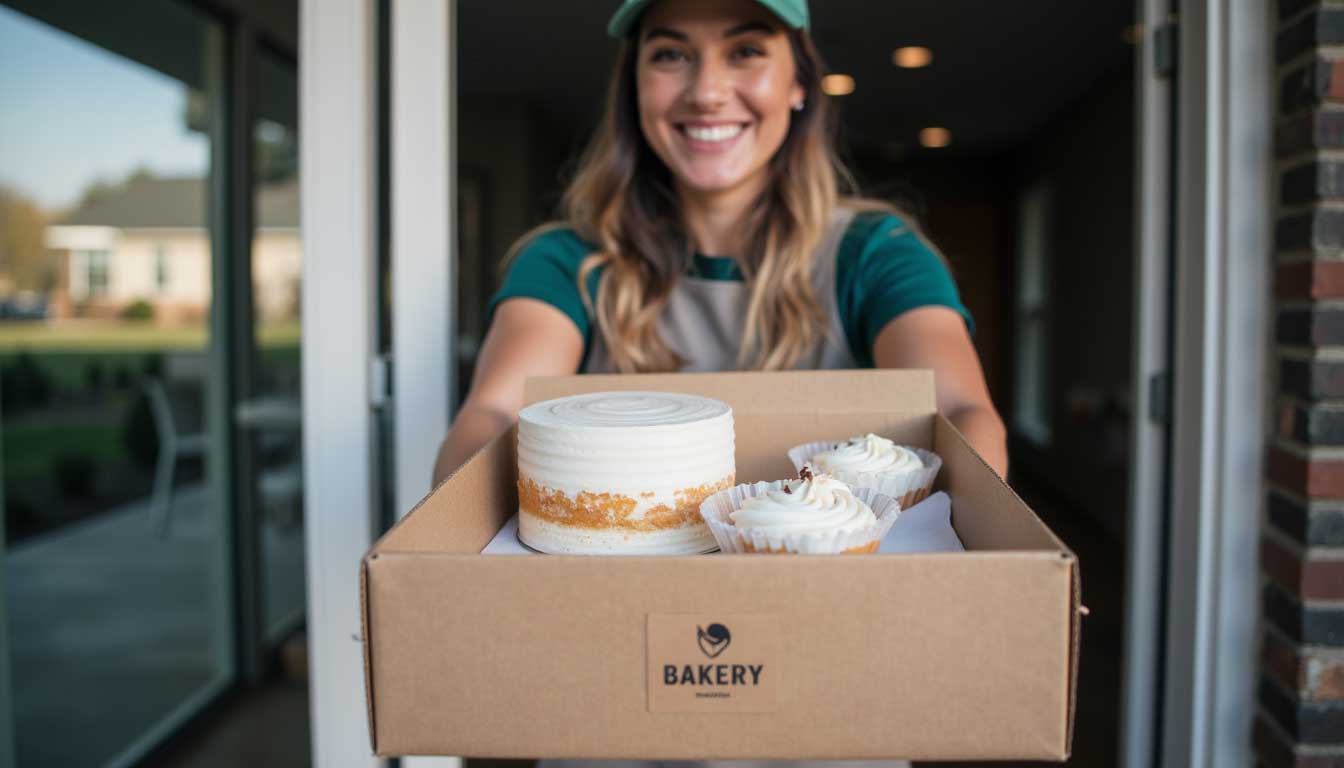
What's really costing you more: the $2 premium bakery delivery packaging or the $150 you lose every time a damaged cake arrives at someone's door?
When someone opens your custom bakery boxes at their doorstep, that three second moment determines if they become regulars or scroll past your business forever. Bakery profit margins average 4 to 15% net, with well managed operations reaching the higher end through cost controls. Every damaged delivery chips away at those thin margins.
At Plastic Container City, we supply thousands of food professionals across the U.S. The smartest bakery owners stopped viewing wholesale bakery packaging as a cost center years ago. They see it for what it is: their digital storefront where brand perception gets made or broken before the first bite.
Why Cheap Boxes Cost More Than Premium Packaging
Food delivery drivers average $18.45 per hour in the U.S., with wages accounting for 90% of delivery costs. You're paying that rate whether your pastry box arrives pristine or crushed. The difference is what happens next.
A $40 custom cake order arrives damaged. You remake it. $15 in ingredients and labor. You refund or discount, another $20 to $40 hit. The customer posts a photo before you can intervene. 300 people see it. Three potential orders evaporate. That $2 cheaper box just cost you $150 in real money.
If custom dessert orders are part of your business, check our latest bakery recipes for inspiration, and to see how packaging can preserve every creation’s arrival.
The margin math gets brutal fast. Ingredient costs should stay below 25% of revenue for healthy margins. Factor in waste rates of 5 to 15%, and actual margins drop 3 to 8 percentage points. Poor bakery packaging boxes amplify waste. For a deep dive on the real cost of packaging choices, read “Bad Bakery Packaging Costs You – Learn Why”. Quality packaging solutions prevent it.
Delivery puts baked goods through mechanical abuse. Bags get dropped. Boxes get stacked under groceries. Temperature swings from kitchen heat to air conditioned cars to hot porches. Your packaging fights physics every step.

Material Selection: What Works vs What Marketing Says Works
Paper, plastic, or hybrid? The answer depends on your specific bakery products, not trending sustainability buzzwords.
Plastic Reality Check
Plastic packaging materials maintain 48% market dominance in confectionery and bakery sectors. Clear plastic clamshells aren't popular by accident. They work.
Polyethylene and polypropylene containers offer moisture barriers, impact resistance, and transparency. Customers see their dessert boxes contents immediately, reducing "did they mess up my order" anxiety. Frosted items stay separated from lids. Cookies arrive unbroken.
Modified Atmosphere Packaging extends shelf life by 200 to 300% for commercial bakeries. The technology isn't exotic anymore. Pre gassed packaging materials cost less than absorbing losses from premature spoilage.
Paper and Kraft Performance
Paper packaging holds 35% market share driven by recyclability and customer preference. For delivery, kraft paper boxes breathe, preventing condensation buildup that turns crispy croissants soggy during transit.
Climate affects delivery performance. Arizona bakeries can use paperboard for nearly everything. Florida operations need moisture resistant coatings or hybrid designs because humidity during delivery ruins unprotected paper. A paper tray inside keeps pastries separated while outer kraft provides structure and withstands handling abuse.
Restaurants using compostable kraft packaging saw 12% increases in five star packaging ratings on delivery platforms during Q1 2025. Delivery customers notice. They reward brands that match packaging to values without sacrificing quality.
Biodegradable Truth
Bioplastics from cornstarch, sugarcane, and seaweed decompose under correct conditions, avoiding microplastic pollution. The phrase "correct conditions" carries weight. Industrial composting facilities, not backyard bins, break down most biodegradable materials.
Bagasse trays made from sugarcane pulp rival polystyrene strength while remaining fully compostable. They cost 20 to 40% more than plastic but command premium positioning. Structurally reinforced bagasse containers reduce leakage and deformation by 68% compared to basic paperboard.
Here’s how common packaging materials compare for delivery strength, sustainability, and cost:
| Material | Best For | Delivery Strength | Sustainability | Cost Range |
|---|---|---|---|---|
| Clear Plastic Clamshells | Cookies, brownies, pastries | Excellent impact resistance | Recyclable in many areas | $0.40 to $1.20 |
| Kraft Paperboard | Bread, rolls, muffins | Good with proper design | Widely recyclable | $0.30 to $1.00 |
| Bagasse Containers | Scones, tarts, ambient items | Very good, moisture resistant | Fully compostable | $0.60 to $1.50 |
| Hybrid Windowed Boxes | Custom cakes, layered desserts | Excellent, combines benefits | Partially recyclable | $0.80 to $2.00 |
Temperature Control That Doesn't Require Refrigerated Trucks
Baked goods must cool to about 21°C before packaging to prevent products from becoming too tender or developing moisture problems. That's the easy part. Keeping items at proper temperature during delivery presents the real challenge.
Cold Chain Solutions
Passive cold chain packaging maintains temperatures at minus 18°C or below using insulated containers with phase change materials. No external power required. Frozen bakery items like croissants and Danish stay solid during transport.
Cream filled items need special attention. Buttercream cakes, eclairs, cream puffs all contain high fat content that reacts badly to temperature swings. Insulated packaging solutions maintain temperature control for up to 48 hours, far exceeding typical delivery windows.
The three stage protection approach works: proper cooling after baking, appropriate storage before packing, and insulated bakery packaging for transit. Skip any stage and quality suffers.
Moisture and Ventilation Engineering
Air and moisture control methods add 1 to 3 weeks of freshness through proper packaging preventing staling and mold growth. The trick is controlled breathability, not sealed airtight containers.
Micro perforation allows moisture vapor to escape without letting contaminants enter. Strategic vent placement prevents "sweat spots" where condensation pools. Paper based packaging with grease resistant coatings handles this naturally for items like croissants and muffins.
Bread requires different treatment than cookies. Rolls need moisture retention to stay soft. Brownies need protection from drying out. Custom bakery packaging means matching design to product chemistry, not using identical boxes for everything.
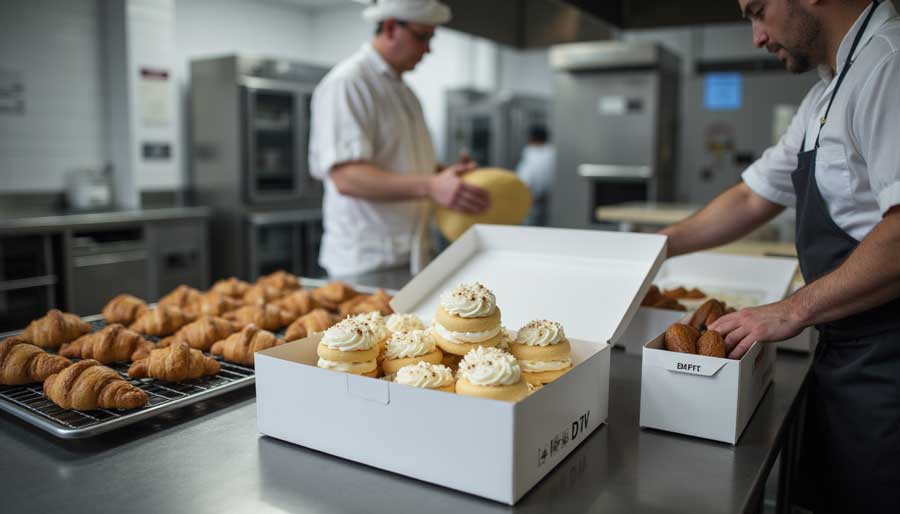
Sustainability That Works in Real Delivery Conditions
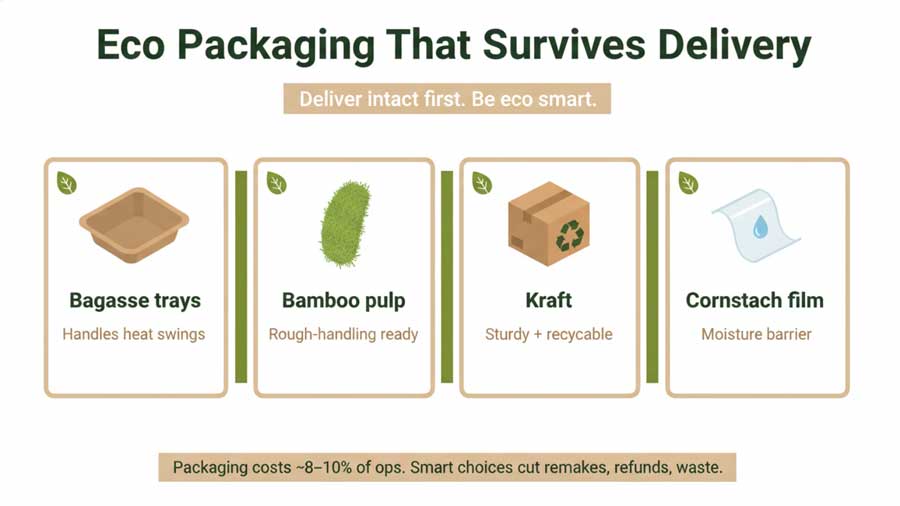
70% of consumers will pay more for eco friendly packaging, but they won't forgive you for delivering ruined goods in compostable containers. The balance matters.
Plant based solutions perform when designed correctly for delivery abuse. Bagasse trays from sugarcane waste withstand temperature swings during transit. Bamboo pulp containers handle rough handling. Cornstarch films provide moisture barriers. These materials work when engineered for the delivery journey, not just shelf display.
Packaging costs represent 8 to 10% of total operating costs for foodservice operations. For delivery focused bakeries, packaging becomes even more critical—poor choices lead to remakes, refunds, and lost customers. Small bakeries face higher costs without bulk purchasing power, making smart material selection essential.
Automation and Labor Efficiency
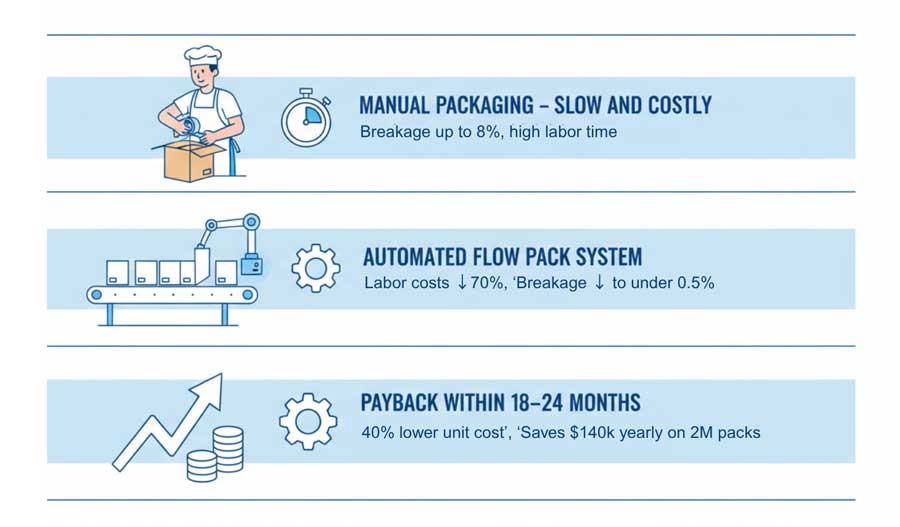
Packaging automation cut costs by 40% per unit for one bakery, saving $140,000 annually on just 2 million packs per year. The ROI arrived in 3 to 4 months.
Flow pack wrappers reduce labor costs by 70% while cutting breakage from 8% to under 0.5%. The payback period runs 18 to 24 months for well designed systems.
Manual packaging doesn't scale. Friday night dinner rush with delivery orders stacking up, every second per box compounds. Pre scored bakery boxes that pop into shape save 15 to 30 seconds per pack compared to flat boxes requiring tape.
At Plastic Container City, we see operations double throughput switching from fold and tape designs to snap close containers. The containers cost $0.30 more per unit. Labor savings hit $2 per pack. The math isn't subtle.
Brand Identity Through Custom Bakery Boxes With Logo
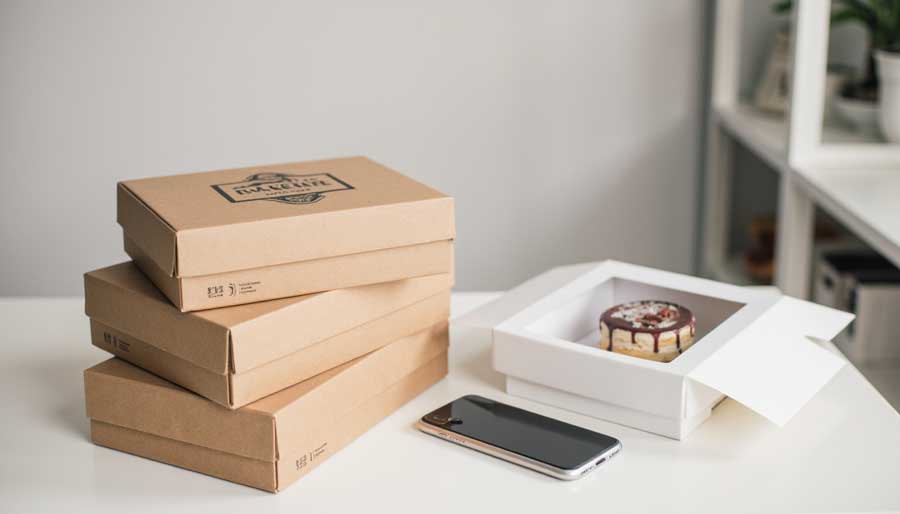
Custom printed kraft sleeves and embossed logos increase brand recognition by 3X in repeat delivery orders. Your bakery boxes with logo travel through neighborhoods, sit on porches, appear in refrigerator photos, and get photographed more than in-store purchases.
Bold graphics beat intricate designs because delivery customers see your box first, product second. One color, clear typography, memorable mark. That's the formula. When customers share delivery unboxing moments on Instagram, you want instant recognition.
60% of consumers engage more with brands using interactive QR codes and traceability features. For delivery orders, QR codes enable one tap reordering—no searching for your website or phone number. Link codes to loyalty programs or bakery item origin stories. Make repeat purchasing frictionless.
Wholesale prices enable customization. Order volume determines per unit costs. 5,000 custom boxes at $0.30 each versus 100,000 at $0.11. The jump from small to medium runs delivers dramatic savings. Free shipping thresholds matter when boxes take up truck space.
Real ROI: When Packaging Investment Pays
One operation reduced shrink by 90% with MAP packaging, extending shelf life and cutting waste. For delivery operations, this means products ship further distances without quality degradation. The investment paid back through inventory management improvements alone.
A Southeast Asian salad chain rebranded packaging in January 2025. Customer satisfaction jumped from 4.2 to 4.6 stars. Packaging complaints fell 72%. Instagram mentions tripled. The tangible ROI appeared within one quarter.
Test in real delivery conditions. Ship samples to yourself. Drop boxes. Stack weight on them. Leave them in hot cars. Reddit discussions document real operator experiences: packages drop kicked, ice packs insufficient, macaron damage rates hitting 50% from poor packaging choices.
The evidence is clear. Strategic bakery delivery packaging transforms from cost center to profit protection, reducing waste, preventing remakes, and building brand loyalty with every delivery that arrives intact.
For more bakery insights, delivery tips, and industry news, visit the Plastic Container City blog.
FAQ
Does bakery delivery packaging require minimum orders?
Most suppliers set MOQ at 1,000 to 5,000 units for custom printed options. Stock boxes with logo designs start at 500 units. Higher volumes unlock wholesale prices that reduce per unit costs by 60 to 70%. Order enough to cover 2 to 3 months of delivery volume for optimal pricing.
What makes bakery packaging food safe for delivery?
Food safe certification ensures materials don't leach chemicals into baked goods. Look for FDA compliance stamps. Grease resistant coatings prevent oil migration. Moisture barriers stop condensation from contaminating products. Temperature rated materials maintain integrity in hot cars or cold storage.
Can I get free shipping on wholesale bakery packaging?
Many suppliers offer free shipping on orders exceeding specific dollar thresholds, typically $500 to $1,000. Bulk orders qualify more easily. Factor shipping into cost comparisons between suppliers. Regional suppliers often beat national companies on delivery costs for smaller orders.
How do custom bakery boxes with window designs perform?
Windowed boxes combine clear product visibility with structural integrity. The plastic window lets customers verify order accuracy while kraft or corrugated exteriors provide crushing protection. Best for high value items like decorated cakes where visual confirmation builds trust before opening.
What packaging keeps goods fresh longest during delivery?
Modified Atmosphere Packaging extends shelf life 200 to 300% through controlled gas mixtures. For standard operations, moisture control sachets add 1 to 3 weeks of freshness. Insulated containers with phase change materials maintain frozen or chilled items for 48 hours without external power.
