

Ghost kitchens are rewriting the restaurant playbook faster than you can say "table for two." But here's the question every savvy restaurant owner is wrestling with: are these delivery-only operations the industry's next big thing, or just another flash in the pan that'll burn out when the novelty wears off?
The numbers don't mess around. The US ghost kitchen market hit $98.28 billion in 2025, with projections soaring to $2,915.48 billion by 2032. That's not a typo, and it's definitely not pocket change.
While some operators are still debating whether this is sustainable, the smart money is already positioning for what comes next. The question isn't whether ghost kitchens will reshape dining—it's whether you'll be part of that transformation or watching from the sidelines.
Understanding Ghost Kitchens
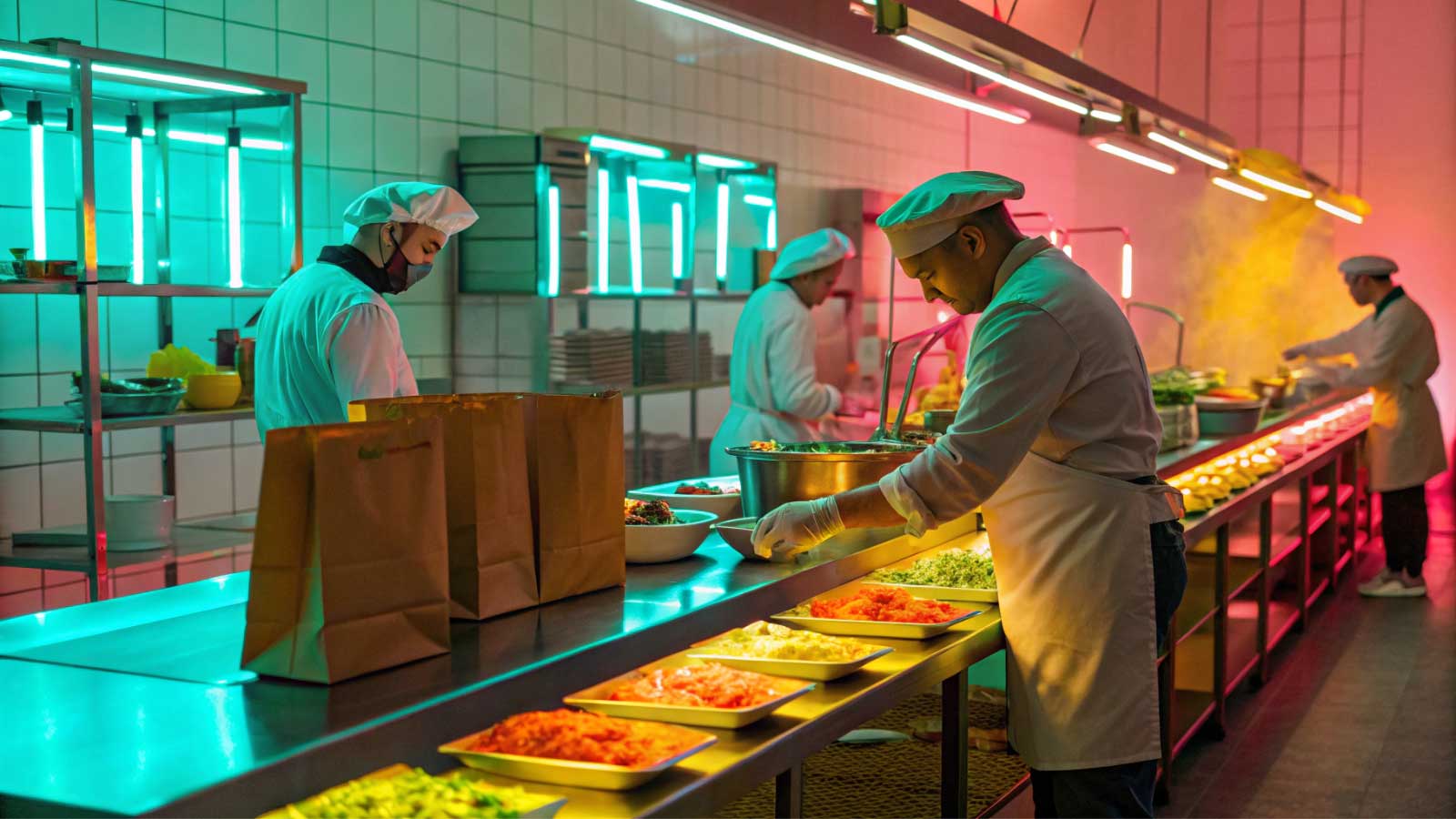
Ghost kitchens strip away everything traditional restaurants think they need and focus on what actually makes money: exceptional food delivered fast. These delivery-only operations operate without dining rooms, servers, or expensive storefronts—just pure culinary execution optimized for the digital age.
The concept goes by several aliases: cloud kitchens, dark kitchens, virtual kitchens. Different names, same revolutionary approach to food service. What started as a pandemic pivot has evolved into a sophisticated business model that's attracting serious investment and even more serious attention from industry veterans.
The beauty lies in the simplicity. Orders arrive online, food gets prepared in commercial kitchens, then dispatched for delivery. No hostess, no ambiance, no tables to turn—just relentless focus on what customers actually want.
But here's what the pandemic really did: it didn't just create a temporary boom, it catalyzed a fundamental structural change in the foodservice industry. A 2021 Deloitte study revealed that digital food delivery continued growing even after restaurant reopenings, cementing new consumer habits that persist today.
Four Models Reshaping the Game
Independent Model: The purist approach. One kitchen, one brand, laser-focused execution. Orders flow in online, food flows out for delivery. Clean, simple, profitable.
Multi-Brand Model: The efficiency play that makes traditionalists nervous. Shared kitchens hosting multiple virtual brands under one roof, maximizing kitchen utilization while serving diverse customer segments. It's like running five restaurants from one location—without the headaches of five dining rooms.
Hybrid Format: The evolution that's catching everyone's attention. Smart operators discovered that blending delivery efficiency with strategic physical presence creates the best of both worlds. Think micro storefronts that handle walk-up traffic while serving as pickup hubs for online orders.
Shell Model: The real estate play. Large kitchen complexes that rent space to different food brands, essentially becoming the WeWork of food service. Less glamorous than running your own brand, but potentially more profitable.

The Appeal and Advantages of Ghost Kitchens
Let's cut straight to what matters most: economics. Traditional restaurant startup costs in Colorado range from $95,000 to $2,000,000. A ghost kitchen in Denver? Around $30,000. That's not just a difference—that's a completely different risk profile.
Economics That Actually Make Sense
Ghost kitchens eliminate the financial killers that keep restaurant owners awake at night. No premium rent for prime locations, no elaborate interior design, no extensive front-of-house payroll. What remains is pure operational focus: significantly lower utilities, maintenance, and overhead costs.
Here's what industry veterans understand: ghost kitchens deliver faster return on investment because the model eliminates traditional restaurant inefficiencies. Less capital at risk, faster path to profitability, more predictable cash flow.
Geographic Freedom and Scalability
Traditional restaurants live or die by foot traffic and location, location, location. Ghost kitchens flip that script entirely. They reach higher customer volumes through online platforms rather than depending on passing pedestrians or convenient parking.
This geographic flexibility changes everything. Set up in affordable industrial areas while efficiently serving high-demand delivery zones across the city. One kitchen can house multiple virtual brands, effectively running several restaurants from a single location without the complexity of multiple storefronts.
Innovation Without the Risk
Want to test Korean-Mexican fusion? Indian pizza? Vegan BBQ? Ghost kitchens make experimentation affordable. Understanding the next big food trends in 2025 helps operators identify concepts worth testing, launching virtual brands to gauge market response before committing serious capital.
If a concept doesn't resonate? Switch to something else without major operational disruption. No need to redesign dining rooms, retrain servers, or explain the pivot to confused regulars walking through your door.

Challenges Faced by Ghost Kitchens
But let's be honest—if ghost kitchens were easy money, everyone would be doing it successfully. The model comes with its own set of headaches that separate profitable operations from expensive learning experiences.
The Brand Visibility Paradox
Here's the catch-22 that keeps ghost kitchen operators strategizing late into the night: building brand recognition without physical presence. Traditional restaurants build loyalty through atmosphere, personal service, and memorable experiences. Ghost kitchens? They've got an app icon and hopefully decent food photography.
Noah Clark, who runs Box Chicken in Los Angeles, knows this challenge intimately. It's why he's considering adding a brick-and-mortar component—sometimes you need that human connection to build lasting customer relationships.
Operational Complexity at Scale
Managing a single restaurant is challenging enough. Now imagine coordinating orders from five different delivery platforms, each with different timing requirements, packaging specifications, and customer expectations. Juggling multiple delivery platforms while coordinating with third-party drivers can overwhelm operators who underestimate the complexity.
Multi-brand operations amplify this challenge exponentially. Managing various menus, ingredients, and cooking procedures under one roof requires operational precision that would make a Swiss watchmaker proud. Rush hour becomes make-or-break time when high order volumes create bottlenecks in poorly optimized workflows.
The Platform Dependency Dilemma
Ghost kitchens exist in a symbiotic relationship with third-party delivery platforms like Uber Eats, DoorDash, and Grubhub. These platforms provide access to customers but extract a heavy toll: commission fees reaching 30% of gross revenue.
Beyond the financial impact, there's the operational burden of managing photos, descriptions, menu updates, and pricing across multiple platforms. It's like managing multiple storefronts, except they're all digital and constantly changing their rules.
Regulatory and Licensing Challenges
Here's where things get messy. Ghost kitchens represent a new, non-traditional food business model, and many cities have regulations often unadapted to their unique operational structure. Obtaining appropriate permits for delivery-only kitchens in areas zoned for residential or industrial use poses significant challenges.
Despite lacking dine-in components, ghost kitchens must comply with the same strict sanitary and regulatory requirements as full-service restaurants. This includes Business License, Food Service Permit, EIN, Employee Health Permit, Seller's Permit, and Zoning Permit.
Food Safety and Quality Control Risks
Operating at high volumes creates unique risks. Maintaining food quality and safety standards becomes more challenging for delivery-focused kitchens handling large order volumes, as high production throughput raises risks of shortcuts being taken and hygiene compliance suffering.
Packaging that fails to withstand delivery challenges—leaks, spills, or heat loss—directly jeopardizes brand reputation. Choosing the right food packaging solutions becomes critical for ghost kitchen success. Ghost kitchens require strict protocols for food handling, temperature control, cross-contamination prevention, and sanitization, with many jurisdictions requiring food safety certification.
Market Saturation and Intense Competition
The opportunity has attracted serious competition. Ghost kitchens face stiff competition from traditional restaurants adapting to delivery, virtual brands by established chains, and numerous niche concepts. Some major metropolitan areas are experiencing market saturation, intensifying the battle for customer attention.

How Much Does It Cost to Start a Ghost Kitchen?
Let's break down the real investment requirements, because "low startup costs" doesn't mean "no startup costs."
Based on industry research and typical startup ranges
Most successful operators invest $30,000-$75,000 total to launch properly. However, there's an important nuance here: while ghost kitchens eliminate traditional restaurant overhead, the research reveals they face "higher upfront investment requirements" for specialized equipment and technology infrastructure.
The Evolution: Ghost Kitchens in 2025 and Beyond
The industry narrative has shifted from "disruption" to "integration." Ghost kitchens aren't replacing traditional restaurants—they're forcing the entire industry to evolve.
Hybrid Models Leading the Charge
Pure delivery-only operations discovered their limitations, leading to strategic evolution. Forward-thinking operators now blend delivery efficiency with selective physical presence, creating hybrid formats that capture benefits from both models.
This means launching micro storefronts that serve walk-up customers while functioning as pickup hubs for online orders. Even CloudKitchens, the poster child for pure ghost operations, is establishing customer-facing pickup zones.
Strategic Kitchen Partnerships
Established restaurant brands discovered a clever workaround to ghost kitchen competition: collaboration. Instead of building new ghost kitchen infrastructure, savvy operators license their menus to restaurants with underutilized capacity.
Case in point: Sushi Zushi in San Antonio partnered with Franklin Junction to prepare Nathan's Famous and Applebee's meals during off-peak hours. Additional revenue streams without additional capital investment—that's the kind of strategic thinking that separates industry leaders from followers.

Strategies for Success and Profitability in 2025
Success in the ghost kitchen space requires more than good recipes and wishful thinking. Here's what separates thriving operations from costly mistakes.
Location Strategy Beyond Rent Savings
Ghost kitchens don't need expensive storefronts, but location remains critical for delivery efficiency. The operational sweet spot: keeping customers within a three-mile radius for optimal delivery times. Beyond that range, food quality suffers and customer satisfaction plummets.
The strategic advantage: operating from affordable, less trafficked areas while maintaining service quality to premium delivery zones. It's about optimizing operational costs without compromising customer experience.
Menu Engineering for Delivery Excellence
Not every dish translates well to delivery, and ignoring this reality kills brands faster than bad reviews. Menu development must prioritize items that maintain quality during transit—texture, temperature, and visual appeal all matter when food arrives 20-30 minutes after leaving your kitchen.
Professional operators design menus with ingredient overlap across multiple dishes, reducing waste while streamlining prep procedures. It's efficiency disguised as variety.
Understanding the Trade-Offs
Here's what the industry doesn't always discuss openly: ghost kitchen benefits inherently create new challenges. Lower overhead costs come at the expense of brand visibility problems. Operational efficiency gains can compromise specialized culinary focus when managing multiple brands under one roof. The convenience provided to consumers creates increased packaging waste and environmental concerns.
There's no free lunch in the ghost kitchen model. Success requires intelligently navigating these inherent trade-offs rather than simply adopting the operational format.
Technology as Competitive Advantage
In ghost kitchens, technology isn't optional—it's the foundation of everything that works. Winners invest in integrated POS systems, kitchen display systems, and inventory management software that create operational advantages their competitors can't match.
Platforms like Otter consolidate orders from multiple delivery apps into unified dashboards, transforming chaos into manageable workflow. The efficiency gains directly impact profitability.
Digital Brand Building That Actually Works
Without physical presence, everything depends on digital execution. Strong online presence becomes non-negotiable, and effective restaurant marketing strategies are essential for ghost kitchen success. This requires mobile-optimized websites with seamless ordering experiences and professional food photography that makes mouths water through screens.
Loyalty programs and personalized customer experiences become essential tools for building repeat business when customers never see your face or shake your hand.

Emerging Trends Shaping the Future
The ghost kitchen evolution continues accelerating, driven by technology advancement and changing consumer expectations.
AI and Automation Integration
Advanced technology integration includes AI-powered demand forecasting and automated cooking systems that optimize operations beyond human capability. AI innovations in the food industry are transforming how smart kitchens predict rush hours, automated prep systems reduce labor costs, and data analytics reveal customer preferences before customers know them themselves.
Virtual Brand Proliferation
Virtual restaurant concepts operating exclusively through online platforms are multiplying rapidly, with established chains taking notice. Wendy's partnership with REEF Technology to establish 700 ghost kitchens across the US, UK, and Canada by 2025 signals mainstream adoption of virtual brand strategies.
Sustainability as Operational Standard
Eco-friendly practices and responsible sourcing have evolved from marketing nice-to-haves to operational necessities. This includes transitioning to compostable and recyclable packaging materials and implementing comprehensive food waste management systems.
Ethical Considerations Demand Attention
The ghost kitchen model introduces ethical complexities that responsible operators must address proactively.
Labor Practices: While ghost kitchens benefit from requiring smaller workforces, the intense focus on efficiency and high volume can create high-pressure environments. Successful operations must manage hiring, compensation, and wage issues fairly while ensuring safe working conditions and compliance with wage, benefit, and working hour regulations.
Food Waste Management: Key contributors include overproduction due to inaccurate demand forecasting, poor inventory management, large portion sizes, and menu inefficiencies. The delivery-only nature inherently generates significant single-use packaging waste. Solutions include portion control, robust inventory tracking, donation programs, and leveraging technology for predictive management.
Community Integration: Unlike traditional restaurants that serve as community hubs, ghost kitchens lack physical dining areas, limiting direct community engagement. There's growing public distrust due to misconceptions that ghost kitchens operate outside typical legislation, highlighting the need for transparent operations and clear regulatory frameworks.

The Ghost Kitchen Market Outlook
The market trajectory speaks for itself. Globally, expect growth to $196.69 billion by 2032.
North America commands 31.7% of global market share, driven by robust delivery platform infrastructure and widespread consumer adoption of online food ordering.
The operational count tells the real story: ghost kitchens expanded from 3,500 to over 7,500 between 2021 and 2024. That's not growth—that's industry transformation.
Your Restaurant's 2025 Action Plan
The ghost kitchen revolution isn't coming—it's already here, reshaping customer expectations and competitive dynamics whether you participate or not.
Smart restaurant operators stopped asking "Should I compete with ghost kitchens?" and started asking "How can I leverage ghost kitchen principles to expand my business?" The answer often involves utilizing existing kitchen capacity to launch virtual brands, creating additional revenue streams without additional overhead.
The winning strategy combines traditional dining with delivery optimization. Multi-channel revenue streams become essential for sustainable growth—dining room service, takeout, delivery, and potentially retail or CPG extensions.
The restaurant that thrives in 2025 operates like a technology company that happens to serve exceptional food. Data-driven decision making, digital customer relationships, and operational efficiency become as important as culinary skills and hospitality.
The question isn't whether you'll adapt to this new reality. The question is whether you'll lead the transformation or scramble to catch up while your competitors pull ahead.
Ready to transform your food business? Explore our complete collection of industry insights, trends, and expert advice at Plastic Container City's blog—your go-to resource for staying ahead in the competitive food landscape.
Frequently Asked Questions
What is the concept of a ghost kitchen? A ghost kitchen is a delivery-only food operation that prepares meals exclusively for online orders and delivery, operating without a traditional dining area or customer-facing storefront.
How do ghost kitchens make money? Ghost kitchens generate revenue through online food orders placed via delivery platforms or direct websites, focusing on higher order volumes while maintaining significantly lower overhead costs than traditional restaurants.
Are ghost kitchens cheaper? Yes, ghost kitchens require substantially lower startup and operational costs due to eliminated expenses like premium real estate, dining room construction, and extensive front-of-house staffing.
Can anyone start a ghost kitchen? While technically accessible to anyone, successful ghost kitchen operations require proper licensing, commercial kitchen access, food safety expertise, and sophisticated digital marketing capabilities to compete effectively.
Are ghost kitchens still a thing? Absolutely. Ghost kitchens have evolved beyond pandemic responses into sophisticated hybrid models and strategic partnerships, with market projections showing continued strong growth through 2032.
