

Is your restaurant money disappearing faster than free appetizers on a Friday night? You're not alone. Egg prices have shot up 53% compared to last year and beef costs are 5.5% higher. Everyone in the food world is feeling the squeeze.
Here's something to chew on: saving money doesn't mean your food has to taste worse or your guests need to have a bad time. It's more like trimming the fat from a prime cut – you're just getting rid of what you don't need.
The Restaurant Money Challenge in 2025
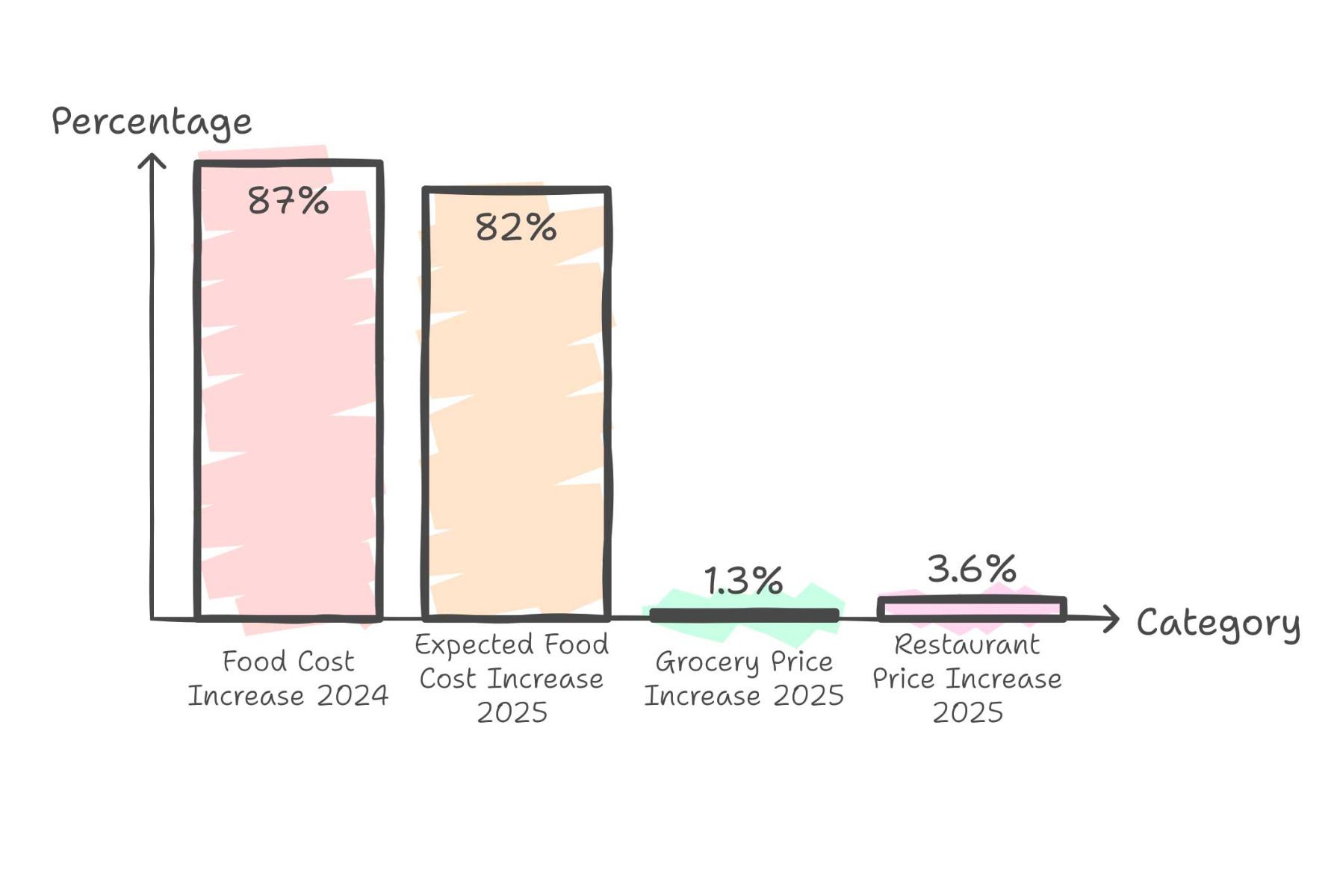
The numbers paint a clear picture of what restaurant owners are dealing with. 87% of restaurants saw their food costs go up in 2024, and 82% think they'll keep climbing this year.
Also, when ingredients eat up 25-35% of what you spend – sometimes reaching 40% for casual dining spots – that's a real problem for your wallet.
Making things worse, there's a growing gap between grocery store prices and restaurant prices. Grocery prices are only expected to go up 1.3% in 2025, but restaurant prices will jump 3.6%. That means your customers are getting more price-conscious about eating out.
Smart Food Cost Management: Beyond the Basics
How Do You Get Food Costs Down?
Master Your Inventory Game
Ask any restaurant pro and they'll tell you: not keeping track of what's in your fridge and pantry is like throwing money in the trash. And there's proof – studies show almost 38% of fruits and vegetables and 21% of dairy and eggs get wasted because restaurants don't plan well enough. To further minimize spoilage, explore practical tips on properly storing fresh fruit and veggie storage.
Writing stuff down on clipboards just doesn't work anymore. The restaurants that are making money now use inventory software that tells them what they have, what they're using, and what they're wasting – all in real time. The smartest ones even use AI to predict what they'll need next week.
Want a simple trick that works wonders? Pick someone on your team to be the "waste warrior" – their job is to write down what gets thrown away and why. Just paying attention to waste makes it shrink, because everyone starts noticing where food is getting lost.
For more strategies to tackle food waste head-on, read our in-depth blog post on reducing restaurant food waste.
What Is the Best Pricing Strategy for a Restaurant?
Turn Your Menu into a Money Maker
One of the best-kept secrets in restaurants is something called menu engineering. It's simple really – figure out which dishes make you money and which ones don't.
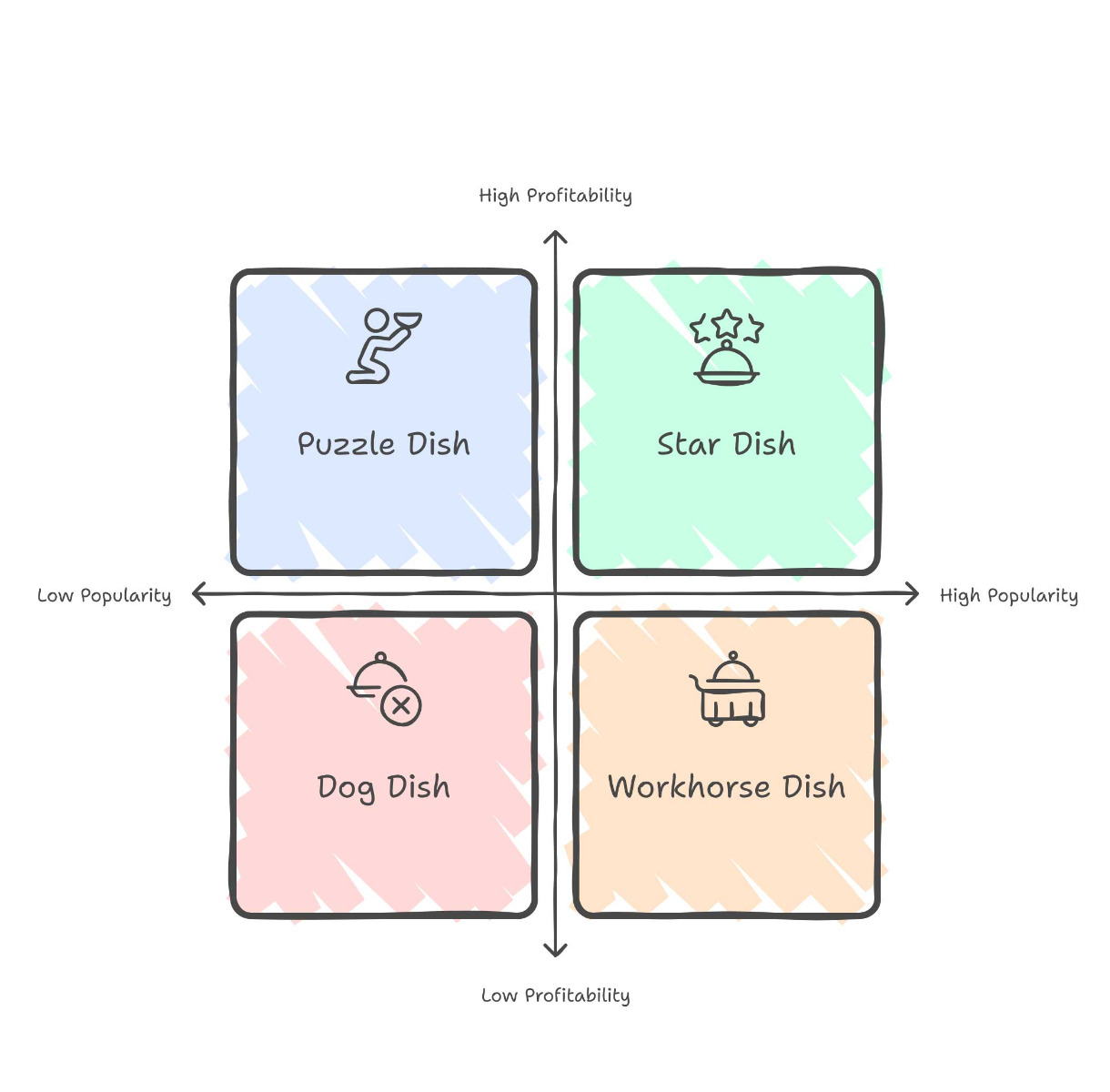
Think about your menu items in four groups:
. Stars: Everyone orders them and they make good money (put these front and center)
. Puzzles: They make good money but not many people order them (make them sound more exciting)
. Workhorses: Everyone orders them but they don't make much money (can you charge a bit more?)
. Dogs: Not many people order them and they don't make much money (time to say goodbye)
The National Restaurant Association says the smartest restaurant owners are changing their menus and watching their inventory to fight rising costs. Many are serving breakfast longer or adding brunch to use the same ingredients in more ways throughout the day.
Changing your menu with the seasons is another smart move. You get to use ingredients when they're cheapest and most plentiful, plus your regular customers get excited about new dishes. For more creative menu ideas, check out our guide on flavor fusion combinations that can transform your menu.
Build Stronger Supplier Relationships
In today's crazy market, treating your suppliers like just another company you buy stuff from doesn't work. The restaurants that are thriving build real friendships with their suppliers.
Beyond just asking for better prices, try these proven ideas:
. Have a sit-down with your key suppliers every few months to talk about what you'll need
. Have backup suppliers for your must-have ingredients in case your main one runs out
. Team up with other restaurants nearby to buy in bulk and get discounts
. Get to know local farmers for special ingredients that can make your menu stand out
These relationships are gold during shortages, when suppliers tend to take care of their favorite customers first.
What Is a Restaurant's Biggest Expense?
Energy and Utilities: The Silent Money Sucker
Your electric and gas bills might be costing you way more than they should. A good energy check can find savings without changing how your food tastes or how comfortable your guests feel.
Beyond just switching to LED lights and programmable thermostats, think about:
. Installing low-flow sprayers at your dish station (saves thousands of gallons of water)
. Making a schedule for turning equipment on (many kitchens turn everything on at opening, hours before it's needed)
. Cleaning your refrigerator coils regularly (dirty coils make your fridge work harder and use more electricity)
The money you spend making these changes usually comes back to you within months, and then keeps saving you money year after year.

Smart Tech That Pays for Itself
The difference between restaurants that are struggling and those that are thriving often comes down to technology. Industry research shows 40% of U.S. restaurant owners have invested in technology to make their kitchens more productive and cut labor costs, with nearly 75% saying their restaurants run better as a result.
The secret is to start with just one problem instead of trying to fix everything at once:
. If keeping track of inventory is your headache, start with automatic ordering systems
. If labor costs are eating your lunch, get scheduling software that matches staff levels to how busy you'll be
. If orders often come out wrong, try kitchen display systems that reduce mistakes
Make sure each new tech tool pays for itself before adding another one.

The Portion Size Question
Big restaurant chains across the country are dealing with higher costs by serving a little less food. Burger King cut their chicken nugget count from 10 to 8, McDonald's made their burgers a bit thinner, and Arby's made their sides smaller while keeping prices the same or even charging more.
This strategy needs a gentle touch. Restaurant pros suggest:
. Look for dishes customers regularly don't finish
. Use slightly smaller plates to make the right amount of food look generous
. Cut back on side dishes rather than the main protein
. In your menu descriptions, talk about quality instead of size
The goal is to find the sweet spot where portions match what people actually eat while still feeling like a good value.
One smart move? Think about mini dessert options. They're a great way to give customers a sweet treat without overdoing it, which can cut down on dessert waste and even make your menu feel more appealing with variety.
How to Control Labor Costs in a Restaurant?
Labor Costs: Finding the Balance
With 88% of restaurants reporting higher labor costs in 2024 and 79% expecting more increases this year, how you manage your staff is super important.
Teaching your team members to do multiple jobs creates amazing flexibility. The best restaurants have charts showing who can do what, and they reward people who learn new skills.
Scheduling based on sales predictions—not just what you did last year or what the manager thinks—can save a ton on labor. Modern systems look at weather forecasts, local events, and even social media to predict when you'll be busy or slow with amazing accuracy.
For fast-casual places, adding self-service kiosks or tableside ordering tablets often increases check sizes while needing fewer front-of-house staff.

Embracing Technology Without Breaking the Bank
Adding technology doesn't mean spending a fortune. The most successful approach starts small and builds up:
1. Start with the basics that pay for themselves quickly:
. Point-of-sale systems that track inventory
. Simple kitchen display systems that reduce mistakes
. Basic online ordering to stop phone interruptions
2. Add tools that improve operations once the basics are working well:
. Inventory systems that predict what you'll need
. Staff scheduling that forecasts sales
. Systems to keep track of customer preferences
3. Get the fancy stuff only when you're ready:
. Fully connected restaurant technologies
. Advanced analytics for buying and staffing
. Custom loyalty programs based on what your guests like
This step-by-step approach ensures each new tech investment proves its worth before you add more.
Creating a Cost-Conscious Culture
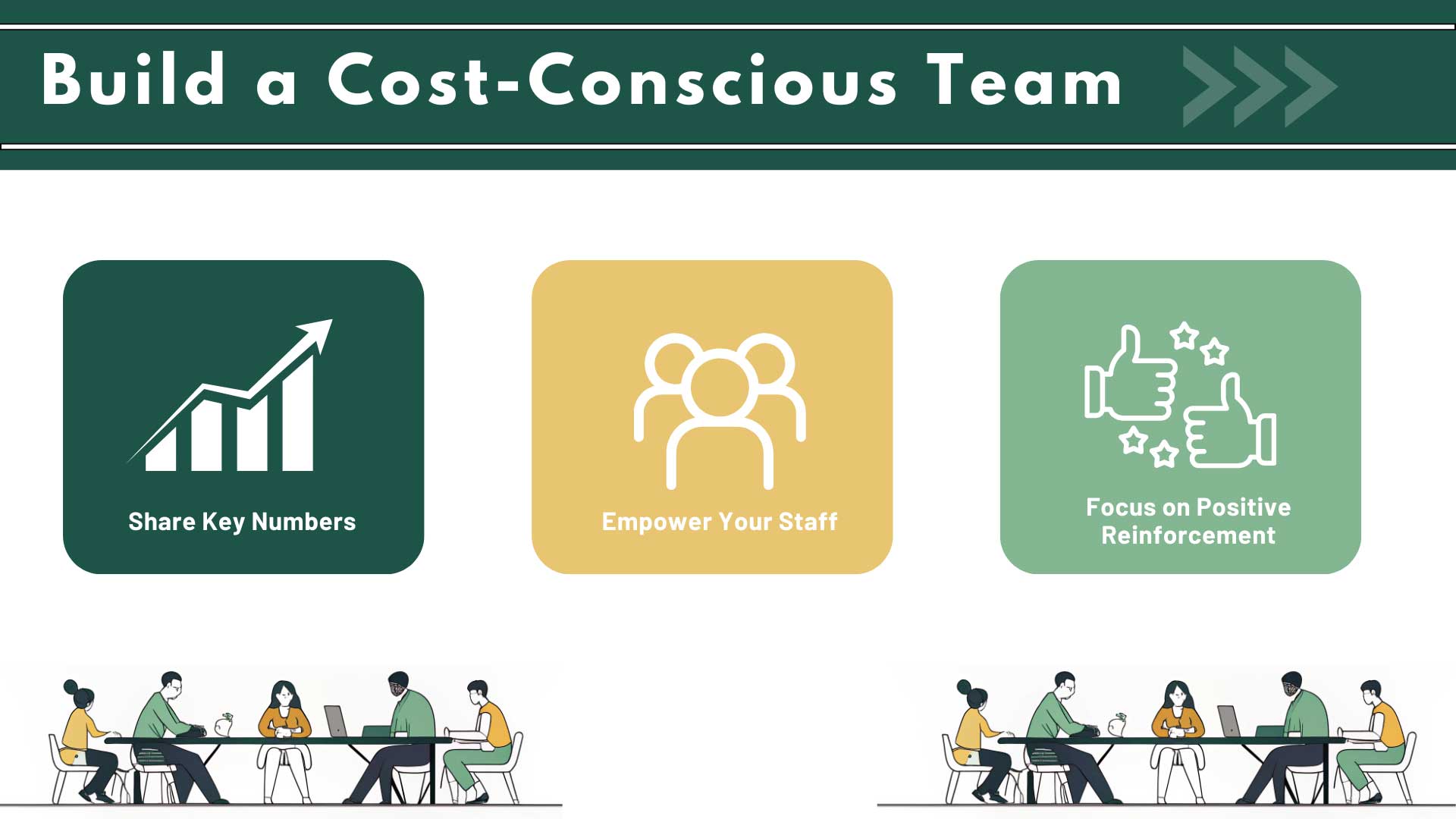
The most powerful way to control costs isn't a system or program—it's creating a workplace where everyone understands how their actions affect the bottom line.
Successful restaurants share important numbers with staff in simple, visual ways. When your team can see how food waste, portion control, and energy use affect profits (and possibly their hours and tips), they become partners in finding solutions.
Some places have had great success with simple reward programs: when costs come in under target while keeping quality high, a percentage of the savings goes into a team bonus pool. This aligns what's good for the staff with what's good for the business.
This isn't about putting pressure on people but tapping into the wisdom of those who see every part of your operation daily. Cooks often know which ingredients spoil frequently, servers know which menu items customers complain about, and dishwashers see which garnishes come back uneaten most often.
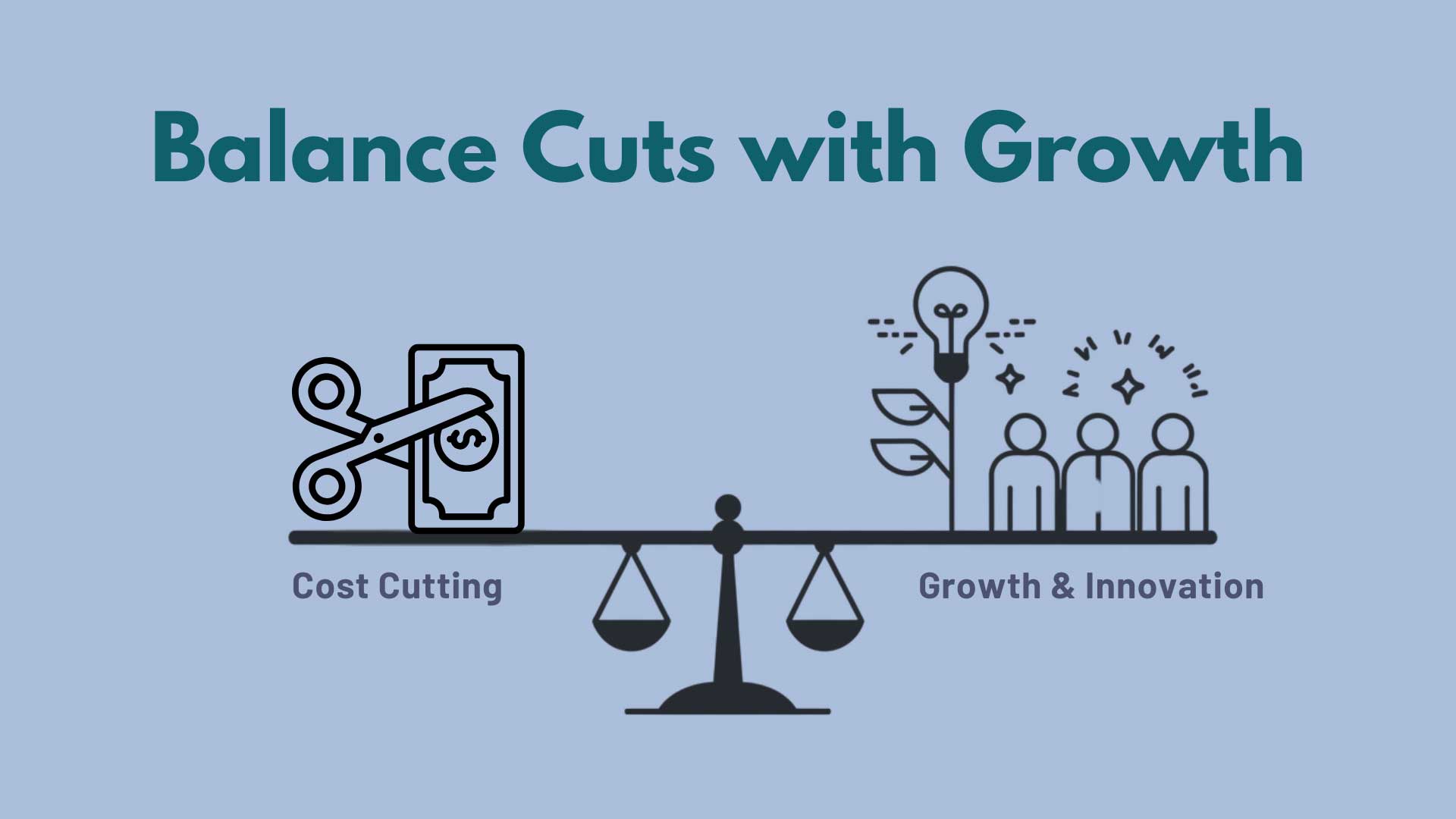
The Path Forward: Balancing Cuts with Growth
Cutting costs alone won't guarantee success. The food places thriving in 2025 are both trimming expenses AND creating compelling reasons for guests to choose them.
Even with today's challenges, over 80% of operators expect sales in 2025 to either go up (41%) or stay the same (41%) compared to 2024. The difference? They're not just cutting—they're reimagining.
This means creating exciting new menu items that still fit your budget. It means using technology to create memorable experiences worth paying more for. And it means telling your story in ways that connect with increasingly price-conscious diners.
The restaurants setting themselves up for long-term success are making smart cuts in places customers never notice while enhancing the parts of the experience that customers value most.
Your Recipe for Financial Success: The Bottom Line
Cutting costs in your restaurant isn't about making the experience worse—it's about being smarter with every dollar so you can focus on what matters most: creating experiences that keep guests coming back.
The challenges facing the industry in 2025 are real, but so are the opportunities. By tackling both obvious and hidden costs strategically, you position your business not just to survive but to thrive in an industry projected to reach $1.5 trillion in sales this year.
The question isn't whether you can afford to make these changes—it's whether you can afford not to.
Want more insights to help your food business thrive? Check out our blog for the latest tips, trends, and strategies for food professionals.
Frequently Asked Questions
What is the biggest expense for a restaurant?
Labor costs are typically the biggest expense for restaurants, with food costs making up 25-35% of what you spend. Other major costs include rent, utilities, and technology. In casual dining places, food costs can reach up to 40% of total expenses.
What is FIFO in food and how does it reduce costs?
FIFO stands for "First In, First Out" – a method where you use oldest inventory first to reduce spoilage. This means organizing your storage so the oldest products are used before newer ones. Implementing FIFO, along with inventory management software for real-time tracking, AI-powered forecasting, and proper storage training, can significantly reduce waste. Studies show over 38% of fruits and vegetables are wasted because of poor planning.
What is menu engineering and how does it help cut costs?
Menu engineering means analyzing how profitable and popular each menu item is to make smart decisions about pricing, placement, and promotion. This helps you figure out which items to highlight, redesign, or remove based on food costs and what customers like. Many restaurants are adjusting their menus to fight rising ingredient costs.
Should I consider reducing portion sizes to manage costs?
Portion adjustment is a strategy many chains are using, with Burger King reducing nugget counts and McDonald's serving thinner burgers. But you need to be careful about customer expectations and value perception. Focus on items customers typically don't finish anyway.
What uses the most electricity in a restaurant?
Refrigeration, HVAC systems, and kitchen equipment (especially those with heating elements like ovens, fryers, and grills) typically consume the most electricity in restaurants, followed by lighting. While the exact percentages can vary by restaurant type and location, energy costs represent a significant operational expense. Technology investments that monitor and optimize energy usage, along with inventory management and staff scheduling systems, have helped 75% of restaurants become more efficient. These systems reduce waste, optimize operations, and often provide returns far exceeding the initial investment.
What's the best way to negotiate with suppliers?
Build real relationships that go beyond transactions, check out multiple supplier options for key ingredients, consider combining orders to get volume discounts, and look into local suppliers who might offer more flexible arrangements with lower delivery costs.
How much can energy-efficient practices save my restaurant?
Simple changes like LED lighting, programmable thermostats, and regular equipment maintenance can lead to significant utility savings without affecting food quality or guest experience. These energy-efficient practices can make a noticeable difference on your bills while contributing to more sustainable operations.
What is a good labor cost for a restaurant?
According to industry observations, labor costs are typically a significant portion of restaurant expenses. While specific benchmarks vary by restaurant type, 88% of restaurants reported increased labor costs in 2024, with 79% expecting further increases. Well-trained staff make fewer mistakes, waste less food, and serve customers more efficiently. Cross-training creates scheduling flexibility that can significantly reduce these labor costs during slower periods.
What is a good COGS for a restaurant?
Food costs, which make up the majority of COGS (Cost of Goods Sold), typically represent 25-35% of overall expenses, and can reach up to 40% in casual dining establishments. Monitoring this percentage closely helps identify when costs are creeping up. The biggest mistake restaurants make when trying to cut costs is making cuts across the board without strategic analysis, which often leads to compromising quality in noticeable ways.
How would you increase profit of a restaurant?
Increasing restaurant profits requires a two-pronged approach: boosting revenue while controlling costs. On the revenue side, implement strategic menu engineering to highlight high-profit items, use suggestive selling techniques, optimize pricing, create loyalty programs, and expand revenue streams (catering, meal kits, retail products). On the cost side, follow the strategies outlined in this article: inventory management, supplier negotiation, energy efficiency, and creating a cost-conscious culture where staff understand how their actions impact profitability.
