

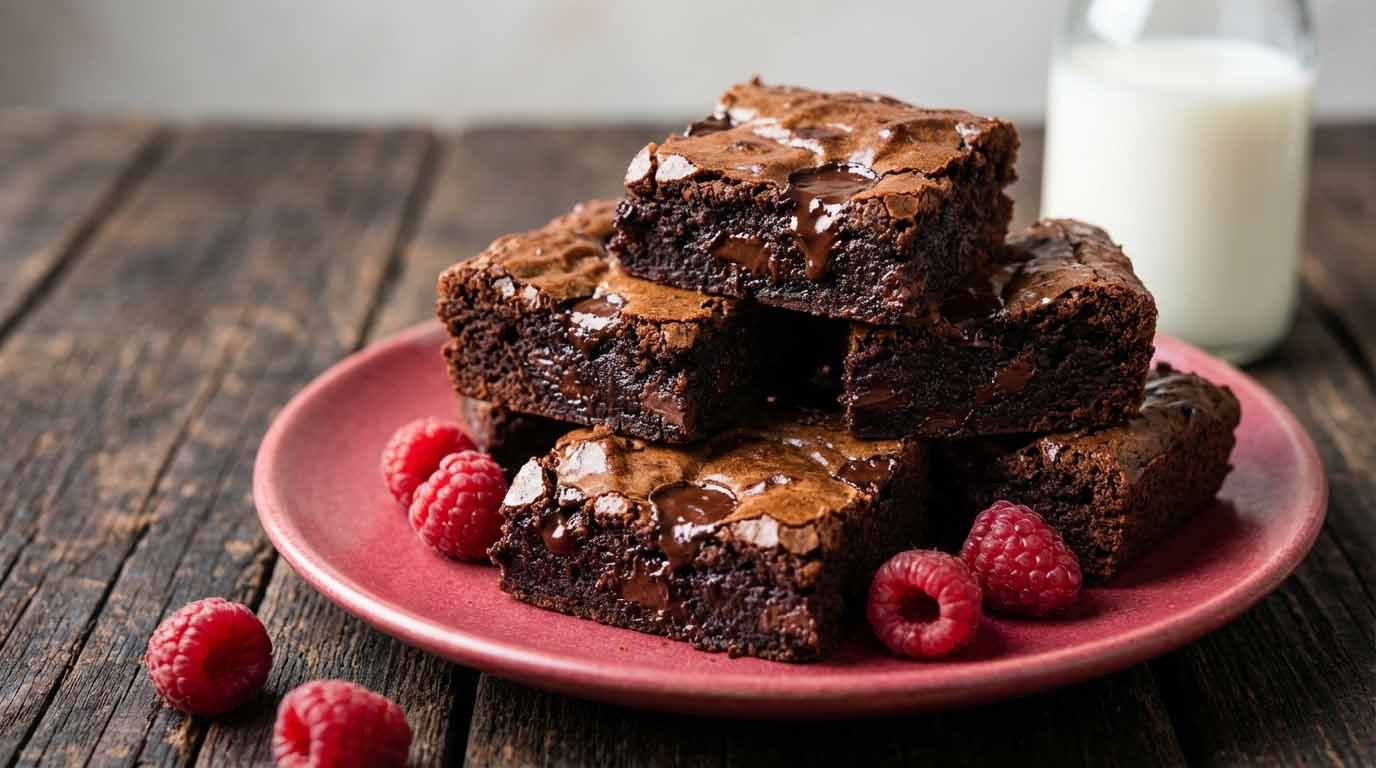
Want to know how to start a home bakery business without renting commercial space or leaving your day job?
Starting a home bakery business takes 8 weeks when you follow a structured plan that covers legal compliance, smart pricing, and controlled order flow. Success here doesn't mean becoming a viral sensation overnight. It means consistent weekly orders, repeat customers, and a workflow that doesn't wreck your personal life.
At Plastic Container City, we supply thousands of food professionals across the U.S., from bakery owners to caterers to home bakers who started exactly where you are now. We've watched this pattern repeat hundreds of times: talented bakers freeze on legal paperwork, underprice their labor into poverty wages, or say yes to every order request and burn out by week three.
This 8 week roadmap prevents those failures. Each week builds on the last, targeting the specific friction points that actually stop home bakeries from launching.
What "Success in 8 Weeks" Really Means
Let's be honest about the finish line. After 8 weeks, you won't be quitting your day job. You will have a repeatable system that generates weekly income, brings customers back, and doesn't consume every free hour you have.
This plan assumes you're operating under your state's cottage food exemption, which generally covers non potentially hazardous baked goods made in home kitchens. Rules vary wildly by state. You need to verify your specific local rules before the first timer dings. It's the difference between a business and a liability.
Week 1: Legal Verification and Product Selection
Most aspiring home bakers stall here because cottage food laws are a maze. One wrong move shuts you down before you start.
Cottage food typically means products that don't require time or temperature control for safety. The science behind this: foods with water activity below 0.85 or pH below 4.6 are considered shelf stable. That's why cookies, brownies, and high acid jams qualify, but cream cheese frostings, custard filled pastries, and cheesecakes don't.
For a detailed look at cottage food regulations, economic opportunities, and state-by-state differences, see our guide on starting your home bakery strong.
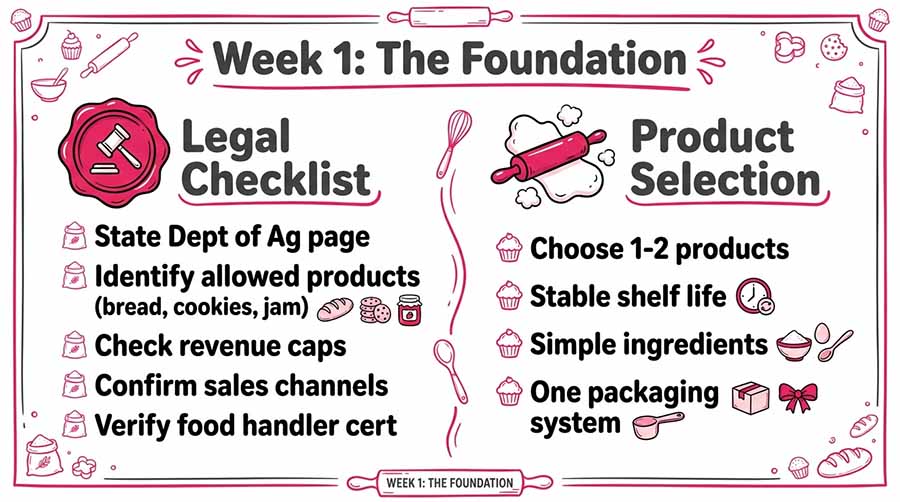
Your Week 1 checklist:
- Find your state's Department of Agriculture cottage food page
- Identify allowed products (breads, cookies, unfilled cakes, jams with natural pH under 4.6)
- Note prohibited items (cream fillings, low acid canned goods, anything requiring refrigeration)
- Check revenue caps (some states cap sales at $15,000 to $25,000 annually)
- Confirm sales channels (direct to consumer only vs wholesale allowed)
- Verify if food handler certification is required (states like New Jersey mandate it; others don't)
⚠️ Important:
Most states restrict cottage food sales to in-state only. Cross-border shipping typically requires full commercial licensing. Plan to build your customer base locally first.
Choose 1 to 2 products this week. Pick items with stable shelf life, simple ingredients, and packaging you can execute without specialized equipment.
This narrow focus prevents the burnout that kills most home bakeries. Three different cookie flavors means one shopping list, one batch process, one packaging system. Ten different products means ingredient chaos, equipment overwhelm, and production days that stretch past midnight.
Week 2: Calculate Real Costs and Set Baseline Prices
This is where most home bakers kill their margins before they bake their first batch. They calculate ingredient costs, then forget labor and overhead exist.
Here's the real math:
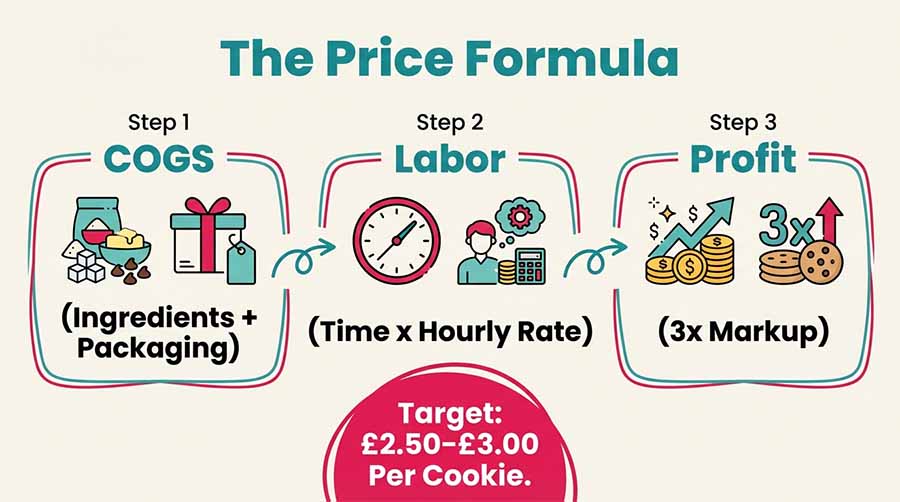
Calculate your cost of goods sold (COGS) per batch. List every ingredient with its cost. Add packaging and labels. Include a slice of overhead like electricity and equipment wear.
If one batch of 24 cookies costs you $12 in materials, your COGS per cookie is $0.50. Standard industry markup is 3x on COGS, so that cookie should be priced at $1.50 minimum before you even count labor.
Now add labor. Time yourself making one full batch from prep to cleanup. If it takes 90 minutes and you value your time at $20 per hour, that's $30 in labor. Add $1.25 per cookie. Your true floor price is $1.75 per cookie just to break even. Sell them for $2.50 to $3.00 and you have actual profit.
For custom cakes and specialty items, pricing gets more complex. Our guide on how to price custom cakes walks through a stage-based system that accounts for complexity, client expectations, and profit margins.
Startup costs vary widely but are lower than you think. Research shows cottage food operations typically start with $550 to $1,750 for permits, upgraded equipment, and initial inventory, plus $1,800 to $3,000 in working capital for the first six months. Other analyses place the range between $1,000 and $5,000 depending on what you already own.
You probably already own most equipment you need: stand mixer, sheet pans, cooling racks, measuring tools, and food thermometer. A $300 stand mixer beats a $2,000 commercial oven when you're producing 24 cookies a week.
Permits and Insurance
Most states require some form of cottage food registration or permit. Costs range from $50 to $500 depending on location. Some states mandate food handler certification (New Jersey requires full Food Protection Manager certification). Others don't require any training at all.
Liability insurance runs around $37 per month or $446 annually for small home bakeries. A bundled Business Owner's Policy averages $67 monthly. This protects you when someone claims your product made them sick or when you drop a cake tray in a customer's driveway.
Week 3: Build Your First Customer Pipeline
You need warm leads and a simple offer. This is not the week to build a polished website or hire a photographer.
Channels that work for early orders:
- Personal Facebook posts to friends and family
- Local community groups (get permission first)
- Neighbors and coworkers
- Coffee shop bulletin boards
- Nextdoor app
Your offer: "I'm launching a home bakery. Taking preorders for Saturday pickup. Here's what I'm making and here's the price."
Collect orders via Google Form or text message. You're testing demand and building confidence, not launching a tech platform.
Week 4: Set Up a Preorder Workflow That Doesn't Collapse
This is where home bakeries implode. Customers ghost on pickup times. They text changes 20 minutes before pickup. They expect same day turnaround.
Your preorder system needs these boundaries:
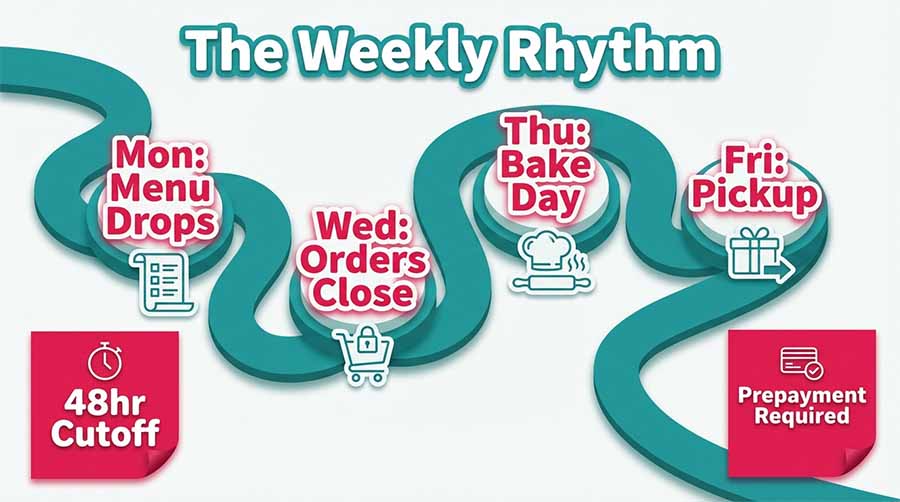
- Order cutoff: Minimum 48 hours before pickup (industry standard across working bakeries)
- Limited pickup windows: Thursday 4 PM to 6 PM, not "whenever works for you"
- Prepayment required: No pay at pickup unless you enjoy chasing no shows
- Clear confirmation: Repeat pickup details in the order confirmation
A weekly rhythm works best. Menu drops Monday. Orders close Wednesday at noon. Bake Thursday. Pickup Friday. Customers learn the pattern. You control when the work happens.
Week 5: Solve Packaging and Labeling Before Your First Delivery
Packaging isn't about pretty boxes for Instagram. It's about getting your product to the customer intact and compliant with state law.
Cottage Food Label Requirements
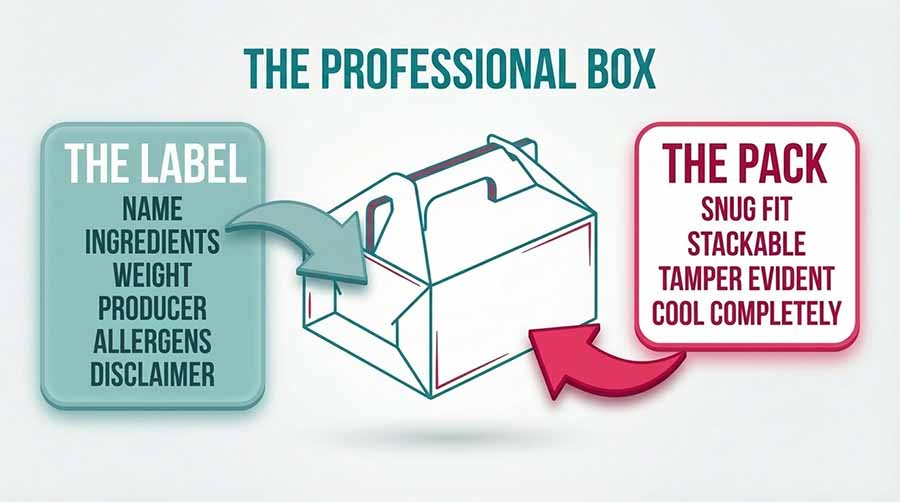
Labels must include specific elements that vary by state. Here's what commonly appears across state laws:
| Required Element | Details |
|---|---|
| Product name | On principal display panel |
| Ingredients | Listed by weight, descending order |
| Net quantity | Weight, volume, or count |
| Producer info | Name, address, sometimes phone |
| Allergen disclosure | Major allergens per federal rules |
| Cottage disclaimer | "Made in a home kitchen not subject to inspection" (exact wording varies by state) |
Labels must be printed, in English, minimum 10 point font in most states. No, a QR code cannot replace printed information.
Pro Tip:
Some states like Utah require larger font sizes for specific disclaimers (12-point type for "Home Produced"). Check your state's exact requirements to avoid compliance issues. While you can add a QR code to link customers back to your full menu or website, it cannot replace the required printed information. A digital link is an extra, not a shortcut.
Packaging That Protects Your Product
Logistics research shows over 20% of cookie shipments arrive damaged in some distribution lanes due to vibration and poor stacking. Even local pickup isn't immune.
Your packaging must:
- Fit the product snugly (no rattling or shifting)
- Stack without crushing lower boxes
- Include tamper evident seals
- Separate layers to prevent icing from smearing
- Handle moisture (never pack warm cookies; let them cool completely to avoid condensation that makes products soggy)
Choosing the right packaging can feel overwhelming with hundreds of options. We've worked with home bakers across the country to identify the must-have food packaging solutions that balance protection, cost, and professional presentation. The right container prevents damage during the car ride home and keeps your product looking as good as it tastes.
We see home bakers constantly who nail the recipe but lose customers because their packaging fails in the car ride home. The cookie that looked perfect leaving your kitchen arrives as crumbs.
Week 6: Write a Production Day Checklist
Consistency comes from repeatable systems, not raw talent. Your production day should follow the same sequence every single time.
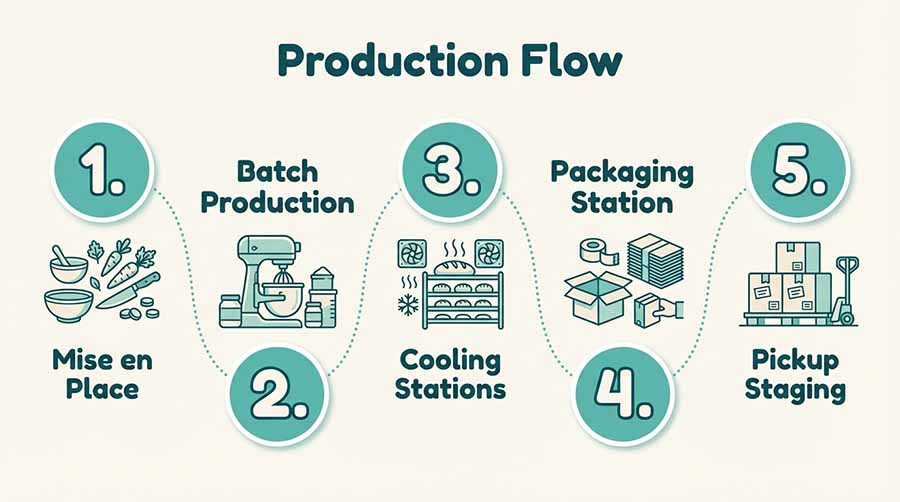
Standard production flow:
- Mise en place: All ingredients measured and staged before you start
- Batch production: Complete all of one item before switching to another
- Cooling stations: Racks ready, nothing stacked while hot
- Packaging station: Clean surface, labels printed, containers opened
- Pickup staging: Orders grouped by customer name or pickup time
This prevents the chaos of frosting cakes while customers are texting they're outside and you can't locate their order.
Pro Tip:
Keep your product in its primary storage until the customer arrives. Boxing too early leads to soggy results and wasted packaging if they're a no show.
Week 7: Build a Retention Loop
One time customers are expensive and exhausting. Repeat customers are how home bakeries survive.
Simple retention tactics:
- Menu cadence: Same day every week so customers remember
- Reminder system: Text or email 24 hours before order cutoff
- Loyalty incentive: Buy 5, get the 6th half off
- Seasonal rotation: Keep things interesting without constant menu overhauls
Building steady demand is harder than perfecting recipes. This is a marketing problem, not a baking problem.
Week 8: Review Metrics and Decide Your Next Move
After 7 weeks of controlled operation, you have real data. Look at:
- Average weekly order count
- Repeat customer rate
- Production time per batch
- Profit per item after all costs
- Peak capacity before you're overwhelmed
If you're hitting consistent demand and turning profit after paying yourself, you can scale. That might mean adding a third product, opening a second pickup day, or exploring farmers markets if your state allows.
Or it might mean staying exactly where you are because $500 to $1,000 a month in side income fits your life perfectly. Not everyone needs to scale. If you do want to grow without the overhead of a physical location, scaling your bakery without a storefront offers low-risk expansion paths.
Frequently Asked Questions
Can you start a home bakery with no money?
Not zero, but you can start lean. If you already own basic baking equipment, expect $250 to $1,000 for permits, initial ingredients, packaging, and labels. Borrow equipment where possible. Scale up as revenue comes in. Skip the custom branding and professional photoshoot in week one.
Do I need a separate kitchen for cottage food?
Generally no. Cottage food laws allow home kitchen use in most states. You do need to follow safe food handling practices and keep pets out of the workspace during production. Some states conduct home inspections. Others operate on complaint based enforcement.
How do I get my first customers as a home baker?
Start with your warm network. Friends, family, coworkers, neighbors. Post in local Facebook groups. Offer samples at community events if your state allows. The goal is 5 to 10 paying customers in your first month, not 500. Build from there.
What baked goods make the most money?
Items with high perceived value relative to ingredient cost: decorated sugar cookies, custom celebration cakes, specialty breads. Avoid products requiring expensive or highly perishable ingredients unless you can charge accordingly. A dozen decorated cookies at $36 has better margins than a loaf of bread at $6.
Can I sell cottage food across state lines?
Most cottage food laws restrict sales to in state and direct to consumer only. Interstate shipping typically requires FDA compliance, commercial kitchen production, and specialized cold chain packaging. Cross state sales become complicated fast and usually require full licensing beyond cottage food exemptions.
Follow this 8-week roadmap and you'll know exactly how to start a home bakery business that thrives well beyond launch.
For more bakery insights, operational strategies, and food industry tips, visit the Plastic Container City blog.
