


Ever finish a custom cake order and realize you barely broke even?
Learning how to price custom cakes correctly starts with calculating your true cost per item (ingredients + labor + overhead + waste), then multiplying by 4 to 7 to set your selling price. Most bakeries fail because they underprice their work, not because they bake poorly.
This guide walks you through a five stage system for pricing custom cakes, from handling the first inquiry to collecting final payment, so you get paid fairly every time.
The Five Stage Custom Cake Workflow
Stage 1: The First Inquiry
The first inquiry is your intake meeting. This is where you qualify the client and set expectations before any pricing discussion happens.
Start with the basics upfront. What's the event: wedding, birthday, corporate celebration? How many servings do you need? What flavor profile are they after—chocolate ganache, lemon elderflower, red velvet with cream cheese frosting? Get specific about visual style. Modern cake designs range from elaborate, ornate piping to clean, minimalist naked cakes. And check for dietary restrictions. Consumers actively seek gluten free, vegan, and sugar free options, which can add complexity and cost to your ingredient sourcing.
This stage isn't about quoting a price. It's about understanding scope. The more detail you capture now, the fewer surprises you'll face when it's time to deliver.
Stage 2: Consultation and Tasting
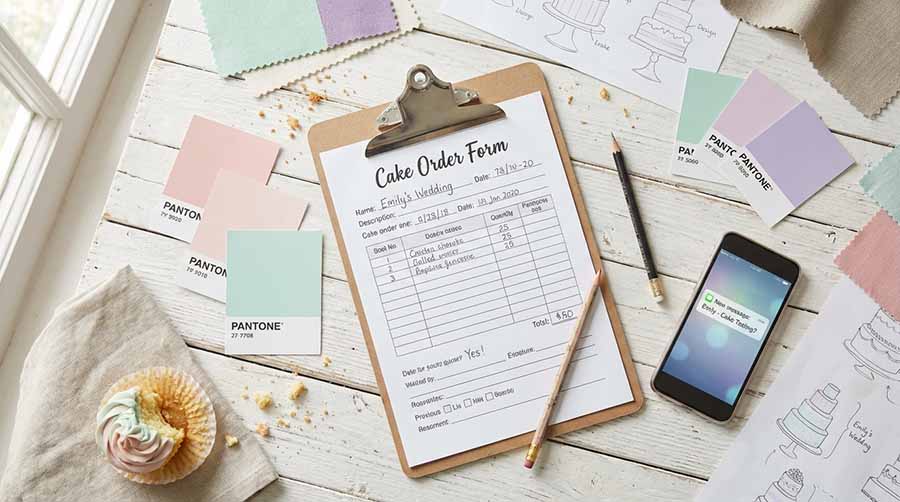
Here's the decision point: Do you charge for consultations?
For routine birthday cakes with standard designs, probably not. But for unique, highly customized requests like wedding cakes with handmade sugar flowers, multi tiered showpieces, or anything requiring extensive back and forth, you absolutely should.
Charging a consultation fee (even $50 to $100) filters out tire kickers and signals you're a professional, not a hobbyist. It also compensates you for the time you spend sketching designs, sourcing specialty ingredients, and planning production. If the client books the cake, apply the fee to the final invoice.
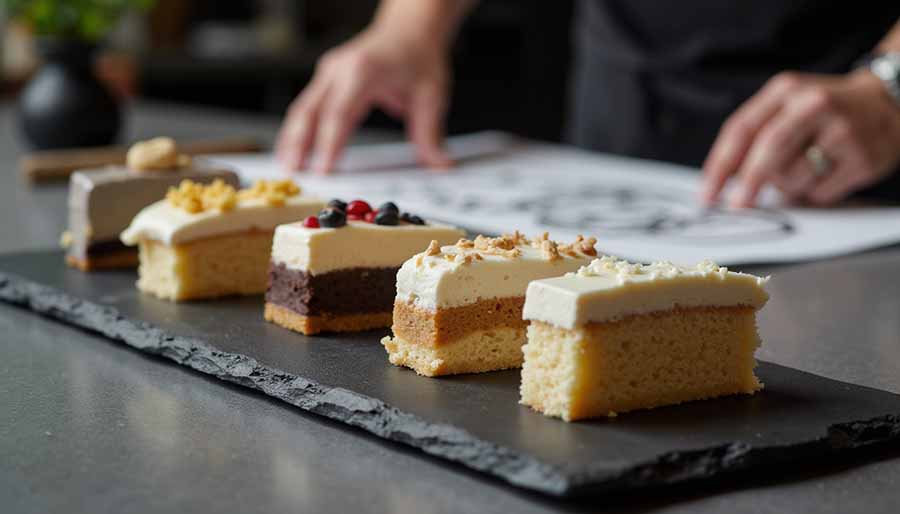
Tastings work the same way. Offer a flat rate for a tasting session with three to five flavor options. Your time is worth money. Treat it that way.
Stage 3: The Pricing Formula
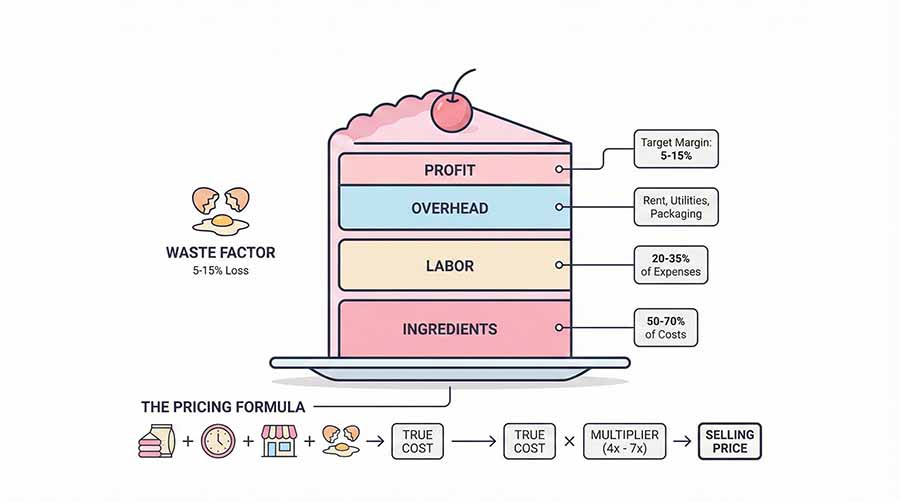
This is where the math comes in, and it's non negotiable. You must calculate the true cost per item before setting the price.
Here's the breakdown:
Ingredients
Raw materials typically account for 50% to 70% of total production costs. Track every ounce of flour, butter, fondant, and edible gold you use.
Labor
Labor should be budgeted for 20% to 35% of production expenses. A three tier wedding cake can take eight to twelve hours of hands on work. If you're paying yourself $18 to $22 per hour (the going rate for skilled bakers in metro areas), that's $144 to $264 in labor alone.
Overhead
Overhead must include utilities, and a small bakery may spend $500 to $1,200 monthly just on power and water. That doesn't include rent, insurance, equipment depreciation, or packaging materials.
Boxes, labels, ribbons, cake boards. A sturdy cake box can run $5 to $15 depending on size. Add a ribbon, a branded label, and you're looking at $8 to $20 in packaging alone. At Plastic Container City, we work with thousands of food professionals across the U.S., and we hear the same mistake over and over: bakers absorbing packaging costs instead of building them into the price. Bad bakery packaging decisions can cost you far more than the materials themselves. Don't make that mistake.
Waste Factor
Ingredient loss is usually 5% to 15% of output. A cracked layer, a batch of frosting that splits, a design element that doesn't work. It happens. Build it into your pricing.
The True Cost Calculation
Here's the breakdown for a two tier birthday cake serving 40 people:
| Cost Component | Amount |
|---|---|
| Ingredients | $35.00 |
| Labor (4 hours × $20/hr) | $80.00 |
| Overhead | $15.00 |
| Waste Factor (10%) | $13.00 |
| TRUE COST | $143.00 |
| Selling Price (5x Multiplier) | $715.00 |
| Price Per Serving | $17.88 |
Applying the Multiplier
Apply a multiplier of 4 to 7 times the true cost to determine the selling price. Using a 5x multiplier, you'd charge $715 for that two tier cake. That's $17.88 per serving, which aligns with the personalized bakery market where high priced products appeal to upscale customers.
If that feels high, remember that skilled labor and specialized ingredients justify premium prices. Customers who want artisanal quality expect to pay for it. Custom orders are beneficial because they carry zero waste risk from unsold inventory.
Target Profit Margins
Successful specialty bakeries target net profit margins between 5% and 15%. Home based operations usually see margins between 4% and 9%, but the principle is the same. You're running a business, not a side hustle that barely breaks even.
Stage 4: Quote and Boundaries
Now you present the quote. Be clear, be confident, and be firm.
What to Include in Your Quote
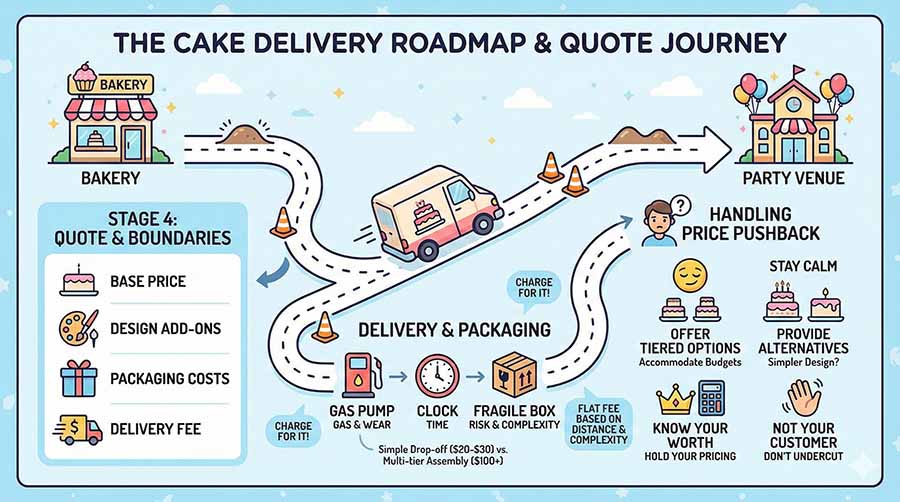
Your quote should include a breakdown:
- Base price for the cake
- Design add ons: toppers, airbrushing, hand painted details
- Packaging costs
- Delivery fee (if applicable)
Delivery and Packaging
Modern consumer expectations favor fast, flexible, on demand delivery, so if you're delivering, charge for it. Time, gas, vehicle wear, and the risk of transporting a fragile product all have a cost.
Charge a flat fee based on distance and complexity. A simple drop off might be $20 to $30. A multi tier wedding cake that requires on site assembly could be $100 or more. Factor in your time, gas, and the risk of damage during transport. Master the complete delivery and packaging workflow to protect your products and your profit margins.
Handling Price Pushback
What if they say the price is too high?
Stay calm. Use a tiered pricing structure to offer alternatives that accommodate various customer budgets. Maybe they want a three tier cake but can only afford two tiers. Maybe they can skip the hand painted details and go with a simpler design.
Give them options, but don't undercut yourself out of fear. Knowing your numbers gives you confidence to hold your pricing.
If someone won't pay what you're worth, they're not your customer.
Stage 5: Invoice, Deposit, and Final Payment
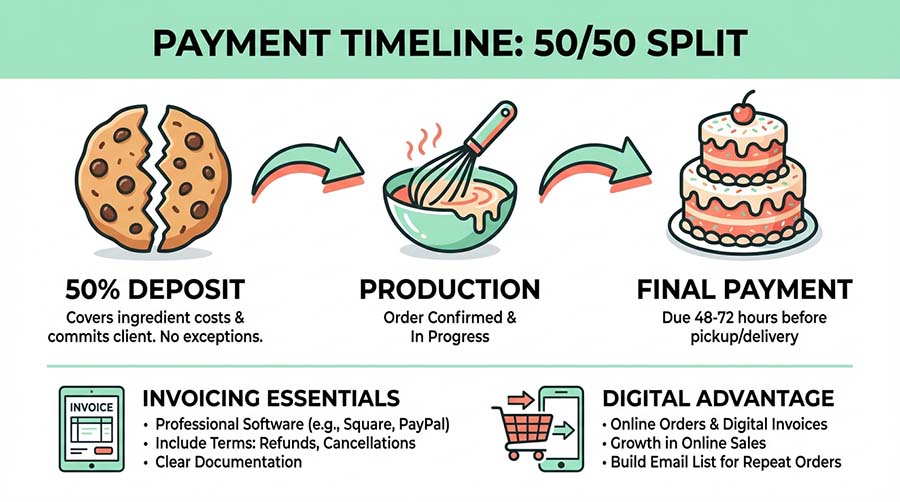
Your invoicing should be efficient and professional. Use invoicing software or a simple Square or PayPal invoice to make it easy for clients to pay.
Deposit Structure
Require a 50% deposit upfront. This covers your ingredient costs and commits the client to the order. The remaining 50% is due 48 to 72 hours before pickup or delivery. No exceptions. You're not a bank.
What to Include on Your Invoice
Include your terms on the invoice: refund policy, cancellation window, and what happens if they change the design mid production. Clear financial planning and documentation are necessary to secure funding and demonstrate viability. Track key metrics like daily sales and average transaction value to monitor profitability over time.
The Digital Advantage
Online retail and direct to consumer segments are the fastest growing distribution channels for cakes, with online birthday cake sales increasing by over 30% in the last year. If you're not set up to take orders online and send invoices digitally, you're leaving money on the table. Building a strong email list can dramatically increase your repeat orders and customer lifetime value.
The Bottom Line
Pricing custom cakes isn't about guessing or hoping you charged enough. It's a system. You calculate your costs, you apply your multiplier, you set clear boundaries, and you stand by your pricing.
Poor cost control destroys more bakeries than bad baking. The bakers who survive and thrive are the ones who treat their work like a business, not a favor.
You're skilled. Your work takes time. Your ingredients cost money. When you price custom cakes, charge what you're worth, and don't apologize for it.
For more bakery insights, business tips, and food industry trends, visit the Plastic Container City blog.
Common Custom Cake Pricing Questions
Why are custom cakes more expensive than grocery store cakes?
You're not competing with grocery stores. Custom cakes require skilled labor, specialized ingredients, and hours of focused work that mass produced sheet cakes never touch. They sell convenience and volume. You sell craftsmanship. Different markets, different pricing.
Should I charge for rush orders?
Yes. A 20% to 50% rush fee is standard for orders with less than 72 hours notice. You're rearranging your schedule, working late nights, and taking on risk. Charge for it.
How do I handle design revisions?
Include one round of revisions in your quote. After that, charge $25 to $50 per additional revision. Be clear about this upfront so there's no confusion later.
What determines the price of wedding cakes?
Wedding cakes command premium pricing because they require more complexity, serve larger guest counts, and carry higher stakes. The decoration is often more intricate, delivery and setup are critical, and clients expect perfection. Factor in consultation time, multiple tastings, and the stress level when calculating your price.
What's the best pricing structure for a home based bakery?
Use the same formula as commercial bakeries: true cost multiplied by 4 to 7. Don't undervalue your work just because you're home based. Your skill level, ingredient quality, and time investment are the same whether you work from a commercial kitchen or your home.
How do I price cakes with special ingredients?
Add the full cost of specialty ingredients to your ingredient calculation. If you're using imported vanilla, edible flowers, or gold leaf, those costs get passed to the customer. Premium ingredients justify premium pricing.
