


Are you pulling 14-hour days, answering Instagram DMs at 6 a.m., and still falling behind on orders?
What is bakery owner burnout?
The World Health Organization defines burnout as a syndrome from unmanaged workplace stress. For bakery owners, this shows up as exhaustion that doesn't go away after a day off, detachment from the work you once loved, and feeling like nothing you do is ever enough.
The restaurant industry hit a 75% average turnover rate in 2024, with fast food spiking to 150%. Bakery owners aren't immune. About 68% of food service workers report staff shortages, which means you're probably covering gaps yourself while your own creative spark dims.
This article gives you seven operational fixes to reclaim your time without sacrificing quality. We're talking workflow changes, not wellness platitudes.
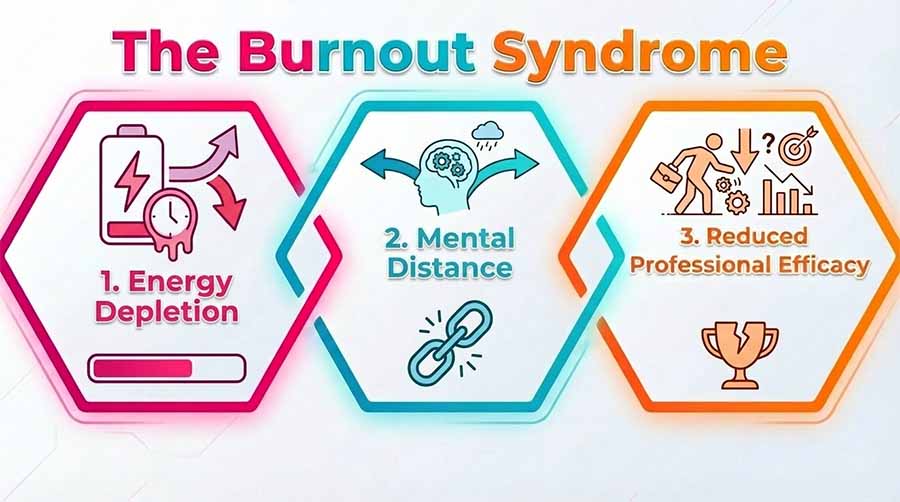
What causes bakery owner burnout?
Burnout isn't weakness. It's what happens when the workload becomes unsustainable and the systems you need aren't there to catch you. Let's break down each cause.
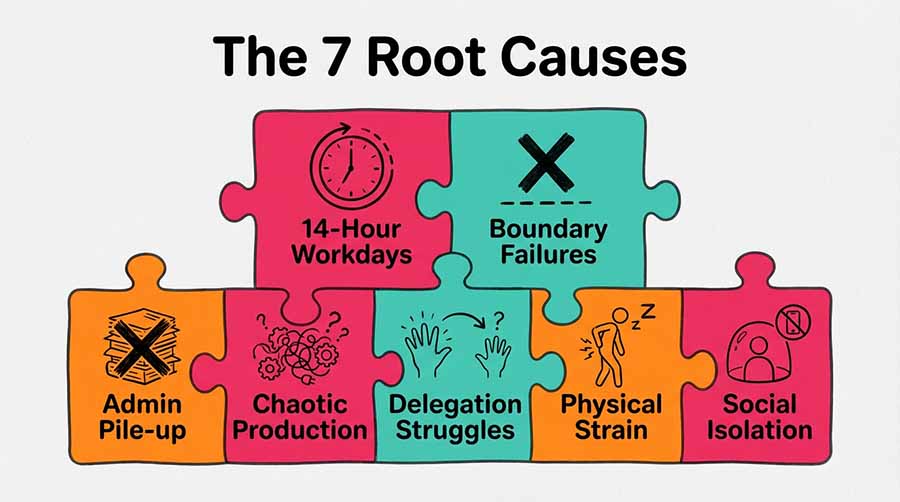
Long Hours Become the Default
Common shifts in food service stretch 10 to 12 hours, often spanning weekends and holidays. Many bakery owners work six or seven days straight without a real day off. But here's what that actually looks like: you're up at 4 a.m. for prep, open at 7, close at 6 p.m., then spend two more hours on invoices and Instagram. That's 16 hours. And you still need to write tomorrow's shopping list.
For home bakers, the problem shape-shifts. Your kitchen is also your workspace, so the line between "on" and "off" disappears. You're making dinner and mentally calculating how many dozens you can fit in tomorrow's batch. One cottage baker put it bluntly: burnout happens fast when the workday never truly ends.
You Say Yes to Everything
Boundaries sound great in theory. In practice, you're terrified that saying no will cost you a customer.
So you take the last-minute birthday cake order even though you're already at capacity. You agree to make macarons in a custom Pantone color match. You promise delivery on Sunday morning because the customer "really needs it" even though that's supposed to be your only day off.
This isn't just people-pleasing. It's survival mode thinking. When you're competing with three other bakeries in town and cash flow is always tight, every order feels critical. But here's what constant availability actually costs you: the ability to plan, the space to rest, and any shot at thinking strategically about your business.
Admin Work Steals Your Evenings
Bookkeeping, inventory tracking, email replies, and social media don't happen during business hours because you're too busy running the counter or mixing dough. So they pile up and steal your evenings, the only time you thought you had to yourself.
The result? You're never fully "off." Even when you're watching TV, you're mentally drafting a response to that supplier or worrying about whether you ordered enough butter.
Chaotic Production Schedules
Baking every day feels productive, but it's actually a trap. When you're constantly in production mode, you're stuck in a cycle of mess and stress. You can't batch prep, you can't plan ahead, and you can't catch your breath.
This is especially brutal for cottage bakers and small operations where one person (you) is doing everything from mixing to marketing.
Delegation Is Hard Without Systems
You know you need help, but hiring feels risky. What if they don't follow your recipes? What if they're slow? What if they quit after two weeks?
Here's the real issue: most bakery owners don't have documented systems. No written recipes, no standard operating procedures, no task breakdowns. So every new hire becomes a weeks-long training project that pulls you away from the work only you can do. Turnover costs can hit $6,000 per person, so the financial pressure keeps you stuck doing everything yourself.
Physical Strain Adds Up
Over 90% of food service workers experience work-related musculoskeletal issues from repetitive motions, awkward postures, and heavy lifting.
Here's what that actually feels like: you're standing on concrete floors for 10 hours straight. You've lifted thirty 50-pound bags of flour this week. You're leaning over mixers, reaching into ovens, carrying sheet trays, and your lower back is screaming by Wednesday.
You can't remember the last time you slept through the night without waking up with sore shoulders or achy knees. Add heat, sharp equipment, and floors that turn slick the second someone spills buttercream, and you've got a recipe for chronic pain and injury.
Isolation Chips Away at You
For home bakers and small shop owners, loneliness is a silent problem. You're working solo most days. Sure, you talk to customers, but those are transactions, not connections. There's no team to vent with when a wedding cake order goes sideways. No colleague who gets why you're stressed about buttercream consistency in July heat. No one who truly understands what it's like to run this kind of business.
That isolation erodes your enthusiasm over time. The creative challenges that used to excite you start feeling like problems you're facing alone. You forget why you started. The spark dims.
How do order cutoffs reduce bakery owner burnout?
Here's how to implement them effectively.
Stop Accepting Last-Minute Requests
Pick a deadline that matches your production schedule. 72 hours for custom cakes. 48 hours for specialty items. Then stick to it. No exceptions, no guilt.
Set up autoresponders that communicate this upfront:
"Thanks for reaching out! Custom cake orders require 72 hours' notice to ensure we deliver the quality you deserve. Ready to order? Here's the link..."
This isn't about being difficult. It's about protecting the planning time you need to actually execute well. At Plastic Container City, we work with thousands of food professionals across the U.S., and the ones who thrive are the ones who control their intake instead of letting it control them.
Limit Custom Slots
If custom work is what's killing you, cap it. Three custom cake slots per week. Five specialty orders. Whatever number lets you maintain quality without losing your mind.
First come, first served. When they're gone, they're gone. Customers respect clarity. What they don't respect is a frazzled baker who takes their order Tuesday and delivers something rushed Friday because you overcommitted.
If you're struggling to price custom work profitably, our 5-stage custom cake pricing system walks through exactly how to calculate your true costs and stop underpricing your labor.

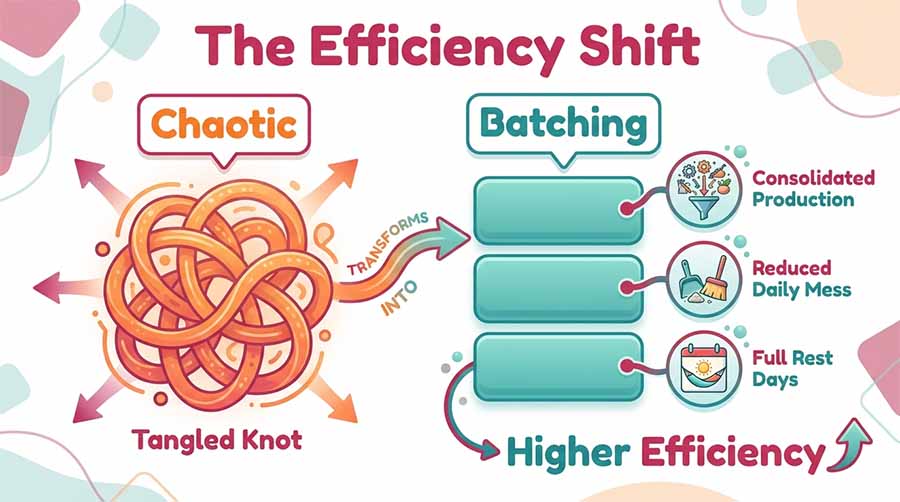
How does batch baking reduce bakery owner hours?
Instead of the constant grind of daily production, you create focused work sessions that are more efficient and less exhausting.
Consolidate Baking Into Two or Three Days
Block out two or three dedicated production days per week. Bake everything for the week in those sessions, then use the other days for admin, ingredient prep, or actual rest.
Cottage bakers who switched to this model reported something surprising: they actually produced more in three focused days than they had been making across seven chaotic ones. Batching reduces the daily mess, cuts down on oven warm-up waste, and frees up the mental space you need to plan ahead.
Sample Weekly Schedule for a Home Bakery
| Day | Focus |
|---|---|
| Monday | Rest and admin |
| Tuesday | Ingredient shopping and mise en place |
| Wednesday | Full production day |
| Thursday | Full production day |
| Friday | Packaging and final touches |
| Saturday | Deliveries or farmers market |
| Sunday | Complete rest |
Brick-and-Mortar Variation
If you run a retail shop, you can't shut down mid-week. But you can shift toward a pre-order model for specialty items. Bake your daily bread and pastries fresh, but reserve custom cakes and bulk catering orders for designated production windows. Your regulars still get their morning croissant. You get control over the chaos.
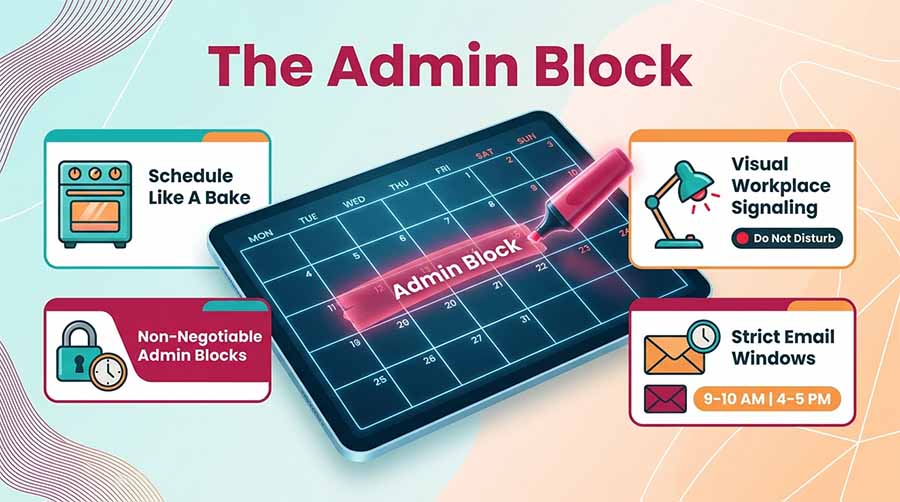
How do you schedule admin time to prevent bakery burnout?
Treat administrative work like a baking session. It gets scheduled, protected, and completed.
Treat Admin Like a Baking Session
Schedule two-hour blocks for bookkeeping, emails, inventory, and social media. Treat them as non-negotiable appointments. Put them on your calendar. Don't skip them.
This prevents the evening pile-up and gives you structured time to handle business tasks without feeling like they're invading every free moment. If marketing is eating up your nights, our 3-hour bakery marketing plan breaks down exactly how to stay visible without becoming a full-time content creator.
Use Visual Cues
If you work from home, hang a physical sign in your kitchen when you're in work mode versus home mode. It sounds simple, but visual boundaries help train your brain (and your family) to respect the shift.
How do documented systems help bakery owners delegate?
Before you bring on help, you need systems that make training possible.
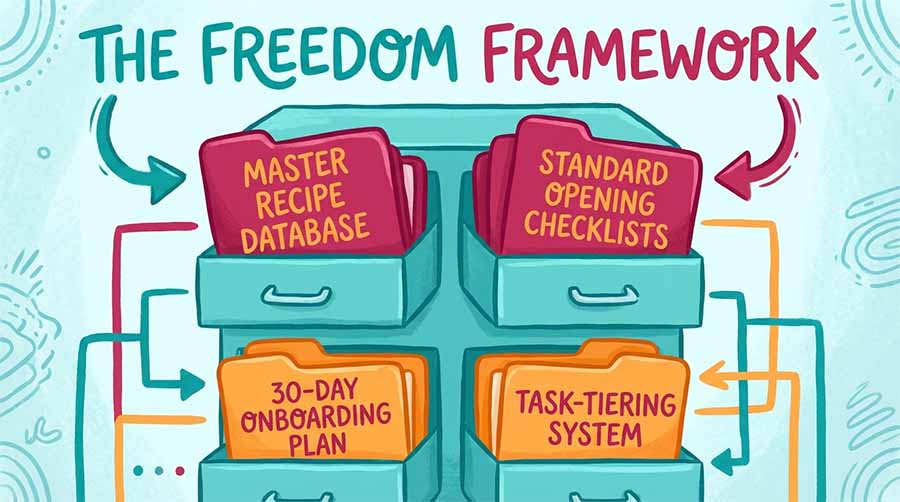
Document Everything
Write down your processes. Not in your head. On paper or in a shared doc.
Start with a recipe database with exact measurements, timing, and oven temps to eliminate manual paperwork and ensure consistency when you're not at the mixer. Then add:
- Opening and closing checklists
- Cleaning protocols
- Order fulfillment steps
- Customer communication templates
This doesn't have to be fancy. A Google Doc works. The point is to create a reference so you're not the only person who knows how things get done.
Tier Your Tasks
Break tasks into three categories: only you, trained staff, anyone with basic skills.
Most bakery owners discover that about 40% of what they're doing could be handled by someone with minimal training. Packaging, labeling, basic cleaning, inventory counts. That's your starting point.
Start Small with Delegation
You don't need a full-time employee right away. Start with a part-time prep cook for three hours twice a week. Or trade services: a local photographer covers your social media in exchange for monthly desserts. Cottage bakers have used barter successfully when cash flow is tight.
Hire Smarter, Not Harder
When you're ready to hire, make it easy for people to apply. Text-to-apply ads and simple online applications cut your time-to-hire in half. You're competing with every other food business for the same workers, so speed matters.
Use a 30- to 90-day onboarding plan with clear benchmarks. What should they master in week one? Week four? This reduces frustration on both sides and addresses the reality that 59% of restaurant operators struggle to fill positions.
How do you manage seasonal bakery stress without burning out?
Holiday weeks are brutal. You can't eliminate the rush, but you can manage it strategically.
Acknowledge Seasonal Realities
Offer a simplified menu during peak seasons. Three cake flavors instead of eight. Pre-set designs instead of full custom. Earlier order cutoffs. Temporary caps on total orders.
Then rebuild your full menu in the off-season when you have breathing room. For a complete approach to turning seasonal demand into profit without the chaos, check out our guide on launching profitable seasonal dessert campaigns.
Hire Temporary Help
Bring in extra hands for the two weeks before Thanksgiving or Christmas. You don't need permanent staff for a seasonal spike. Temp workers, culinary students, or even friends who want extra cash can handle packaging, deliveries, or basic prep under your direction.
For Event-Driven Operations
If you run a food truck, cater events, or supply restaurant dessert programs, your burnout pattern is different. You're not grinding seven days a week. You're doing three events in four days, then scrambling to recover while prepping for the next wave.
Apply the same seasonal playbook to your event calendar. During your busy season (wedding season, corporate holiday parties, festival circuit), simplify your menu. Offer three dessert options instead of eight. Set earlier deadlines for custom requests. Cap the number of events you'll take per month.
In your off-season, that's when you test new recipes, rebuild your full menu, and handle the systems work you can't do when you're in production mode.

How do bakery owners prevent physical burnout?
The physical demands are real. Address them before they sideline you.
Invest in Ergonomics
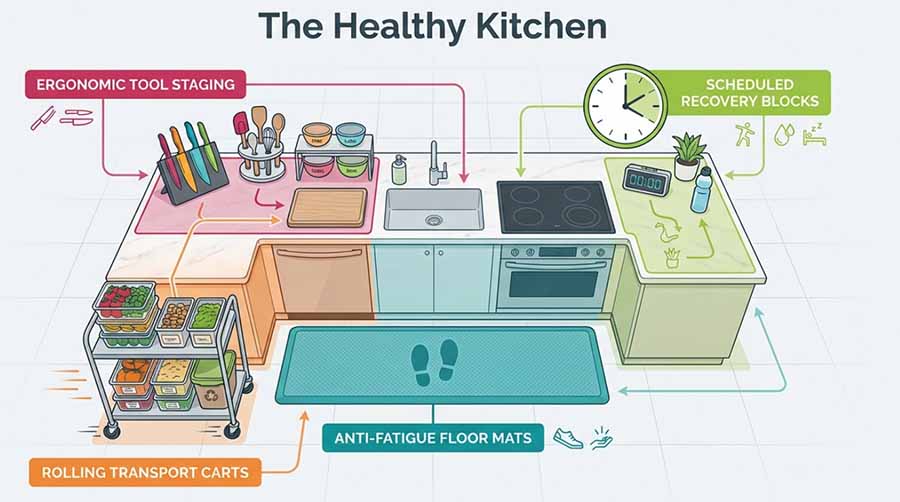
Keep frequently used tools and ingredients between knee and shoulder height to reduce repetitive bending and reaching. Use rolling carts instead of carrying heavy bowls across the kitchen. Install anti-fatigue mats if you're on concrete.
Stuyver's Bread redesigned its workflow with a floor-mounted track system for heavy grain buckets, cutting down on lifting injuries and burn risks. Small changes add up.
Schedule Recovery Time
Rest isn't optional. It's part of the job. If you're not recovering physically, your output quality will drop, and eventually, you'll get injured.
Block out non-negotiable time for stretching, walking, or whatever helps your body reset. This isn't self-care fluff. It's operational maintenance.
How does social isolation contribute to bakery owner burnout?
Loneliness erodes your enthusiasm over time. You need connection.
Find Your People
Join a local bakers' group, a small business network, or an online community where people actually understand the grind. Not cheerleaders who say "follow your passion." People who get why you're up at 3 a.m. troubleshooting a temperamental dough starter.
Even one monthly coffee with another bakery owner can shift your perspective. You're not looking for solutions every time. Sometimes you just need to vent to someone who won't suggest you "hire a social media manager" when you barely have budget for flour.
Create Shared Responsibility
If you have even one part-time employee, give them ownership over something small. Let them run inventory for dry goods. Put them in charge of the Saturday market setup. Let them own the decision about which herb to pair with your seasonal lemon cake.
Shared responsibility builds connection and takes real work off your plate. More importantly, it reminds you that running a bakery doesn't have to be a solo sport.

When should bakery owners seek professional help for burnout?
These seven fixes address workflow problems. But sometimes burnout overlaps with clinical anxiety or depression, and workflow changes alone won't solve that.
The WHO classifies burnout as an occupational phenomenon related to workplace stress, not a medical diagnosis. But that doesn't mean your mental health isn't affected.
Professional support isn't a sign of failure. It's smart business. You can't run a sustainable operation if you're running on fumes.
How can bakery owners start recovering from burnout?
You don't need to overhaul everything by Monday. Small, strategic changes compound.
Set an order cutoff. Block one admin session. Write down three recipes. Simplify next month's menu. Text one other baker and suggest coffee.
Small tests let you see what works without blowing up your schedule or finances. Burnout didn't happen overnight. Recovery won't either. But every hour you reclaim is an hour you're not stealing from your health, your relationships, or the creativity that got you into this business in the first place.
We've worked with thousands of bakery owners, caterers, and food professionals who've built sustainable operations without sacrificing quality. The ones who make it aren't necessarily the most talented. They're the ones who build systems, set boundaries, and treat their time like the finite resource it is.
You started this because you love baking. Managing bakery owner burnout doesn't mean you have to quit to get that feeling back.
For more bakery insights, profit strategies, and practical business tips, visit the Plastic Container City blog.
Is owning a bakery stressful?
Yes. Bakery ownership combines long hours, physical labor, unpredictable demand, and tight margins, but stress becomes manageable with proper systems and boundaries.
The challenge isn't just the workload but the combination of multiple pressure points hitting simultaneously without adequate support structures.
Can you make a living as a baker?
Yes, but profitability depends on pricing correctly, controlling costs, and scaling operations without personal burnout. Many small bakery owners supplement income with wholesale, catering, or teaching.
The key is treating your bakery as a business first, a passion second. That means charging what your labor is worth and saying no to unprofitable work.
Do bakers get days off?
Not always. Many bakery owners work six to seven days per week, especially in early years, but batching production and hiring help can create regular days off through intentional scheduling.
Days off don't happen by accident. They happen when you design your production schedule to allow for them.
Why do most bakeries fail?
Most bakeries fail due to poor cash flow management, underpricing, and owner burnout. Many bakers excel at their craft but lack the business systems and boundaries needed to survive long term.
Technical baking skill doesn't automatically translate to business sustainability. The difference is systems.
What is the 4-day cake rule?
The 4-day cake rule is a custom order timeline: day one for consultation and ordering, day two for baking, day three for decorating, and day four for pickup, building in buffer time for quality control and preventing rushed work.
This timeline protects both quality and your sanity by eliminating last-minute chaos.
