

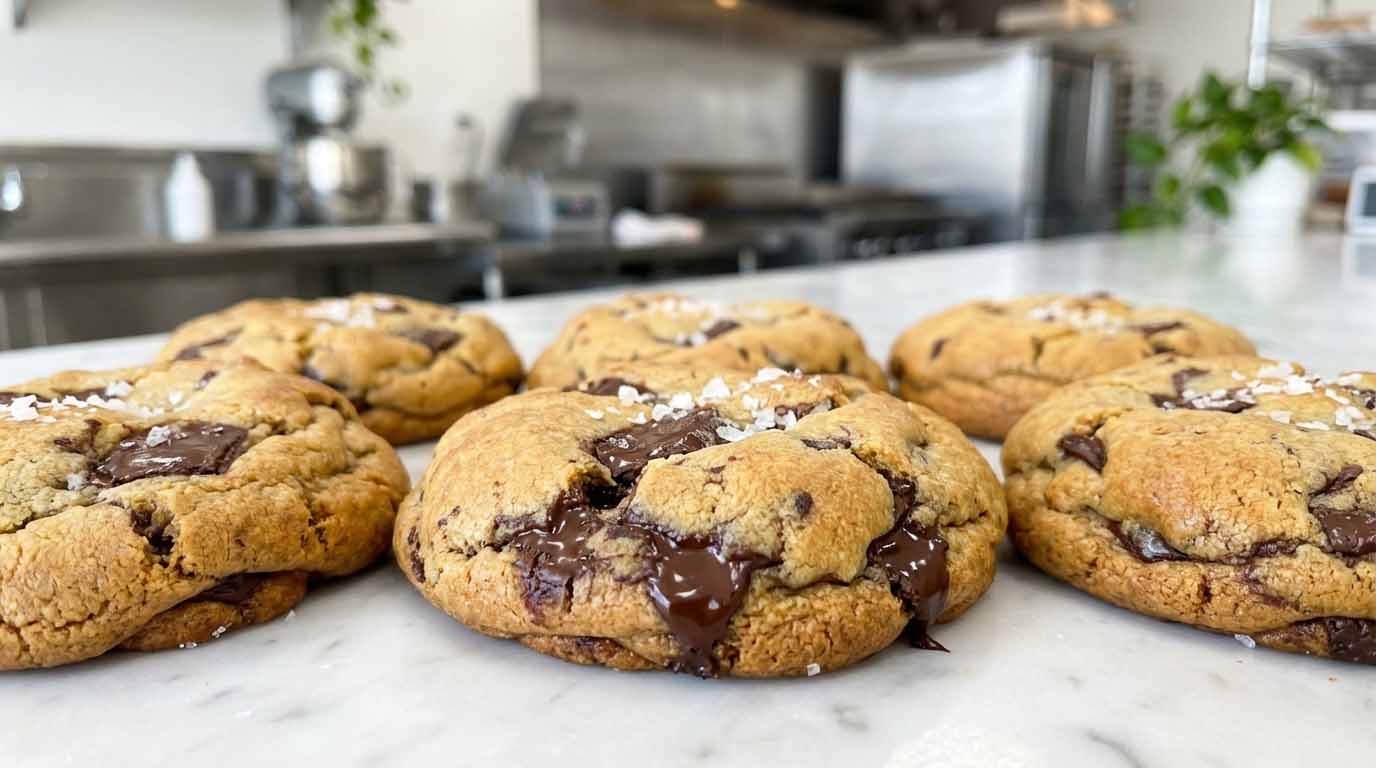
Want to know if you're ready to meet wholesale bakery license requirements? You need six things: a commercial kitchen, product liability insurance, written SOPs, FDA labels, digital traceability, and 90 days cash. Those are non-negotiable requirements to legally sell through retailers.
Most home bakers think getting wholesale accounts is about making great products and pitching buyers. It's not. It's about infrastructure. The bakery down the street might make incredible scones, but if they're baking in a home kitchen with a cottage food permit, they legally cannot sell to that coffee shop or grocery store. The moment you sell to a business that resells your products, you trigger an entirely different regulatory framework.
At Plastic Container City, we supply thousands of food professionals across the U.S., and we see this gap constantly. Talented bakers with retail success hit a wall when they try to scale into wholesale because they underestimate the legal, financial, and operational requirements. This checklist breaks down exactly what separates a retail bakery from a wholesale ready operation.
What Makes a Bakery "Wholesale Ready"?
A wholesale ready bakery has a commercial kitchen, 90 days cash, written SOPs, product liability insurance, FDA labels, and digital traceability.
Each requirement protects you from legal, financial, or operational failure when selling through retail channels.
The licensed commercial kitchen requirement alone disqualifies most home bakers. If you check fewer than six of those boxes, you're not ready yet. And that's fine. Better to know now than to sign a contract, fail an inspection, or burn through your savings waiting for payment that comes too late.
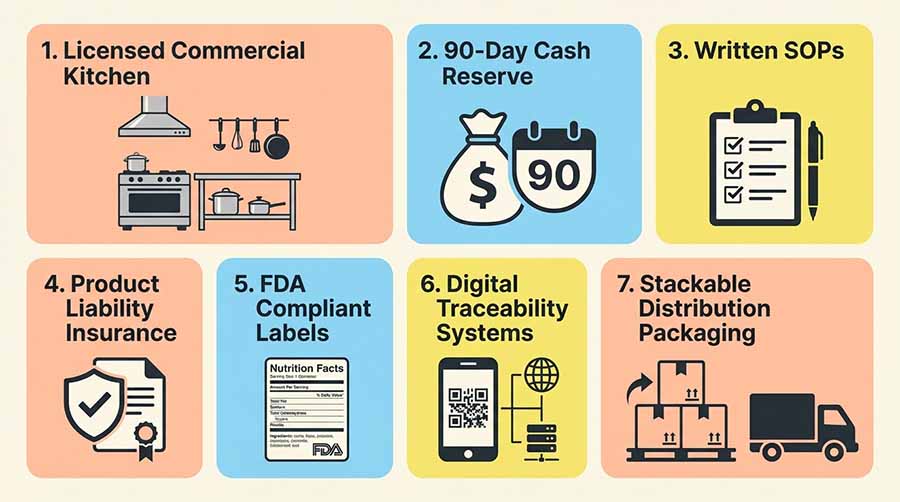
The 7-Step Wholesale Readiness Checklist
Step 1: Verify Your Kitchen Meets Commercial Standards
Do you have a licensed commercial kitchen or only a home kitchen permit?
Only licensed commercial kitchens qualify for wholesale. Home permits, cottage food licenses, and domestic authorizations are invalid for B2B sales.
This is the legal line most home bakers don't realize exists.
Here's the legal line: state agriculture departments require commercial facilities to have proper ventilation, three compartment sinks, commercial refrigeration, dedicated prep areas, and equipment rated for continuous use. Your home kitchen, even if immaculate, doesn't meet the square footage, equipment separation, or wastewater standards required for wholesale operations.
The upgrade myth: Most home bakers assume they can modify their existing space. You can't. Commercial licensing requires dedicated facilities separate from personal use, floor to ceiling finishes that can be sanitized, and infrastructure that residential buildings simply aren't designed to support.
If you're currently operating from a home kitchen, your first step isn't applying for a wholesale license. It's securing access to a licensed commercial kitchen through rental, shared use agreements, or building out an inspected facility. For guidance on making this transition, see our guide on how to start a home bakery business.
Step 2: Build a 90 Day Cash Reserve
How much cash do you need to survive wholesale payment delays?
You need liquid cash covering at least 90 days of production costs including ingredients, labor, overhead, and packaging without receiving payment.
This kills more bakeries than bad products. Retail sales are immediate. You make croissants Tuesday, sell them Wednesday, buy flour Thursday. Wholesale breaks that cycle. You deliver $2,000 worth of muffins February 1st and get paid April 1st under standard Net 60 terms. But you still need money to produce March's delivery before February is paid. And April's delivery before March is paid.
The double burn: Wholesale pricing runs 40 to 50% below retail because buyers need their markup. So you're producing more volume, waiting longer for payment, and earning less per unit. Without serious reserves, you'll fail before your first check arrives.
| Cash Flow Comparison | Retail Model | Wholesale Model |
|---|---|---|
| Payment Timeline | Same day | 30 to 60 days |
| Price Per Unit | Full retail | 40 to 50% of retail |
| Volume Required | Lower | 3x to 5x higher |
| Cash Reserve Needed | Minimal | 90+ days operating costs |
If you don't have three months of operating expenses saved, focus on building retail revenue before pursuing wholesale contracts.
Step 3: Document Your Standard Operating Procedures
What are SOPs and why do wholesale buyers require them?
Standard Operating Procedures are written, step by step instructions ensuring batch 100 tastes identical to batch 1 regardless of who's working.
Wholesale buyers don't care how good your bread is when you make it. They care that it's exactly the same every time. If you eyeball hydration and bake by feel, you're not ready. You need documented recipes with weights, mixing times in minutes, verified oven temperatures, cooling procedures, and shelf life testing all reproducible by any trained employee.
The consistency test: Hand your SOPs to someone who has never worked in your bakery. Can they produce an identical product? If not, your procedures aren't tight enough. Buyers drop suppliers the first time quality varies.
Step 4: Upgrade Your Product Liability Insurance
Does retail bakery insurance cover wholesale distribution?
No. General retail policies exclude third-party sales, requiring separate product liability coverage for wholesale distribution.
When products leave your control and enter retail channels, your risk exposure changes completely.
When you sell a cookie directly to a customer and they get sick, the liability trail is short. When you sell cookies to a grocery store that sells them to a customer who gets sick, you're in a multi-party claim involving the retailer, distributor, and other suppliers. The difference in coverage cost can be substantial.
Call your insurance provider and ask specifically: "Does my policy cover product liability for items sold to retailers for resale?" If they say no or hesitate, you need upgraded coverage before signing wholesale contracts. Most wholesale buyers require proof of coverage in vendor agreements.
Step 5: Master FDA Labeling Requirements
What information must appear on wholesale bakery labels?
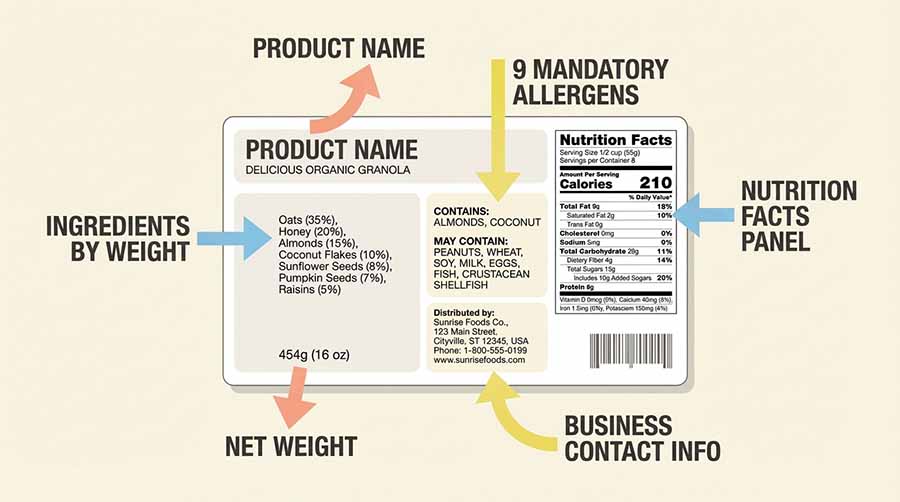
Wholesale labels need product name, net weight, ingredients by weight, nine major allergens including sesame, contact info, and nutrition facts.
The formatting requirements are strict. You can't estimate, round carelessly, or use handwritten stickers.
All wholesale labels must comply with federal guidelines, listing ingredients in descending order by weight and clearly declaring the nine major allergens, with sesame now mandatory for 2026. Your retail stickers won't work. Wholesale requires professional, durable, compliant labels. The nutrition facts panel alone needs specialized software to calculate and format correctly.
The allergen declaration: If your product contains or was processed near milk, eggs, fish, shellfish, tree nuts, peanuts, wheat, soybeans, or sesame, you must declare it clearly. Missing allergen warnings trigger recalls and legal action.
Most small bakeries need label design software and thermal printers producing waterproof, smudge proof labels that survive refrigeration and handling. Handwritten labels or inkjet printing signals you're not operating professionally.
Step 6: Implement Digital Traceability Systems
What is FSMA Rule 204 and does it apply to bakeries?
FSMA Rule 204, effective January 2026, requires digital traceability for high-risk foods. You must provide FDA records within 24 hours.
FSMA Rule 204 applies if you make cheesecake brownies, almond croissants, or products combining baked goods with high risk ingredients. You need digital systems tracking every batch from ingredient receipt through final sale.
This means lot codes, batch logs, supplier documentation, and distribution records maintained electronically. Notebooks don't meet traceability requirements. You need software, barcode scanning, or robust digital spreadsheets.
The vendor audit: Wholesale buyers increasingly require traceability compliance proof during onboarding. If you can't demonstrate digital tracking capability, you won't pass food safety audits.
Step 7: Engineer Packaging for Distribution Logistics
Why does wholesale require different packaging than retail?
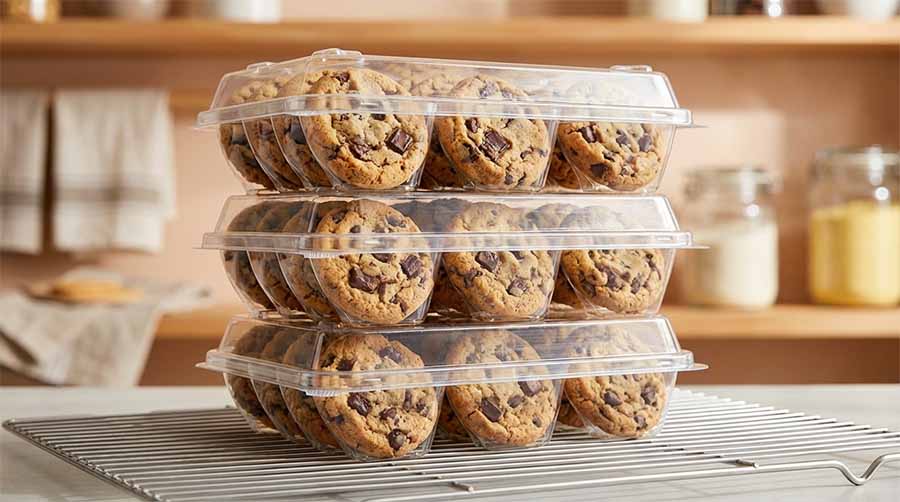
Wholesale packaging must survive stacking four to six cases high, refrigerated transport, and multiple handling points without collapsing.
That beautiful retail box gets crushed in delivery vans. Your packaging needs structural protection, not just presentation.
The condensation problem: Baked goods release moisture as they cool. Without proper airflow, condensation builds up causing soggy products or mold before reaching shelves. At Plastic Container City, we see the collapse every week. Bakers use beautiful retail boxes for wholesale, only to have them turn into soggy cardboard pancakes in a refrigerated van. You need vertical structural integrity and venting. Wrong container choice isn't just expensive. It's a contract killer. Buyers drop suppliers whose products arrive damaged.
You need flat stackable tops, adequate venting, and durability matching your distribution method.
The Hidden Costs Nobody Warns You About
Unsold Inventory Risk
Retail gives you control over production. Wholesale means retailers decide display time and markdowns. Products not sold by expiration get disposed of, and depending on contract terms, you may absorb that cost through credits or refunds.
Delivery Logistics
Wholesale buyers expect delivery, not pickup. That means vehicle costs, driver time, fuel, and commercial delivery insurance. Or you pay distributors who take another 15 to 25% of your already reduced wholesale price.
Sampling and Promotion
Retailers want free samples for staff training and customer demos. They want signage, promotional pricing participation, and sometimes in-store demo staff. These costs rarely appear in initial conversations but show up in contracts.
When You're Not Ready Yet
If you failed three or more checklist items, you're not ready for wholesale. That's not judgment. It's business reality that saves you from expensive mistakes.
First, secure commercial kitchen access. Everything depends on this. Research shared facilities, kitchen incubators, or commissary spaces in your area. If wholesale feels too risky, explore alternative paths to scale your bakery without a storefront like production-only leases or copackers.
Second, calculate your cash needs. Determine exactly how much you need for 90 days without revenue. If you don't have it, build retail sales or seek capital before pursuing wholesale. Learn pricing strategies that help you charge more while keeping customers to strengthen your cash position.
Third, create written SOPs. Document every recipe, process, and quality checkpoint. Test them by having someone else make your products using only written instructions.
Fourth, upgrade your insurance. Talk to your agent about product liability for wholesale. Get quotes and factor costs into pricing models.
The bakeries succeeding in wholesale treat it as a separate business model requiring separate infrastructure, not "more of what we're already doing."
Frequently Asked Questions
What is the difference between a bakery and a wholesale bakery?
Wholesale bakeries sell primarily to businesses rather than consumers, operating under stricter facility and liability standards.
A wholesale bakery sells primarily to businesses like grocery stores, cafes, and restaurants rather than directly to consumers, operating under stricter commercial facility requirements and product liability standards.
Are wholesale bakeries profitable?
Wholesale bakeries are profitable at scale, but require high-volume production to offset lower unit prices and 30 to 60 day payment cycles.
Wholesale bakeries can be profitable at scale but require higher production volumes to offset lower per unit prices, longer payment cycles, and increased operational costs compared to retail operations.
Do I need an LLC to sell wholesale?
An LLC isn't legally required but protects personal assets from business liabilities when selling through third-party retailers.
While not legally required, forming an LLC protects personal assets from business liabilities, which becomes critical when selling through third party retailers who could involve you in product liability claims.
How much money do you need to start a wholesale business?
Starting wholesale typically requires $50,000 to $150,000 for kitchen setup, equipment, inventory, licensing, and six months operating expenses.
Starting wholesale typically requires $50,000 to $150,000 for commercial kitchen setup or rental, equipment, inventory, insurance, licensing, cash reserves for delayed payments, and six months of operating expenses.
What do I need to become a wholesaler?
You need a commercial kitchen license, product liability insurance, FDA-compliant labels, digital traceability, and 90 days cash reserves.
You need a business license, food processing permit, commercial kitchen approval from your state agriculture department, employer identification number, seller's permit or resale certificate depending on your state, and product liability insurance.
Wholesale isn't the inevitable next step for every bakery. It's a specific business model demanding infrastructure, capital, and operational discipline many talented bakers don't want to manage. There's real money and satisfaction staying retail focused at a scale you control.
But if you're serious about scaling into distribution, treat this checklist as your minimum entry bar. The bakeries thriving in wholesale built the foundation first, not after signing contracts. Before moving forward, ensure you've met all wholesale bakery license requirements. For more bakery insights, operational strategies, and industry news, visit the Plastic Container City blog.
