


Juggling rising food costs, labor shortages, and diners who want gourmet meals in 3 minutes flat? You’re not alone. In 2025, the line between “fast” and “quality” is vanishing—and Quick Service Restaurants (QSRs) are leading the charge.
Forget stale fries and lukewarm coffee. Today’s QSRs? They're not just slinging food; they're crafting a whole vibe. Think premium speed. They're weaponizing AI, going hyper-local with menus, and even going green – all to make fast feel… well, better. And get this: the global fast food market is about to explode to $1.25 trillion by 2033. In the US alone, we're looking at a $311.99 billion QSR market by 2030. Knowing this shift? Non-negotiable if you're in the food game.
What Is a Quick Service Restaurant? (And Why It’s Not Just “Fast Food”)
Even seasoned pros conflate “QSR” with “fast food.” Let’s clarify.
Think beyond just burgers and fries. A quick service restaurant in 2025 is about speed and keeping it wallet-friendly, sure, but it’s also way broader now. Chipotle's bowls, Starbucks' lattes, Sweetgreen's salads – these are the new face of 'fast'. They’ve kept the speed of old-school fast food, but leveled up the whole experience: fresher ingredients, slick tech, and spaces that don't feel like a pit stop. QSRs are basically answering the call of customers who want more without the fuss.
Fast food? That's a piece of the QSR pie – the classic burger joints, the fried chicken spots, utilitarian service, end of story. But here's why splitting hairs matters: customer minds are changing. Fast food’s still got its place for the budget crowd, but the real growth? It's in the QSR lane, where quality and experience are part of the deal. Brands are throwing cash and creativity at QSR because that's where the action is.
Proof? KFC's "Original" prototype. It’s not just a facelift. They streamlined the menu, brought in AI in the kitchen, and slashed order screw-ups by 60%. That's speed and standards. That's the QSR upgrade in action.
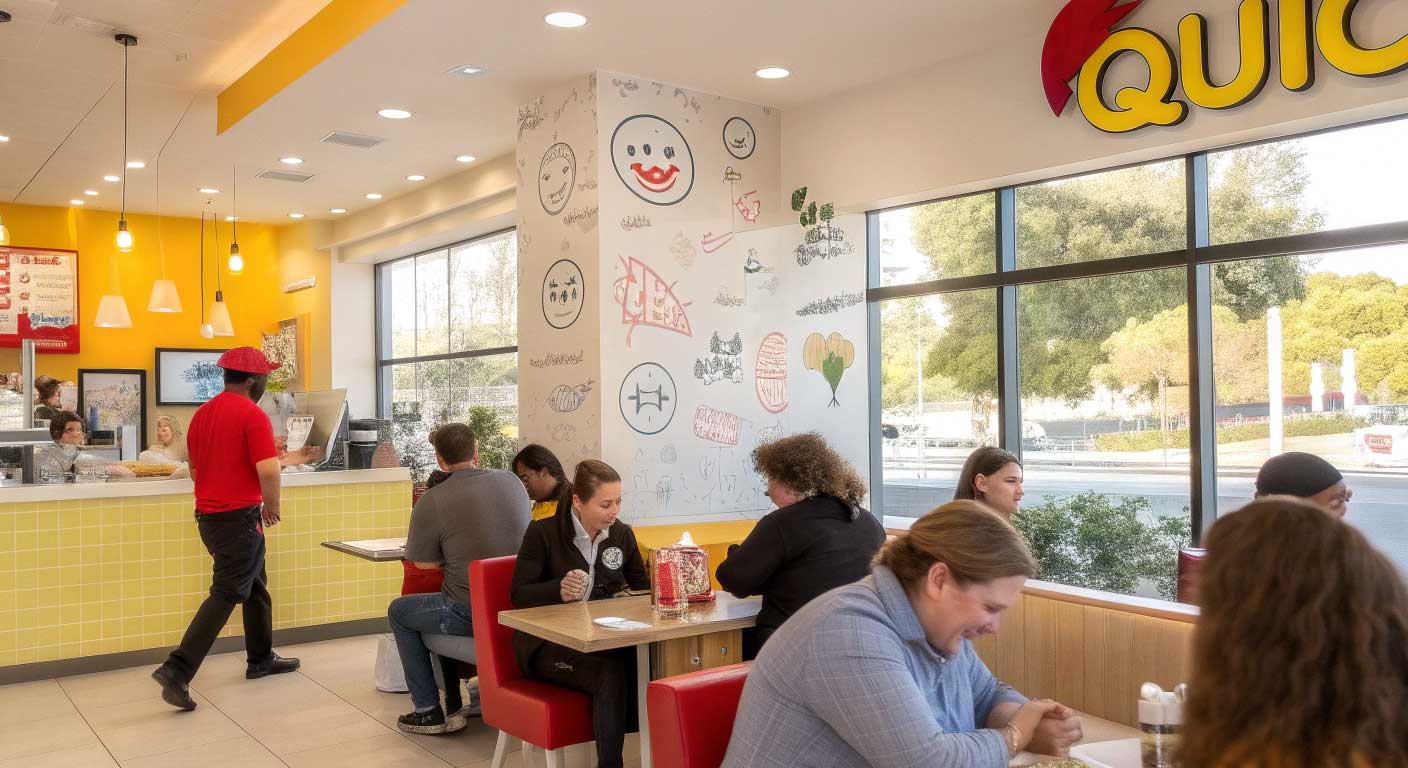
Fast Food vs. Quick Service Restaurants: Breaking Down the Divide
Why does this distinction matter for your bottom line? Because misjudging the market can cost you. Here’s the breakdown:
| Feature | QSR | Fast Food |
| Scope | Way broader: cafes, pizza joints, fast-casual spots | Tighter focus: burgers, chicken, fries |
| Menu Flexibility | Seasonal drops, crazy customization, global flavors | Fixed, mass-produced, what you see is what you get |
| Tech | AI brains, pay-by-face, ordering on your phone, kiosks everywhere | Counter, maybe a drive-thru, that's your lot |
| Ingredients | Local hookups, transparent sourcing, actually fresh | Bulk buys, mystery meat, frozen is key |
| Vibe | Chill seating, design that doesn’t hurt your eyes | Plastic seats, harsh lights, purely functional |
| Price tag | $10–$15 a meal, mid-range spend | $5–$8, budget eats |
| Speed | 3–5 minutes, real prep time | 1–3 minutes, assembly line hustle |
| Service Style | Minimal fuss, tech does the heavy lifting, some human touch | Counter slam, drive-thru dash, transactional only |
| Target Customer | Everyone, including the healthy crowd, experience seekers | Budget-focused, wants it now |
The Tech Behind the Magic: How QSRs Are Outpacing the Competition
Struggling to keep up with tech demands? Here’s how leading QSRs turn headaches into advantages:
- AI: The Silent Line Cook
AI in QSRs? Not sci-fi anymore, it's straight-up essential. Taco Bell and KFC are using AI to predict what ingredients they'll need, like some kind of food-forecasting wizard.
Their 'Recommended Ordering' system uses smart algorithms to crunch sales numbers, seasonal shifts, even local events to nail down ingredient orders. Result? Food waste down by 20%. Franchisees are seeing real cash savings – less spoilage, smaller inventory bills.
Beyond just stock, AI voice systems are changing how you even order. Drive-thru lines are shrinking by 20%, and they can even spot returning faces for that 'regular' treatment.
- Kiosks: The Upselling Whisperers
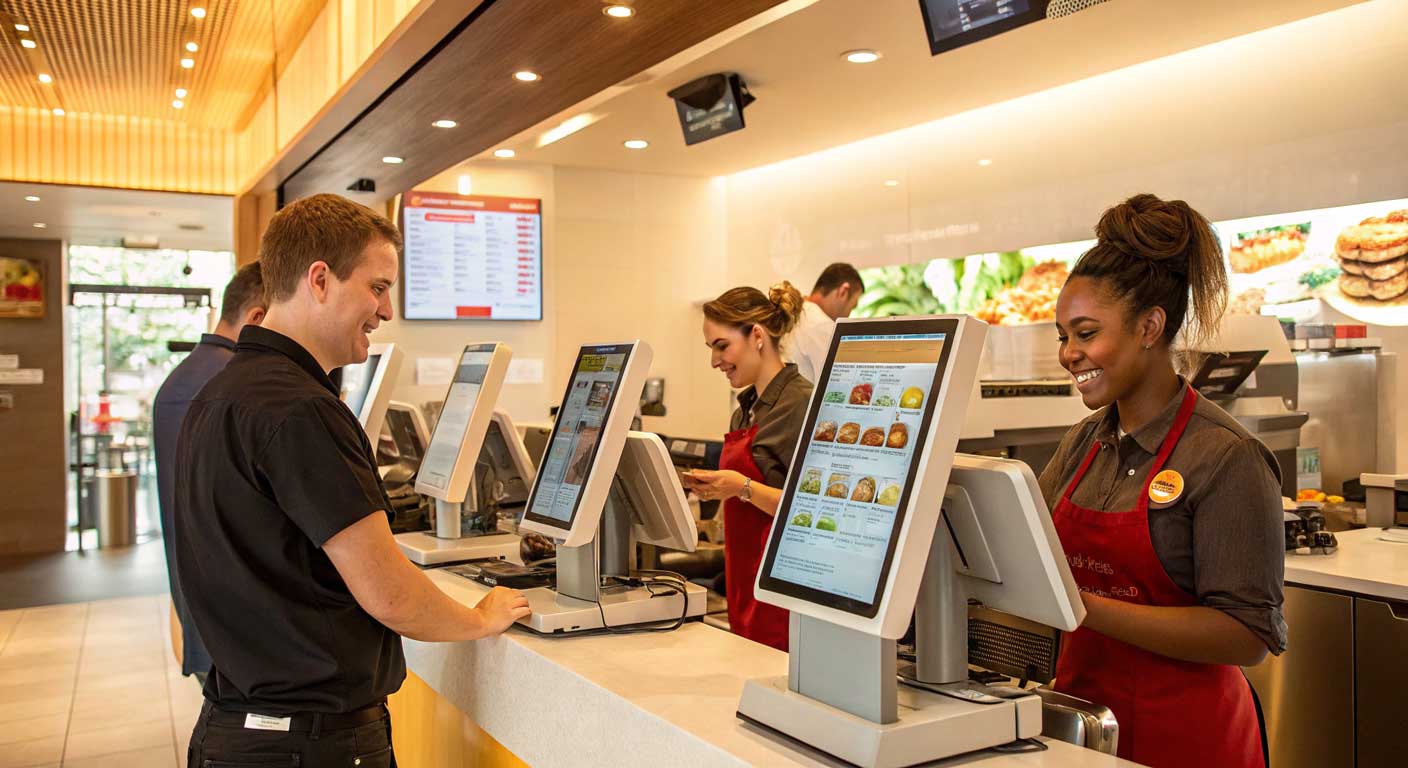
Kiosks? Not just for the young crowd. Everyone’s using them now. Chains rocking kiosks see checks jump by 20% – blame those smart AI nudges like “Extra guac?” Domino’s is all-in on kiosks, even tweaking them for different countries. They're not just for upselling; they cut lines, speak multiple languages, and free up staff for the kitchen and actual customer service. Efficiency boost, customer win.
- Sustainability as a Sales Driver
Sustainability isn’t just a trend; it’s business smarts. Sweetgreen switching to compostable bowls? Boosted their bottom line. Customers, especially younger ones, will pay more for brands that walk the eco-walk. For QSRs, it’s about packaging that’s both green and practical. Think plant-based, recyclable, smart designs that cut waste without messing with food quality. Going sustainable? It’s a brand differentiator that actually sells.
Learn how to reduce waste without sacrificing freshness with actionable tips from industry experts.
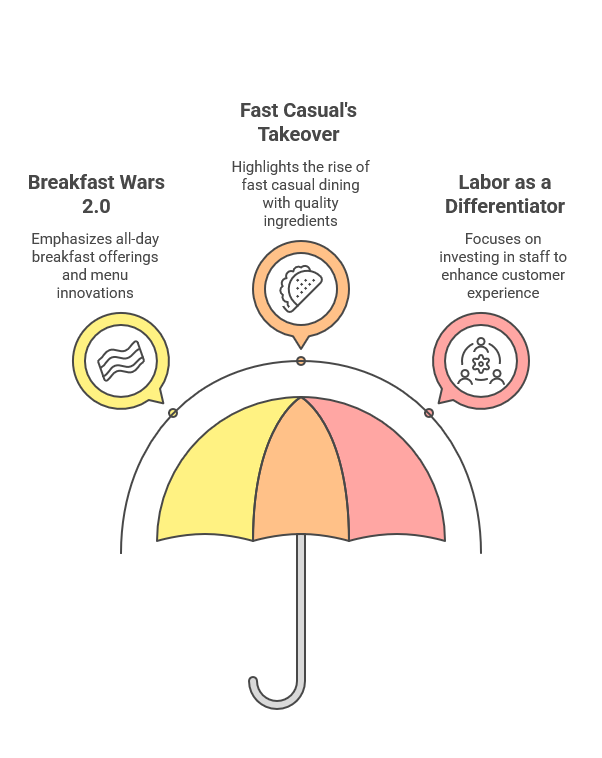
2025 Trends Every Food Pro Should Watch
-
Breakfast Wars 2.0
9-to-5? Dead. QSRs are catching on, going all-day breakfast. Dutch Bros is testing breakfast burritos for the night shift crowd. Panera's pushing avocado toast as an anytime eat. Breakfast prices are up 17.4% since 2021 – demand is there. For QSRs? Rethink your menu, rethink your kitchen. Breakfast all day is the new game.
-
Fast Casual’s Takeover
Fast casual isn't just a segment; it’s changing the whole QSR game. Chipotle, Cava – they're blending QSR speed with chef-driven menus, quality ingredients. Result? Same-store sales up 6-18% . Their play? Open kitchens. Customers see the fresh food, no marketing spin needed. People want quality, even when they want it fast.
-
Labor: From Cost Center to Differentiator
Staff turnover in QSRs? Brutal – 11-25%. Smart operators are flipping the script, investing in staff. Red Robin’s bringing back bussers, bartenders – sounds retro, right? But guess what? Happier customers, smoother service. In a digital world, human touch? That's the upgrade.
Localization: The Secret Sauce for Global Growth
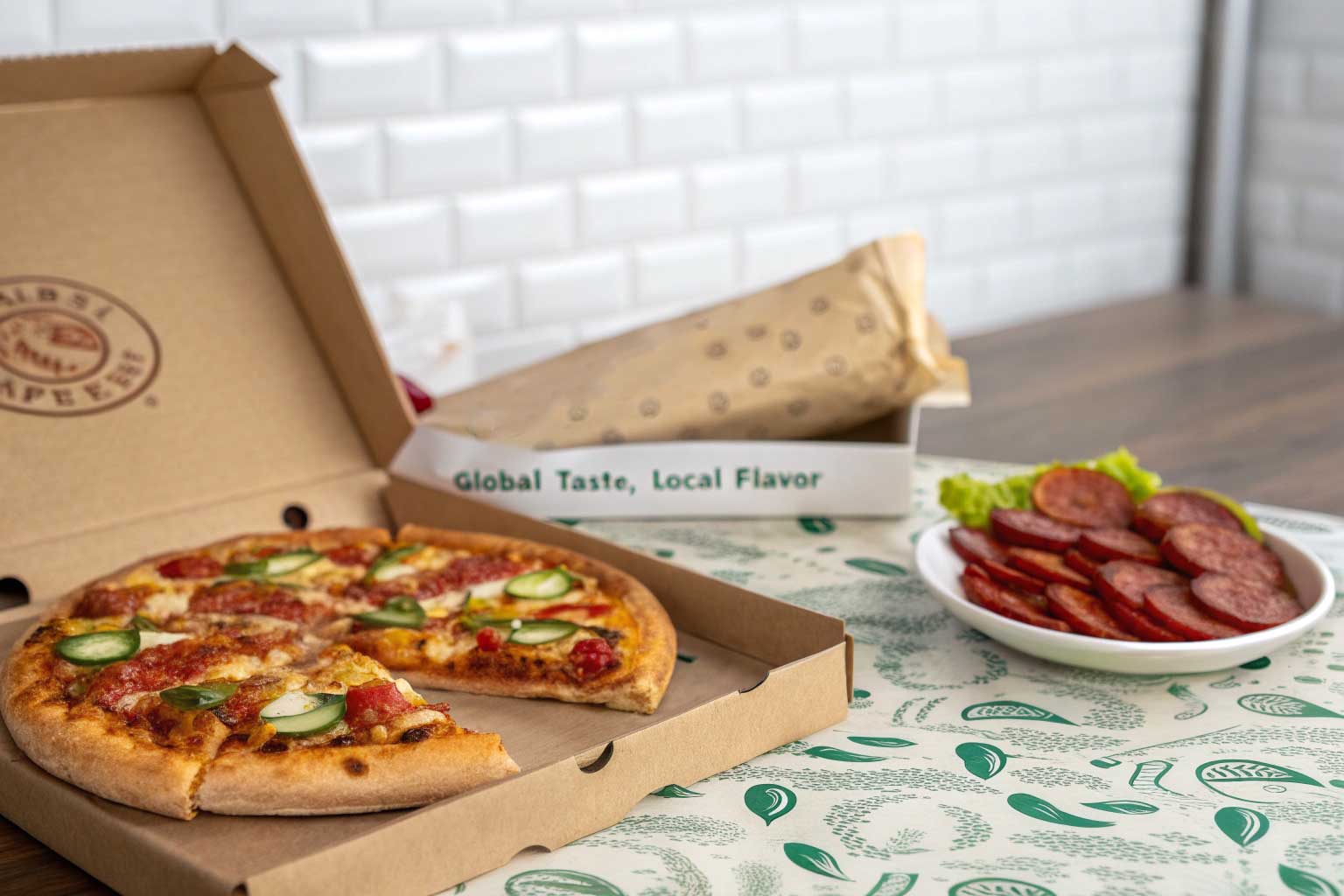
Going global? Cookie-cutter QSRs don't cut it anymore. Localization is the code. Domino’s crushes it in India with paneer pizzas and curry spices. Subway? Brazil gets its own wraps and fillings. Lesson: global reach, local eats. And packaging that keeps it legit. Think local flavor, global wins.
Global success requires local flavor—and packaging that keeps regional specialties intact. For inspiration, explore How to Source Local Ingredients to build authenticity without breaking the bank.
Challenges on the Horizon
Even QSRs aren’t immune to turbulence:
-
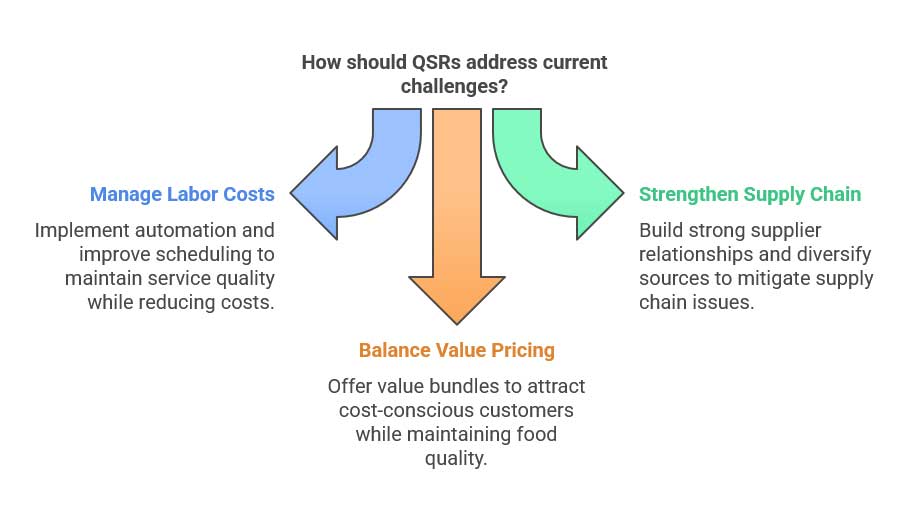
Labor Costs: Labor costs are spiking – 90% of QSRs are feeling the squeeze from wage hikes. Time to get smart on automation, scheduling, and actually keeping good people around. Bottom line? Gotta manage labor costs without killing service.
-
Supply Chain Whiplash: Supply Chain Whiplash: Supply chains are still wild. AI helps predict, but avocado freakouts and grain spikes still hurt. Gotta build strong supplier ties, diversify where you get stuff, and have menus that can roll with the punches. Supply chain smarts? Now essential.
-
Value Wars: Value Wars: Prices are up 17.4% since 2021. Customers are watching their wallets. Chains like KFC are pushing value bundles to keep people coming. QSRs need to nail that value balance – good food, right price, keeps customers happy.
The Future Is Flexible (and Delicious)
Where are QSRs headed? Flexibility is the name of the game. Domino’s Mumbai menu, Subway’s São Paulo wraps – customization wins. The global QSR market is heading to $635 billion by 2032. It’s about speed with soul. Not just robots and quinoa bowls, but giving people what they crave, when they crave it, no BS. And the unsung hero? Packaging. Keeps food fresh, safe, Instagram-ready. For QSR packaging that works as hard as you do, check out our top picks.
Craving More Insights? Dive deeper with:
For food pros navigating this whirlwind, one truth stands: The future isn’t just fast—it’s finessed.
Frequently Asked Questions (FAQs)
What’s the key difference between a QSR and traditional fast food in 2025?
QSRs prioritize speed and quality, offering fresher ingredients, tech-driven experiences, and customizable menus. Traditional fast food focuses on ultra-low costs, standardized menus, and purely transactional service.
How does AI actually improve operations in QSRs?
AI optimizes inventory, predicts demand, reduces food waste, and powers voice-ordering systems to speed up drive-thrus. It also personalizes recommendations, boosting order accuracy and customer loyalty.
Can QSRs adopt sustainability practices without raising prices?
Yes! Strategies like compostable packaging, local sourcing, and waste-tracking AI cut long-term costs. Many eco-friendly moves (e.g., reducing plastic) also align with customer preferences, justifying minor price adjustments.
What’s the best way to reduce labor turnover in QSRs?
Invest in training, create career advancement paths, and delegate repetitive tasks to tech (e.g., kiosks). Happy employees improve service quality, which drives customer retention.
