


Is your food business prepared for the 2026 artificial dye ban or are you waiting until state laws force your hand?
The artificial dye ban sweeping through the US isn't a single federal knockout punch - it's a rapid, high-pressure phase-out of nine petroleum-based synthetic dyes by the end of 2026, backed by enforceable state laws that are already in effect. If you're running a bakery, restaurant, food truck, or any food operation, here's what you need to know before reformulation becomes a scramble.
Let's cut through the noise. The question isn't whether these dyes are disappearing, it's how fast you need to move and which products are at risk.
What's Actually Happening with Food Dyes?
The US isn't issuing a blanket ban on all artificial dyes through one sweeping federal law. Instead, the Department of Health and Human Services and the Food and Drug Administration announced in April 2025 a plan to phase out petroleum-based synthetic dyes from the nation's food supply.
Here's the breakdown:
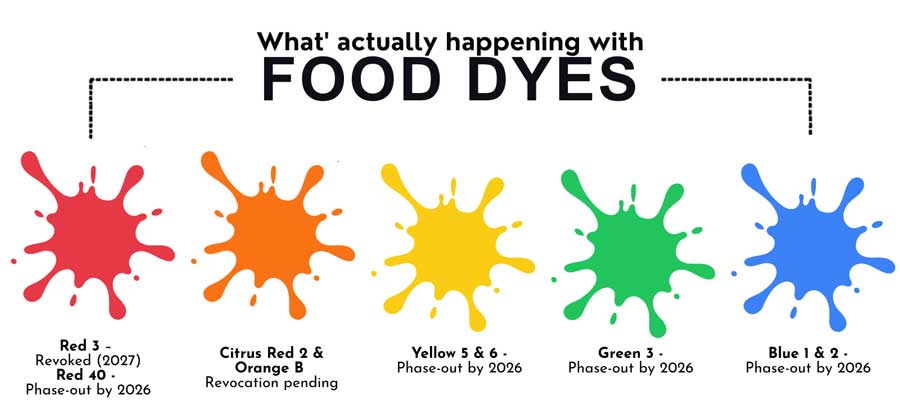
FD&C Red No. 3 is getting the axe through formal revocation. The deadline? January 15, 2027, but the FDA is pushing companies to remove it sooner.
Citrus Red No. 2 and Orange B are also facing formal revocation, with final bans expected in the coming months.
The big six—Red 40, Yellow 5, Yellow 6, Blue 1, Blue 2, and Green 3—are technically part of a "voluntary" phase-out. The FDA is working with the food industry to eliminate them by the end of 2026.
But here's the catch: voluntary doesn't mean optional. States are already enforcing their own bans, and if you're selling across state lines, you'll need to comply with the strictest rules anyway.
The timeline isn't without controversy. The International Association of Color Manufacturers has warned that the 2026 goal may be unrealistic and could disrupt supply chains, while Consumer Reports cautioned that a voluntary process could prolong removal. But waiting to see if deadlines slip is a risky bet when states are already moving faster than federal timelines.
The State-by-State Patchwork You Can't Ignore
About 30 states have proposed or passed legislation targeting artificial colors. That's not a trend—it's a regulatory avalanche.
If you're operating nationally, the smartest move is to align your entire portfolio with California and West Virginia's standards. Running state-specific versions of the same product isn't just expensive—it's a supply chain nightmare.
At Plastic Container City, we work with thousands of food professionals across the US, and we're hearing the same thing from bakeries to caterers: everyone's trying to get ahead of this before they're forced to react.
Why Are Synthetic Dyes Getting the Boot?
Critics have linked dyes like Red 40 and Yellow 5 to hyperactivity, behavioral issues, and potential cancer risks in animal studies. The FDA maintains that most children experience no adverse effects when consuming them, but the push to phase them out is about eliminating risk entirely.
Many of these dyes are already banned or require warning labels in Europe and Canada. The US is finally catching up.
Consumer sentiment is driving this as much as regulation. People want "clean label" products. They want to see ingredients they recognize. And they're willing to pay a premium for it.
The Real Pain Points: Reformulation Isn't Simple
Switching from synthetic to natural colorants isn't as easy as swapping one ingredient for another. It's a complete overhaul.
Color Matching Is a Nightmare
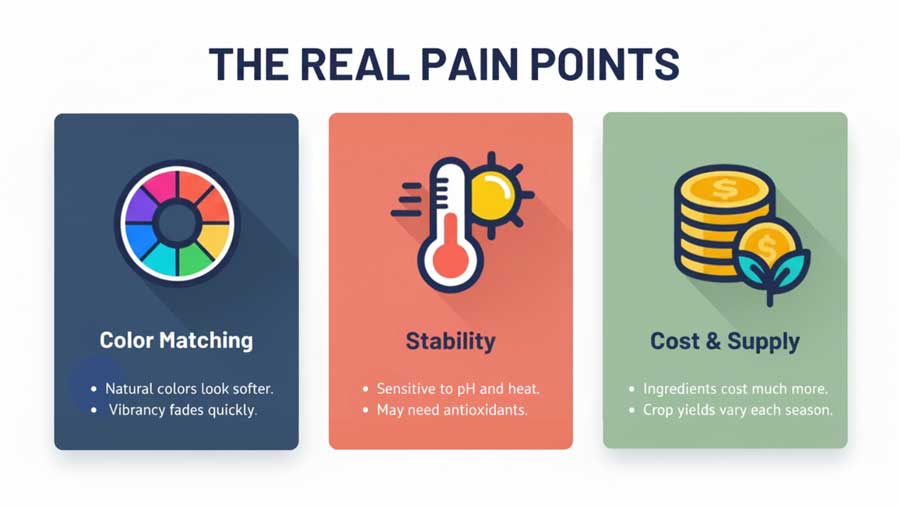
Natural colors are less vibrant and fade quickly. Your customers have a psychological connection between color and flavor. If your strawberry frosting looks pale pink instead of hot pink, they'll think it doesn't taste the same—even if nothing else changed.
Stability Issues Are Real
Natural dyes are sensitive to pH, temperature, light, and oxygen. You might need to:
. Add antioxidants
. Adjust your recipes
. Switch to opaque or light-blocking packaging
The Cost Will Hit You
Natural colorants typically cost 300% to 1000% more than synthetic versions. Supply chains are fragile because they're agriculturally based—subject to crop yields, seasonality, and potential shortages.
Some natural colorants need cold chain infrastructure for storage and transport. That means higher logistics costs on top of the ingredient price spike.
You Have Less Time Than You Think
The FDA's end-of-2026 target gives you only 19 months to identify products, assess alternatives, reformulate, and get them to market. For context, about 11.5% of US packaged food products contain synthetic dyes. That's a lot of SKUs.
What Big Brands Are Doing Right Now
You're not alone in this. Major manufacturers are already moving. The clean label movement isn't slowing down—it's accelerating, and these brands are proving it can be done.
Walmart is removing synthetic dyes and 30 other ingredients from its US private label brands (Great Value and bettergoods) by January 2027. That's huge.
Kraft Heinz will remove all FD&C colors from US products by the end of 2027. That includes Kool-Aid and Jell-O—products where color is everything.
General Mills is targeting complete elimination from its US retail portfolio by the end of 2027, prioritizing cereals and K-12 school foods by summer 2026.
Tyson Foods committed to eliminating synthetic dyes by the end of May 2025—one of the fastest compliance timelines out there.
In-N-Out Burger announced in May 2025 it removed artificial colors like Yellow 5 and Red 40 from its pink lemonade and strawberry syrup. Quick-service chains are watching this closely.
The International Dairy Foods Association pledged to remove seven artificial food dyes from products by 2028. That represents over 90% of US ice cream sales.
Natural Alternatives That Actually Work
The FDA is fast-tracking approvals for new natural color additives. Here are three recently approved options worth considering:
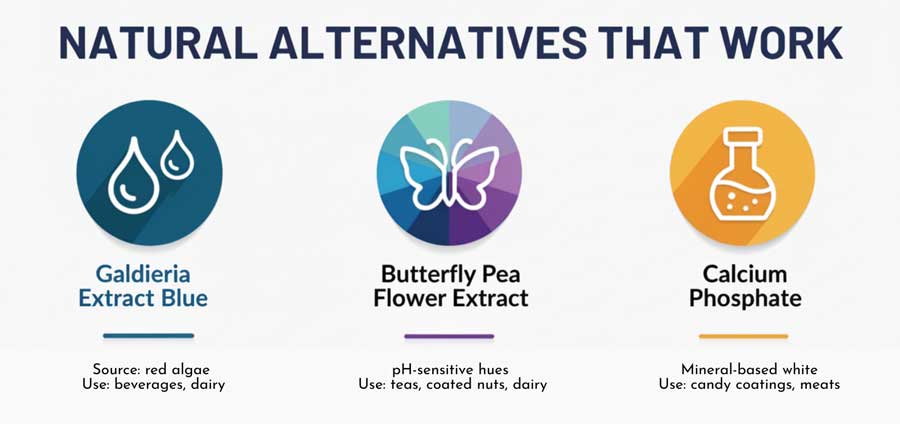
Galdieria Extract Blue comes from red algae and provides a vivid blue for beverages and dairy products.
Butterfly Pea Flower Extract offers pH-sensitive hues—blue to purple and green—perfect for teas, coated nuts, and dairy.
Calcium Phosphate is a mineral-based white colorant used in candy coatings and processed meats.
Start testing these now. Colors should be considered early in your product development cycle—not as an afterthought.
How to Protect Your Brand and Stay Compliant
Audit Everything
Go through your ingredient lists with a fine-tooth comb. If you're a restaurant, check your pre-made sauces, dressings, syrups, and bakery goods. Many of our customers tell us they're surprised by how many products contain synthetic dyes they didn't realize were there.
Get Ahead of State Laws
Don't wait for federal mandates. Align with the strictest state standards now. It's cheaper to reformulate once than to manage multiple versions of the same product.
The Legal Risks You Can't Ignore
Beyond state fines, the real danger is consumer class-action lawsuits. Companies face increased exposure to class actions alleging false advertising and mislabeling. If your reformulation changes a product's appearance or quality—or if your marketing claims conflict with your ingredients—you're vulnerable.
Broad health claims like "healthy," "all natural," or "good source of vitamins" are under heightened scrutiny if those products contain synthetic dyes like Red 40 or Yellow 6. The Texas Attorney General launched an investigation into CPG companies following federal announcements, targeting deceptive trade practices related to these exact claims.
California is also questioning the FDA's "Generally Recognized As Safe" (GRAS) determinations for certain ingredients, which could set a precedent for broader national reform beyond just colorants.
The legal landscape is shifting fast. Don't assume your current labels will pass scrutiny six months from now.
Watch Your Marketing Claims
If you're reformulating, avoid saying your new product is "safer" or "healthier" than the old version. That can create legal risks and reflect poorly on older inventory.
Do focus on "dye-free," "made with natural ingredients," or "clean label." That's what health-conscious customers want to hear.
Communicate Proactively
If you're changing the color of a product, tell your customers before they notice. Use your website, social media, or in-store signage to explain the switch. Position it as a health-conscious decision that strengthens your brand.
Train your staff to answer questions confidently. If your strawberry shake looks a little different, your team should know why—and be able to explain it without hesitation.
Update your POS systems and digital ordering apps if visual appearance changes. Customers will notice. Get ahead of it.
Diversify Your Suppliers
Establish relationships with multiple suppliers to mitigate supply risk. Natural colorant manufacturers with shorter supply chains—like American companies—may have a competitive edge due to reduced transportation and storage costs.
Think Bigger: Bundle Your Compliance Efforts
Here's a strategic move most operators miss: many states are also rolling out Extended Producer Responsibility (EPR) laws for sustainable packaging. Instead of tackling dye removal and packaging compliance as separate projects, consider a holistic product revamp. You can address both issues in a single, cost-effective redesign—saving time, money, and operational headaches down the road.

The Food Safety Angle You Might Be Missing
Here's something not many people are talking about: switching to natural colorants introduces new food safety risks.
Natural colorants are prone to agricultural hazards—microbial contaminants, mycotoxins, pesticide residues, and heavy metals. You'll need to update your food safety plans under Hazard Analysis and Risk-Based Preventive Controls (HARPC) rules.
This isn't just about swapping ingredients. It's about rethinking your entire supply chain from a safety perspective.
What This Means for Your Bottom Line
Let's be real: this transition is going to cost money. Between reformulation, new suppliers, potential packaging changes, and staff training, the bill adds up fast.
But here's the other side of it: consumers are willing to pay more for clean-label products. If you position this shift as a premium upgrade, you can offset some of those costs.
Private label brands are considered the most impacted segment because they span all categories—meaning more products need reformulation. If you're a smaller operation with a focused product line, you might actually have an advantage in speed and agility.
So What Does This Mean for You?
The artificial dye ban isn't a future problem. It's happening right now. States are enforcing bans. Major brands are reformulating. Consumers are demanding change.
If you wait until you're forced to comply, you'll be playing catch-up while your competitors are already on shelves with cleaner labels.
Start now. Audit your products. Test natural alternatives. Talk to your suppliers. Train your team. And most of all, communicate with your customers.
This is your chance to get ahead of the curve and build trust with people who care about what's in their food. The artificial dye ban may feel overwhelming, but it's also your opportunity to show customers you're willing to evolve. Don't waste it.
Want to stay ahead of shifts like this? We break down what's actually changing in the food industry—and how to turn it into opportunity. Check out our latest insights at Plastic Container City for more no-fluff guides built for food professionals who need answers, not theory.
Frequently Asked Questions
Why is Red 40 not banned in the USA yet?
Red 40 is part of the voluntary phase-out by the end of 2026. The FDA is working with the food industry to eliminate it, but it hasn't been formally revoked like Red 3. Several states are enforcing their own bans on Red 40, so even though there's no federal ban yet, companies are removing it to comply with state laws and consumer demand.
What will replace Red 40 in food products?
Natural alternatives include beetroot extract, carmine (from insects), paprika extract, and other plant-based colorants. These options are less stable and more expensive than Red 40, but they meet consumer demand for clean-label ingredients. The FDA is also fast-tracking approvals for new natural color additives to give manufacturers more options.
How quickly does red dye affect behavior in children?
Studies have shown links between synthetic dyes and hyperactivity in some children, but the FDA states that most children experience no adverse effects. The phase-out is a precautionary measure to eliminate potential risks, especially since these dyes are already restricted in other countries.
Is Walmart eliminating artificial food dyes from all products?
Walmart is removing synthetic dyes and 30 other ingredients from its US private label brands (Great Value and bettergoods) by January 2027. This doesn't apply to third-party brands sold in Walmart stores—only products under Walmart's own labels.
What sodas have Red Dye 40?
Many sodas and fruit-flavored drinks contain Red 40, including some versions of popular soft drinks, fruit punches, and sports drinks. Check ingredient labels for "FD&C Red 40" or "Red 40." As manufacturers reformulate, expect to see more beverages switching to natural colorants over the next few years.
