


Struggling to make your restaurant stand out?
Sourcing local ingredients could be your answer.
As restaurant costs rise and customers demand better quality, getting ingredients from local suppliers will boost your kitchen's offerings.
The National Restaurant Association's latest research shows customers are actively choosing restaurants that source locally and care about their environmental impact.
What is Local Sourcing of Ingredients?
Local sourcing means getting your ingredients from farmers and producers within your region - typically within 100-150 miles of your kitchen. As food industry professionals, we've seen how this makes both kitchen work and dishes better. Research from USDA's Local Food Directory tells us we're not alone - 67% of chefs prefer local food over imported alternatives.
Walking into your local farmers' market on a crisp morning, breathing in the aroma of fresh vegetables and fruits - this is where great food begins. This direct connection to your ingredients makes all the difference.

Why is it Better to Use Local Ingredients?
Fresh, local ingredients give you real advantages:
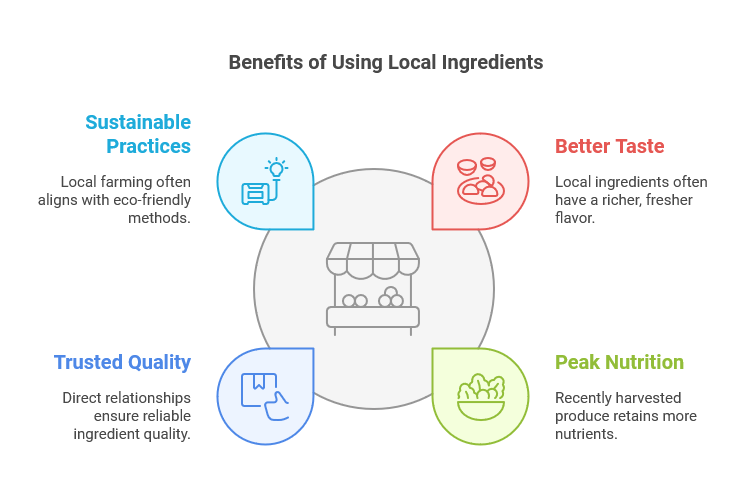
- Better taste than food shipped through long transport routes
- Peak nutrition from recently harvested produce
- Quality you can trust through direct relationships
- Sustainable farming practices that customers value
Finding and Vetting Your Local Suppliers
Ready to find quality local ingredients? Here's your complete guide:
Where to Look:
- Local farmers' markets
- Community agriculture programs
- Nearby farms and producers
The folks at Produce Blue Book share these tips:
- Visit farms to understand growing methods
- Check food safety certifications
- Ask about traceability
- Talk to other restaurants they supply
Here's what works best, according to Stellar Menus:
- Start with small orders to test quality
- Talk about bulk pricing options
- Work around harvest times
- Team up with other chefs for better rates

Creating Your Menu with Local Ingredients
The team at CalcMen share these pricing tips:
- Know your costs through seasons
- Keep prices flexible with market changes
- Set fair margins that work year-round
- Use peak season abundance wisely
For menu planning, they suggest:
- Create dishes that work in any season
- Add specials based on what's fresh
- Save peak-season items for later use
- Use ingredients in multiple dishes to cut waste

Making Local Work Day-to-Day
The kitchen pros at Galley Solutions recommend:
- Check freshness dates
- Rotate based on seasons
- Save extra produce for later
- Keep backup suppliers handy
Correct Storage: Quality storage containers help keep fresh ingredients at their best. Check out our guide on smart food storage methods for more tips.

Sourcing Local Builds Business
When you source locally, you're not just getting ingredients:
- You connect with other local businesses
- Your food tells a local story
- Customers appreciate the quality
- Your community grows stronger
Good for the Planet
Using local ingredients makes a real difference. Research from PEC shows getting food locally cuts delivery miles by 25-30% compared to global supply chains. This means:
- Fewer miles traveled
- Less resource use
- Reduced waste
- Supported sustainable farms
Our team has put together some smart waste reduction tips to help you make the most of these quality ingredients.

What to Watch For with Local Food
Supply Management:
- Ingredients change with seasons
- Product quantities can vary
- Multiple supplier relationships needed
- Backup sources essential
Cost Considerations:
- Some items cost more than conventional
- Delivery schedules affect pricing
- Storage needs may increase
- Menu prices need adjustment
Quality Control:
- Health and safety rules matter
- Food safety certification checks
- Product consistency varies
- Storage monitoring important
These challenges don't mean local sourcing isn't worth it. In fact, our success stories show just how well these hurdles can be overcome.
For more information, check out Food and Agriculture Organization

Real Success Stories
Check out what's working for others. In Pittsburgh, chef Christopher Galarza changed how his kitchen works with local ingredients. The result? Lower costs and happier staff.
A Vermont farm-to-table success story shows what's possible - they saw repeat customers increase by 35% after switching to local.
Even schools are getting great results. The USDA Local Schools Food Program study shows how one K-12 district cut costs by 15% while earning community praise with their local food program.

Bringing It All Together
Getting great local ingredients doesn't have to be complicated. Start small, build relationships with farmers at your local farmers' market, and watch your dishes come alive with freshness and flavor. Here at Plastic Container City, we love seeing restaurants create amazing food using ingredients from right here in their community.
Every local carrot, wheel of cheese, or fresh-caught seafood tells a story. When you cook with ingredients from nearby farms and producers, you're not just making food - you're
Frequently Asked Questions (FAQ’s)
Are locally sourced ingredients cheaper?
Here's the truth about local ingredient costs - they're not always the budget option. Why? Most local farmers run smaller operations, which means higher production costs (USU Extension confirms this in their research on direct pricing).
That said, buying direct from farmers can sometimes save you money by cutting out middlemen. Just remember - prices will swing with the seasons, but the quality you get often justifies any extra cost.
Why is it better to use local ingredients?
I'll tell you exactly why local is worth it. First, you're getting ingredients at peak freshness - no long-distance shipping means better flavor in your kitchen. Research from Dirt-to-Dinner backs this up. Plus, you're doing good while cooking great food: supporting local farmers keeps money in your community, and shorter transport distances mean a smaller carbon footprint. Our local farmers markets prove this every day.
What are the disadvantages of local food?
Let's be straight about the challenges. Seasonal limitations are real - ResearchGate's policy review confirms this. You can't get everything year-round, and sometimes supply gets unpredictable. And yes, smaller production scales can mean higher costs. But here's my take - smart menu planning and good supplier relationships help overcome these hurdles. The quality makes it worth the extra effort.
Does local mean organic?
Let me clear up this common confusion. Just because it's local doesn't automatically make it organic. As New Society Publishers points out in their recent research, organic certification involves specific standards and regulations. While many local farms use sustainable practices, they might not have that official organic certification. Want organic? Always check for the certification - don't just assume.
